The Lens Inside the Headlight: How Does a Projector Lens Work?
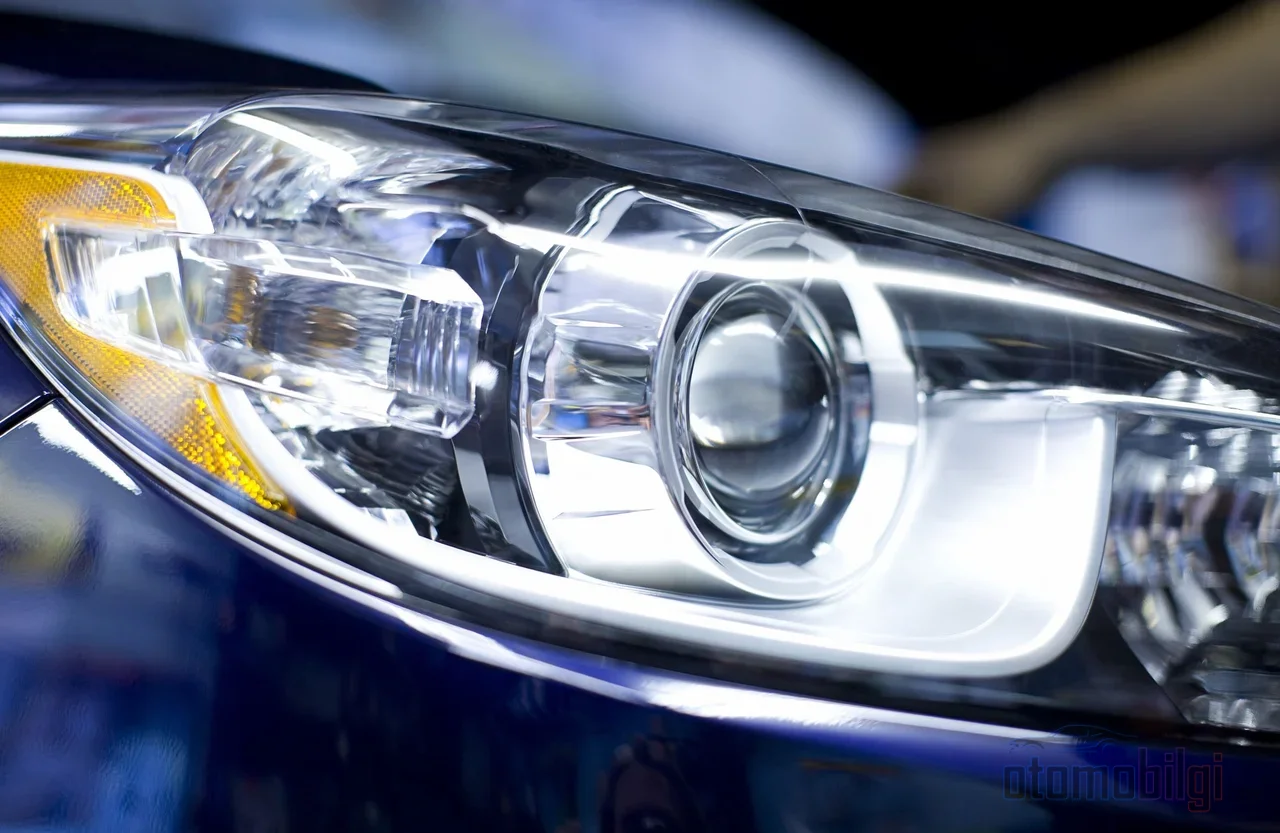
Share This Page
The projector lens is the optical assembly in which the aspheric lens, the elliptical reflector, and the cutoff shield inside the headlight work together to project light onto the road with a sharp cutoff line. What turns a low beam into oncoming light is not the bulb, but precisely this assembly. In other words, a "projector" is not a light source technology, but an optical architecture that shapes the light.
Highlights
- A projector headlight has three core components: the elliptical reflector, the cutoff shield, and the aspheric lens.
- The concept dates back to 1911; its introduction into commercial use came in the early 1980s.
- Bi-xenon and bi-LED headlights use a single shield moved by a solenoid to produce both low and high beam from one source.
- UN R112 makes the cutoff line mandatory on all low-beam (passing) headlights; the line serves both as an anti-glare measure and as the headlight adjustment reference.
- Installing an LED bulb in a halogen reflector headlight may physically fit, but it disrupts the beam pattern and increases glare.
There Is Actually a Slide Projector Inside the Headlight
Now let me explain what is inside the headlight, because my head was spinning the first time I heard it: the projector headlight essentially works on the same principle as a slide projector. In the middle there is a small light source, behind it an elliptical reflector that gathers the light and focuses it onto a single point, in front of that a shield that decides which light will be projected onto the road, and at the very front a lens that magnifies everything and projects it onto the road. Whatever the slide in front of the lamp is in a slide projector, that is what the cutoff shield inside the projector headlight is: it determines which part of the light will reach the screen, in other words the road.
The concept is very old, going back to 1911; but its commercial spread in automobiles came around the early 1980s. So this technology is hardly "new" after nearly half a century, but the engineering inside it is still incredibly elegant. In the optics literature, a projector headlight module is defined as three components: the elliptical reflector that focuses the light, the baffle, that is, the cutoff shield, that forms the upper edge of the beam, and finally the aspheric lens that projects the light onto the road. When these three come together, the famous cutoff line of the low beam is born.
How Do the Three Components Work Together?
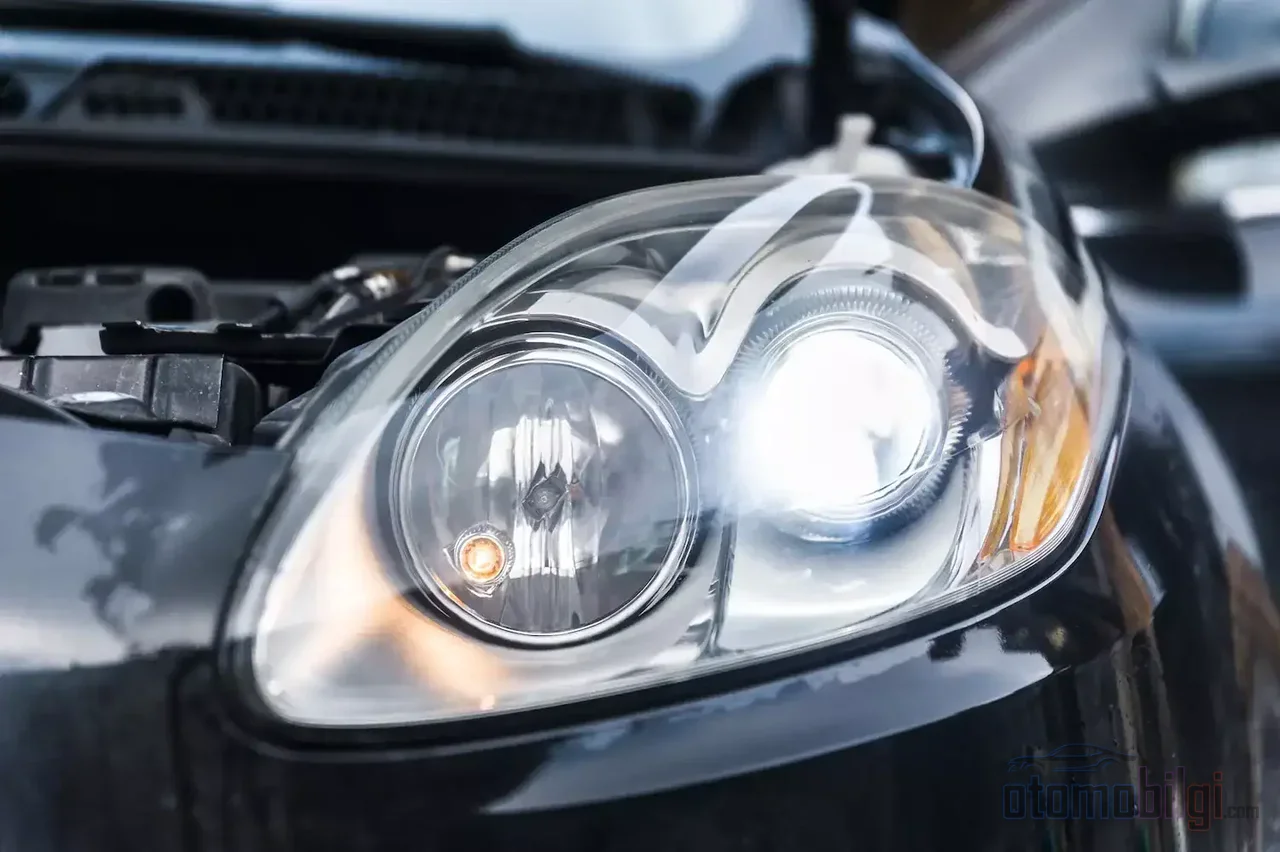
Let's go through them one by one. The bulb is placed at a point close to the focal point of the elliptical reflector. The property of the elliptical reflector is this: it gathers light emanating from one focus onto another focus. In other words, the light scattered in every direction from the bulb reflects off the inner surface of the reflector and is gathered at a single focal point. This is the first step in "concentrating" the light.
The second step is the shield. The cutoff shield placed between the reflector and the lens physically cuts off the upper part of the beam. The result? A dense light close to the road with a sharp upper edge, and reduced glare going into the eyes of oncoming drivers. In some designs, this shield also serves as a lower reflector, providing an additional contribution to the beam; in other words, that part does more than one job.
The third step is the lens. The aspheric lens magnifies the image defined by the shield and projects it onto the road. That cut-off line you see on the road is actually the magnified image of the shield's edge through the lens. The shield's geometry is so critical that academic studies show the shape of the cut-off shield can directly optimize the density gradient at the brightest edge and the color distribution. The sharper the edge, the crisper the transition; the less color scattering there is.
Bi-xenon and bi-LED: Single Source, Two Beams
One of the smartest tricks here is the bi-projector mechanism. A single bulb provides both the low and high beam. How? The shield moves! A solenoid actuator pulls the metal shield up and down. When the shield is up, it blocks the upper part of the light, creating the low beam mode. When the shield drops down, it blocks no light at all, and the beam opens to its full width: the high beam. As simple as a mechanical blind, and just as effective optically. Those who have heard that "click" sound while operating it know it means a small mechanism is at work inside the headlight.
How Does a Reflector-Type Headlight Illuminate Differently?
The reflector-type headlight is the familiar mirrored bowl: no lens; what shapes the light is directly the geometry of the reflector surface. In classic parabolic designs, the bulb sits at the focus, and the bowl sends the light forward in relatively parallel beams; the cut-off line is produced by the reflector itself, with no separate shield. The light spreads more diffusely, and the glare risk increases if the design is poor.
But note, fairness is required here: modern reflectors are now multi-surface, computed designs we call free-form. In one headlight from some manufacturers, more than 50,000 individual reflective surfaces are calculated one by one to shape how the light is distributed on the road. So a lensless headlight without a cut-off line? No; a modern free-form reflector can also produce an extremely precise distribution. The reflector's advantage is low manufacturing cost and less required headlight depth; the projector offers a sharp cut-off line and low glare, but may require more depth at the rear. Also, the total light output of the two systems can be the same; the difference lies in beam width and distribution pattern.
Let's clarify one thing, because marketing muddies it: projector does not automatically mean brighter or safer; reflector does not automatically mean old and crude. Usable illumination depends not on the optical architecture but on the complete optical design, thermal conditions, assembly precision, and headlight alignment. Regulations, in fact, look not at the optical type but at the function and measured performance: legislation such as UN R149 and FMVSS No. 108 is determined not by whether it is a projector or reflector, but by the light's function and test results. In UN R112 type approval, the cut-off line is mandatory both as an anti-glare feature and as the reference for headlight alignment; FMVSS No. 108 defines the low beam as the light used "for meeting or closely following" situations.
What Changes If Halogen, Xenon, and LED Go Into the Same Lens?
Here is where everyone gets confused. A projector describes the optical design, not the light source type; halogen-source projector headlights are also available on the market. So what happens when you put different sources into the same lens? The key concept is this: the light-emitting surface. In a halogen bulb, light comes from a filament with a defined and fixed position; the reflector and lens are designed precisely for that position. A xenon arc has a different size and a different light-emitting surface, and an LED chip is completely different: size, light-emitting area, heat path, and electrical requirements all differ.
| Feature | Halogen | Xenon (HID) | LED |
|---|---|---|---|
| Typical power | 60/55W (H4, 12V) | 35W | ~42W on low beam in the sample unit (12V) |
| Typical light output | Filament-based, relatively low | ~3,000-5,000 lumens | Intense and concentrated output |
| Color temperature (HID) | Close to warm white | 4300-8000K range | Varies by product |
| Compatibility with projectors | Optics are designed entirely for the source | Works well with projectors for intense output | Requires dedicated reflector/lens geometry |
| Heat characteristics | Filament heat is high | Produces a lot of heat, can wear out the reflector over the years | Runs cooler but heat dissipation is essential |
Because HID and LED outputs are more intense and concentrated than halogen, they work especially well with projector optics. The reverse also holds: fitting an LED or HID bulb into a headlight designed for a halogen reflector typically produces excessive glare and a broken beam distribution. Why? Because if the LED cannot reproduce the light-emitting position that the halogen optics expect, the beam pattern changes completely. LED integration, on the other hand, is a separate engineering effort: it requires dedicated reflector and lens geometry, an LED driver, thermal and overvoltage protection, heat dissipation, and EMC design. In other words, the "put whatever you like in the lens" approach does not work in optics; it is like putting a random piece of glass on a camera lens and expecting a sharp photo.
Why Is the Cutoff Line the Heart of Non-Glaring Lighting?
The cutoff line is a line most people never think about, but one that saves lives every night. Think of it this way: you cut the light just below the eye level of oncoming traffic, and everything below it is brightly lit. That way, you see the road, and the other driver sees you but does not lose their way squinting into your lights. The shield does exactly this job: by preventing the beam from rising above it, it provides a sharp upper edge and low glare.
On the regulatory side, the line's role is very clear. UN R112 makes the cutoff line mandatory in all low-beam passing headlights. Moreover, the line is not a one-way constraint: it is also the reference point for headlight adjustment in type approval. When you have your headlights adjusted at the service, the technician is actually measuring and correcting this line's position on the road. Separate cutoff shapes are also defined for left-hand and right-hand traffic; mirror-image patterns of each other, determined by the direction of traffic the vehicle is used in. That is why in some countries "left-traffic headlights" and "right-traffic headlights" are genuinely different products. It is also recommended to check the headlight aim after bulb replacement; because even small differences in filament position can shift the beam pattern.
Why Are Aftermarket Lens Conversions Optically Risky?
You have surely seen this on YouTube: people fit a "quick fix" LED bulb into a halogen reflector headlight and hit the road, job done. Well, from an engineering standpoint that is exactly not where the job is done, but where the problems begin. Physical fitment does not guarantee optical, electrical, thermal and regulatory compliance. If the LED cannot fully mimic the position and light-emitting surface of the original halogen filament, the reflector and lens are now focusing the wrong source; the result is a broken beam pattern and glare that blinds oncoming drivers. This is not marketing talk, it is geometry itself.
The legal side is no joke either. In the US, a headlight is approved once as DOT certified; replacing the interior of an existing certified headlight with a different source is generally not legal. NHTSA has also explicitly stated that an HID conversion kit installed in a halogen headlight cannot meet the photometry requirements of FMVSS No. 108; it has clearly stated that it cannot meet the photometry requirements of FMVSS No. in other words, the original headlight cannot be modified for this purpose. Aftermarket LED projector headlights are considered legal only when installed as a complete, certified unit. The logic is similar on the European side: the correct solution is to replace the entire headlight rather than the light source, and to choose a unit approved with its own LED source for the traffic direction used by the vehicle. This is also why original projectors designed for HID can be compatible: the complete optic was designed and approved together with its source.
There is still a debated topic in the retrofit community, and let us be honest about it: the view that quality HID projector installations perform better than LED in most scenarios is widespread; on the other hand, LED projectors are improving fast and there are now serious options available. The fact that HID generates a lot of heat and can degrade the reflector over the years, while LED runs cooler, is one of the main axes of the longevity debate. There is no single definitive answer; it depends on the overall system and quality.
Summary: Headlight Quality Is Not the Lens, It Is the Whole System
The projector lens is not some magical part that truly shapes the light; it is the visible face of a system composed of an elliptical reflector, a cutoff shield and an aspheric lens. Regardless of whether the source is halogen, xenon or LED, what really matters is that the source was designed and approved together with this optic, as a whole. So at your next headlight purchase, or when thinking "I'll convert to LED", keep this in mind: brightness is the bulb's job, while safety is the job of the optic and the aim. So what do you look at when choosing a headlight, the lumen count or the beam pattern?
Sources
- Modular design of the LED vehicle projector headlamp system (Applied Optics, 2013)
- Projector vs Reflector Headlights: Which Is Better for Your Vehicle Application? (SIRIUS Light Technology, 2026)
- Projector vs Reflector Headlights: Key Differences Explained (Betalight Tactical, 2024)
- Projector Vs Reflector Headlights - What's the Difference? (autobulbsdirect.co.uk, 2019)
- Optimization of Cutoff Shields in Projection Headlight (Joo, 2016)
- How to Choose Bi Projector Headlights & a Lens (ledingco, January 2026)
- UNECE UN Regulation No. 149
- U.S. FMVSS No. 108 (eCFR)