How Does the Dynamic Turn Signal Light Flow in a Sweeping Motion?
Share This Page
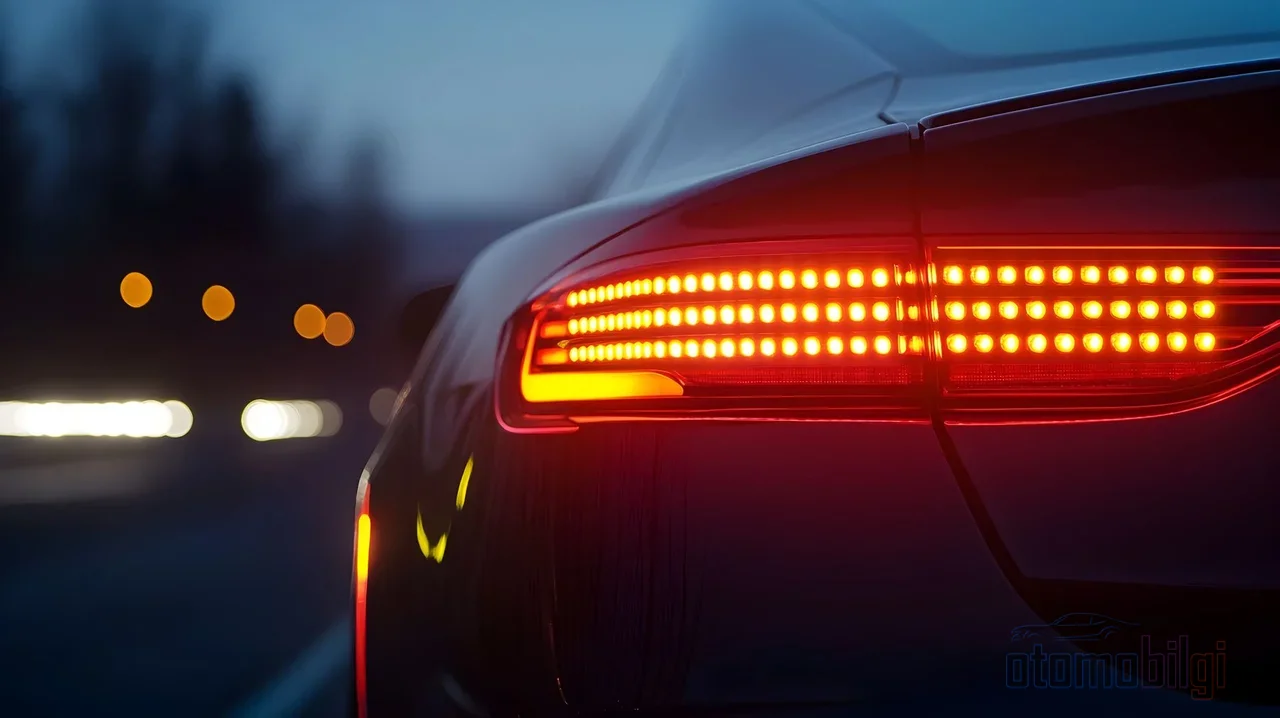
A dynamic turn signal, instead of a single bulb flashing at a constant rhythm, is a row of individually controllable LEDs that light up in sequence with slight delays under a microcontroller's command; this sequential illumination makes the light appear to sweep from the inside of the lamp toward the outside. In other words, what the driver behind you sees is not really a blink, but a directional movement of light. So how exactly is this sweeping effect produced, and why is it increasingly becoming standard? Let's take a look together.
Highlights
- Sequential signaling works with a microcontroller that manages an array of individually controllable LEDs.
- In classic hobby circuits, the 555 timer + 4017B pair is still the best-known combo.
- Daytime running lights became mandatory in Sweden in 1977; in the EU, they have been standard on new cars since February 2011.
- The typical light intensity range for DRLs is around 400 cd and above.
- Sequential designs first appeared in the luxury segment and have now spread across different price ranges.
What Is the Difference Between Standard Blinking and a Sweeping Signal?
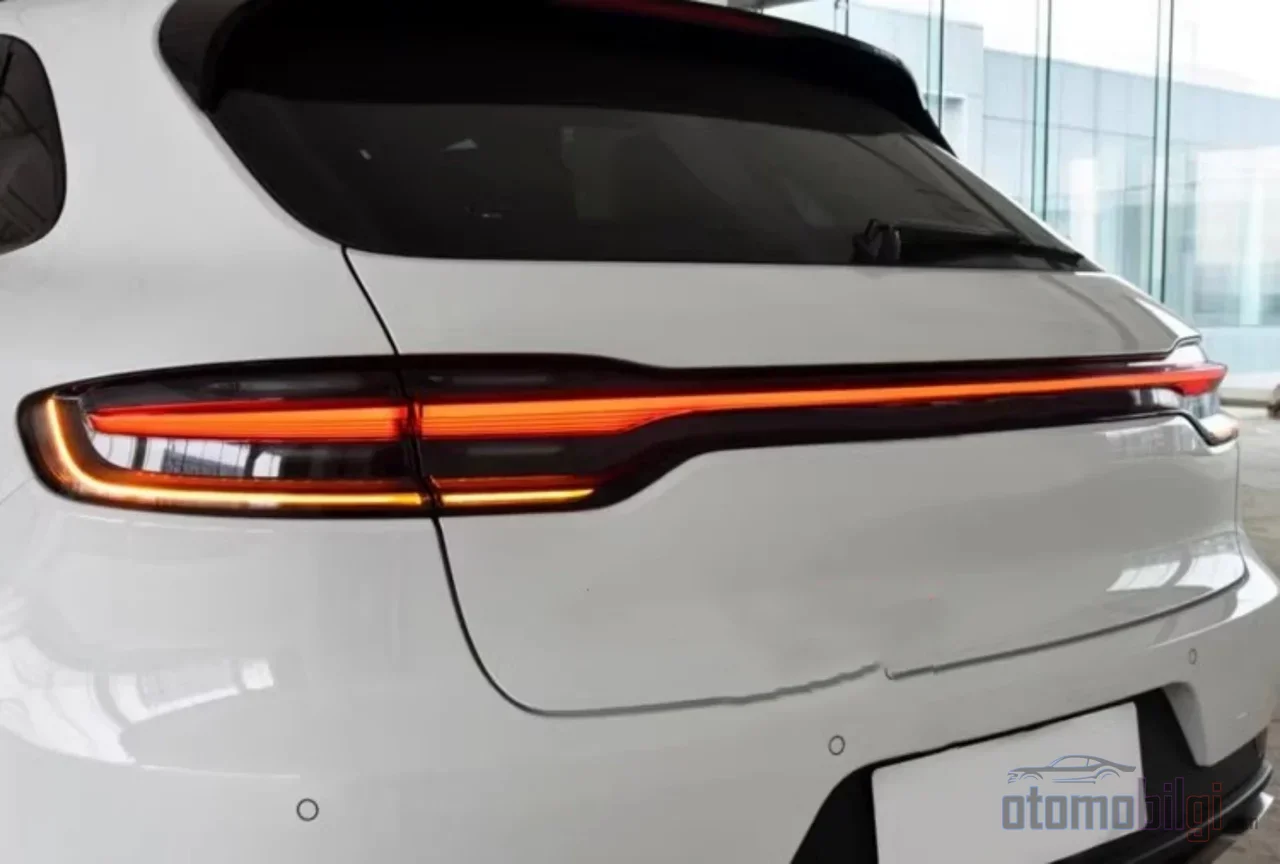
First, let's recall the classic system. A standard turn signal has a single bulb or a static group of LEDs; a flasher relay cuts and connects the circuit, making it blink at a constant rhythm. The entire lamp lights up at once and goes out at once. A simple, cheap solution that has been proven over generations.
Sequential, or dynamic, signaling, on the other hand, is based on a completely different architecture. Inside the lamp there is an array of individually addressable LEDs, and this array is managed by a microcontroller. Each LED lights up with a slight delay after its neighbor; the inner LED first, then the middle one, then the outer LED. With the signal going completely off, the cycle returns to the beginning. The result? Our eyes get the impression that the light is flowing from the inside of the lamp toward the outside. Automotive lighting manufacturers call this effect a flowing or sweeping light pattern.
Why has it become so widespread? Because a moving and directional light pattern is more attention-grabbing than a constant blink. In complex city traffic or in the rain, the driver behind you catches it more easily. But there is a price to pay: dozens of LEDs and complex electronics mean higher costs and a broader failure surface compared to a standard system. Moreover, since it is a new technology, the rules governing it are still not fully settled in some places; states and regions can impose additional regulations.
The Circuits That Electronically Produce the Sweeping Effect
Here's my favorite part of the whole thing: behind this animation there is truly elegant electronics. The 4017B integrated circuit, a classic among hobbyists who want to build their own sequential signal, is a clocked decade counter; it operates between 3 and 15 volts DC and has 10 short-circuit-resistant outputs. Inside it there is a five-stage Johnson counter; on the rising edge of each clock signal the counter increments, and exactly one of the outputs goes high while the other nine stay low. In other words, the selected output remains active for one full clock cycle. This is exactly how the light jump from LED to LED happens.
Generating a Clock with a 555 Timer
To provide a clock signal to the 4017B, the 555 timer circuit usually comes into play; it operates as a variable-frequency square wave generator and determines the scrolling speed. In a typical test circuit, the current measured is around 12.5 mA per LED at 9 volts; each output is limited to 100 mW and the entire package to 500 mW of dissipation. So these circuits are not toys, but they cannot handle the high currents a real automotive lamp would draw on their own. The typical observation on forums points in the same direction: the 4017 alone may be insufficient; a MOSFET or transistor stage is needed to drive the LEDs.
The Small Details That Determine Speed
There is a trick when building the circuit: if you want a continuously scrolling indicator, you need to connect the first unused output to the RESET pin. If you don't do this, instead of flowing continuously, the light makes a dotted, scanning movement. Even an accelerating scroll effect can be designed: in a 10-step sequence, if the first LED lights on steps 0-3, the second on 4-6, the third on 7-8, and the fourth on 9, it gives the impression of the display accelerating from left to right. A brilliant detail, isn't it?
The typical cycle of the sequential signal works like this: the inner LED lights up, then the middle LED, then the outer LED, and finally all three go out together. The circuit must be able to drive three LEDs at the same time - that's why the driver stage shouldn't be forgotten. There is also a classic problem on the vehicle side: some vehicle computers don't like the LED's low load and the flasher relay may not work properly; the solution is usually to add a load resistor.
Addressable LED Strips: The Modern Way
There is now a more common approach in the hobby world: addressable LED strips like WS2812B. These are digital strips containing both the LEDs and the driver chips; each LED can be controlled independently. With an Arduino or ATtiny85 and the FastLED library, you can write an animated signal pattern in minutes. The vehicle's signal line is connected to the circuit as a 12-volt trigger signal, and the animation starts when the turn signal is activated.
With non-addressable analog strips, the situation is different: all the LEDs connected to the strip respond to the control signal in the same way, so you can't light them up individually. On the power side, you also need to make a choice; 5-volt and 12-volt strips require different driver approaches, and for high-current strips, power MOSFETs or driver chips like the TLC5947 are used.
In modern vehicles, the picture is even more interesting. Current automotive lighting driver chips rely on a chained internal data bus called daisy-chain; the chips are connected to each other and data is transferred over a single line. This design reduces the number of wires but brings an engineering risk with it: a single chip failure in the chain can affect the rest of the chain. That's why manufacturers design fault tolerance very seriously.
Where Do Daytime Running Lights Fit in This Story?
The modern home of dynamic signals is often the daytime running light strips; so knowing the story of DRLs is half the job. The first step came from Scandinavia: Sweden in 1977 made daytime running lights mandatory on all new cars; Norway followed in 1986, Iceland in 1988, and Denmark in 1990. Canada introduced this requirement for all new vehicles produced or imported after January 1, 1990. In the European Union, daytime running lights have been standard on all new passenger cars and small commercial vehicles since February 2011; they are also mandatory for trucks and buses.
The US side is different: DRLs are legal but not mandatory. Even so, it is common practice in most vehicles for them to light up automatically when the ignition is switched on and to be rarely switchable off. According to the interpretation of the US regulator, a manufacturer may use any pair of front lamps other than parking lamps or fog lamps for the DRL function. The typical value for light intensity is around 400 candela or more; according to the current R148 regulation, the DRL minimum is also 400 cd. On the signaling side, too, the rules on color and behavior are clear: ECE R6 regulates turn indicators being amber, visibility angles, light intensity, and flash frequency.
Slip Speed and Brightness: The Balance of Perception and Safety
So why does the light sweep at exactly that speed? Here the matter touches perception science. The function of the signal is to convey your intention to the driver behind you as quickly and clearly as possible; but at the same time it must not cause glare. That is why brightness and direction rules have been meticulously defined: signals must be amber, must operate at a certain flash frequency, and their visibility angles are limited by regulation. The 400 cd base value for DRLs is also part of the same logic: a level that is visible enough but not dazzling.
The effect of motion on perception is still an active research topic. A 2026 vision science study examines how flicker affects speed perception in stimuli moving sideways and in depth; the perceptual foundation of dynamic signal design rests precisely on studies of this kind. There are also studies investigating the effect of dynamic signals on driving safety with full-width designs in vehicle taillights; it has even been suggested that the width of the taillights and the distance between the lights can affect the driver's speed perception. But let's be honest: we do not yet have definitive evidence that dynamic signals reduce accidents; this is still an area under investigation. On the motorcycle side, it is a known point that visibility increases when signals are placed away from the vehicle's centerline.
Are Sequential Signals Legal, and Can You Do It at Home?
Let me gather the most frequently asked questions. Well-designed aftermarket sequential signal kits are produced to comply with federal regulations; state laws can impose additional rules, but most drivers run into no problems. Even so, it is worth checking the rules in your region before installing them; white lights with a blue tint, especially above 6500 K, are illegal in most regions, and the red rear light requirement applies everywhere. One regulatory detail is also interesting: the regulations for trucks do not allow the turn signal lamp to be optically combined with a headlight or any other lighting device.
If you want to do it at home, you have two options: the classic 555 + 4017B combination or a WS2812B strip + Arduino/FastLED setup. The vehicle's signal line is connected to the circuit as a 12-volt trigger. Before starting, calculating the LED currents, the driver stage, and the load resistor requirement is half the job; the rest is patience and good soldering. My advice is to try it on a breadboard first - I don't like surprises when dealing with a car's electrical system.
Is It Worth It? Cost, Reliability and the Future
Let's make an honest comparison. The biggest asset of the standard signal is its simplicity: one bulb, one relay, decades of proven reliability and minimal cost. The sequential system, on the other hand, means dozens of LEDs, driver chips, and control electronics; in other words, it is more expensive and theoretically has more parts that could fail. On the other hand, the attention-grabbing nature of directional light movement is a real advantage, especially in heavy city traffic and bad weather conditions. Manufacturers see this too: while the sequential design first appeared in the luxury segment, today it shows up in vehicles across different price ranges.
My reading is this: the dynamic turn signal is one of the finest examples of lighting now being a technology built not just on seeing, but on communicating. Light no longer just shows the road; it tells the person behind you its intent through movement. And as technology transitions to what we call zonal architectures, lighting chips are also becoming smarter. I am certain that in the coming years we will see even faster and more elegant versions of these moving lights. Would you upgrade your vehicle to sequential signals if it were up to you? I would do it without a second thought.
Sources
- The Difference Between Standard and Sequential Turn Signals
- LED Chaser/Sequencer Circuits
- Sequential LED Turn Signals
- Sequential LED's (like the New Mustang's Turn Signals)
- The Most Complete Guide to Addressable LED Strip
- Mastering The Next-Generation of Automotive Lighting for Zonal Architectures
- Led strip turn signal
- The Story of Daytime Running Lights
- What are Daytime Running Lights?
- Interpretation ID: 07-004355as
- Daytime Running Lights: What Are They and Why You Need Them
- ECE Regulations 6, 7 and 91 Explained
- Part 2: ECE guidelines, Luminosity standards in R148
- The effect of flashing lights on speed perception for lateral and in-depth motion
- Dynamic measurements of speed and risk perception during driving