Are Laser Headlights Really Lasers? The Ground and Key Fob Secret
Share This Page
Let's answer briefly: No, laser headlights don't send laser directly onto the road. The small blue laser diodes inside the headlight strike the light onto a phosphorescent surface; this surface converts the light to yellow, and only then is the resulting white light projected onto the road. In other words, the laser's real job is to generate the light, not to send it into your eyes.
Highlights
- Laser headlights produce white light via blue diode + phosphor conversion
- In some systems, module efficiency 310 lm/W can exceed
- In BMWs, the laser range extends to up to 600 meters
- Laser headlights activate at speeds above 60 km/h
- Retrofit cost 2,000-5,000 USD can reach
How Do Laser Headlights Work? The Secret of Phosphor Conversion
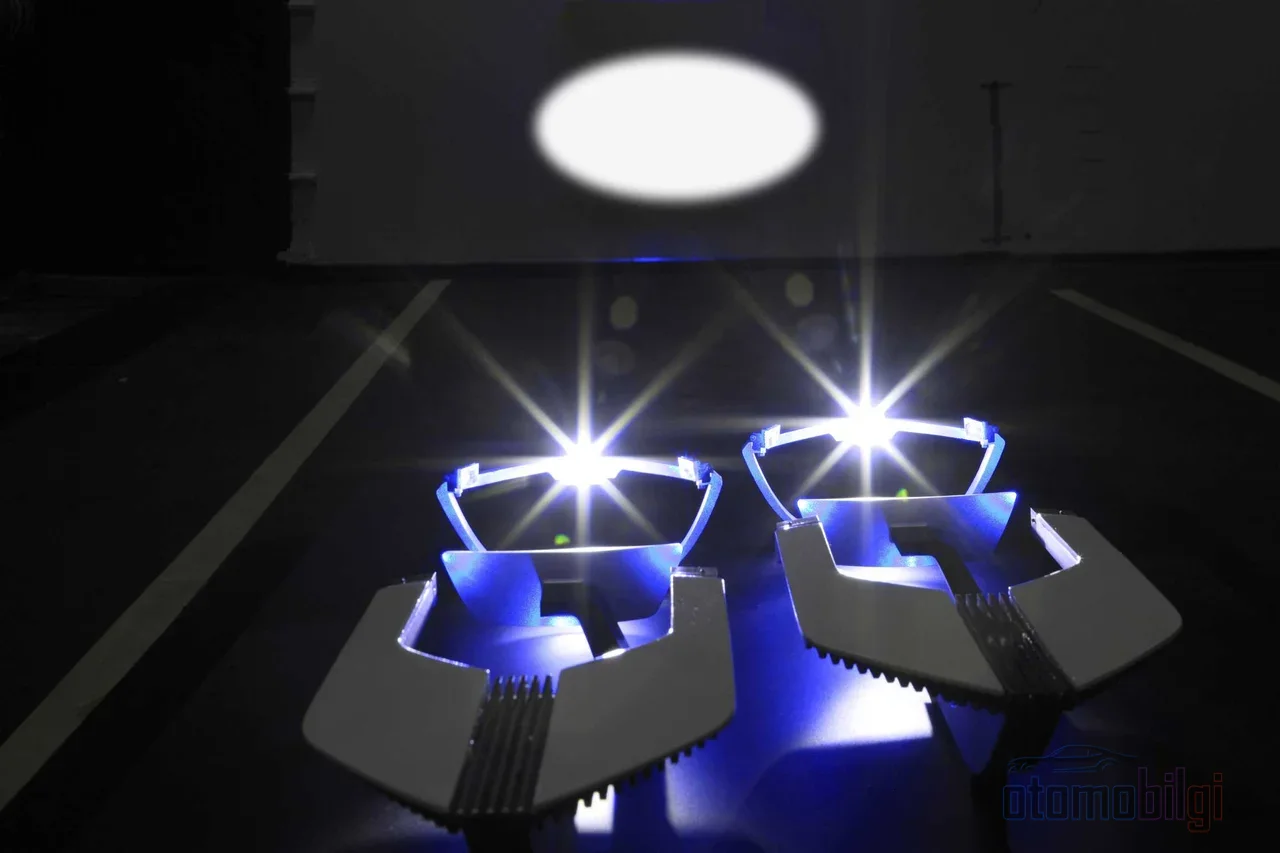
Don't imagine a laser pointer when thinking about the mechanism inside; think of a miniature light factory instead. A typical system has three small blue laser diodes, and their light is focused by mirrors onto a lens filled with phosphor. When the blue light excites the phosphor, the phosphor emits intense white light; this light falls onto the reflector and is diffused forward. It is this reflection and diffusion step that keeps the beam safe for the eyes of oncoming drivers.
The physics part is nice too: it's the same formula as in white LEDs. Blue emission plus yellow phosphor emission equals white light. Cerium-doped YAG, i.e. Ce:YAG powder, is typically used as the phosphor. Part of the blue light is absorbed by the yellow phosphor and converted into yellow light, and inside the module the blue and yellowish light combine to form white in the visible spectrum.
So why is that "surface" so important?
This is the little-discussed hero of the laser headlight. The silicone-based phosphor matrix used in LEDs is molded at around 150°C but lacks sufficient thermal resistance to the extreme temperature conditions in vehicles. That's why laser headlights have moved to more stable but much harder-to-produce materials: ceramics shaped at around 1200°C and single-crystal Ce:YAG produced at around 1500°C are among them.
A newer approach is glass-based phosphor: Ce:YAG powder is mixed into molten sodium glass, powdered, 750°C sintered at 350°C and annealed at . A Ce:YAG concentration of 40% by weight yielded the highest light efficiency; with discs 25 mm in diameter and 0.35 mm thick, an external quantum efficiency of about 70% was achieved. In 42-day thermal aging tests conducted in the 150-450°C range, this glass phosphor proved significantly more resistant than the silicone-based one in terms of lumen loss, color shift, and efficiency loss. The resulting module is impressive: 6 W optical output, 1860 lm flux, 4100 K color temperature and 310 lm/W efficiency - about twice that of the most efficient white LEDs on the market.
What Is the Physical Difference Between a Laser Diode and an LED?
Laser diode light is consistent, meaning it emits coherent, unidirectional light. An LED, on the other hand, scatters its light in every direction. This directionality is the laser's greatest asset: because it can concentrate light into a very narrow area, you can achieve a much more intense beam from a much smaller source. Laser light can also have a very narrow bandwidth; the fundamental differences between it and LED are already defined in terms of bandwidth and coherence. Diode laser systems stand out in applications requiring high flux and directionality where LEDs fall short.
But here's an interesting aspect: if you look at the pre-conversion measurement, laser diode lighting is 30-40% less efficient than LED lighting in most uses in terms of lumens/watt. This doesn't contradict the 310 lm/W module efficiency above; the difference stems from the measurement point. Measured per diode, the laser falls behind, but when looking at the complete phosphor-converted module, it comes out ahead. So when answering the question, you need to know what you're measuring - one of the classic lessons of engineering.
There's a gain on the energy consumption side too: current laser headlight models use about half the energy of LED headlights. Early on, it was claimed that laser headlights could be around 1000 times brighter than LEDs; since this claim was never backed by a proven measurement, it shouldn't be taken as a definitive figure. But thanks to the lower divergence of laser-sourced light, the headlight itself can be designed much smaller, which is a real advantage and gives automotive designers flexibility.
Range and Matrix LED: When Do Laser Headlights Kick In?
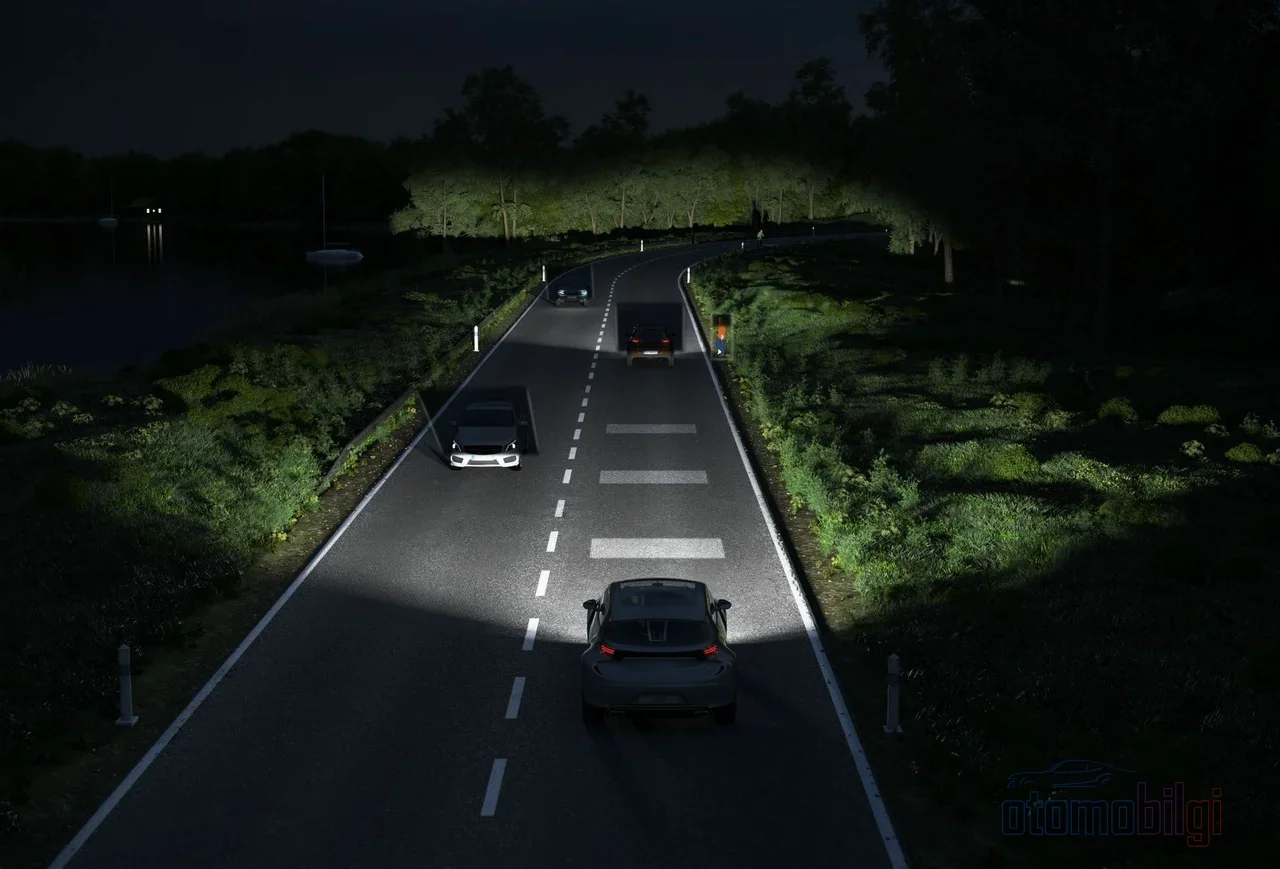
In practice, laser headlights are a long-range layer added on top of the LED system in most vehicles. In BMWs and Audis, the speed threshold at which laser headlights engage is 60 km/h; below this speed, the headlights operate as matrix LED. So in city driving, you're actually not using the laser at all - once you hit the highway, the system activates and the high beam range extends up to 600 meters . On the Matrix LED side, the real strength is adaptive functions, while on the Laserlight side, the real strength is long-range visibility. The two can be thought of as complementary layers, not rivals.
| Feature | Matrix LED | Laser Headlight |
|---|---|---|
| Engagement | At all speeds | Above 60 km/h |
| High beam range | Standard LED level | Up to 600 meters |
| Real strength | Adaptive functions | Long-range visibility |
| Light source | LED | Laser diode + phosphor |
Mercedes, Audi and BMW in the market for this technology
BMW and Audi had raced to be the first to enter the market in laser light technology; Audi first showcased the technology at the 2014 CES. For example, BMW i8 Concept claims about the safety of laser headlights were also raised at that time: it was emphasized that when used in vehicle lighting, the intensity posed no risk to people, animals, or nature. On the Porsche side, the difference within the matrix LED family fundamentally comes down to resolution and feature granularity. In short, every manufacturer sells the same physics in different packages; in some applications, the laser headlight even serves essentially as an additional high beam function with laser diodes added to active LEDs.
Safety and Regulation: Who Is Protecting Your Eyes?
I think this is the most frequently asked question: "Can a laser headlight injure my eyes?" The answer is no, because the light is never sent onto the road directly as a laser. Phosphor conversion followed by diffusion transforms the laser's sharp energy into a safe, widespread beam. Moreover, the systems have fail-safe locks that cut off the laser diode if the phosphor is damaged, and laser headlights must meet the IEC 60825-1 laser safety classification. In other words, even at the moment of a single failure, the diode shuts itself down.
On the regulation side, there is an interesting story. In the US, the federal rule for many years required headlights to be only a high beam/low beam pair, and this effectively prevented laser headlights from becoming widespread there. February 22, 2022 With the rule change published on that date, this barrier was softened by updating the lighting standard to allow the certification of adaptive high beam (ADB) headlights. Nevertheless, regulatory restrictions limiting the performance advantage and high replacement part costs are cited among the reasons BMW has phased out its laser headlights.
Why Doesn't Every Car Have Laser Headlights?
A logical question: twice the efficiency, 600 meters of range, small in size... Where are these headlights? The answer is mostly your wallet. High costs slow mass adoption initially; significant R&D investment and expensive components are involved. The manufacturing cost is so high that it directly reflects in the vehicle's price. Just replacing the bulb doesn't work either: a true laser headlight retrofit can exceed 2,000-5,000 USD because the entire headlight assembly has to be replaced.
Market size forecasts point to rapid growth; the figures from different research firms vary quite a bit from each other because their definitions and scopes differ, but the direction is the same: growth. Still, the laser headlight today largely lives in the luxury segment and usually on the most expensive lines of option lists. For it to reach mass-market vehicles, the cost curve needs to break - and developments on the phosphor material side are precisely preparing for that breakthrough.
FAQs: Eyes, LED, and Thermal Camera
Let's quickly wrap up a few questions. When we talk about the LED difference: laser diode-sourced light diverges less; the intensity and range advantage kicks in above 60 km/h. When we talk about eye safety: the beam formed after phosphor conversion and diffusion is not a direct laser. What about its relation to night vision? While the headlights illuminate the road, thermal night vision systems catch danger before the human eye does: they detect the heat of a pedestrian or animal; Cadillac's system is said to detect heat signatures about 100 meters ahead. Passive night vision systems detect heat but cannot see inanimate objects - which is why the headlight's job and the thermal camera's job are not alternatives but complements to each other.
So Is a Laser Headlight Really a Laser? Conclusion
Yes and no. What produces the light really is a laser diode; but the light that reaches you is converted, diffused white light that has passed through a phosphor surface. The key word is exactly this conversion: when the laser's intensity and directionality combine with the elegance of the phosphor, the result is a beam that is both compact, long-range, and safe for the eyes. As for the answer to why it isn't in every car - it lies not in physics but in cost and regulations. In my opinion, as a technology, the brightest era of laser headlights has not yet arrived - as materials science advances, these headlights shrinking and getting cheaper is more than likely. If it were you, would you pull that money out of your pocket for that extra range? I probably would, but let's not tell anyone.
Sources
- Automotive Lighting: Laser headlight module uses stable, easy-to-manufacture glass phosphor - Laser Focus World
- An advanced laser headlight module employing highly... - Optica
- Laser Headlights Have Drivers Seeing the Road in a Whole New Light - Konica Minolta Sensing
- What Are Laser Headlights? - Capital One Auto Navigator
- Halogen v LED v matrix LED v laser: Headlights compared - CarExpert
- Laserlight vs Matrix LED: BMW's 2026 Lighting Upgrades - BMW of Anchorage
- Federal Motor Vehicle Safety Standards; Lamps, Reflective Devices... (ADB) - Federal Register
- Laser Headlight Market Report - Market Research Future
- Automotive Laser Headlight Market - Coherent Market Insights
- 2026 Best Headlight Guide: LED vs HID vs Laser - Carneon Lighting
- How Laser Diodes Are Enhancing Energy-Efficient Lighting - Arroyo Instruments
- Laser diode vs LED: know the difference - Gentec-EO
- Outshining LEDs: Diode Lasers Deliver Intensity - Photonics.com
- What is Cadillac Night Vision? - Turan Foley Cadillac