How Does the Automatic High Beam Assistant Make the Decision by Looking at the Camera?
Share This Page
The automatic high beam assistant works with a camera mounted on the upper part of the windshield and a control unit that processes data from light sensors: the moment it detects the headlights of an oncoming vehicle or the taillights of the vehicle ahead, it switches off the high beams, and turns them back on when the road clears and it remains dark enough. In other words, your car acts like a little eye that constantly turns lights on and off on your behalf on the night road. So what exactly is this eye looking at, and how does it make its decision? Let's take a look inside.
Highlights
- The system consists of three parts: a front camera, ambient light sensors, and a control unit that makes the decision.
- AHB only switches on/off; the systems that shape the light, matrix and AFS, are a separate technology.
- Speed thresholds vary from model to model: in some cars it engages above 34 km/h and switches off when speed drops below that.
- Fog, reflective signs, and pedestrians whose lights are not visible are the system's biggest weaknesses.
- After a windshield replacement or bumper repair, the camera must be recalibrated.
How the Automatic High Beam Assistant Works: Three Basic Parts
You can think of the system like a team: an eye, a sense, and a brain. The eye is the front camera placed behind the windshield, right next to the interior rearview mirror. This camera scans the headlights of oncoming vehicles and the taillights of vehicles ahead. The sense is the sensors that measure ambient light; they distinguish between a brightly lit city street and a pitch-black rural road. The brain is the control unit: it feeds the camera and sensors and makes decisions in real time.
Why is such a system needed? Because high beams significantly widen your field of vision in the dark and allow you to notice pedestrians earlier. But nobody wants to blind oncoming drivers. The assistant's sole purpose is to solve this dilemma: high beams as much as possible, low beams instantly when needed. Many drivers either forget to turn on the high beams at all or don't take the risk because they are unsure about oncoming traffic; the whole reason the system exists is to fill this gap in usage.
What Does the Camera See, and How Does the Algorithm Make Its Decision?
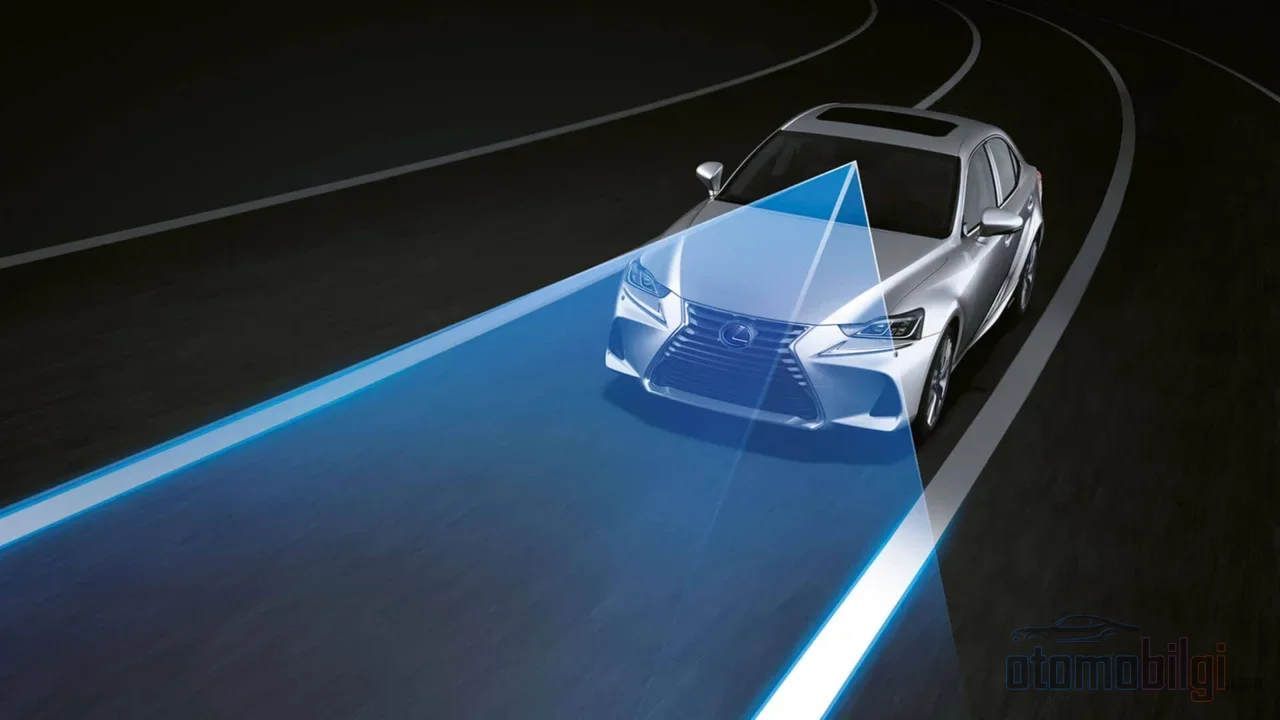
The night view is not as rich as daytime. At night, the camera's most reliable clues are lights: the two headlights of an oncoming vehicle, the red taillights of the vehicle ahead, and the streetlights along the road. That's why most of the engineering work on nighttime vehicle detection is light-focused; vehicles are classified using the color, size, symmetry, and on-screen position of the rear lights. In fact, brake light detection is even treated as a harder problem than vehicle detection alone, because distinguishing whether a vehicle is braking is a separate image processing task.
Modern systems also involve deep neural networks. AI-based detection processes the image frames coming from the camera and determines where other vehicles are; the goal is both to avoid dazzling them and to make the road visible in the dark. Even one of the early patents explains this logic clearly: the system receives numerous images representing video frames of the external scene and makes its decision by processing them. In other words, the principle has been the same since the 2010s; only the intelligence doing the processing keeps getting smarter.
But the other side of the coin is also interesting: the camera relies heavily on lights. Could a pair of street lamps standing away from the road resemble an oncoming vehicle? How are roadside barrier reflectors or a distant reflective sign distinguished in the camera's eyes? This is precisely one of the open questions engineers still dwell on: whether moving lights (belonging to vehicles) are separated from static lights (fixed to the road) by their difference in relative motion. It is hard to say with certainty that some systems make this distinction, because manufacturers rarely share algorithm details.
Is AHB the Same Thing as Adaptive Headlights? The Confusing Difference
Let's touch on the trap most people fall into here, because even dealers sometimes confuse it. Automatic High Beam (AHB, High Beam Assist) does exactly two things: it turns the high beam on and off. There is no in-between state; the light is either on or off. Adaptive systems, on the other hand, are in a different league. Adaptive High Beam also known as ADB (Adaptive Driving Beam) systems, instead of completely turning off the high beam when they detect other vehicles, shape the light beam: they dim the portion falling on the oncoming vehicle while the rest of the road remains in high beam brightness. AFS is more concerned with direction; it turns the light into the corner based on steering angle, yaw movement, and speed.
If we put the difference into a table, it becomes clear:
| System | What it does | Light control |
|---|---|---|
| AHB / High Beam Assist | Turns the high beam on and off | Binary: on or off |
| ADB / matrix | Provides high beam, detects vehicles | Beam is shaped, oncoming vehicle is dimmed |
| AFS | Directs the light into the corner when turning | Directional; on/off is not the main function |
This distinction even has an official counterpart: in the US, NHTSA opened the road to ADB systems with its 2022 regulation and defined them as superior to classic automatic high beams; because ADB, while not as much as low beams, can provide more illumination than auto hi-beam. In other words, the glare problem is solved by switching off in classic AHB, and by shaping in ADB.
Decision Thresholds: At How Many Kilometers Does the System Activate, and Why Does It Delay?
The system does not decide everything instantly; speed thresholds and conditions vary from model to model. Let's look at a few concrete examples:
- Toyota Tacoma: activates at approximately 34 km/h and above, 27 km/h and shuts off when the speed drops below.
- Mercedes-Benz: speed 30 km/h and if no other road user is detected, the high beams turn on; a drop in speed, the detection of a road user, or sufficient street lighting switches it back to low beam.
- Honda: at night, above 40 km/h it switches depending on conditions.
- Ford Bronco: 40 km/h it operates above and makes instant decisions about turning the high beams on and off.
As for why the thresholds differ, manufacturers use different speed definitions and activation/deactivation distinctions; some write the activation speed into the manual, others the deactivation speed. So the figures don't contradict each other, they just measure different points. There is also a nice detail about the switching logic: in systems like Mercedes, after the oncoming vehicle passes, if the road is both sufficiently dark and empty, it returns to high beam; at lower speeds it stays on automatic low beam. In the city, where speeds are low, high beams aren't needed anyway.
The usage side is simple but rule-bound. In Chevy IntelliBeam, the engine must be running, the headlights on, and the switch in the AUTO position. In BMW, you set the headlight switch to automatic and flick the turn signal stalk. And you can disable it at any moment: pushing or pulling the high beam stalk temporarily takes manual control back to low beam - so the final decision is always yours.
Edge Cases That Surprise the System
Here comes the most fun part of engineering: when everything works fine, nobody talks about the system's weaknesses, but look at the manuals and you encounter officially admitted limitations. Manufacturers state these conditions openly:
- Unlit road users: the camera cannot see a pedestrian without light on them; cyclists with little light are at the same risk.
- Damaged or hidden lamps: if the oncoming vehicle's headlight is broken or hidden behind another object, the system may not detect it.
- Fog and rain: light can reflect off fog or raindrops back to the driver; heavy rain, snow, and a dirty windshield seriously restrict the camera's view.
- Reflective surfaces: reflections from road barrier reflectors and bright signs can confuse the camera.
- Slow startup: some systems may not work at all for the first 15 seconds after the vehicle is started; moreover, the manuals say the system may not always turn off the high beams every time.
The most interesting admission comes from the camera logic: the system may rarely fail to recognize users who have their own light, or detect them too late. In other words, to see a low-light road user, the camera waits for exactly the thing it needs from them - light. This isn't a software bug, it's the nature of camera-based detection. If you think about why systems like night vision turn to thermal cameras, the logic makes sense: light isn't required in a thermal image.
Calibration, Override, and the System's Real Value
The camera is mounted behind the windshield at a specific angle, meaning its physical position is part of the system's math. A windshield replacement, a front bumper collision, or suspension repair can disturb this angle; then recalibration is a must. This is one of the warnings the manuals repeat most often: a camera with drifted calibration sees the world slightly shifted, and its decisions are too.
So are these systems really worth it? The answer from safety organizations is interesting: there is a serious underuse problem with high beam usage, and drivers don't turn on the high beams at all because they can't be sure about oncoming vehicles. The automatic assistant eliminates exactly this psychological threshold; even if you forget, the system turns it on. Moreover, the regulatory side knows how critical the delay is: ADB rules require the headlights to react very quickly after detecting a vehicle. Those few hundred milliseconds between detection and reaction - that is, the system's delay - is a regulated parameter even on paper.
Despite this, some drivers prefer to turn the system off; rare false alerts and unnecessary switches can shake the user's trust. In my opinion the healthiest perspective is this: think of the assistant as a copilot, not like an airplane's autopilot. Take control on a foggy night or a highway full of reflective signs, and let it watch in your place the rest of the time. The final word is still yours - right at the end of your arm.
On your next night drive, when you see that blue high beam icon on the instrument panel turn off and on by itself, you'll now know what's happening: a camera, a few light sensors, and a decision algorithm running continuously in the background, working in place of your eyes. Pretty cool, right? I think absolutely.
Sources
- High Beam Assist | Innovation - Nissan Global
- Auto High-Beam | Honda Technology
- What Are Automatic High Beams and How Do They Work? - Car ADAS
- What is Mercedes-Benz Adaptive Highbeam Assist?
- Federal Register: FMVSS Lamps, Reflective Devices - Adaptive Driving Beam (NHTSA, 2022)
- Adaptive Headlights - Ansys
- Automatic High Beams (AHB) Complete Operating Guide - 4G Tacoma Forum
- Limitations of High Beam Assist - Kia EV9 Manual
- High Beam Assist Malfunction and Limitations - Genesis 2026
- How to Use IntelliBeam Headlamps - Chevrolet
- BMW USA - Automatic High Beam Assistant Activation
- DNN-Based Perception for Automatic High Beam Control - NVIDIA Developer Blog
- Intelligent headlight control using camera sensors - Patent US8493446B2
- Robust visual detection of brake-lights in front (PMC, 2023)
- How do automatic high-beam headlights work on cars? - AI Stack Exchange
- Headlights - IIHS
- High beam headlamp use rates - Reagan et al., 2017