Does the AI Inside Your Car Really Understand You?
Share This Page
In-car AI assistants today can genuinely understand natural language, plan your route, and recognize you - but much of the promise of controlling everything from the air conditioning to navigation still remains just that: a promise. Mercedes MBUX and BMW have taken concrete steps; at Tesla, the gap between the chatbot and vehicle controls is still noticeable.
Highlights
- Mercedes added to MBUX January 13, 2025 a Google Cloud-based conversational search; 250 million place details and more than 100 million map updates are used daily.
- BMW added Amazon Alexa technology to its assistant January 5, 2026.
- In 2026, more than 65% of new passenger cars are expected to carry AI-powered cockpits; in 2023 that figure was around ~41%.
- At Tesla, Grok can chat, but users report that most on-screen functions cannot be operated through it.
- Driver monitoring systems can track fatigue, phone use, and even vital signs.
Is the assistant in your car really talking, or just waiting for commands?
If you remember the voice commands of older generations, you know the situation: you had to say a complete, memorized phrase. Something like "Navigation, save address." Miss a single word, and the system wasn't even listening. Today the picture has changed; but how much it has changed is debatable.
The modern architecture consists of three layers: speech recognition, a large language model running in the background (that is, ChatGPT-style generative AI), and live data streams. Mercedes has implemented this in the most concrete way. In the new CLA, the assistant uses ChatGPT-4o, Microsoft Bing search, and Google Cloud's Automotive AI Agent layer together. So you don't say "Turn on the AC"; you ask "Is there a well-rated Mexican restaurant around here, and is it going to rain?" and the system really answers. Heated seats, traffic, weather, even random trivia questions work when tried - provided the car's data connection is good. If the internet is weak, the magic collapses too, let's add that.
On the Mercedes side, there is also deep integration: MBUX Virtual Assistant wakes up with "Hey Mercedes," built on the fourth-generation MBUX and the MB.OS operating system. With the concept called Zero-Layer, relevant content already appears in the top menu; you don't have to dig five levels deep in the menus. Thanks to the Google partnership, the system can hold multi-turn conversations and remembers the context. On your first request you can say "the second one there," and the system remembers what you're talking about. This is not even comparable to the in-car voice systems of three years ago.
But there is another side to the coin. Even Mercedes' own dealer materials point out an important detail: the product names used in marketing are not the official feature names, and the approved wording is "AI capabilities from Microsoft and Google." In other words, there is a difference between what they actually use under the hood and the name they sell you. A small detail, but a good thermometer for measuring the distance between marketing and reality.
Does BMW's assistant learn, or does it just listen?
On the BMW side Intelligent Personal Assistant It works with "Hey BMW". It explains features, offers personalized recommendations, and reportedly learns driver habits. The real big move January 5, 2026 when BMW announced that Amazon Alexa technology had been added to the assistant. Now consecutive requests can be linked together like a human conversation. Being able to say "How long will it take to get there?" after "Where are we going?" is a genuine turning point.
Now let's be realistic. User experiences show that not everything is rosy. Some BMW owners complain that the assistant frequently activates itself without anyone speaking. One user put it even more bluntly: "I rarely use it; I don't know what it does beyond telling me I'm cold, bored, or making a joke." To me, that sentence sums up the whole article: The technology exists inside the box, but people don't know what to use it for. Another user also highlights the language support issue: The assistant doesn't work in Swedish, and you have to change the entire system language. In other words, the linguistic limits of the natural language promise are still harsh.
Tesla has Grok - so can Grok drive your car?
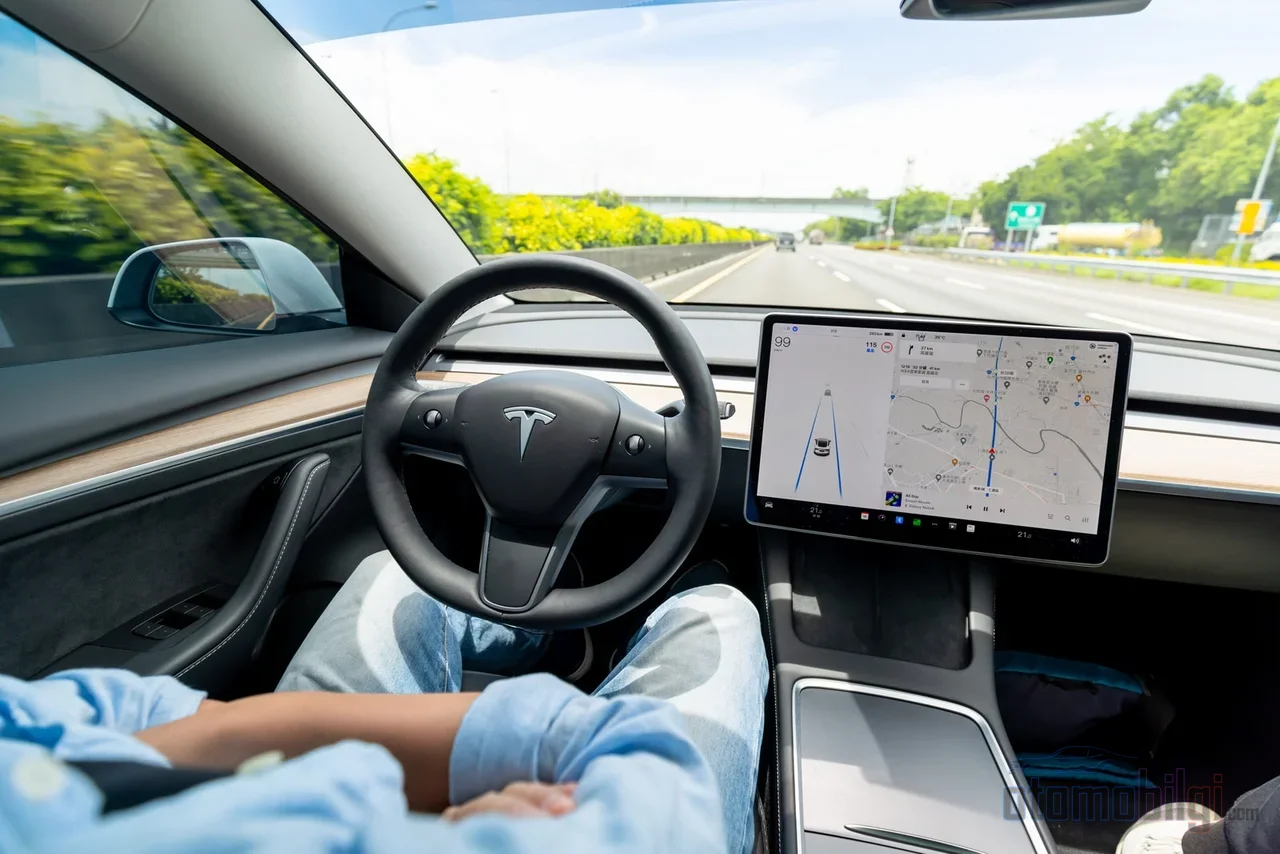
Tesla's path is a bit different. The company's classic voice command system starts by fully pressing the microphone button on the steering wheel and interprets the request with its natural language processor. So the basic system does its job. But what's really intriguing is the Grok integration that came with the 2026 Software Update 2026.26.6.5.
Grok is no longer just a chatbot, fine. But user reports are brutal: Grok and voice command can't operate most of the on-screen functions. In other words, what happens when you say "Hey Grok, turn off the seat heating" doesn't resemble what happens in a Mercedes. Grok can chat with you, answer your questions; but it can't control the car. To me, this is the biggest gap in in-car AI: Conversational intelligence and vehicle control intelligence are still two separate worlds. Manufacturers are trying to combine them, but nobody has solved it perfectly.
The cabin is watching you: How far have driver monitoring systems come?
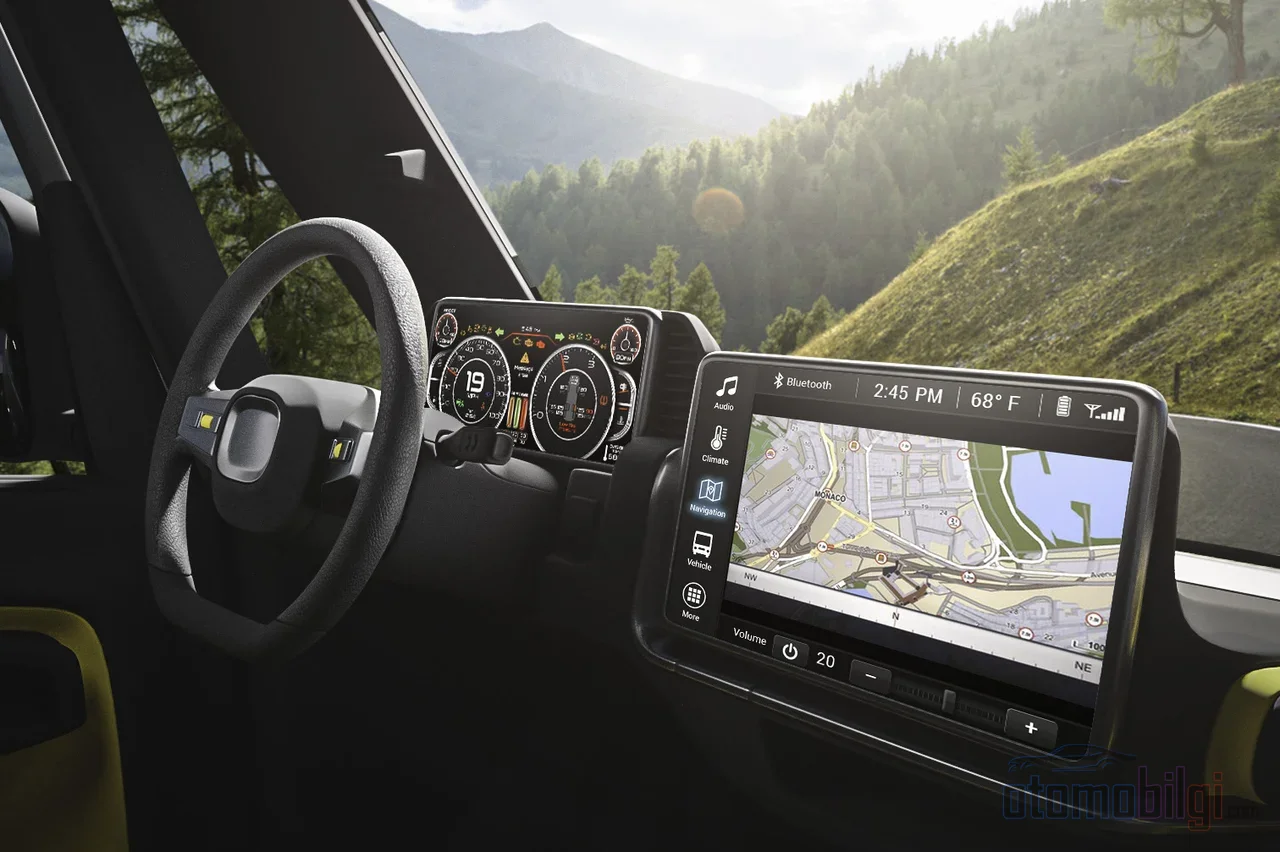
It's not just talking assistants; the cabin now also listens to you, and even watches you. Driver monitoring systems (DMS/IMS) can track the driver's attention, fatigue, inattentiveness, phone use, seat occupancy, seatbelt status, and even vital signs using cameras, sensors, and software. Thanks to infrared (NIR) sensors, they can read facial expressions day and night without distinction. It's said that some systems can even do lip reading and facial analysis.
The good side of this technology is real: Catching the moment a tired driver's eyes close can save lives. The manufacturer opinion reported by IEEE Spectrum points in the same direction - adding voice interfaces to vehicles increases safety and reduces stress. Handling a task by speaking instead of searching for a button on the steering wheel keeps attention on the road.
But the privacy side is at least as important. If cabin cameras can collect facial expressions, eye movements, even vital data, where is this data going? Who is storing it, who is analyzing it? The answers to these questions are not yet clear, and it has become one of the hottest topics of debate in the industry. A system that acts like a partner inside the car also carrying the potential to act like a surveillance device is, in my opinion, the most disturbing irony of 2026.
The market is growing - but why are the figures so different?
When you look at the size of the in-vehicle AI market, confusion is completely normal. One estimate says the in-vehicle AI assistant market will rise from 5.12 billion dollars in 2026 to 19.84 billion dollars in 2034. Another estimate measures the same market as much smaller and puts the growth rate at a record level of 45.21%. Why the difference? Because the market definitions differ: while one definition counts only voice assistant software, the other covers all in-cabin hardware and software. The smart cockpit market, on the other hand, is a separate pie expected to grow on its own from about 34.8 billion dollars in 2026 to 65.2 billion dollars in 2031. expected to emerge as a separate pie.
Rather than debating the exact value of the figures, it's better to read the direction: by every definition, the market is growing rapidly, and according to one estimate, more than 65% of new passenger cars will carry an AI-powered cockpit in 2026. The fact that Mercedes is rolling out ChatGPT-based natural language capability for MBUX globally via wireless (over-the-air) updates is also a sign: this technology is no longer the privilege of the luxury segment, but a software layer delivered to everyone via OTA.
What remains between the promise and reality?
Let's clarify the difference between the picture presented by manufacturers and the picture experienced by drivers:
| Promise | Today's reality |
|---|---|
| An assistant that fully understands natural language | Largely works in Mercedes and BMW; dependent on language support and data connectivity |
| The assistant controls everything in the car | In Tesla, Grok cannot run most of the screen functions; control and conversation are separate |
| A cabin that truly personalizes | In the CLA, the driver profile can be loaded with facial recognition; recommendations are still limited |
| The assistant answers every question | There are knowledge limits; according to users, assistants often remain in a narrow area |
| Driver monitoring is only for safety | With facial analysis and lip-reading capabilities, the privacy debate is growing |
The skeptics' voices never stop either. A questioning comment circulating on social media was this: when the "AI" label is added to voice control in 2026, are they trying to make people think the system has human-like powers? There is a similar theme on the academic side; the exaggerated AI claims at events like CES have been examined, and the distance between marketing and reality has been addressed separately. Even the headline of an industry publication was frighteningly clear: "The automotive AI assistant knows nothing."
So what's my verdict? Mercedes' system in the CLA is being described as the first system in the West that can rival the assistants in Chinese electric cars, and the experience is genuinely impressive. BMW's Alexa move is a sensible acceleration. But today's answer to the phrase "the car understands me" is this: The car understands your conversation, and it usually understands your need; but saying it understands you still has a way to go. And along that road, the privacy signs have yet to be put up.
What do you think - is "Hey Mercedes" cooler, or are these assistant things still slower than just handling it by phone? Let's meet in the comments.
Sources
- AI-powered conversational search within navigation systems
- 2026 Mercedes-Benz CLA AI Voice Assistant and 4th-Generation MBUX
- I Tried Mercedes' New In-Car AI Assistant
- BMW Intelligent Personal Assistant expanded to include Amazon Alexa technology
- How do I use Intelligent Personal Assistant in my vehicle
- Voice Commands | Tesla Support
- Voice Commands | Tesla Owner's Manual Model 3
- In-Cabin Monitoring System for Autonomous Vehicles
- Interior Sensing Systems
- Automakers Race to Add Voice AI to Connected Vehicles
- Your Automotive AI Assistant Doesn't Know Anything
- In-Vehicle AI Assistants Market
- In-Cabin Automotive AI Market
- Automotive Smart Cockpit Market
- Car Smart Cockpit Market Research Report 2034
- AI agents arrive in the cabin
- The State of AI 2026: Exaggerated Promises