Does the Intelligent Speed Assistant (ISA) Enforce Compliance with Speed Limits?
Share This Page
No, Intelligent Speed Assistance (ISA) does not force you to comply with the speed limit. The system warns you as you approach the limit, and in some modes gently restricts acceleration; but the final word behind the wheel is always yours. You can always override the system by pressing the pedal harder, tapping the relevant button, or temporarily switching it off from the menu - and European legislation explicitly requires this.
Highlights
- ISA is mandatory in new vehicle types from July 6, 2022, and in all new cars, vans, trucks, and buses registered in the European Union from July 1, 2024.
- Every ISA system is legally required to be overridable; vehicle speed remains under the driver's control in all cases.
- Every new ISA system must pass a 400 km road test and demonstrate accuracy above 90% in reading speed limits.
- Widespread use could reduce serious road accidents by up to 30% and fatalities by up to 20%.
- There are also side benefits such as up to an 11% improvement in fuel economy and up to an 8% reduction in exhaust emissions.
It does sound a bit like "my car is managing me," doesn't it? But once you get into it, you realize ISA is more like a cautious road companion sitting beside you: whispering "hey, it says 50 here" - and even if you don't listen, it doesn't go and take the wheel from your hands. Let's take a look at how this system works, how intrusive it really is, and exactly where control remains.
How ISA Works: Camera, Map, and the Combination of Both
ISA's job looks simple: understanding which speed limit the vehicle is currently on. There are three ways to do this. The first is for the camera on the windshield to read the speed signs along the road. The second is to use digital speed maps with GPS data - the vehicle knows where it is and pulls the limit for that stretch of road from the map. The third is to combine both.
So why isn't the camera alone enough? Here's the interesting part: Up to 60% of speed limits in Europe are not written on signs; they are determined implicitly based on the type of road. So no matter how sharp the camera is, on a stretch without signs it cannot answer the question "what's the limit here?" on its own. That's why map data becomes almost inevitable. Systems that combine camera, digital map, and electronic horizon give the most accurate results but also have the most complex architecture; which is why they are generally seen in upper-segment vehicles.
To use an analogy: the camera is the eye reading the signs on the road, and the map is the navigation in your pocket. A traveler using both knows where they are and what the limit is, even when the sign has faded in the rain or frozen over in the snow.
Three Levels of Ink: Does It Warn, or Does It Limit?
ISAs are not all the same; how intrusive they are is what matters. There are three levels of operation:
- Advisory mode: Only shows the current limit on the display and gives an audible or visual warning if you exceed it. That's all - the rest is up to you.
- Voluntary mode: It warns you and, if you wish, sets a speed limit. If you hit the limit, you can still accelerate by pressing the pedal harder; in return, you get a new warning.
- Automatic mode: It automatically restricts the vehicle's maximum speed according to the legal limit. But be careful: even in automatic mode, the driver can override the system at will or in an emergency.
The critical point here is this: even automatic mode does not apply the brakes. When the system kicks in, it restricts acceleration to keep you from exceeding the speed limit; in other words, it gently tells the throttle "not enough". You can think of it as a reset cruise control - it doesn't touch the steering wheel for you, doesn't brake, it just pins the speed to a ceiling. In short: the car does not replace the driver; it merely gently slows down excessive acceleration.
Mandatory in Europe: What Has Changed Since 2022?
The story of ISA was formalized with the European Union's General Safety Regulation of 2019. The regulation added ISA to the list of mandatory safety equipment. You can read the timeline as follows: From July 6, 2022 onward, new vehicle types, and from July 1, 2024 onward, all new cars, vans, trucks and buses registered come with ISA. This means every new vehicle sold in the EU market now carries a system that signals the speed limit via camera or map.
Mandation alone doesn't count as enough, of course. The EU requires every new ISA system to pass a 400 km road test and demonstrate accuracy above 90% in reading speed limits. So there's no "we installed a camera, done and dusted" approach that passes the exam; systems are measured in the field. And there is an ambitious expectation: if ISA becomes widespread, a reduction of up to 30% in serious road accidents and up to 20% in fatalities is projected. Properly functioning ISA systems can also earn manufacturers an extra 20 safety points in Euro NCAP tests - that's one reason manufacturers put so much effort into this.
On the US side, the picture is somewhat younger. A model legislation regulating ISA for states was approved in January 2026; it covers ISA devices to be installed in the vehicles of drivers convicted especially of severe speeding or dangerous driving, compliance periods, and data privacy. So in the US, ISA is not yet standard in every new vehicle; it is rather drawn as a compliance tool aimed at specific drivers.
What Happens If the Driver Resists? Overriding and Turning Off the System
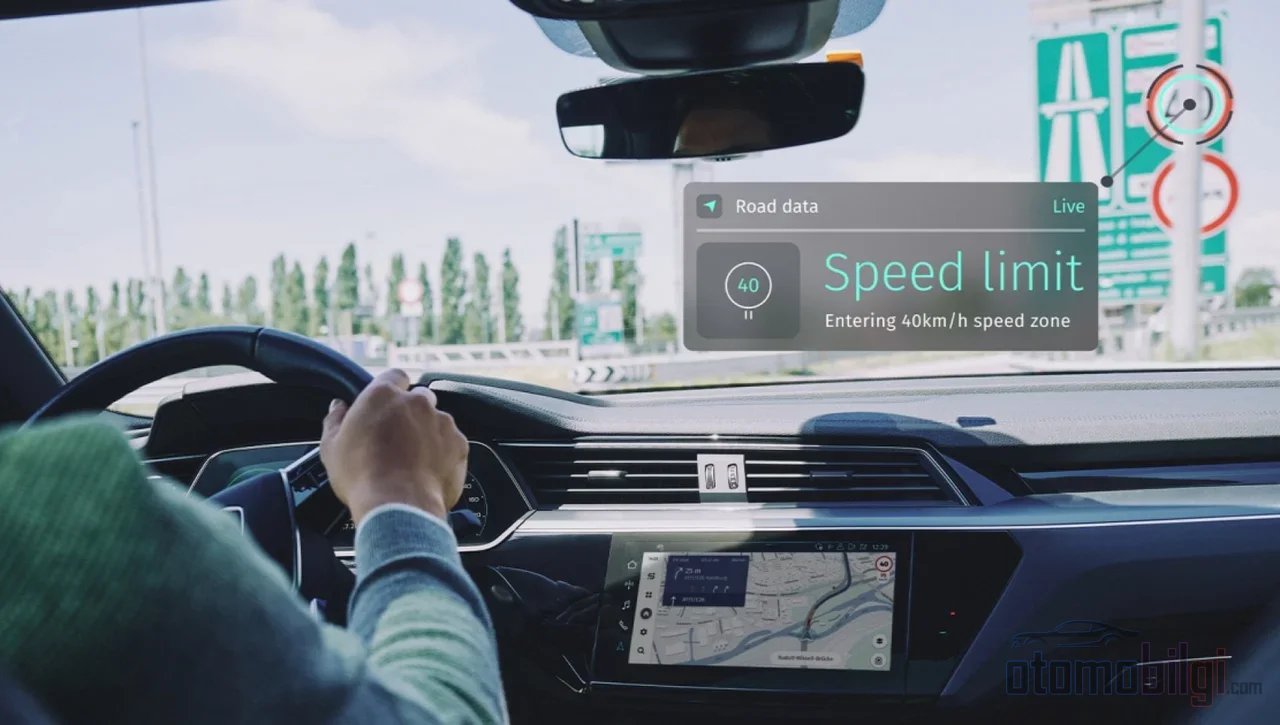
This is probably the most wondered-about topic: "What if I really need to speed up?" The answer is clear. The legal framework requires every ISA system to be overridable; control of the vehicle's speed remains with the driver in all cases. And that's how it works in practice: you can disable the system with a button on the steering wheel and re-enable it with the same button; in some brands, you can turn the speed limit assistant on and off through menus such as iDrive; a system in automatic mode can remain disabled because it will be activated with the LIM button or when the cruise control is engaged. For those who find the audible warning annoying, there is a separate convenience: in some vehicles, pressing and holding the volume button mutes the acoustic warning; the system keeps showing the limit information but stops shouting at you.
While temporary deactivation is this easy, many people also ask about permanently disabling it. That is where things get complicated: since the legislation requires the system to be present for every drive, permanently disabling it is generally not possible through legal means. It is more accurate to think of ISA not as a "put it in, get past it" logic, but as a reminder that constantly stands behind you.
What Happens When ISA Reads Incorrectly? The Teeth of Real-World Use
Now, the other side of the coin. ISA is not a perfect system, and misreadings are a real issue. The camera has its limits: its range is restricted, it can be blinded by rain and snow, and it is weak at recognizing conditional or variable limits (roadworks, time-based limits). GPS-based maps are not always up to date either. The result: a wrong limit may be shown on the display, a new limit may be missed, or you may receive unnecessary warnings while driving at a perfectly legal speed.
In my view, the most common and most preventable cause of misreading is brutally simple: dirty or blocked sensors. If the camera lens is hidden behind a dusty, muddy, fogged, or iced-up windshield, the system starts guessing. Cleaning the windshield regularly and not neglecting calibration significantly improves the ISA experience.
It should also be noted that these errors are not just annoying; they erode trust. Research organizations working in the field of safety emphasize that when ISA misreads the limits, unexpected and inconsistent system responses occur, which over time undermines the driver's trust in the system and points to a gap in the regulation. Then there is the driver side: field studies show that drivers' concerns revolve around technical errors, a diminished sense of control, restrictions, and system complexity. On the other hand, Euro NCAP's assessment indicates that ISA systems do not create significant distraction for the driver - meaning the display does not constantly bombard you with messages and pull you away from the road.
So does it tire you out in real life? The answer leans toward "it varies from vehicle to vehicle." Driver stories circulate in forums describing nearly dangerous situations caused by the system misreading the limit while driving at a constant speed on the highway; moments when the speed is held completely steady and the reading suddenly changes can be particularly frustrating. But the same studies also emphasize that ISA actually establishes a beneficial rhythm by keeping the driver constantly alert about speed. My summary is this: as you get to know the system, you learn when to trust it and when to override it - the confusion of the first week doesn't turn into lasting fatigue.
Who Is Responsible If There's an Accident?
Here comes the series' brutal question: "If the system misreads and I have an accident, who is at fault?" The general rule is clear: the driver at fault in the accident is responsible for the damages. ISA is not a tool for producing evidence or excuses; it is a support system. In fact, there is a dangerous scenario: if you assume the system doesn't recognize the actual speed limit on the road or the lower limit in a roadwork zone and rely entirely on ISA, you could end up above the legal speed due to a misread, and if an incident occurs, you're still the one who has to answer for it.
That's why ISA should be positioned not as a "savior auntie" but as an informative assistant. Think of the number on the display as the average of the signs and the map: it's usually correct, but if it isn't, the final check is done with your own eyes. This is exactly the point where responsibility remains with the driver - the system warns, you decide.
Does ISA Really Enforce Compliance? In Conclusion
Let's return to the question: ISA doesn't enforce compliance with the speed limit, but it makes compliance easier than ever. Its advantage over classic speed limiters is that it works network-wide and in real time: thanks to the map and camera, it knows which road you're on and reports the limit accordingly, and can even restrict acceleration if you want. The gains, such as reduced accidents, fuel savings, and lower emissions, are significant enough to take seriously. In return, there are misreads, a feeling of lost control, and a certain adjustment period - but the final say, both technically and legally, always belongs to the person behind the wheel. Do you think this balance is right: should the system warn you and brake gently, or just notify you? I'd love to hear your opinion in the comments.
Sources
- Intelligent Speed Assistance for safer driving
- HERE ISA Map
- Intelligent Speed Assistance - NHTSA Countermeasures That Work
- Intelligent Speed Assistance - ETSC
- Regulation (EU) 2019/2144 - EUR-Lex
- Intelligent Speed Assistance - AAMVA
- Thatcham Research highlights regulatory gap affecting ISA performance
- XC40 Mild Hybrid Disabling Intelligent Speed Assist - Volvo Cars
- Speed Limit Assist - Cadillac
- How do I activate or deactivate the speed warning feature? - BMW USA
- Safety Feature Updates - Hyundai Motor Europe
- Active Intelligent Speed Assistance - NCSL
- Intelligent speed adaptation (ISA) - European Commission Road Safety
- Intelligent Speed Assistance: an on-road evaluation - Journal of Traffic Safety Research
- What is Intelligent Speed Assist and can you turn it off? - The Car Expert
- ISA System Failures - Resolute Dynamics
- Inside the Rise of Intelligent Speed Assistance - Move Mag
- Intelligent Speed Assistance - TomTom