How Are OTA Updates Renewing the Electric Car?
Share This Page
Over-the-air (OTA) updating means that an electric vehicle's software is updated over a cellular network without going to a service center. Thanks to this method, even after an electric car has been purchased, range estimation, driving character, charging behavior, and safety software can be improved; some of the vehicle's hardware becomes features that can be activated later. In short, the modern electric car is no longer the final version of its delivery-day self, but a product that evolves throughout its lifetime.
Highlights
- More than 70% of new global vehicles have OTA capability.
- Zonal architecture provides a reduction of up to 25% in in-vehicle wiring length.
- The basic regulatory framework for software updates is the UNECE R156 regulation.
- Digital/software revenues today account for 15% of automotive revenues; by 2035 this is expected to rise to 51%. is expected to be released.
- By 2030, it is predicted that 90% of vehicle-related innovations will consist of software.
An electric vehicle may have three motors, a two-tier driver assistant, and a heat pump; all of these are hardware. But what determines how this hardware works is increasingly the software. From motor control to regenerative braking calibration, from range estimation to cabin comfort, many functions are now defined by lines of code. That is why the industry calls these new-generation vehicles "software-defined vehicles" (SDVs): cars in which core functions are controlled, updated, and developed by software rather than fixed hardware.
The difference is not abstract. In a traditional vehicle, functions were fixed in hardware before leaving the factory; a new feature or a bug fix meant a physical change or installing a new control unit. In a software-defined vehicle, however, the same physical package can gain better navigation, improved energy efficiency, or a new driving mode with an update. Without making a dealership appointment.
How Exactly Does an OTA Update Work?
An OTA update means that the vehicle's software is updated wirelessly, usually by reprogramming the non-volatile memory ("flash") chips inside the vehicle. In practice, it carries a logic similar to downloading an app on your smartphone: the vehicle downloads the update package over the mobile network and, at the appropriate time, installs it and replaces the relevant software modules.
The critical point here is that OTA is merely a delivery method. Regardless of the update's content, the same job could also be done with a service device or diagnostic tool at a workshop; being wireless speeds up and scales the job. To deliver a safety fix to hundreds of thousands of vehicles within the same week, no one needs to be called to a service center. There is another distinct advantage for electric vehicles: the update can usually be done while parked, overnight; the user wakes up the next morning with different software.
What Can Change With an Update?
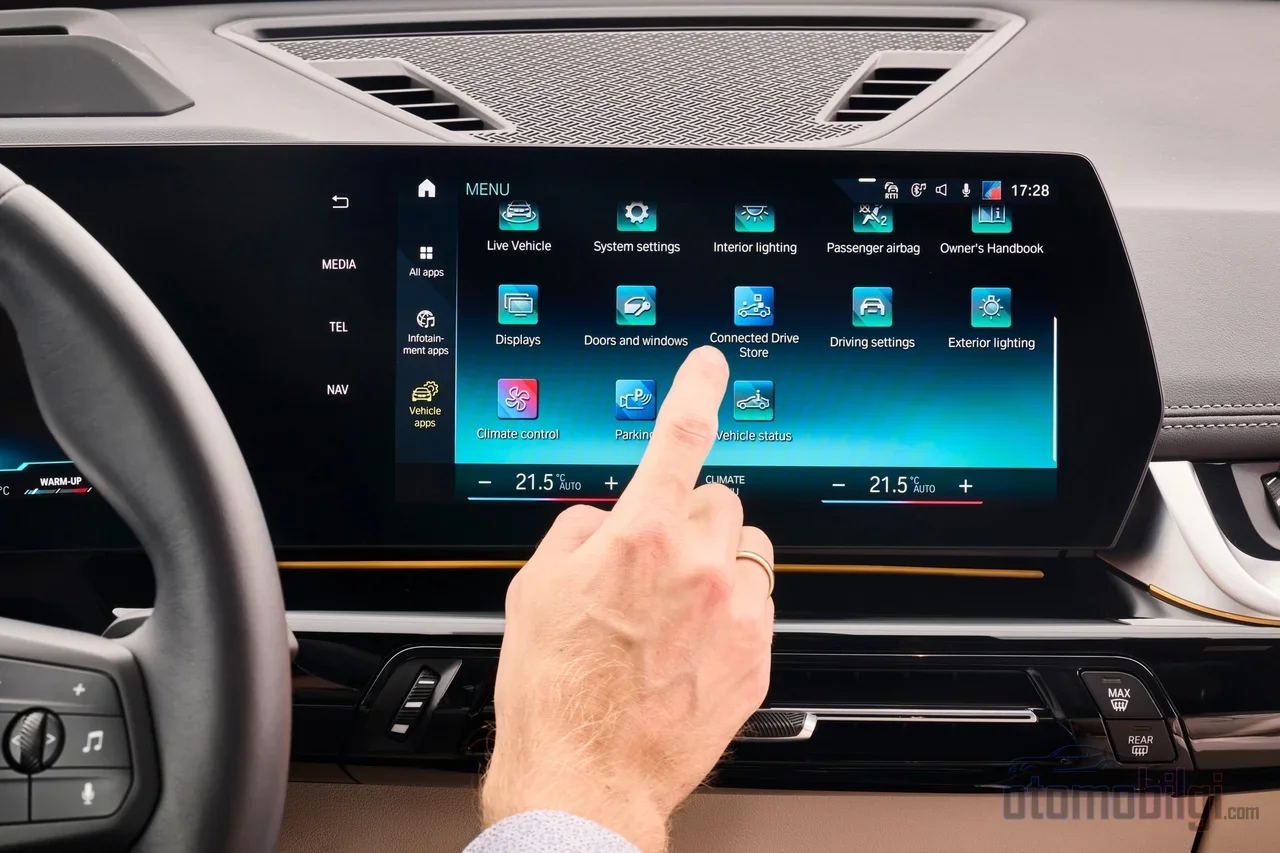
The scope is broader than most people expect. Infotainment is undoubtedly the most visible area: map data, voice assistants, and apps are routinely refreshed. But the truly impressive part is the layers directly related to driving:
- Powertrain calibration: Fine-tuning of engine control can make a difference in power delivery and efficiency.
- Regenerative braking algorithms: By recalibrating energy recovery curves, both efficiency and pedal feel can be improved.
- Battery management and range: Updates can extend range and battery life by enabling more efficient use of the battery; range estimation can be made more accurate, and new charging station locations can be added.
- Safety recalls: Some safety recalls can now be fixed via OTA; the vehicle owner no longer needs to visit the service center.
There are examples on the comfort side as well; solutions such as modes that preserve range by limiting the air conditioner's power consumption can be activated via software. Remote diagnostics are also part of the same infrastructure: since fault symptoms can be reported back through the update channel, physical maintenance and service visits can be reduced. All of these directly affect the vehicle's value throughout its service life; as core driving functions improve, the vehicle becomes somewhat younger instead of aging.
How Did Hardware First Become ECU Clusters, Then Computers?
OTA could not have gained such a broad scope without architectural changes. In the traditional architecture, each function had its own electronic control unit (ECU); in some vehicles there were more than 100 ECUs. This meant both complexity and cable harnesses kilometers in length. Since each unit carried its own software, sending a holistic update to the vehicle was nearly impossible in practice.
The evolution progressed in three stages: first distributed ECUs, then domain controllers grouping areas such as driver assistance and infotainment, and finally high-performance computers (HPC) and zonal architecture. In zonal architecture, zone controllers -front, rear, left, right- connect to a central computing platform. The result is measurable: a reduction in cable length of up to 25% . Fewer cables with more functionality means gains in both weight and assembly.
A common foundation was also needed on the software side. The AUTOSAR standard made software reusable; AUTOSAR Adaptive was designed for dynamic real-time services on Linux and Ethernet-based high-power platforms. Without this common language, every manufacturer would have to develop updates entirely within their own closed world. In practice, there is currently a noticeable breaking point: OTA's prerequisite is a centralized or zonal architecture, and some brands still do not offer full-scale OTA.
How Are Updates Approved, and Who Guarantees Safety?
There is a major difference in responsibility between downloading a playlist to a vehicle and installing tens of thousands of lines of engine control software; this difference also defines the regulatory framework. The basic framework UNECE R156 regulation: it sets conditions for the safe, traceable, and compliant management of vehicle software updates and includes type approval for OTA software updates. Under the WP.29 requirements, manufacturers must have a process by which they can identify the target vehicles for a software update - that is, it must be traceable at any moment which version goes to which vehicle. On the US side, the Federal Motor Vehicle Safety Standards are regulated by NHTSA.
On the cybersecurity side, defense is layered: secure boot, encrypted communication, real-time monitoring, and unauthorized access detection. Secure boot simply does this: when the vehicle is started, no module is loaded until the signature of the software to run is verified. The update process itself is also a matter of engineering discipline; a poorly managed update can lead to system failures and user frustration. That's why major updates are generally rolled out in stages, and the vehicle must be in a safe state during installation (for example, parked, not in motion).
One point that should be clearly stated is this: OTA is only a channel, not a quality guarantee. An update can also be delivered with the same content via a service device or a controlled service visit; the regulatory framework covers the management of the update regardless of the delivery method.
Why Is the Car You Bought Selling Features by Subscription?
The commercial face of software-defined architecture is the "features-on-demand" model. Hardware is turning into features that can be unlocked after purchase: advanced driver assistance systems, heated seats, performance modes. The form of access can be grouped into three categories:
- Monthly or annual subscription
- One-time large payment (purchase)
- Pay-per-use
For manufacturers, the logic is strong: the same hardware continues to generate revenue after delivery, and owners get the chance to "try" some features for a few dollars a month. The industry's picture also shows the scale of this trend: digital/software revenues today stand at 15% of automotive revenues and are expected to rise to 51% by 2035. The automotive OTA market is also projected to reach 22 billion dollars by 2034. By 2030, it is estimated that 90% of all vehicle-related innovations will come from software; 75% of automotive executives foresee that the software-defined experience will move to the center of brand value by 2035.
On the user side, the picture is not so clear. Subscription-based access to features that were once standard - such as heated seats or adaptive cruise control - can rightly anger customers and damage brand perception. "Why should I pay again for hardware already sitting in my car?" is the most common objection to this model. From an engineering standpoint, the situation is simple: the heating element is inside the seat, but the switch is in software. The commercial debate revolves precisely around who will own that switch.
What Does the Connected Car Offer, and What Risks Does It Bring?
OTA's value proposition is concrete: bug fixes, safety patches and feature upgrades delivered remotely, without a trip to the dealer. By 2027, more than 327 million connected vehicles are expected to be on the roads, and 79% of OEM executives believe software-defined vehicle efforts will advance over the next three years; 76% of them add that artificial intelligence will contribute to this progress. Among the 2026 trends, gradual migration to zonal architectures, innovation at the application layer and AI-assisted development stand out.
On the other hand, every connection is an attack surface. Increasing connectivity exposes vehicle controls, data privacy and cloud services to cyberattacks. On the data side, the question is even more troubling: software-defined vehicles continuously collect data, and how this data is stored and used without explicit consent raises ethical and regulatory questions. The legal side is also unresolved - updating vehicle behavior via software raises questions about who bears liability in the event of an accident and who owns the data.
The industry's internal obstacle should not be underestimated either: 74% of executives say it is difficult to change the mechanically oriented culture, and the industry is projected to fall short of the workforce required for software-defined goals until 2034. For an industry built on a century of steel, casting and assembly lines, reorganizing itself like a software company is not an overnight transformation.
FAQ: Will My Car Actually Get Faster, Will Its Range Increase?
Short answer: in some cases yes, but you need to know the limits. In an electric vehicle, the motor's physical power is fixed in the hardware; a software update cannot raise this ceiling. However, since the power delivery curve, regenerative braking depth, power management, and range estimation are determined by software, updates can create a noticeable difference. In some models, updates have improved acceleration and braking in the user experience; range estimation has been made more accurate and new charging locations have been added. The range itself, on the other hand, is limited by the battery chemistry; software enables smarter use of the existing battery - not more than that.
Another practical question: do you need to charge the vehicle or go to a service center for the update? In most scenarios, no; the update is completed wirelessly while parked, and many vehicle owners have gone through multiple major versions without ever visiting a service center during this process.
Conclusion: The Car Is No Longer a Product, But a Platform
The software-defined vehicle concept is transforming the car from a product that is "delivered and finished" into a continuously updated platform. OTA updates are the visible face of this transformation; beneath it lies a much larger engineering change such as zonal architecture, centralized computing, and common software standards. From the buyer's perspective, the critical questions have also changed with this transformation: alongside the question "How powerful is this vehicle?", the question "How often is it updated, which features can be unlocked later, and what do they cost?" has been added. Hardware still sets the rules of physics; but how the same physical car feels is increasingly dictated by software.
Sources
- What is a Software Defined Vehicle? | IBM
- The complete guide to software-defined vehicles | Siemens
- What is OTA? A Comprehensive Guide | Sonatus
- What is OTA in automotive? | Rambus
- What are Over-The-Air software updates? | Polestar
- OTA Car Software Updates: Are They Safe | Consumer Reports
- The Slow Roll of Automotive Over-the-Air Updates | MotorTrend
- UNECE R156 OTA Software Update Type Approval | ATS Group
- WP.29 Requirements & OTA System Considerations | Sibros
- NHTSA Statutes, Regulations & FMVSS
- Subscribe to Get Certain Features on Your Next Car | Consumer Reports
- Features-on-demand (FoD) | Car Rental Gateway
- Mastering EV Software Updates | Fixlane
- Why EV Software Updates Matter | SWTCH Energy
- OTA Updates for Telematics Platforms | Zeva Global
- What Over-The-Air Updates Mean for the Longevity of Consumer Cars | WardsAuto
- Automakers shift over-the-air update strategy | Automotive News
- Automotive Over-The-Air (OTA) Updates Market | Future Market Insights
- SDV trends: why 2026 could mark a turning point | ADT Media
- The Rise of the Software-Defined Vehicle | arXiv
- Current Implementations of Over-the-Air Updates | VTechWorks
- Everything you need to know about the Software Defined Vehicle | Valeo