How Did Lowrider Cars Go From Street Culture to Icons?
Share This Page
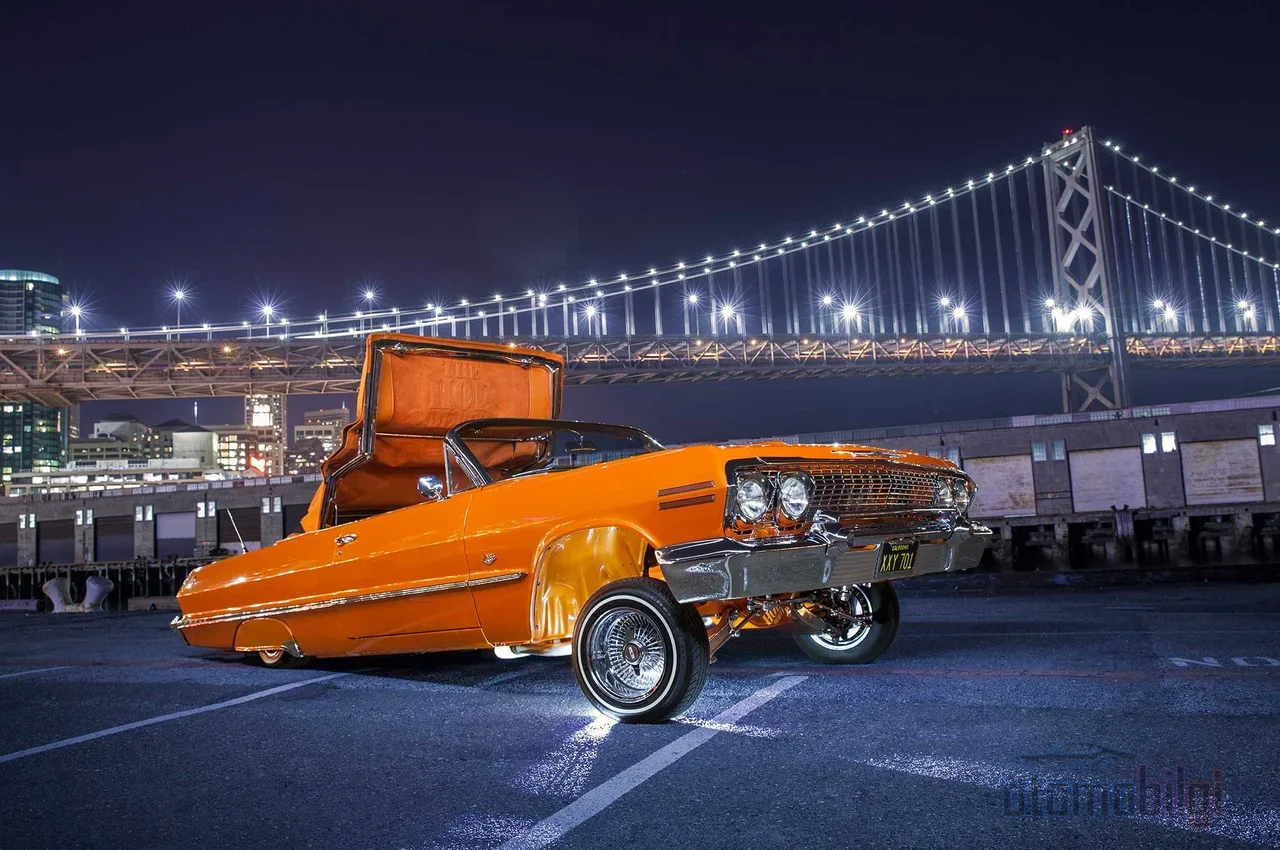
A lowrider is a car customized to sit close to the ground, usually with hydraulic systems, drawing attention with its candy-gloss paint, chrome, and custom interior - and also the name given to the enthusiasts who live by building these vehicles. Born in 1940s Los Angeles, this culture transformed over the following decades from a street fashion into an expression of identity, even a story that made its way into the display cases of art museums. So let's take a look, step by step: how does a car become the symbol of a philosophy of "low and slow"?
Highlights
- The origins of lowriding trace back to 1940s Los Angeles and Mexican American veterans returning from World War II 1958
- The California ban in triggered the birth of hydraulic suspension technology
- Chevys, thanks to their abundance and the X-profile of their frames, became the most popular lowrider platform
- In the 1970s, lowriders took on social roles such as fundraising and healthcare as part of the Chicano Movement
- The Smithsonian's traveling exhibition is touring the culture across multiple museums throughout 2026
Where and How Did Lowrider Culture Originate?
The story begins in 1940s Los Angeles. As the war ended, Southern California was growing, and families were buying cars to adapt to this expanding urban life. As postwar automobile production increased, the surplus of used vehicles also grew; veterans, young people, the working class, and ethnic minorities could now access an affordable car. Lowriding sprouted precisely on this ground.
Character matters too: Mexican American veterans returning from military service brought the mechanical knowledge they had learned in the army back to their garages. They tinkered with engines, painted bodies, and added weight to the rear to lower the car. The hot rod trend of the era made cars "fast and hot"; they chose exactly the opposite: low and slow. According to some accounts, the first seeds of the culture had already been sown with the pachucos, the Chicano youth who wore zoot suits.
But which cars? This is where Chevy takes the stage. Its abundance and the ease of modification enabled by the X-profile under its frame made it the favorite of lowriders. From a 1947 Chevy Sedan Delivery to a 1969 Ford LTD, classic American sedans became the canvases of this culture. On the El Paso side, the roots also reach back to the postwar 1940s; one of the early clubs there was known as the Imperials.
The 1958 Bans and the Invention of Hydraulic Systems
Now here's a thought-provoking question: Can a car be banned? California said "yes" in 1958. Section 24008 of the Vehicle Code made it a crime to operate any vehicle with any part lower than the bottom edge of the wheel rim. So those first-generation lowriders who cut their springs and put lowering blocks on their axles, or loaded sandbags, bricks and even cement in their trunks, had suddenly crossed beyond the legal limit. These static lowering methods are considered the "OG", meaning old guard style, of the culture today; some were even fitting "street scrapers" underneath and throwing sparks on the asphalt!
The answer to the ban came from engineering: hydraulic systems. The driver could now raise and lower their vehicle with a switch. The car was at legal height on the highway, and glued to the ground in the neighborhood - a transition switch between two worlds. Thus a solution born to circumvent the ban became the culture's most recognizable signature.
How Does Hydraulic Suspension Work?
Let's think about the technical side with an everyday analogy: Imagine a bicycle pump, but a separate mini pump above each wheel. At least one, usually more than one, battery feeds a pump in the system; the pump sends hydraulic fluid through hoses to the cylinders. As pressure increases, the cylinder extends and lifts the vehicle; when pressure is released, the vehicle drops. Pressing and releasing quickly creates that famous hopping motion.
The conversion process roughly works like this: The vehicle's coil springs are removed and hydraulic cylinders are installed in their place. The result is a suspension whose height can be adjusted with a switch. At shows, this capability turns into "dancing car" competitions; vehicles bounce front-back, left-right, practically dancing to music. The first time you see it, you can't help but laugh, then you want to go study its engineering - if you ask me, both are reasonable reactions.
Cars That Roll Like Art Canvases
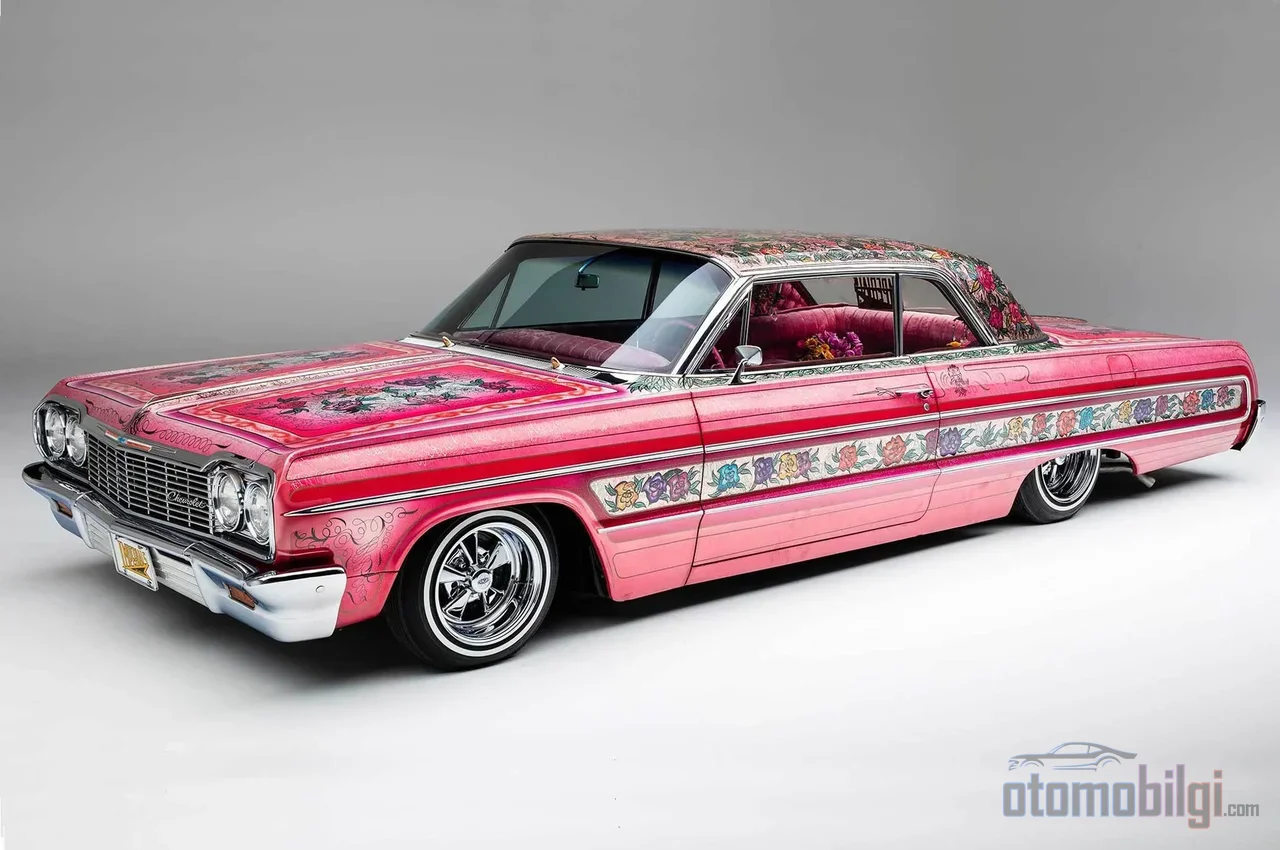
What makes a lowrider beautiful isn't just its height; the real story is in the paint and details. According to Lowrider Magazine, these vehicles "roll like art canvases," and custom paintwork is a rare category whose cost can exceed all other customizations combined. A typical lowrider features custom paint, chrome, murals, pinstriping and custom upholstery all together. How ambitious are the examples caught by photographer Kristin Bedford's lens? Vehicles with magenta velvet upholstery, candy-painted models named "Purple Rain" and "Erotic City." Yes, people name their cars after songs, and they deserve it.
The Chicano mural movement of the late 1960s also spilled onto the hoods and trunks of lowriders. During the Chicano Art Movement era, these vehicles began to be seen as "art on wheels." Many figures were woven onto the bodies, from the Virgen de Guadalupe to the revolutionary Emiliano Zapata, from Aztec warriors to pachucos, from Selena Quintanilla to Tupac Shakur. A concrete example: George Luna, nicknamed "Crazy George," has a 1947 Chevy Sedan Delivery called "Midnight Illusions" that displays Aztec heritage, the founding of Tenochtitlan, and religious imagery as murals; its purpose was said to be teaching young Chicanos about their own roots. Teaching a history lesson with a car - truly an impressive idea, isn't it?
Cars or Community?
This is where lowriding diverges from being an ordinary car hobby. During the Chicano Movement of the 1970s, lowriders took on a more formal political function. The car clubs founded in that period raised funds for the United Farm Workers union and provided social services such as health initiatives. The sentence that sums up this transformation belongs to Steve Velasquez, a curator at the Smithsonian's National Museum of American History:
The car part was 10 percent, the social part was 90 percent.
So that gleaming vehicle you see is actually the showcase of a community center. Enthusiasts who spoke to NPR say the same thing: Cesar Ibarra says "This is not a hobby for me, it's my lifestyle," while Fernando "Birdman" Perez describes it as "How I dress, my walk, my speech, my appearance." As the National Museum of African American History and Culture puts it, lowriders are cars that carry social, cultural, and aesthetic identity. Photographer Bedford's summary is, in my opinion, spot on too: rolling down the boulevard in your own car is a way of saying "I am here."
There were shadows along this journey too. Hollywood attached a stigma that identified lowriders with gang violence; bans on cruising culture were also a product of this stigmatization. Photographer Estevan Oriol's remark on the subject is famous: "Nobody robs a bank in a special glossy yellow-painted car." In 1988, California lawmakers even passed a law allowing local governments to enact anti-cruising ordinances. Yet the essence of the culture was something entirely different - a law signed toward the end of 2024 finally overturned this ban, and lowriders can now cruise without fear of penalties or being pulled over.
How Did Lowriders Enter Art Museums?
In the 1960s and 70s, lowriders were rarely considered legitimate art; today, they can even find a place in mainstream art museums. There is a chronology that shows this transformation very clearly:
| Period | Status of Lowriding |
|---|---|
| 1940s | A style born on the streets of Los Angeles |
| 1958 | Ban on static lowering in California |
| 1970s | Part of the Chicano Movement, "art on wheels" |
| Early 21st century | Representation in mainstream art museums |
| 2026 | Smithsonian's traveling exhibition in multiple museums |
The 2026 calendar is truly packed. The Smithsonian's traveling exhibition "Lowrider Culture in the United States / Cultura Lowrider en los Estados Unidos" is touring McAllen, Texas (August 22 - November 15, 2026), the Farmington Museum in New Mexico (April 25 - July 25, 2026), and the Muzeo in Anaheim (until December 14). There is also a Folklife Festival event in Washington on July 10, 2026, titled "Looking Under the Hood of Lowriders." The Fine Arts Museums in San Francisco are hosting a free "Lowrider Culture Celebration" on June 6, 2026, while the Moab Museum, in collaboration with the National Hispanic Cultural Center, is hosting the "Lowrider Culture in the American Southwest" exhibition. Even the Navy is publishing news about community car shows featuring lowriders - at this point, that means every door is open.
The culture's present is alive too. Lowrider magazine continues its existence as the culture's original voice "with 48 years of trustworthiness." And intergenerational transmission continues through families; for young people, there is a low-cost entry point: lowrider bicycle clubs. So even someone who wants to lower but doesn't have the budget for a classic car can find a place within the culture - how many people would have their bike given a custom paint job under these conditions? The answer: quite a few, and they all look amazing.
What Does It Mean to Ride in a Lowrider Today?
Let's also discuss the objections fairly, because there are real economic barriers within the culture. According to automotive history researcher Denise Sandoval, these old cars can start at $30,000 today; as the cost of living rises, younger generations are connecting with the culture through bicycle clubs. There is also a debate about origins within the community: while the official narrative places lowriding among the Chicano communities of 1940s Los Angeles, who the pioneer was is sometimes debated. Institutional historiography supports the Mexican American origin rooted in California and Mexico. The Smithsonian's summary, in my view, is the most satisfying answer: "Lowriding is a reflection of the postwar experience of Mexican Americans." In other words, it's not just an aesthetic choice - it's a history on wheels.
So which one would you choose: a hot rod hanging just below the bottom edge of its rims, an OG lowrider throwing sparks on the asphalt, or a hydraulic masterpiece that hops and dances when you turn the key? My answer is clear, but the beauty of it is this: whatever answer you give, this culture grants you permission to turn your own story into a painted and chromed canvas. This journey from the street to the museum has only just begun.
Sources
- The Vibrant History of Lowrider Car Culture in L.A.
- The history of lowrider culture and its multigenerational reach
- Lowrider Information - Dr. Martin Luther King, Jr. Library
- Lowriders | National Museum of African American History and Culture
- Lowrider Suspensions
- The Cultural Significance of Lowriders in Mexican-American Communities
- Lowrider Culture in the United States - Muzeo
- Looking Under the Hood of Lowriders - Smithsonian Folklife Festival
- Lowrider Culture Celebration - FAMSF