Manual or Automatic? The Effect of the Transmission on Fuel Consumption
Share This Page
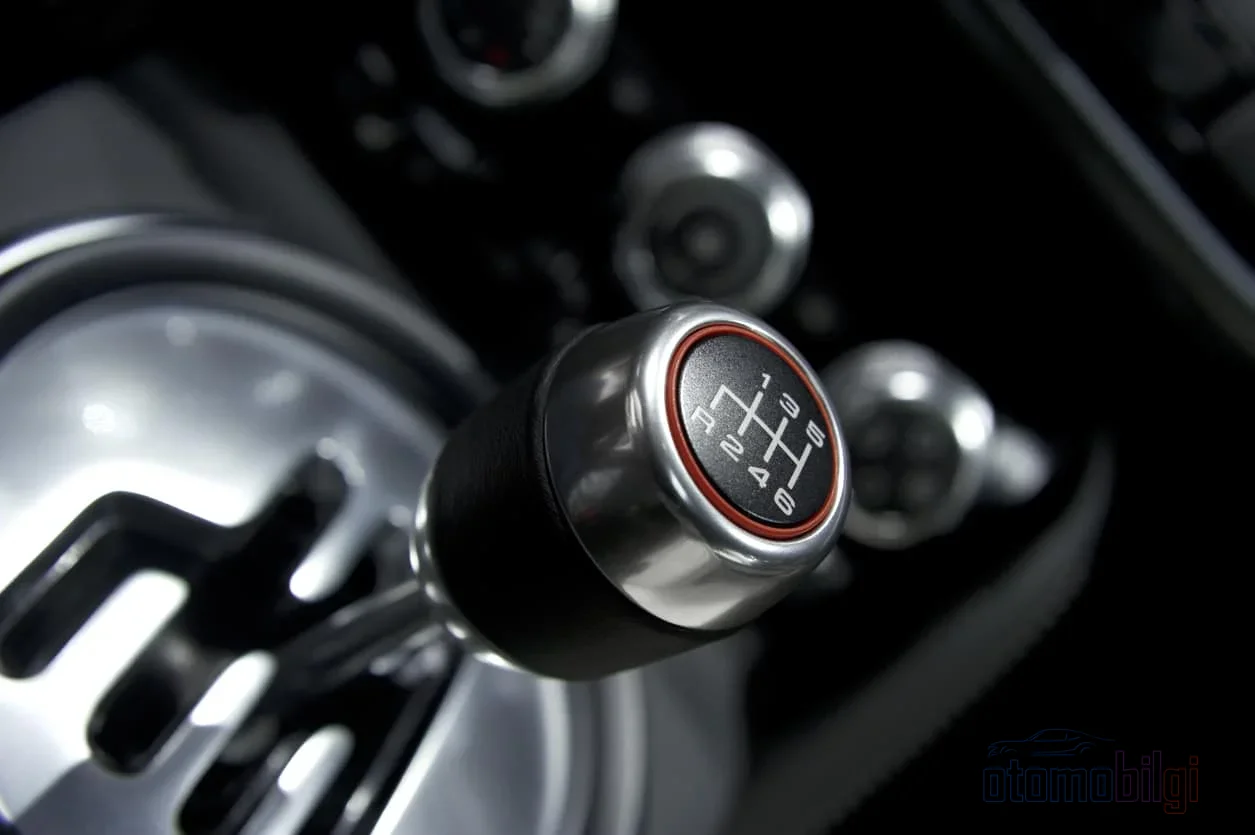
A manual transmission consumes less fuel than it used to; however, this information has largely lost its validity since the 2016 model year. Since that date, automatic transmissions have become more economical than most of their manual counterparts thanks to increasing gear counts and more efficient designs. Today, the difference between the two transmission types in most vehicles is below 1-2 mpg, and the ultimate deciding factor is no longer the gearbox, but driving style.
Highlights
- Since the 2016 model year, automatic transmissions are on average more fuel-efficient than manual transmissions.
- In the past, automatics could consume up to 10% more fuel than manuals.
- A modern eight-speed automatic alone can achieve an improvement of 21-24% in consumption.
- In stop-and-go city traffic, CVTs stand out, while on the highway dual-clutch and well-tuned automatics shine.
- Smooth gear shifts can improve consumption by 5-10%. improvement rate.
Why did automatic transmissions used to burn more fuel?
At the center of the answer lies the torque converter. In classic hydraulic automatics, the torque converter, which establishes the connection between the engine and the gearbox, operates far less efficiently than the clutch in a manual transmission. Part of the power is lost as it is converted into the movement of the fluid, and the engine burns more fuel to do the same work. Even when the converter locks up and switches to a mechanical connection after first gear, the low number of gears often caused the engine to operate in inefficient rev ranges.
For this reason, for many years the rule was clear: an automatic transmission consumes up to 10% more fuel than its manual equivalent. Because this figure was significant enough, the choice of drivers who cared about fuel economy was almost always a manual. This is precisely the period from which the belief still in circulation today originates.
How did modern automatics overtake the manual?
Two developments reversed this picture. The first is the number of gears: most modern automatics have more gears than contemporary manual transmissions. Automatics with six or more gears have now become standard; eight, nine, and even ten-speed gearboxes have become widespread. More gears mean the engine can stay in a more efficient rev band at every speed. This is the short answer to why automatics are more efficient: when the right gear ratio is selected, less power is needed to accelerate the vehicle.
Second, the shrinking shadow of the converter. The widespread adoption of locking mechanisms and improvements in overall design significantly reduced the efficiency loss of torque-converter automatics. From the 2016 model year onward, automatic transmissions became more fuel-efficient than manual transmissions on the basis of official data. The proposition "manual is always more economical" is now a belief, not a measured fact.
A concrete example shows the power of gear count well: a modern eight-speed automatic transmission alone can achieve an improvement of 21-24% in consumption. This is measurable proof of how big a difference the gearbox alone can make in daily consumption.
How does gear count and gear ratio affect consumption?
The transmission's job is to adjust the engine's rpm and the torque going to the wheels; consumption is a direct result of this adjustment. An engine turning at lower rpm at the same speed burns less fuel, which is why a long (numerically low) axle ratio provides an advantage in highway cruising. As the axle ratio number decreases, fuel economy improves; as the number grows, pulling power increases but consumption worsens. Short gears such as 3.73 or 4.10, on the other hand, can even positively affect urban efficiency in some uses.
The balance here is not the same for every vehicle: a wrongly chosen gear ratio slows acceleration, reduces efficiency, and adds unnecessary stress to the drivetrain. Therefore, when comparing the highway consumption of two transmissions, one must look not only at the question of "manual or automatic" but also at which one is equipped with a longer final drive ratio. The reason some manual cars are unexpectedly economical on the highway lies in this ratio rather than in the gearbox itself.
Which burns less fuel, CVT or DCT?
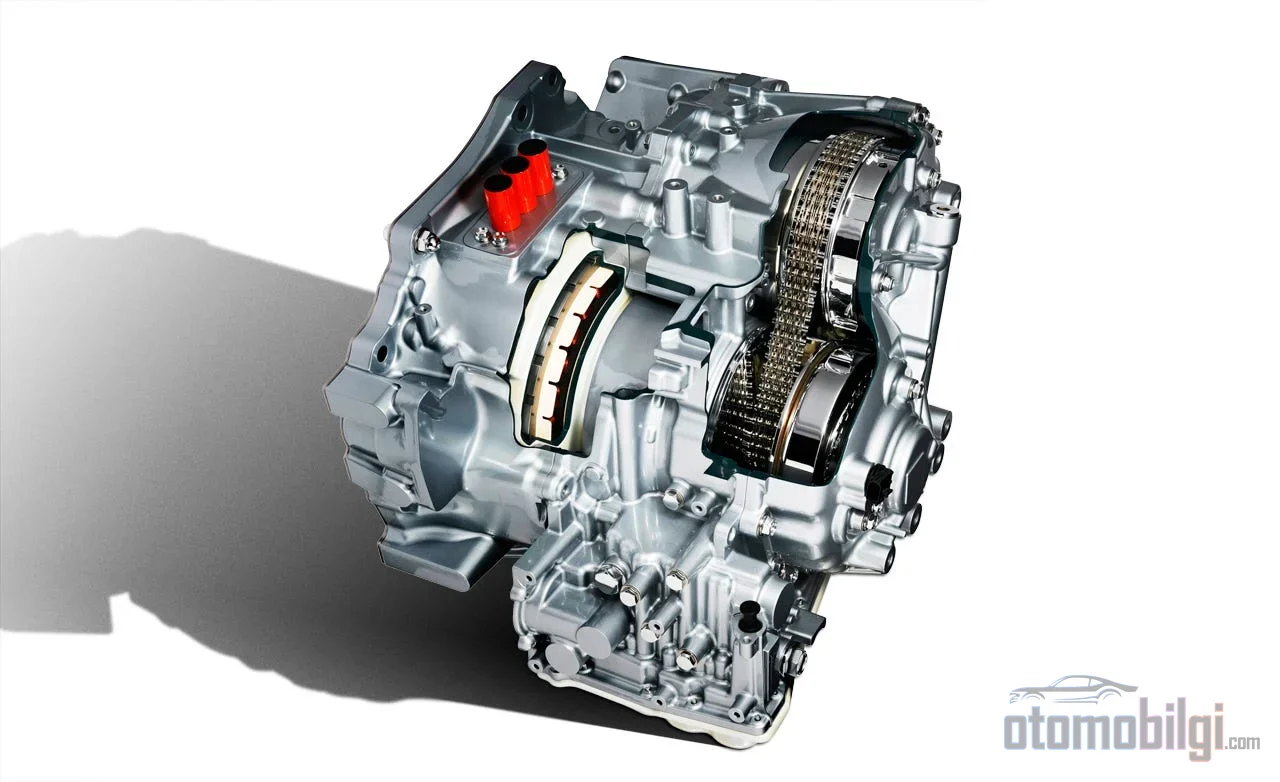
There are two more important players in the modern automatic world, and they operate on different logic. A CVT (continuously variable transmission) has no fixed gears at all; it keeps the engine at the most efficient rpm possible for every speed. Thanks to this capability, a CVT generally delivers somewhat better fuel economy, and since it has no fixed gears, it also handles stop-and-go traffic smoothly.
A dual-clutch transmission (DCT), on the other hand, pre-selects two separate sets of gears and shifts within milliseconds. It is an efficient solution, but absolute statements such as "a DCT is always more efficient than a CVT" or the reverse are not true. The general trend is this: in urban and stop-and-go use, the CVT offers better fuel economy; on the highway, the DCT catches up with the CVT with its smooth and fast shifts, and may even surpass it.
Among the main three (manual, conventional automatic, CVT), comparisons show the CVT as the option with the best consumption figures; however, there is a price to pay: the CVT is the most expensive type of transmission to maintain. In addition, the eCVT used in hybrid vehicles is part of the combination that frequently offers the best economy in mixed and city use.
| Transmission | Where it is strong | Consumption record |
|---|---|---|
| Manual | Skilled driver, steady-speed roads | Used to lead; today the difference is minimal |
| Conventional automatic | Mixed and highway use | Has generally surpassed manual since 2016 |
| CVT | Urban, stop-and-go traffic | Best economy, most expensive maintenance |
| Dual-clutch (DCT) | Highway, dynamic driving | Equal to or better than CVT on the highway |
Which combination is more efficient depending on the usage profile?
Urban: CVT and eCVT stand out in stop-and-go traffic
City traffic is the transmission's toughest exam. In a manual car, every stop-and-go means clutch work and rev matching; efficiency inevitably drops during this process. CVT is the most comfortable gearbox in this profile because it keeps the engine at an efficient rpm without searching for gears. If your usage is city-focused and your priority is consumption, CVT or a hybrid combination with eCVT is the strongest answer today.
Long distance: gear count and axle ratio are decisive
On the highway, the picture changes. Modern automatics cruise at low revs at high speeds thanks to their extra gears and save fuel. A skilled manual driver can also achieve good results; however, most drivers cannot make gear choices as optimally as an automatic. If a manual car burns less than its rival on the highway, the reason is usually a lower final drive ratio - meaning a design choice, an advantage independent of the transmission type itself.
How much do gear-shifting habits affect consumption?
Whichever transmission you use, the driver's foot has the final say. The essence of efficient driving in a manual car is the combination of low revs and high gears: shifting early enough not to strain the engine, skipping a gear when appropriate (for example from 2nd to 4th), and coasting with engine braking instead of the brakes when slowing down. This smooth approach can improve consumption by 5-10% . Modern automatics are programmed with similar logic; many gearboxes skip gears for energy saving.
Habits beyond the transmission should also be taken into account: correct tire pressure, regular maintenance, and avoiding unnecessary idling are simple measures that significantly improve fuel economy. Staying in the most efficient gear while accelerating and shifting early are also among the basic techniques recommended in official efficiency guides.
The difference between the catalog value and real consumption
When comparing transmissions, you need to know the nature of the declared values. The WLTP cycle applies the same standard test to all vehicles, enabling comparison between models, and reflects the real world better than the previous NEDC cycle. Still, real consumption may differ from the declared value; extreme weather conditions and demanding road profiles widen this gap.
An academic study based on the old measurement cycle gives a striking figure regarding the size of the gap: the average difference between real-world consumption and the NEDC value was measured at 37% for gasoline vehicles and 38% for diesels. With WLTP this gap has narrowed, but it has not disappeared. The practical conclusion is this: when comparing two transmission types, it is meaningful to compare their catalog values against each other; but when setting your absolute consumption expectation, you need to add the real-world margin on top of the declared value. In city use, consumption noticeably higher than the catalog is normal, while on the constant-speed highway, consumption close to it is normal.
Conclusion: the right question is not manual or automatic
The impact of transmission choice on fuel consumption is still real, but its direction has changed. The historical 10% automatic penalty has given way to a minimal difference, and in some segments even an advantage in favor of the automatic. The right question today is this: which transmission, with which gear ratios, will work for my usage profile? If you drive mainly in the city, a CVT or hybrid combination may be a sensible choice; if you drive mostly on the highway, a modern multi-speed automatic or a manual with long gearing could make sense. And whichever one you choose, your driving style remains the decisive part of the difference.
Sources
- FOTW #1127: Since Model Year 2016, automatic transmissions have been more fuel efficient
- A Shift to High MPG - Green Car Journal (ZF 8-speed data)
- Fuel-efficient driving techniques - Natural Resources Canada
- Fuel efficient driving tips - UK Vehicle Certification Agency
- Manual vs. Automatic Transmission Pros and Cons - Edmunds
- Comparison of real-world energy consumption and WLTP values - ResearchGate
- WLTP & Fuel Economy - Zemo Partnership
- DCT vs CVT: Which Automatic Transmission is Better? - Spinny
- Comparing The 3 Main Types Of Transmissions - Glendale Nissan
- Ultimate Transmission Guide - AutoExpert
- Myth-Busting: Manual transmissions are more fuel efficient - Practical Motoring
- Does Re-Gearing Affect Gas Mileage? - Revolution Gear
- Understanding The Importance of Axle Ratios - CarPro