Mini: How a British Icon Born from Shortage Became a Cult
Share This Page
Mini, August 1959 is a car drawn by Alec Issigonis in a Britain squeezed by fuel shortages, one that radically changed small car design with its transversely mounted engine and front-wheel drive. With rally victories, 1960s pop culture, and BMW's later revival in 2001, it went beyond being a classic car and achieved cult status.
Highlights
- 5.3 million units produced, making it the best-selling British car in history
- A revolutionary layout dedicating 80% of its floor space to passengers and luggage
- 3 overall victories at the Monte Carlo Rally (1964, 1965, 1967)
- 41 years of uninterrupted production life, being chosen in 1999
- as the second most influential car of the century The 25th year
of the modern MINI renaissance since 2001
How Can a Fuel Crisis Give Birth to a Car? It all starts with the 1956 Suez Crisis. When fuel was rationed, Britain suddenly needed small, fuel-frugal cars. Sir Leonard Lord, head of BMC, recalled designer Alec Issigonis to Longbridge at the end of 1955 and gave him a very clear brief: he wanted a four-seater, minimum-fuel-consuming small car that genuinely
handled well. In other words, not just another bare-bones economy package, but something enjoyable to drive. The project gained priority at the end of 1956, prototypes hit the roads in early 1957, and the project code became ADO15. The result, August 26, 1959 was on display under a dual name: Morris Mini Minor and Austin Seven. Before long, everyone started simply calling it the "Mini"; it officially became a separate brand in 1969, and that year sales passed 2 million . In my opinion, the fact that a car born out of a period of shortage was loved this quickly is one of the sweetest ironies in automotive history.
Issigonis's Napkin Revolution: Layout Genius
Issigonis's philosophy fit into a single sentence: the car should take up minimal space on the road but provide maximum space for the passengers inside. He is said to have drawn his first designs on napkins and the backs of envelopes; so the revolution may have begun not in an office, but on a coffee table. When I hear this, I ask myself, "how many generation-changing ideas are drawn on the back of an envelope?"
So what did he do technologically? He turned the engine sideways, that is, mounted it transversely, sent the drive to the front wheels, and pushed the wheels into the outermost corners of the body. It may sound ordinary today, but at the time, this was a move that wrote the template for small cars. Thanks to this layout, 80% of the floor area was left for passengers and luggage; despite a length of only around 3 meters , four adults plus luggage fit inside. Just think: almost all of today's multi-door city cars still use this scheme.
- 10-inch wheels - enabled placement in the corners along with the small body
- Sump-mounted gearbox - tucked next to the engine, saving space
- Alex Moulton's rubber cone suspension - It replaced the interconnected system planned by Issigonis due to time pressure, but it did the job
- Monocoque body - both lightness and strength
The funny thing is: heating was optional in the first production run. Issigonis didn't consider it necessary! So the man did performance and space calculations, but I think he never thought about whether the windows would fog up in winter.
Who Was Alec Issigonis? The Story of the Genius Who Failed Math
The father of the Mini was born in Izmir on November 18, 1906; he was the son of a Greek father and a German mother. In 1922 the family was evacuated to Malta, and a year later they moved to England. He studied engineering at Battersea Polytechnic, but here's a detail we love: he failed his math exams three times . He is quoted as saying, "Mathematics is the most uncreative subject you could study." To me, this is the story of a man who couldn't fill in number tables in a history exam yet changed the world.
In 1936 he joined Morris Motors as a suspension designer and took part in the design of the Morris Minor in 1948. Then came the career climb: Technical Director at BMC in 1961, CBE and the title of Royal Designer for Industry in 1964, Fellow of the Royal Society in 1967, and a knighthood in 1969. BMC won the Royal Automobile Club's Dewar Trophy for the Mini's innovative design. He passed away on October 2, 1988; in 1999, his work was crowned when it was chosen as the second most influential car of the 20th century. And if you're wondering about second place, first went to the VW Beetle - so just think about who else was in the running.
When John Cooper Stepped In: Mini Cooper and the Monte Carlo Victories
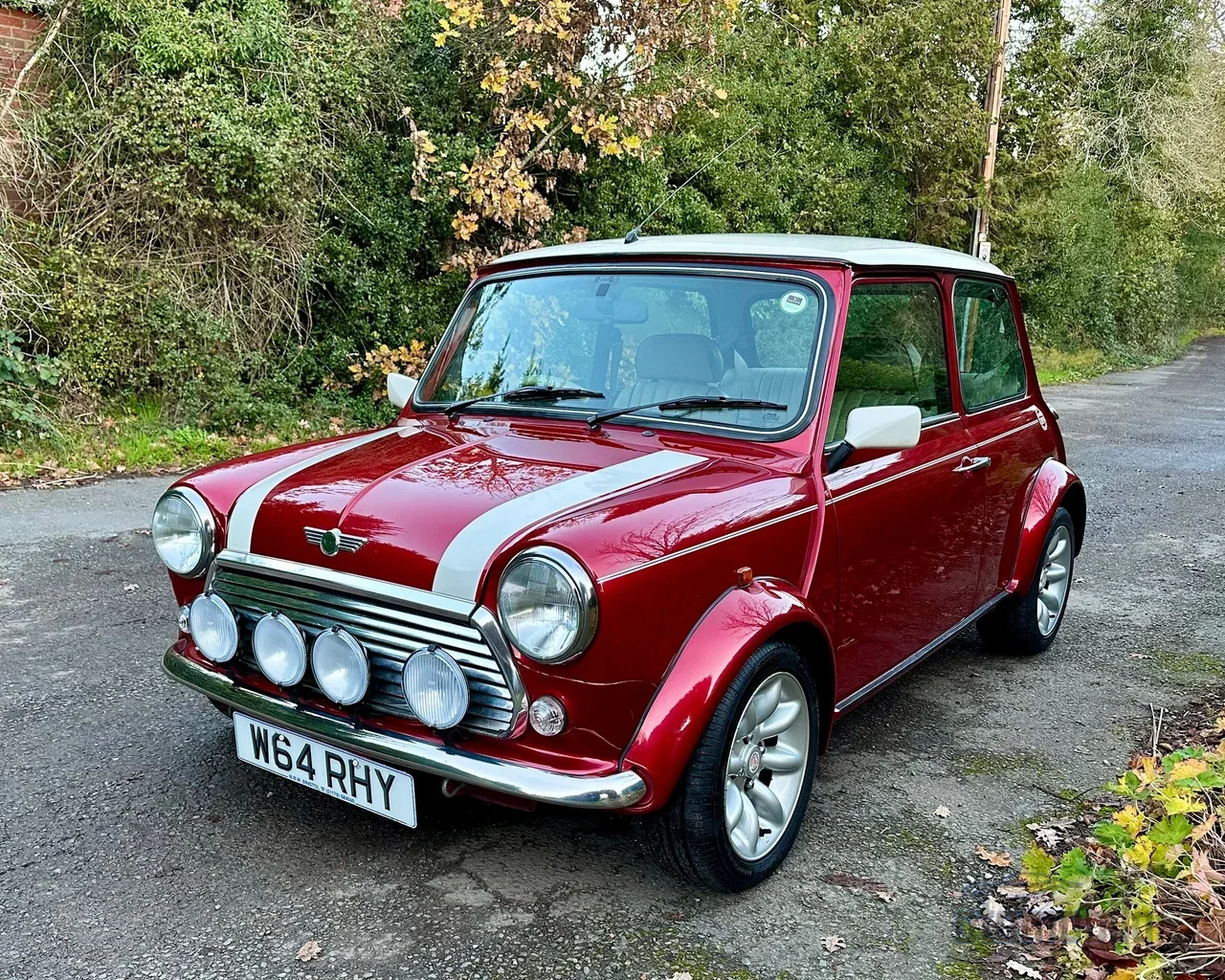
Issigonis had designed the car as a family car, but when motorsport pioneer John Cooper tested the prototype, he saw something else: the fuel-efficient people's car cornered in a way nobody thought it could corner. Cooper convinced Issigonis to prepare the car for Monte Carlo, and in 1961 the Mini Cooper was introduced. The brand talks about a balance born of the tension between these two: Issigonis represented minimalism, Cooper maximizing the experience. Honestly, one of my favorite design relationships.
Then the victories that followed became one of the most beloved tales in rally history:
- 1964: Paddy Hopkirk, in the Mini Cooper S with number 37, finished first in the overall classification; around 277 cars raced and the rivals were many times more powerful
- 1965: A second victory with Timo Mäkinen and Paul Easter
- 1966: The most controversial race - three Mini Coopers and a Lancia Flavia that took the first four places were disqualified over headlight and bulb reasons
- 1967: The third Monte Carlo victory
Between 1960 and 1972, the Mini won a total of 32 rallies worldwide. Remember that the winning Cooper S had about 90 horsepower ; so this was a duel won against monsters with hundreds of horsepower and Italian names. It is said that Cooper's repeated success proved that winning races isn't just about horsepower but also about chassis and character, and I think that's a spot-on observation.
From The Italian Job to Mr Bean: The Mini in Popular Culture
The fame, accelerated by rally victories, was crowned in the "Swinging Sixties" atmosphere of the 1960s. The Mini became a symbol intertwined with the era's fashion, posing with pop stars and models and winning Monte Carlo. From the Beatles era The Italian Job to, then on to Mr Bean, this visibility kept the car constantly fresh on screens. It still shows up even in video games; there is even a Mini-inspired model in an open-world game, named in honor of Issigonis. For me, that's proof of how alive this legacy is.
So why did it become an icon? In my view, the answer is here: the Mini is one of the rare vehicles that offers a beauty born of functionality. When rally victories, film and TV visibility, and that agile driving praised as the go-kart feeling all come together, the result was not just a practical car but a characterful phenomenon. The common phrase among those who love the classic Mini is this: it's the only car that combines genuinely usable space for four, sharp road handling, and lively character in the same body; and its steering is as direct as a bicycle's. Few cars transform functionality into a personality all their own, and the Mini is the most beloved of them.
Legends and Facts: Common Misconceptions About the Mini
Some popular stories deserve correction too, so let's clear them up:
- "It was deliberately designed to be uncomfortable" - No; the spartan interior came from cost and weight concerns
- "It was an overnight success" - Initial sales were modest; adoption by celebrities and royalty made it popular
- "Sliding windows were purely a cost-cutting measure" - Partly true, but it was also a smart choice that allowed thinner doors, more elbow room, and door pockets
- "BMC lost money on every car" - Analyses show a small profit was made on most Minis; the issue was that other models could have been far more profitable
- "A committee product" - The core design ideas belonged to Issigonis; the sketches on envelopes and cigarette packs never changed
From 2001 to Today: BMW's "New Original" and the 25th Anniversary
In the late 1990s the brand passed into BMW's hands, and the truly great transformation came on April 26, 2001: the first modern MINI rolled off the production line in Oxford. BMW presents it not as a simple "retro product" but as an attempt to create a new original that is instantly recognizable, and it is said to have genuinely opened a new category in the premium small car segment. This is still a debate of fidelity versus evolution: loyalty or evolution? BMW's side is clear, but the debate continues, and in my view the very fact that this debate persists shows how loved the brand is.
The numbers speak: since 2001, 4,671,664 MINIs have been produced in the United Kingdom. In 2026, the brand is celebrating the modern MINI's 25th anniversary under the theme "25 Years of MINI Design"; the fourth of eight special-edition series in the US market is the Cooper Heritage Edition introduced. The brand itself has also changed: going beyond its reboot, MINI is no longer called the "new MINI", just MINI. Considering that the little car Issigonis sketched on the back of an envelope in days of scarcity is still at the center of the stage 67 years later, we no longer have any doubt that a functional solution can become a cult. Which car do you think could be saved with a better story?
Sources
- 1959: The Mini Was Born | MINI.com
- Who Designed the Mini? - A Historical Perspective
- Alec Issigonis
- Monte Carlo Rally
- Historic victory for the classic Mini at the Monte Carlo Rally
- 61 Years Ago a MINI Cooper Shocked the World by Winning the Monte Carlo Rally
- Mini Cooper Rally Success
- How Mini Became a Cultural Icon Beyond Just a Car
- A History of the World - Object: Sir Alec's mini car
- 60 years of MINI
- 25 years of MINI Design history
- 25 Years of MINI Design at the BMW Group
- 25 Years of the Modern MINI
- The Modern MINI Turns 25
- MINI Cooper Heritage Edition US launch
- Mini (marque)
- The History of the MINI Cooper: Small Car, Big Impact
- Everyone Should Have a Go In a Classic Mini
- Everything you need to know about Mini