Polestar Design Chief Signals Compact Model as Audi A2 e-tron Rival
Share This Page
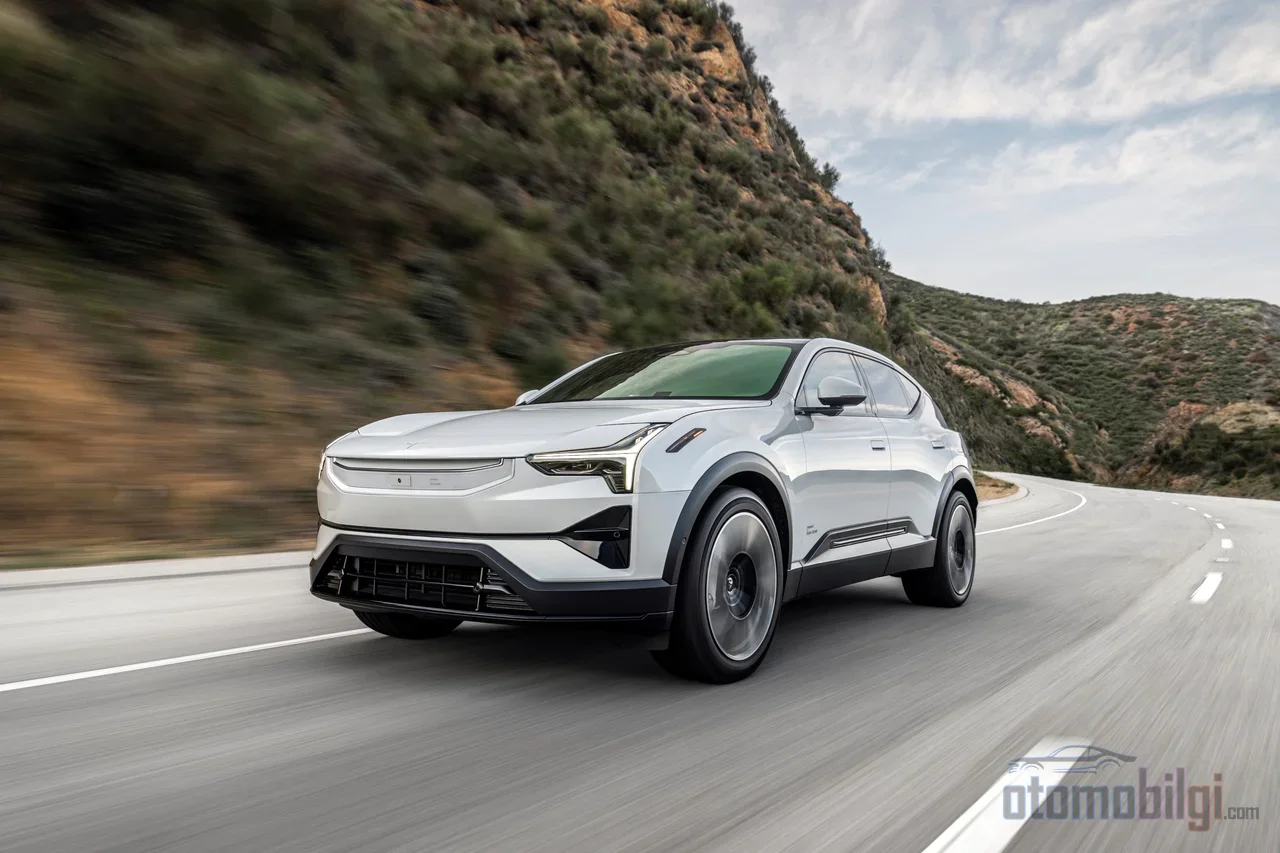
Philipp Römers, the name in charge of Polestar's design, has for the first time raised the possibility of a model that could rival Audi's new compact electric car A2 e-tron entering the brand's portfolio. This is not a confirmed production decision; it is an intent signal aimed at the compact segment that appears on the design chief's wish list. Still, viewed in context, the signal cannot be dismissed as empty talk: Polestar has already officially placed the Polestar 2 successor and the compact SUV Polestar 7 on its calendar. Below, we discuss what this statement means, the brand's prioritization, and the place of entering the compact segment in its strategy.
Highlights
- Polestar design chief Philipp Römers announced that he has put a compact model on his wish list; this is not a production commitment.
- Polestar announced the biggest model offensive in its history, featuring four new vehicles within three years.
- The all-new Polestar 2 successor arrives in 2027, and the compact SUV Polestar 7 in 2028. will arrive in.
- The arrival of the Polestar 6 has been delayed; priority was given to the Polestar 7.
- The brand closed 2025 with 60,119 vehicle sales, a 34% year-over-year increase.
What the Statement Actually Says: A Wish List, Not a Production Decision
The distinction here needs to be clarified from the start. The design chief bringing up a compact model does not mean the green light has been given. In the automotive press, this statement was reported as Römers having such a vehicle on his wish list; in other words, a signal at the level of intent. That a designer who spent most of his career at Audi and the Volkswagen Group, played a role in the design of the e-tron GT and the A3, and also penned the Mk7 Golf, is winking at the compact segment is hardly a surprise.
Römers' arrival at Polestar is also part of this picture. Transferred from Audi and bringing over 25 years of design experience, Römers replaced Maximilian Missoni, who led the brand's design for six years. The first tangible product of his tenure was the Formula 2030 concept, which showcases the brand's new design direction; described as a more assertive evolution of the Scandinavian design language, this concept offers the first clues about how the brand envisions the coming decade.
Evolution or revolution?
We have clear indications about Römers' design approach. When he spoke after IAA Mobility 2025, he argued in favor of a strong evolution, saying that revolution would be premature for now; he implied that the brand is still young and that radically changing its design identity would be a mistake-prone path. This attitude should be read as a consistent choice for a company under pressure to launch four new vehicles in three years. Rewriting the design language in the middle of a model offensive would be a luxury in terms of both cost and time.
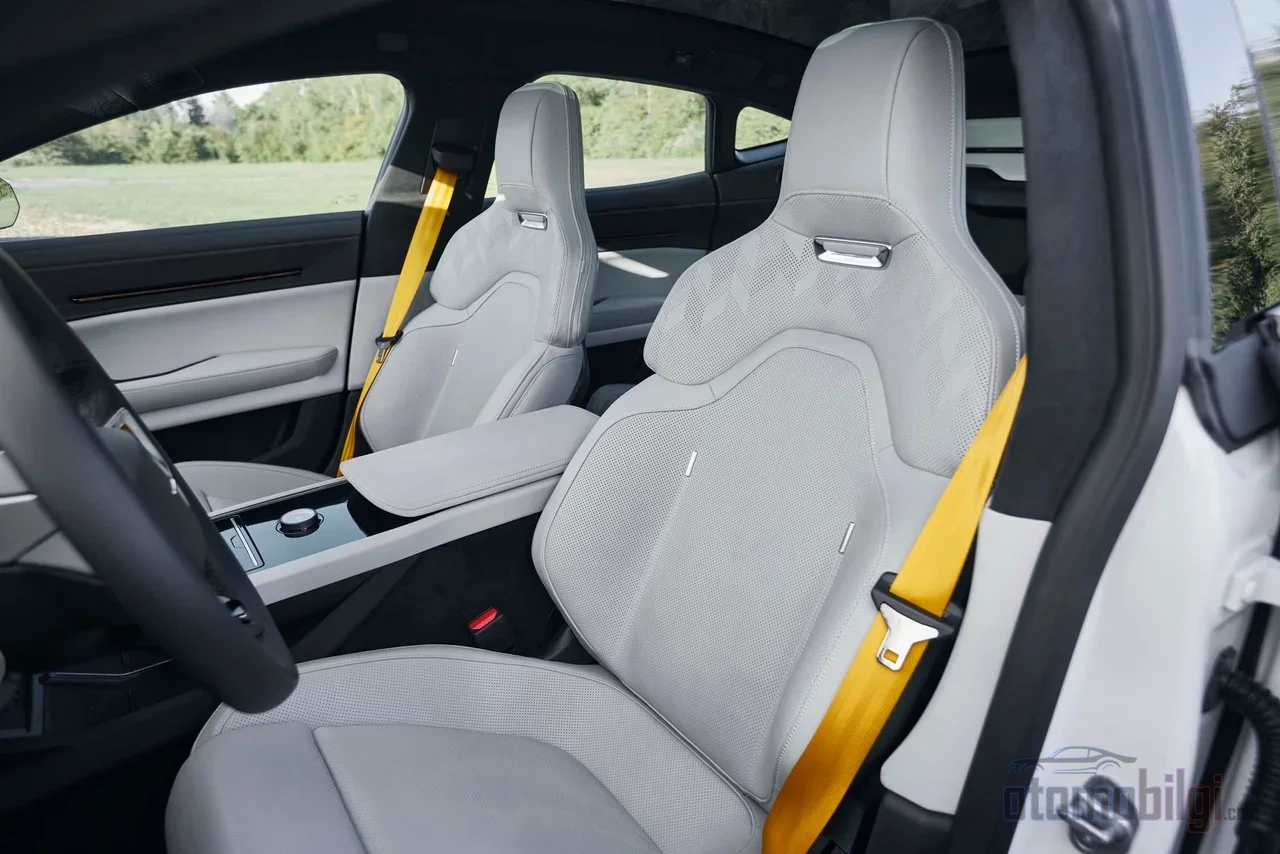
It is also more ambitious when it comes to color. Römers stated that Polestar stayed in shades of gray for a long time and that new colors will be added to the palette for a more human and emotional stance. Although it may seem like a small detail, it signals an expansion of brand identity: a brand that wants to enter the compact segment and carries a broader and more emotional design language also broadens its customer base.
Polestar's Priorities: First the 2, Then the 7
The real value of the compact segment rhetoric becomes clear when read together with the official model calendar. Polestar has openly announced that it has launched the biggest model offensive in its history: four new vehicles in three years. The calendar works as follows:
- Polestar 5: four-door GT, deliveries starting from summer 2026.
- New variant of the Polestar 4: electric station wagon format, in the last quarter of 2026.
- Completely new Polestar 2 successor: 2027 launch.
- Polestar 7: compact SUV, 2028 unveiling; expected to be positioned below the Polestar 3.
This ranking shows on what footing the design chief's compact model thinking stands. The Polestar 2 successor and Polestar 7 are at the top of the brand's priority list; sources fully confirm this. The Polestar 6 sports car was the first victim of this prioritization: the model's arrival, initially discussed for 2026 , was delayed and resources were shifted to the Polestar 7. In a company where budget and engineering capacity are limited, the sports car always goes to the back of the line; this is the automotive world's long-standing, unchanging rule.
| Model | Segment / Format | Status |
|---|---|---|
| Polestar 5 | Four-door GT | Deliveries from summer 2026 |
| Polestar 4 wagon variant | Electric station wagon | Last quarter of 2026 |
| Polestar 2 successor | Compact class representative | 2027 launch |
| Polestar 7 | Compact SUV | 2028 unveiling |
| Polestar 6 | Sports car | Delayed, Polestar 7 prioritized |
Why Did the Audi A2 e-tron Become the Benchmark?
Audi reviving the A2 name signals a notable movement in the compact electric segment. The German manufacturer is adding the A2 e-tron to its portfolio as a fully electric entry-level model and, with 12.8 kWh/100 km energy consumption, it sits at the efficiency extremes of its class. In the past, the compact class entry door meant a small gasoline engine; now it means an efficient, lightweight and cleverly sized electric platform. For Polestar, this segment's appeal is clear: that is where the volume is created.
Looking at Polestar's current lineup, there is indeed a gap. The Polestar 2 is no longer on the list of models produced for the US market; meaning the brand's most compact car is going through a transition period. The Polestar 4 sits smaller than the Polestar 3 but larger than the Polestar 2; the real compact gap in between will be filled by the new Polestar 2 in 2027 and the Polestar 7 in 2028. The possible additional model Römers mentioned would mean a further step, beyond these two official moves, toward the urban efficient compact class that Audi touched with the A2 e-tron.
The Edges of the Growth Strategy: Why the Compact Segment Makes Sense
Polestar's strategic framework is officially clear: entering fast-growing, high-value segments. 2025 was a record-breaking sales year for the brand; 60,119 vehicles were sold, which meant an annual 34% increase. The target for 2026 is low double-digit retail sales growth with a disciplined approach and 30% dealer network expansion. In this picture, the compact segment is one of the areas most aligned with the brand's volume targets.
On the other hand, the picture is not entirely rosy. After the US regulation targeting China-linked vehicles, it rejected Polestar's sales authorization for after the 2026 model year; the company also had to lower its full-year delivery forecast in September. In the US market, the base price of the Polestar 4 is at $56,400 the level; with incentives of up to $25,000 it can effectively drop to as low as $31,400 . So there is a real tension between strategic goals and short-term financial reality. The development cost of a compact model is significant; whether the volume that will finance this investment can be guaranteed is among the leading factors that will determine whether the signal turns into a decision step.
The questions readers ask most
- Will Polestar make a compact model? The Polestar 7 (2028, compact SUV) is officially on the calendar; it is also reported that a compact model that could rival the Audi A2 e-tron is on the design chief's wishlist. The latter is still only at the intention level.
- When is the successor to the Polestar 2 coming? The all-new generation will be launched in 2027
- When will the Polestar 6 come out? The initially discussed 2026 date was cancelled; priority was given to the Polestar 7.
- Who is Philipp Römers? A designer from Audi with over 25 years of experience; he became Polestar's design chief after Maximilian Missoni.
Is This Signal Valuable? The Editor's Assessment
As someone who has been following this industry for more than thirty years, I can say this: design chiefs' wish lists are less a harbinger of model plans than a compass of where that brand wants its identity to evolve. In the past, designers would dream at concept benches with a decade placed between them and series production; now, thanks to electric platforms, that distance has shortened considerably. Römers looking at the compact segment is valuable as the first sign that the design evolution that began with the Formula 2030 concept will not remain confined to the upper segment alone.
Still, caution is warranted. Polestar has concrete tasks ahead: Polestar 5 deliveries starting smoothly, the wagon variant finding a market, and the new Polestar 2 in 2027 becoming the brand's volume engine. Talking about a third compact model before these steps are cleared is, at this stage, a whisper-level intention. As for when and with what Polestar will stand against the efficient compact class that Audi opened with the A2 e-tron, only an official announcement can clarify that. Until then, it is best to read this signal as a step in the right direction that has not yet been taken.
Sources
- Polestar appoints Philipp Römers Head of Design
- Polestar starts largest model offensive in its history: four new cars in three years
- Polestar reports second quarter select and H1 2026 financial results
- Polestar confirms Formula 2030 concept car
- Polestar's design boss has an Audi A2 e-tron rival on his wishlist
- Audi A2 e-tron - Audi official
- Looking Past Shades of Gray: Polestar's Design Boss Wants More Exciting Colors - Road & Track
- Polestar 6 sports car won't arrive in 2026, Polestar 7 takes priority - Motor Authority
- Polestar cuts full-year delivery forecast - Reuters
- A Half-Price Luxury E.V. Comes With a Big Asterisk - The New York Times
- Polestar's Plans Include a New Electric Wagon, Next-Gen 2 Sedan - Car and Driver
- 2026 Polestar 7 Preview - CarsDirect