Why Are Cars Over 25 Years Old Considered 'Antique'?
Share This Page
Let's be honest now: in Türkiye, a vehicle turning 25 years old doesn't automatically make it an 'antique' and doesn't bring a red plate to your door. The 25-year threshold appears in legislation mostly in the context of scrap incentives; classic/antique status is determined according to classifications in the 30-40 year range. So the sentence 'it turned 25, now it's an antique' is unfortunately a fairy tale. But here's the good news: knowing what to do with an aging vehicle - scrap it or go the classic route - can seriously reward you. Come on, let's shed light on these three thresholds and the real rules together!
Highlights
- The 25-year threshold applies in the context of scrap incentives; antique classification 30-40 years in the range of
- For a vehicle scrapped, a new vehicle with domestic contribution is SCT exemption envisaged
- No matter how much a scrap-stamped vehicle is restored, it cannot be registered again for road use
- Minimum declared value in antique vehicle imports 35,500 USD, in some engine sizes the SCT is 220%
- 2026 vehicle inspection fee 3,288 TL, plate printing fee 850 TL
Three Different Age Thresholds: Which Age Brings Which Rule?
In Türkiye, vehicle age is not measured by a single threshold, and that's exactly the confusing part. Think of it as if there were three different passing grades for three different school subjects: they're all about 'age' but each enters through a different door.
| Threshold | In which context | What does it mean? |
|---|---|---|
| 25 years | Scrap incentive | 2000 model and earlier vehicles are considered eligible for scrapping |
| 30 years | International classic vehicle classification | Common minimum age in the definition of antique/historic vehicles; Germany's H plate is also given to 30-year-old vehicles |
| 40 years | Antique vehicle imports | At least this age is required for an antique vehicle to be imported; final approval is granted with the permission of the Ministry of Trade |
So your neighbor's words 'my car is a '25, it's an antique now' don't quite hold up legally. 25 years doesn't mean your vehicle 'has reached retirement age'; in the eyes of the state, it means 'of an age where it can be scrapped'. The classic title, on the other hand, requires a longer road.
Scrap Incentive or the Classic Route: The Big Decision for the Owner of a Vehicle That Has Turned 25
The regulation that came onto the Parliament's agenda in 2025 envisages an SCT exemption for those who scrap vehicles that have turned 25 years old (2000 model and earlier) when purchasing a new vehicle with a domestic contribution rate of 40% or more. The vehicle being registered in the name of an individual user is also among the conditions. A new vehicle without SCT looks very appealing at first glance, I know.
But the other side of the coin is merciless: In Türkiye, a vehicle given a scrap stamp cannot be registered for road use again, even if it is restored. In other words, if you hand over that old friend in the garage for the incentive, there's no going back. You can't scrap it thinking 'I'll make it a classic later'; that door is closed.
The classic world's window, however, looks at the vehicle's originality: being original, not having undergone major modifications, and the evaluation of classic vehicle clubs are decisive on this road. The 'restomod' approach, which blends restoration with modification, is also discussed as an alternative, but don't forget that the further you drift from originality, the lower your score in classic status.
The Red Plate Reality: Advantage or Restriction?
When red plates come up, everyone thinks of the 'privileged classic car,' but the picture is a bit more nuanced. In Türkiye, the color red is generally known as the color used for unregistered or temporary plating; the usage period of temporary red plates is subject to strict rules and usually lasts up to six months at most. When we speak of right of way, vehicles that must be yielded to come to mind; that privilege applies primarily to emergency service, fire brigade, and police vehicles.
So How Long Can a Red-Plated Classic Be Used?
It is important to know that a red plate does not mean 'you can freely drive anywhere you want.' Temporary red plates are issued for specific purposes and periods; even in Germany's Munich example, the permanent red classic plate only allows justified, specific trips (such as club meetings, maintenance, or exhibitions). So while the advantage is concentrated on costs and taxes, restrictions come into play regarding freedom of use. This is a system designed not for daily commuting in traffic, but for 'weekend enjoyment and events.'
What Rules Does It Run Into in Traffic?
- A vehicle registered with antique status carries a special status under the Highway Traffic Law No. 2918
- In roadworthiness inspections, basic safety systems such as brakes, lights, and steering must be working
- Some original components may be exempted from modern standards due to their age
- If the inspection is not performed, a fine is issued and an inspection becomes mandatory within 7 days
The Antique Status's Impact on Your Wallet: The Hefty Import Bill
In Türkiye, the biggest obstacle in front of classic car enthusiasm is the tax burden on imports. In the customs tariff, collectible items are under position 97.05; normal passenger cars are under position 87.03. According to circular No. 2013/12, if a vehicle under 87.03 is to be used outside its original purpose - for example, for exhibition purposes - it must be classified as 97.05.
The figures on the revenue side are chilling: 10% customs duty, 220% SCT for vehicles over 2000 cc, 20% VAT, and 0.8% TRT banderole. There is also an additional 25% tax on US-origin vehicles. The declared value also has a base of USD 35,500; meaning even if you buy the car for 10,000 dollars, you pay tax on 35,500. Systems like Germany's H plate are a living example of how the same passion is far more accessible in Europe.
Practical Details of Inspection, Insurance, and Registration
New vehicles have no inspection for the first three years, then every two years; older vehicles have more frequent inspection periods. For 2026, the automobile inspection fee is 3,288 TL (it was 2,620 TL in 2025) and the plate printing fee is 850 TL. These are not small amounts, but the operating cost of keeping a classic car on the road must be calculated beyond these.
Why Is Classic Car Insurance Different?
Classic vehicles are insured not with standard comprehensive coverage, but through special valuation processes. The insurer examines whether the vehicle is truly collectible and offers a special plan based on the declared value. Ankara Sigorta's 'Ankara Klasik' product in this field also shows that this market is maturing in Türkiye. As for restoration costs, estimates from the USA give 20,000-50,000 USD for simple mechanical and cosmetic work, and 40,000-120,000 USD for an average project. In Türkiye, the restoration of old vehicles in scrap condition in Bursa can exceed 400,000 TL. So you need to weigh your wallet very carefully when buying a 'project car'.
Classic Car Clubs: Don't Go Alone, Grow with Experience
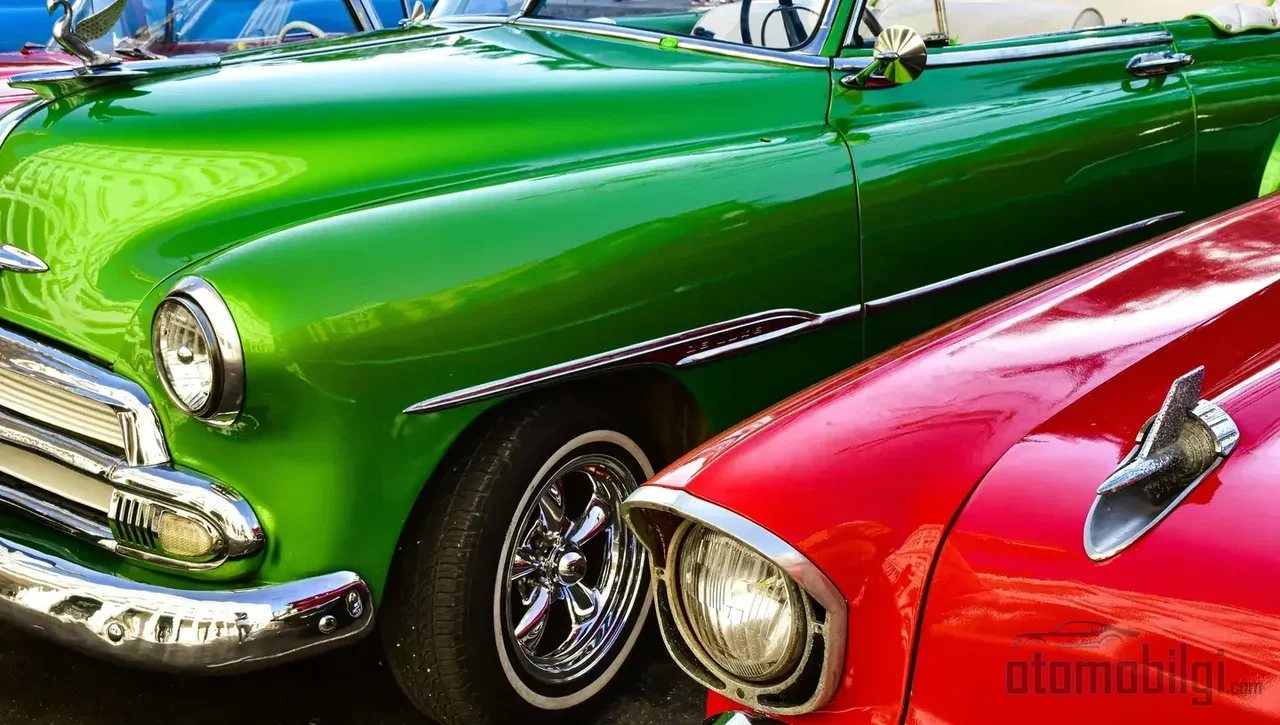
The heart of the passion for classic vehicles in Türkiye beats in clubs. Founded by enthusiasts in 1990, the Classic Automobile Club supports education with the theme of 'classics that appreciate as they age'. In Istanbul, IKOD was founded on May 29, 2009 with 18 founding members and holds the distinction of being Türkiye's second mixed classic automobile club. In Izmir, IZKOD organizes national festivals and guides classic vehicle owners on restoration.
TOSFED organizes classic automobile championships within the framework of 'National Classic Automobile Rules'; valid traffic insurance and first registration documents are mandatory in races. TÜVTÜRK also offers classic vehicle inspection presentations at festival panels for classic car club members. In other words, clubs are practically a shortcut for both learning the intricacies of registration and finding technical support. They know the vehicle's value, inspection tips, and restoration connections; and you quickly build a network.
A Realistic Picture for Beginners
The world of classic vehicles is fascinating but not fairy-tale-like. Import taxes are high, restoration costs fluctuate across a wide band, and 'antique' status still hinges on the 30-40 year threshold. Scrapping your 25-year-old vehicle provides an SCT advantage, while putting it on the classic path requires patience, the right club support, and an emotional commitment. The red plate is not a life-saving privilege, but a special registration format with boundaries.
So the honest answer to your question is this: a 25-year-old vehicle is not legally an antique; but with the right knowledge and the right community, stepping onto the classic path is more accessible today than ever. Take a look at your garage, decide for yourself which path you want to take - let the decision stay with you!
Sources
- How to Import a Vintage Vehicle? 2026 Guide
- Classic & Scrap Car Import in Türkiye
- Classic Car Import 2026
- What Are the 2026 Scrap Vehicle Incentives and Conditions?
- What Is the Scrap Incentive Law and What Are Its Conditions?
- The latest status on the SCT exemption for owners of vehicles over 25 years old
- What Are the TÜVTÜRK Plate Rules?
- Vehicle Inspection Fees 2026
- Vehicle Inspection Procedures
- Plate Colors and Their Meanings
- Red permanent plate for classic cars
- Classic Car Insurance
- Special insurance for classic vehicles from Ankara Sigorta
- Report on vintage car import issues
- Scrap vehicle restoration for 400 thousand TL
- Differences between restomod and original restoration
- Classic Car Club
- Istanbul Classic Car Enthusiasts Association (İKOD)
- Izmir Classic Car Enthusiasts Association (İZKOD)
- National Classic Car Rules - TOSFED