From the Parking Lot to Your Own Wallbox: EV Charging in Your Apartment

Share This Page
Setting up electric vehicle charging in your apartment building was greatly simplified by the Ministry of Environment, Urbanization and Climate Change circular that came into force on August 4, 2024: For shared parking areas, a decision by majority of number and land share is now sufficient instead of the four-fifths consent of all unit owners, and the building permit requirement was removed entirely. This guide walks you through the process step by step, from obtaining a unit owners' association decision to checking the adequacy of the electrical installation, and from meter selection to wallbox installation costs.
Highlights
- With the August 4, 2024 circular, the majority required for charging unit installation dropped from four-fifths to a simple majority (50%+1).
- If installation is carried out without touching the wiring in a parking area that is an annex to an independent unit, a unit owners' association decision is not required.
- The cost of home wallbox installation, including device and mounting, ranges from 45,000-150,000 TL; the determining factor is not the device power but the electrical infrastructure.
- Common AC units are rated at 3.7-22 kW; a 7 kW unit requires a 32 A/3-phase fuse and typically 6-16 mm² copper cable.
- New buildings are now required to have charging infrastructure for a certain number of parking spaces.
Which Legal Regulations Govern Charging Unit Installation?
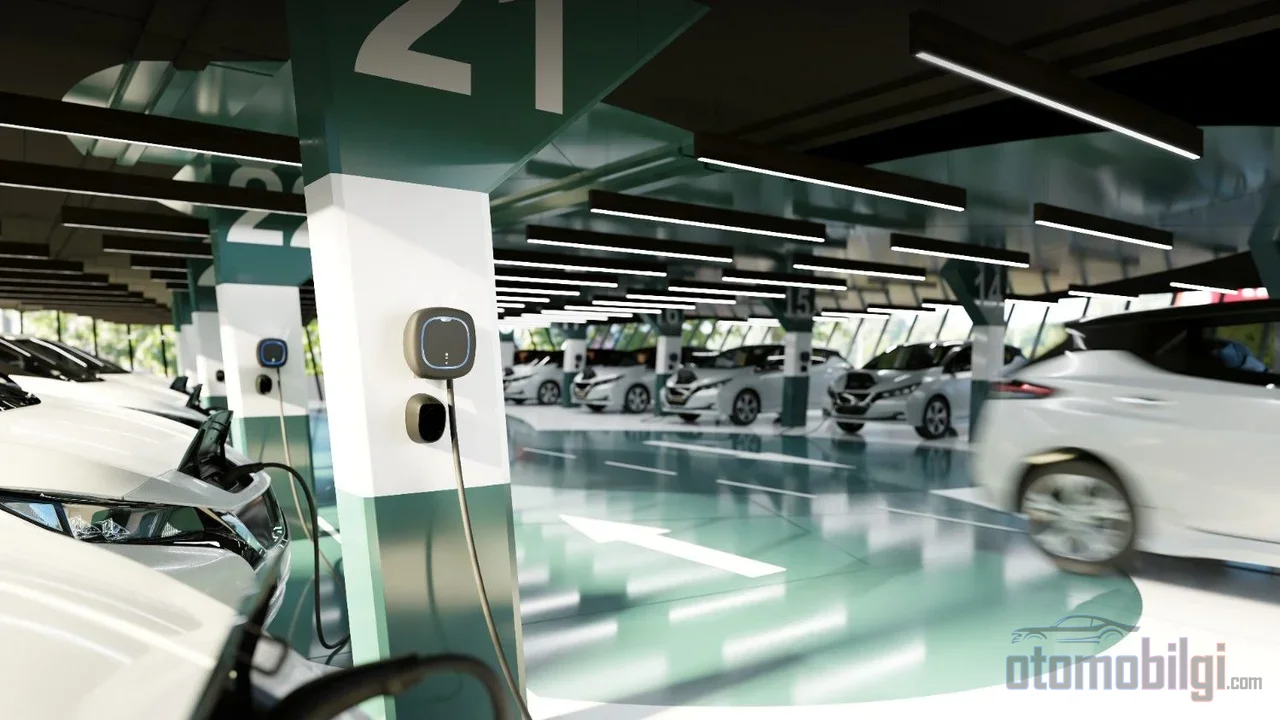
Three regulations frame the process. The first is the Condominium Law No. 634 (KMK): Article 19 requires the written consent of four-fifths of all unit owners for construction, repair, or installation of facilities in common areas. The second is the Ministry's circular dated August 4, 2024, "Installation of Electric Vehicle Charging Units in Housing Complexes and Apartment Buildings"; sent to 81 provinces and reported to EMRA, this circular ties charging unit installation to the provision on "useful innovations and additions" in KMK Article 42 - for this article, a decision by majority of number and land share is sufficient. The third pillar is EMRA's Charging Service Regulation.
The rationale behind the circular is meaningful from an engineering standpoint: Charging units are classified as portable electric devices that are not subject to construction activity, do not create enclosed space, are installed as modules, can be disassembled and reinstalled, and have fire and electrical precautions in place. In other words, you are not building a wall, you are mounting a device; therefore, it is not considered a structure subject to permits. This classification is the logical basis for overcoming the four-fifths requirement for shared parking installations.
When Is a Unit Owners' Association Decision Required, and When Is It Not?
Two scenarios fall on either side of the dividing line.
Installation in a shared parking area
If you are installing your vehicle's charger in the building's shared parking area, a decision by the majority of number and land share (50%+1) of unit owners is sufficient. In a 10-unit building, approval from 6 units is enough to pass this threshold. For installation, the approval of the relevant electricity authority must also be obtained; the circular grounds this on references to the Planned Areas Zoning Regulation and the Electrical Indoor Installations Regulation.
Installation in an assigned, annex-type parking area
If your parking garage qualifies as an annex to your independent unit and the installation is carried out without modifying the electrical wiring and without affecting other independent units or common areas, a condominium owners' assembly resolution is not required. The determining question in practice is this: Does the parking space appear as an "annex" annotation or easement in the management plan and title deed records? This record directly affects your right to install on your own; checking the title deed status as the first step of the decision-making process prevents objections from arising later.
There is a gray area that needs to be addressed here: According to some interpretations, it is argued that written consent of four-fifths is still required for an individual installation at one's own parking space. This view contradicts the simple majority approach of the circular, and at the center of the debate lies the same distinction once again - is the parking space an annex to an independent unit, or a common area? In legal literature, the provision is interpreted within Article 42 in some sources and Article 19 in others. The assessment that condominium owners cannot prevent the installation but can intervene in its location and form is the approach that best summarizes the practical balances among existing interpretations.
Is the Electrical Wiring Sufficient? Pre-Installation Checklist
The charging unit is a device; the real work is the wiring. The main panel, cable cross-section, transformer, and connection capacity need to be checked by a qualified electrical engineer; if insufficient, an increase in subscription capacity or a transformer upgrade may come onto the agenda. In a single-phase subscription, home-type stations operate only at limited power - seeing 3×220/230 V or 380/400 V on the meter is a sign of three phases, and a three-phase connection is a prerequisite for an AC unit to operate at full capacity.
A 32 A/3-phase (or 64 A/1-phase) fuse is required for a 7 kW AC unit; the cable cross-section is typically selected in the 6-16 mm² copper range - a 10 mm² cross-section can be given as an example for loads continuously above 50 A. Measuring the grounding transition resistance in Ohms before installation is also among the recommended steps. Putting these values on the table before installation largely eliminates later cost surprises; experience already shows that what determines the total cost is not the device's power but the current state of the electrical infrastructure.
Shared Meter or Individual Meter?
Choosing between the two operating models affects both the wiring and the sharing of expenses. In the shared meter model, electricity is divided according to each user's consumption; in the individual model, consumption is tied directly to the subscription of the relevant apartment. A newly installed fixed station affects not only the shared meter but also the panel, fuses, and cable cross-sections - therefore, switching to the shared meter model must be done with an assembly resolution in accordance with the provisions of the management plan.
For the administrative framework of expense sharing, you can draw inspiration from a well-known model: The built-in 70% consumption / 30% area (square meters) allocation used in heat cost allocator applications offers a similar logic for sharing the costs of a shared-meter charging setup. It must be emphasized that: Heat cost allocator results cannot be directly applied to EV charging; the analogy here is only for the administrative structure of consumption-based cost sharing. Although there are observations that individual installations are becoming difficult and setups are shifting to shared meters, this is not yet a general rule but a trend seen in individual site practices - for confirmation, you should refer to your own management plan and the structure of your apartments.
Which Wallbox Should You Choose? Power, Socket and Standards
AC wallboxes are offered in a power range of 3.7-22 kW; the most common choices are 7 and 11 kW units. The socket standard should be Type 2 and the communication protocol should be OCPP 1.6 or higher - OCPP is the openness that allows the device to communicate with its management platform and makes it easier for you to switch to a different operator in the future. On the device, compliance with the TS/EN/IEC 61851 and 62196 standards along with a CE certificate are the baseline requirements to look for.
DC fast charging is a different category: These units with over 30 kW (typically 50-150 kW), with CCS or CHAdeMO sockets, complete a charge from 20% to 80% in 30-50 minutes. DC power is an unnecessary investment for a parking garage where apartment residents park overnight; an AC unit is technically a much better fit for the usage scenario. A DC installation only makes sense when serving third parties comes into question - and at that point the legal nature of the undertaking also changes.
| Feature | AC Wallbox | DC Fast Charging |
|---|---|---|
| Power | 3.7-22 kW (commonly 7-11 kW) | Over 30 kW (50-150 kW) |
| Socket | Type 2 | CCS / CHAdeMO |
| 20%→80% charging time | On the order of hours | 30-50 minutes |
| Typical fuse/breaker | 32 A/3-phase (for 7 kW) | Requires a high-power installation |
| Suitable scenario | Overnight parking, home and apartment parking garage | Quick turnaround, commercial station |
How Much Does Installation Cost and What Does It Consist Of?
For a home-type installation including the device and mounting, a range of 45,000-150,000 TL is indicated. The reason for this wide range is simple: The device's power is not the only item that determines the cost. At the low end, there is a well-prepared building where the infrastructure is ready and only the unit is mounted; as you approach the high end, panel renewal, cable laying, power upgrades and permitting processes come into play. Another calculation approach gives a cost per power - an installation value at an average level of approximately 7 TL/kW. The two figures cannot be placed in the same picture because they are measured with different definitions; showing the items separately is healthier:
- Hardware: The device cost, varying according to the power and hardware level of the selected AC unit.
- Electrical infrastructure: Panel, fuses, cable cross-section, grounding and, if necessary, a subscription power increase - the item that expands the range the most.
- Permit and approval process: The utility company's positive opinion and management procedures.
Maintenance should also be planned on the operations side: 1-2 detailed maintenance sessions per year (firmware updates, grounding resistance measurement, etc.), visual inspection every three months, and a 24-48 hour response target in case of failure are among the requirements for the continuation of a healthy installation.
Negotiating with the Site Management: How Is the Process Conducted and Where Are the Limits?
Decision-making processes are bound by the provisions of the management plan; decisions taken contrary to the plan may become the subject of an annulment lawsuit. In other words, management's refusal of a charging unit must not rest on a mere excuse, but on a procedure grounded in the management plan and the Condominium Law (KMK). With the simple majority requirement now in effect, the most practical path in most blocks is to convene the condo owners' assembly and pass a favorable decision for the shared parking lot - in a building with 10 units, the approval of 6 units provides the sufficient majority after the circular.
The business model should also be discussed at the negotiating table. Commercially oriented stations serving parties outside the condo owners are outside the scope of the circular; to offer paid charging services to third parties, it is necessary to work with an EPDK-licensed charging network operator. The idea of "let's make money with a site station" is tied to this licensing requirement; clarifying the boundary between non-commercial resident use and the commercial model before installation prevents both legal and billing problems later on.
On the industry side, the picture is growing rapidly: WAT Mobility, part of the Koç Group, has reached over 600 stations in more than 60 provinces and approximately 2,000 charging sockets as of the end of 2025; about half of these sockets are AC, half DC. The company's 2026 target is the widespread rollout of 180-360 kW DC infrastructure. Revenue sharing, hybrid, and site-investment business models are also offered - meaning management can bring joint models with charging network operators to the table instead of shouldering the entire cost on its own budget. It should also not be forgotten: New buildings have been required to include charging infrastructure for a certain number of parking spaces; the luckiest group in terms of infrastructure will be those moving into new-generation residential complexes.
Conclusion: A Step-by-Step Roadmap
If we boil the process down to a single sequence: First, clarify the status of your parking space in the deed and management plan; if it is accessory in nature and the installation will not be touched, you can proceed without seeking an assembly decision. If it is in a common area, obtain a simple majority decision from the condo owners' assembly. Then have an electrical engineer inspect the installation - meter type, fuse, cable cross-section, and grounding. Determine the meter model (shared/individual) and the cost-sharing method, choose an AC unit with OCPP 1.6+ support and IEC 61851/62196 compliance, obtain the electrical authority's approval, and have the installation carried out. If you have commercial sales in mind, talk to an EPDK-licensed operator at that point. Each step has a benchmark; management that proceeds in order keeps both costs and the risk of objections to a minimum.
Sources
- ÇŞİDB: Widespread Deployment of EV Charging Units in Apartment Buildings and Housing Complexes (Circular announcement)
- Circular on EV Charging Unit Installation in Housing Complexes and Apartment Buildings (Full Text)
- How to Install an Electric Charging Station in Housing Complexes and Apartment Buildings?
- EV Charging in Apartment Buildings: Installation, Legal Process, and Costs
- Home Charging Station Installation: Cost, Permit, Process
- EV Charging Station in Common Areas of Housing Complexes and Multi-Unit Residences: Legal Regulations Guide
- How Electricity Subscription (Single-Phase/Three-Phase) Affects Charging Power
- EV Charging Units in Buildings Subject to Condominium Ownership (Law Faculty Journal article)
- Heat Cost Allocator 70%-30% Sharing Models