A Growing Miniature Car Passion with Hot Wheels and Matchbox
Share This Page
Hot Wheels and Matchbox, two brands that since the 1960s have turned miniature cars from a children's toy into a massive collector culture. Today we're opening the doors to a world where adults build collections worth millions of dollars and rare models sell at auction for record prices. If you're ready, we're diving into this massive 1:64 scale universe!
Highlights
- Hot Wheels was launched on May 18, 1968; in its first year it sold 16 million units.
- Mattel produces roughly 519 million Hot Wheels every year - almost 17 cars per second!
- The most valuable model is the pink Volkswagen Beach Bomb: its value can reach up to 175,000 dollars .
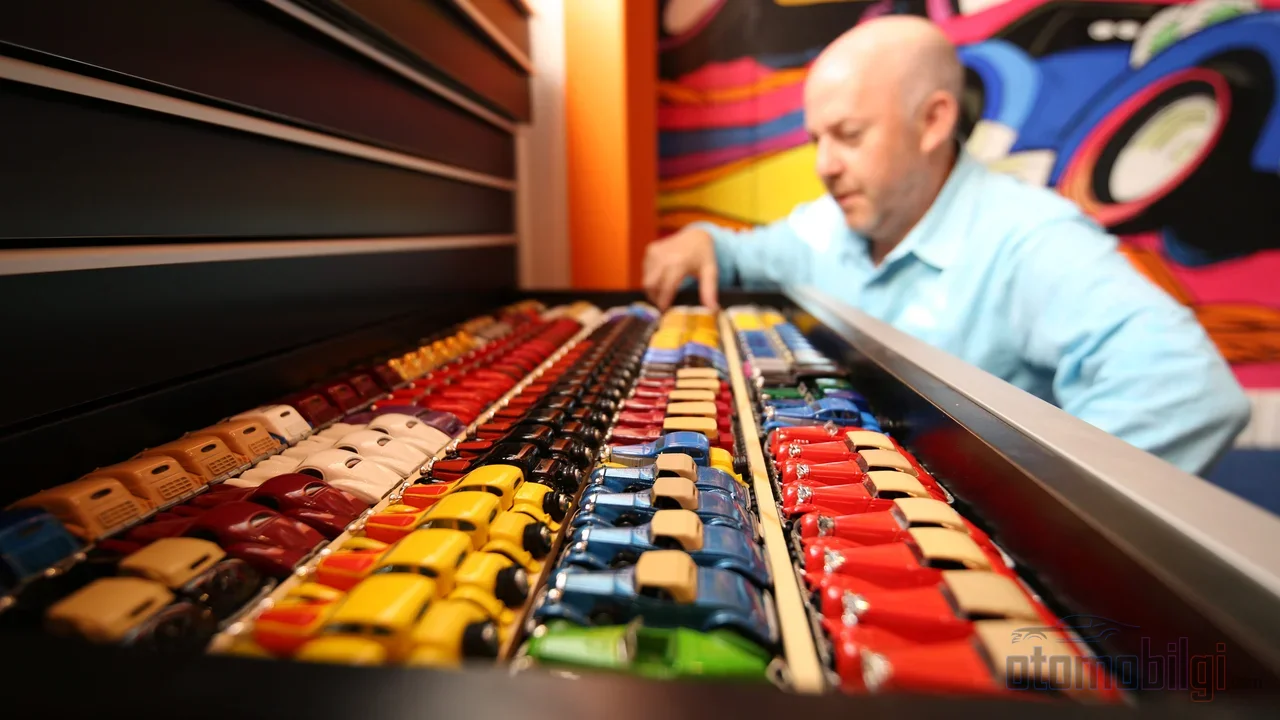
- An average adult collector owns around 1,500 cars .
- In 2017, Hot Wheels brought Mattel 847 million dollars in revenue.
How It All Began: A Reaction to a "Nice But Slow" Toy
Here's a question for you: how was the world's most famous toy car born? The answer starts entirely with a father's attentiveness. Mattel co-founder Elliot Handler - yes, the man behind Barbie too - was watching his son play with Matchbox cars when he noticed something: the Matchboxes were "nice but slow." Handler had something completely different in mind: a fast, California-style car with muscle car and hot rod aesthetics.
To do that, he assembled the right team: Harry Bentley Bradley from the General Motors design studio and Jack Ryan, a Yale-educated missile systems engineer. What's a missile engineer doing on a toy car? Designing pilot pin axles from piano wire and Delrin bands, he reduced friction to nearly zero. In other words, these cars fly on the track. When Handler saw the first prototype, he said: "Those are some hot wheels!" - and the brand's name was born at that very moment.
The first series released on May 18, 1968 consisted of 16 models known among collectors as the Sweet 16 : Custom Camaro, Custom Mustang, Custom Corvette, Beatnik Bandit, Deora, Python, Silhouette... In its first year, they sold a full 16 million units . Prices ranged from just 69 to 98 cents, and according to legend, a Kmart executive was so impressed by the presentation that he ordered 50 million cars on the spot. If we'd been there for such a moment, we'd probably have screamed.
The Redline Era: The Collectors' Sacred Line
Speed wasn't the only thing that made Hot Wheels so special. Mattel's patented Spectraflame paint sat on the mirror-polished metal like a translucent, candy-colored coating. Add to that the red-striped wheels, and the result was a visually unstoppable look. That's why collectors today call the 1968-1977 period the Redline era - and models from this period command serious money on the secondary market.
What's the Difference Between Hot Wheels and Matchbox?
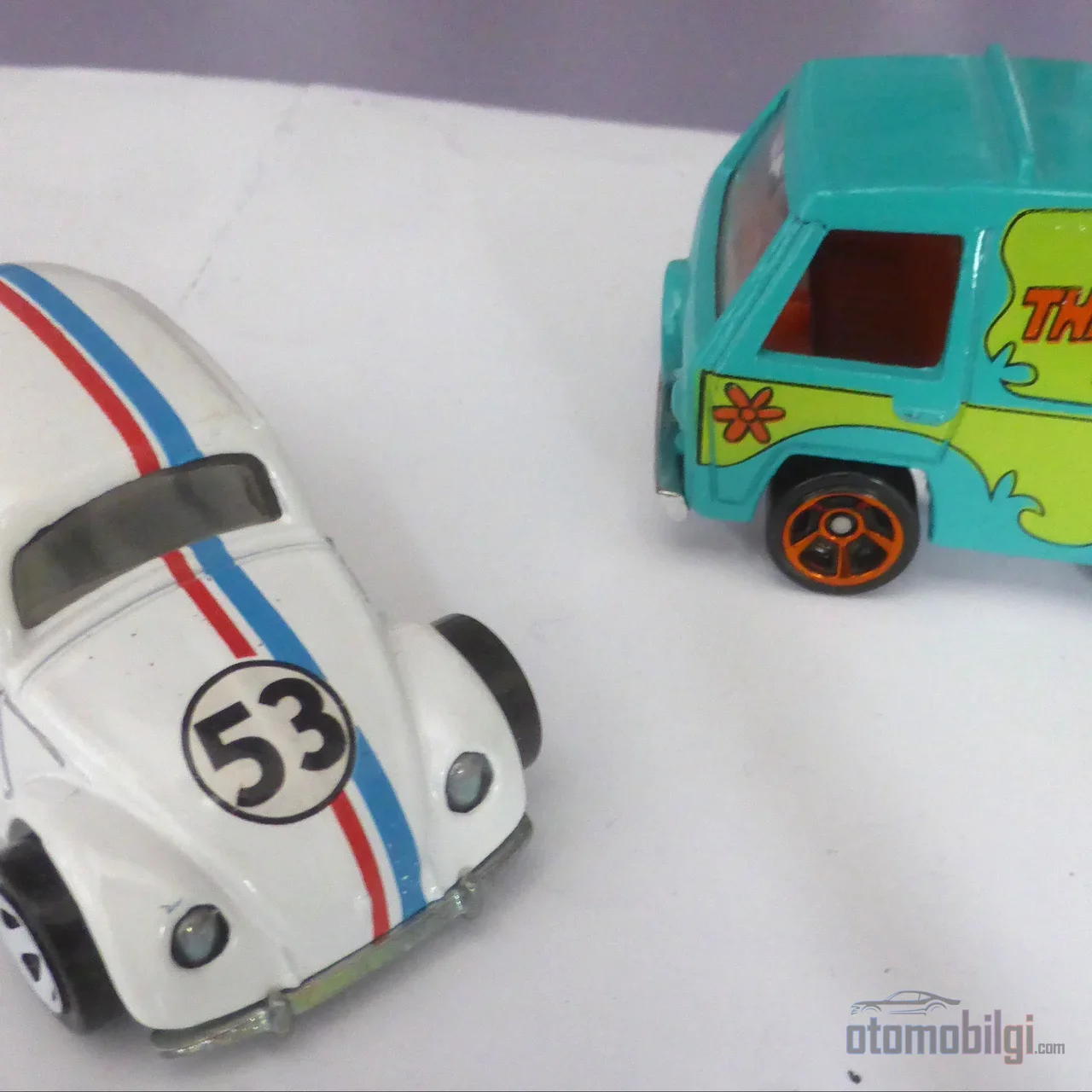
This question is a classic debate in the collecting world, and the answer is more interesting than you might think. First, a striking detail: today both brands belong to Mattel. Matchbox joined the Mattel family in 1997. So these two fiercely rivaling brands are actually children of the same house. They are also nearly identical in size: both are about 2.5-3 inches, i.e. 1:64 scale.
The difference is entirely in character. While Hot Wheels focuses on speed, custom designs and fantasy castings, Matchbox prefers realistic vehicles - fire trucks, farm machinery, the vehicles you see on the street. On the Mattel side, the division of labor roughly works like this: Hot Wheels shines with its Premium line for adult collectors, while Matchbox thrives on the more playful side.
| Feature | Hot Wheels | Matchbox |
|---|---|---|
| Owner | Mattel (both since 1997) | Mattel |
| Size | ~2.5-3 inches / 1:64 | ~2.5-3 inches / 1:64 |
| Focus | Speed, custom design, fantasy models | Realistic, everyday vehicles |
| Strength | Premium and collector lines | Realism and affordability |
Matchbox's story is a lesson in itself. The brand started as Lesney production out of an old pub in the United Kingdom and was the market leader for 15 years. Then Hot Wheels came along and dethroned it. While some collectors criticize Matchbox designs as "not cool," others adore it for its realism and affordability - some even say it is possible to collect vintage Matchboxes much more cheaply than Hot Wheels. Which side are you on?
How Real Automakers Shaped the Toy World?
Here is the cleverest part of the whole business. Mattel has official licensing agreements with nearly all major automakers, including Ferrari, Porsche, Lamborghini, BMW, Mercedes, Ford, Chevrolet and Dodge. So the miniature Ferrari in your hand is produced with real Ferrari's approval. For automakers, this is like free marketing: a child grows up with a miniature Lamborghini at age 8 and dreams of the real one at 30. The toy car world is the smallest yet most effective ambassador of car culture.
And this relationship is not one-way - sometimes the toy makes it into real life! The Twin Mill fantasy car designed by Ira Gilford in 1969 was turned into a full-size, genuinely working vehicle with twin V8 engines in 2001. Think about it: a design born as a child's toy on paper is now burning fuel on the road. The SEMA show regularly hosts full-size vehicles inspired by Hot Wheels designs; even the Petersen Automotive Museum in Los Angeles has held permanent Hot Wheels exhibitions.
There is also an out-of-this-world moment: inside the real Tesla Roadster launched into space by SpaceX's Falcon Heavy rocket in 2018, there was a Hot Wheels Tesla Roadster replica. So a toy car went into Earth's orbit in space. The altitude reached by a miniature car is, quite literally, orbital level.
Why Do Adults Collect Toy Cars?
The answer is deeper than you think. First, look at the scale of the business: since 1968, Hot Wheels has sold more than 6 billion units sold and more than 20,000 variations cataloged to date. The average collector owns around 1,500 cars . As the Washington Post put it, the enduring appeal of this 56-year-old toy comes from its cross-generational charm and its strong connection to car culture - sales are at record levels precisely thanks to adult collectors.
So why? Limited production runs, special editions, and the "found it on the shelf!" moment make collecting an adrenaline-filled and rewarding game. The 1:64 scale also has a big advantage: where a display area holds 50 cars at 1:18 size, hundreds of 1:64 cars fit in the same space. There are also plenty of people who defend the intangible side of collecting - some collectors say this hobby feeds on the value they place on their passion rather than on physical pieces. Some even argue that collecting model cars is better for the mind than scrolling on social media.
Red Line Club: Models Selling Out in 60 Seconds
The clearest proof of this adult obsession is the Red Line Club. In this membership-based club by Mattel, special models can sometimes sell out in less than 60 seconds . Demand is so excessive that Mattel had to create a separate "Overdrive Membership" tier to manage the extreme intensity. Imagine: racing against the seconds in a virtual store trying to grab a miniature car. Among the RLC models announced for 2026 are legends like the '65 Shelby Cobra 427 S/C, '71 Datsun 510 Spectraflame Purple, Ferrari F40 Spectraflame Bright Red, Nissan Skyline GT-R BNR32 and RWB Porsche 930.
Most Valuable Hot Wheels and Matchbox: Auction Records
Now we come to the million-dollar part of the story - yes, million-dollar. The most valuable Hot Wheels of all time is the 1969 pink rear-loading Volkswagen Beach Bomb: its value reaches up to $175,000 . So why is this tiny VW Bus so precious? The story is a true triumph of chance. In designer Howard Rees's prototype, the surfboards loaded through the rear window; but on the orange tracks the car became too heavy and tipped over. In mass production the boards were moved to the sides. The pink color was an attempt to market Hot Wheels to girls - a total commercial failure. But that failure accidentally created one of the rarest pieces in toy history: only two pink examples are reported to exist in the world.
A brief footnote: There is no single definitive price on the market; valuations range from over $150,000 to $175,000 depending on the model, condition, and moment of sale. That's how rarity works - every sale has its own story.
This tiny treasure also appeared on the famous Pawn Stars show: The owner asked for $150,000 , Rick Harrison offered $70,000 and no deal was made. In the years since, a red rear-loading Beach Bomb prototype was also appraised on PBS Antiques Roadshow at $100,000-150,000 was valued at. In 1998, a collector bought 250 vintage Hot Wheels, including 25 prototypes, from a former Mattel engineer for $9,000 in total - the Beach Bomb eventually changed hands for $50,000 to the world's leading collector.
Bruce Pascal: The Man with a $2 Million Toy
The face of the adult collector phenomenon: the commercial real estate manager from Washington D.C. Bruce Pascal. His 7,000-piece collection is worth approximately $2 million - and he owns one of those two pink Beach Bombs. Yes, his main profession is real estate management, but in the Hot Wheels world his name is spoken like a legend. Imagine a path from a childhood bedroom to a million-dollar collection room; he is the man standing at the end of that road.
Other High-Value Models
- 1968 "Over Chrome" series: per car $10,000-50,000
- Classic Cord: approximately $6,600
- Woody: approximately $8,000
- Beatnik Bandit: approximately $5,000
- 1971 purple Spectraflame Bye-Focal: approximately $6,000
- 1974 Magenta Rodger Dodger with white interior: approximately $3,000
The Matchbox side is no slouch either. Rare examples can fetch £4,000-11,000 at auctions; a rare Matchbox sold for a record $30,000. One of the brand's rarest examples is the turquoise Opel Diplomat released in 1967. And the hunt continues in the modern world too: the 2024 "Super Treasure Hunt" collection changes hands on the secondary market for $446-2,240 .
Is Collecting Toy Cars an Investment?
Let's be honest: for some collectors this is pure passion, for others it's a serious store of value. Both are right. On the investment side, models representing icons such as the Ferrari F40, Lamborghini Countach, classic Le Mans racers and legendary F1 cars are among the most sought-after pieces. The main criteria in price guides are well known: the red lines of the Redline era, Treasure Hunt finds, production errors and, of course, condition. A model's value emerges from the combination of these four elements - like a miniature version of a real classic car appraisal.
But let's also issue a warning: entering this hobby with an eye toward "guaranteed profit" would be a mistake. In this world, the real gain is that feeling you get every time you look at your collection growing on the shelf. The rest, just like the pink color of the Beach Bomb, can turn into a surprise.
Hot Wheels Legends Tour: From Miniatures to Real Tracks
Perhaps the best example showing how alive this culture is the Hot Wheels Legends Tour. The tournament is in its ninth year and in 20 countries, it is experiencing its broadest season ever with in-person and virtual events. The goal is simple: to find legendary cars in ordinary people's garages and turn them into Hot Wheels miniatures. Is there a parachute car in your garage? Maybe one day the world will be picking up the 1:64 version of your car from the shelf.
There are more surprises on the 2026 calendar: the Car Culture series is celebrating its 10th year, and from this year on, sets will offer an extra "favorite" car instead of the black "chase" car. The Pop Culture series features pop culture icons like a Godzilla-themed Nissan Skyline. The Silver Series "1968 Vintage Club" set brings back five cast cars from the 1960s. In short, the brand never stops paying tribute to its roots.
Tiny Cars, Massive Passion
From axles a rocket engineer built to eliminate friction, to a Tesla replica sent into space; from a 69-cent toy to a 175,000-dollar collection piece... The story of Hot Wheels and Matchbox is proof of how universal the passion for cars is. In a world where 17 cars are produced every second, those little cars on your shelf are also part of this massive story. So which one is your most valuable miniature? We're curious to hear the answer - because this passion grows precisely with these questions.
Sources
- Hot Wheels: The History, Car Culture & Collecting Guide
- Hot Wheels - Wikipedia
- The Rise and Fall of Matchbox's Toy-Car Empire
- The 20 Most Valuable Collectible Hot Wheels Cars Ever
- Most Expensive Hot Wheels Ever Sold
- The Most Valuable Hot Wheels Cars Ever Sold
- Most Valuable Hot Wheels Cars in 2026
- Hot Wheels sales are on fire
- What is the difference between Hot Wheels and Matchbox?
- Hot Wheels vs Matchbox - Which to Collect?
- 2026 Hot Wheels MASTER LIST of all lines
- From garage to die-cast car: 2026 Hot Wheels Legends Tour
- Rare Matchbox Cars Worth Money
- Rare Matchbox Cars
- Hot Wheels Price Guide 2026
- Are Diecast Models a Good Investment in 2026?