Are There MTV and Tax Advantages for Hybrid Car Owners?

Share This Page
No, as of 2026 there is no MTV (motor vehicle tax) discount in Türkiye for standard hybrid and plug-in hybrid cars. These vehicles are taxed under the same tariff as their gasoline and diesel counterparts, based on engine displacement, vehicle value, and vehicle age. Having an electric motor offers no direct benefit on the MTV side; the difference only emerges with fully electric vehicles, which are assessed based on motor power. In this article, we examine the annual tax a hybrid owner actually pays with concrete figures.
Highlights
- Hybrid and plug-in hybrid vehicles are not granted an MTV discount in 2026.
- MTV is calculated based on engine displacement, vehicle value, and vehicle age .
- For a vehicle under 1,600 cm³, aged 1-3 years, with a vehicle value above 541,500 TL, the annual MTV is 12,028 TL.
- MTV payments are made in two installments ; the first installment is paid at the start of the period.
- For fully electric vehicles, the calculation is based on motor power (kW) instead of engine displacement.
How is a hybrid vehicle assessed in MTV calculation?
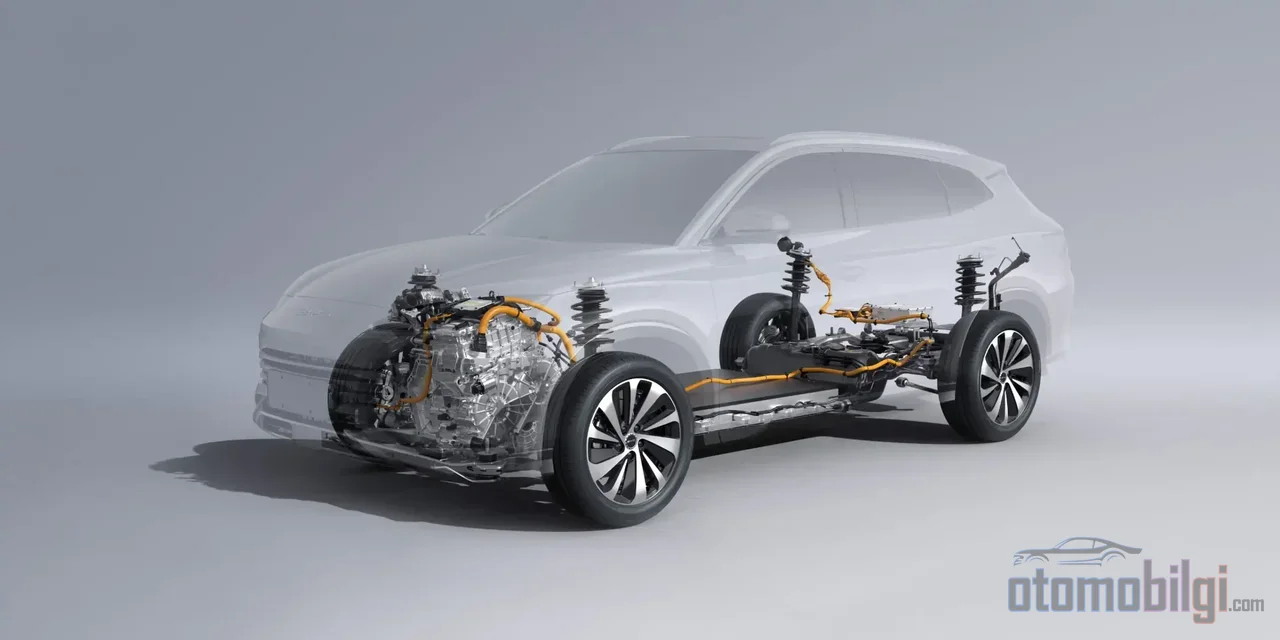
Three variables are decisive for cars under the Motor Vehicles Tax: engine displacement, vehicle value, and the vehicle's age. The tariff is divided into subgroups by engine displacement; within each group there are brackets by vehicle value, and the amount gradually decreases as the vehicle ages. A hybrid car receives no privilege in this table. No matter how powerful an electric motor it contains, from the tax office's perspective the vehicle's identity is defined by the displacement of its gasoline engine.
The practical consequence is this: a hybrid with a 1,497 cm³ gasoline engine pays exactly the same MTV amount as an ordinary gasoline car of the same displacement. The electric motor's power, the battery capacity, or the vehicle's consumption are not taken into account. There is no separate category, rate, or exemption defined for hybrids in MTV legislation.
2026 MTV tariff: amounts a hybrid owner will pay
In 2026, MTV amounts increased in line with the revaluation rate. Tariff No. I for cars applies the following amounts to vehicles registered after January 1, 2018. Payments are collected in two installments; the amounts shown are annual totals.
| Engine Displacement | Vehicle Value | 1-3 Years (Annual) |
|---|---|---|
| 1300 cm³ and below | Up to 309,100 TL | 5,750 TL |
| 1300 cm³ and below | 309,100 – 541,500 TL | 6,319 TL |
| 1300 cm³ and below | Above 541,500 TL | 6,902 TL |
| 1301 – 1600 cm³ | Up to 309,100 TL | 10,016 TL |
| 1301 – 1600 cm³ | 309,100 – 541,500 TL | 11,023 TL |
| 1301 – 1600 cm³ | Above 541,500 TL | 12,028 TL |
| 1601 – 1800 cm³ | Graduated by vehicle value | 19,472 – 21,251 TL |
| 1801 – 2000 cm³ | Graduated by vehicle value | 30,679 – 33,474 TL |
The vast majority of hybrid cars on the market fall into the under 1,600 cm³ group. The reason is historical: in Türkiye, hybrid models were sold for many years with engines downsized below the 1,600 cm³ threshold in order to benefit from the SCT advantage. As a result, a typical hybrid owner today pays an annual MTV between 10,000 and 12,000 TL pays; as the vehicle value rises, it approaches the upper bracket.
Why are electric vehicles calculated differently?
Since fully electric vehicles have no parameter such as cylinder capacity, MTV moves away from the internal combustion logic and is calculated based on motor power (kW). This distinction draws a clear line between hybrid and electric in terms of tax: even if it is a plug-in hybrid, every vehicle with an internal combustion engine is subject to the traditional framework. Only battery-powered vehicles fall under power-based calculation.
The regulations on the agenda closely concern the electric side. As of 2026, a new system based on vehicle value and vehicle age instead of engine capacity is being discussed for electric vehicles; moreover, Law No. 7582, which entered into force on June 4, 2026, introduces a new tax incentive for individuals relocating to Türkiye and also envisages a change in the MTV calculation method. These changes do not yet cover hybrid vehicle owners; however, they show that the legislation is moving and that tariffs may be reshaped in the coming period.
The ÖTV situation for hybrid vehicles: is there an advantage?
The biggest tax item at the time of purchase is the ÖTV (Special Consumption Tax). Here, the position of hybrids depends on a triple set of criteria: electric motor power, cylinder capacity, and tax-free base. Within the framework valid since the circular period, hybrids whose electric motor power exceeds 100 kW and whose cylinder capacity does not exceed 2,500 cm³ fall into the 90% ÖTV bracket; hybrids that do not meet the criteria are taxed at rates rising up to 145%. In some periods, different tiers were applied depending on the combination of base and capacity.
In practice, this framework does not provide an advantage for most models. Due to the width of the rate band and the strictness of the criteria, hybrids that cannot benefit from the ÖTV reduction are sold in price lists with a high tax burden. In an earlier period, much more accessible rates such as 30% for hybrids not exceeding 85,000 TL and 35% for those not exceeding 135,000 TL were applied, and the only decisive criterion at that time was cylinder capacity. Since the base thresholds were not updated, this incentive period has closed.
On the plug-in hybrid side, the picture is even more striking: the decline in tax incentives is cited as one of the main factors behind the drop in sales in this segment. For electric vehicles, there was never an ÖTV exemption in any period; the tax was tiered according to motor power and the tax-free sales price. With current regulations, it was announced that a lower bracket such as 25% would be applied to electric vehicles whose power does not exceed 160 kW, and a bill containing new ÖTV rates covering hybrids, electric vehicles, and pick-ups is also on the parliamentary agenda.
Official fees you pay other than MTV
The annual tax is not the entire official cost table. Other items paid to the state during the ownership of a hybrid vehicle are also included in the bill:
- Inspection fee: Regardless of vehicle age, periodic TÜVTÜRK inspection is mandatory; hybrid vehicles go through the same inspection line and the same fee schedule as gasoline vehicles.
- Notary fees and notary service charges: The 2 per thousand duty on the sale is collected from the buyer based on the comprehensive insurance value; in addition, a notary service fee of approximately 2,600 TL is also borne by the buyer.
- Traffic insurance premiums: Although mandatory traffic insurance is not a tax, it is an official obligation; the premium is determined by the vehicle's age, damage history, and region.
Since the comprehensive insurance side is a separate subject of examination, we keep it outside the scope of this article; the picture we cover here concerns only taxes and official fees.
International comparison: Where does Türkiye stand?
In Europe, practices that reward low-emission vehicles on the tax side are widespread. For example, the Netherlands is applying a 30% reduction in the Motor Vehicle Tax for fully zero-emission vehicles between 2026 and 2028. In Türkiye, however, the picture works in the opposite direction: the Motor Vehicle Tax after purchase is above the European Union average, and there is no financial incentive for purchasing electric vehicles. Türkiye always ranks among the top in the list of countries where vehicle taxes are applied at the highest levels worldwide.
This comparison also clarifies the cost mathematics of hybrid ownership. Fuel savings, the extended life of brake pads, and gains in maintenance items make the hybrid attractive in terms of cost of use. However, on the tax side, the state contributes nothing to any of these gains: the financial return of switching to a hybrid ends only at the pump, not at the tax office window.
How do you calculate and pay your vehicle's Motor Vehicle Tax?
The most reliable way is to use the official MTV calculation tool in the Revenue Administration's Digital Tax Office. TURMOB's calculation page also works on the same tariff and offers sample calculations. For the calculation, you only need to enter three pieces of information: the vehicle's registration date (which determines the age group), engine displacement, and vehicle value.
The payment schedule consists of two installments. The first installment is collected at the beginning of the year, and the second in the middle of the year. Knowing the technical meaning of the vehicle value concept also makes your job easier: this is not the vehicle's market price, but the old vehicle value criterion defined in MTV legislation, and it is updated each year according to the revaluation rate. In other words, your vehicle's MTV is affected not by movements in the second-hand market, but directly by the revaluation rate.
In summary: where should a hybrid owner pay attention in terms of tax?
The tax balance sheet of hybrid car ownership can be summarized in three lines. There is no reduction in the Motor Vehicle Tax; your engine displacement is decisive, and for a typical hybrid under 1,600 cm3, the annual burden ranges between 10,016 and 12,028 TL. The criteria for advantages in the Special Consumption Tax are so strict that, in practice, there is none for most buyers. Although system changes concerning electric vehicles are on the agenda for 2026, every hybrid with an internal combustion engine is, as of today, subject to the traditional framework. When buying your vehicle, set your tax expectation not according to the list price, but according to the engine displacement and vehicle value brackets in the GIB tariff; the gains in cost of use, on the other hand, are part of a separate and real equation.
Sources
- Motor Vehicles Tax Calculation - GIB Digital Tax Office
- MTV Calculation - TURMOB
- Motor Vehicles Tax Tariff
- MTV Calculation, MTV Inquiry, Prices and Payment 2026
- 2026 Motor Vehicles Tax Calculation
- 2026 figures for MTV have been announced
- Hybrid Vehicle MTV 2026: Is There a PHEV Tax Discount?
- SCT rates for some hybrid cars have been reduced
- SCT regulation for electric vehicles
- Türkiye Adjusts Calculation Method For Motor Vehicle Tax
- How to Calculate MTV and Tax for Electric Vehicles?
- Automotive Sectoral Report 2026 First Half
- Motor vehicle tax discount for electric cars
- Vehicle registration tax in Türkiye