Before Switching to LPG: A Guide to Conversion, Maintenance, and Real Savings
Share This Page
LPG conversion is a mechanical investment that turns a gasoline engine into a dual-fuel one, and when done with the right vehicle, the right system, and quality installation, it typically reduces fuel costs per kilometer by 20-30% However, this figure alone is not the whole story: the success of the conversion depends on a series of technical decisions, from system type selection to installation workmanship, from valve maintenance to spark plug choice. This guide covers the entire process, from the decision-making stage to daily use, with measurable data.
Key Takeaways
- Kit cost typically ranges between $800-2,500 the conversion increases consumption by 10-20% .
- LPG is usually 40-60% cheaper than gasoline per liter.
- Sequential vapor injection is the standard and reliable solution for electronically fuel-injected vehicles.
- Liquid LPG systems are the most advanced technology, but the high-pressure pump's reliability is debatable.
- Annual usage above 20,000 km is the profile that provides the strongest financial justification for conversion.
What Is the Difference Between Sequential and Liquid LPG Systems?
To understand the conversion systems on the market, one must first look at the injection logic. In sequential vapor injection (SVI) systems, considered the standard, LPG passes through the regulator and turns into vapor, and is injected separately into each cylinder via its own LPG injector. The critical point is this: the system reads the gasoline injector pulse width and injection sequence and converts them into gas injector signals; closed-loop control is still carried out through the gasoline ECU. In other words, the engine continues to be managed as it was, assuming it is running on gasoline.
The distinguishing feature of sequential injection is that each injector fires independently and the spray timing is synchronized with the cylinders' actual intake timing. System generations progress along a line evolving through single-point (carbureted and pre-2000 injected vehicles), closed-loop single-point, multipoint non-sequential, and fully sequential; the further down the line, the better modern vehicle compatibility. Today, for an electronically fuel-injected vehicle, the fully sequential system is usually the only reasonable choice.
Liquid LPG injection: high performance, high risk
Liquid LPG injection (LPDI/LSI) is the next step up in technology: it injects LPG in liquid phase, very similarly to gasoline. It offers precise fuel dosing and easy conversion; it does not even require a separate LPG controller, because the gasoline ECU can drive the injectors directly. So why doesn't everyone switch to it?
The answer lies inside the tank. The liquid system requires a high-pressure pump inside the LPG tank, and this pump costs approximately £1,000 an expensive part like that; its reliability is also lower compared to vapor systems. An interesting indicator of the industry picture is that some insurance companies have problematic liquid systems completely removed and replaced with vapor sequential systems. To summarize for a clear decision: if you want daily use and proven reliability, choose sequential vapor injection; if you want maximum precision and have a budget that can absorb pump risk, choose liquid injection.
Which Engines Are Suitable for LPG Conversion?
The most critical filter for conversion is the engine's injection architecture. Converting gasoline engines with indirect (port) injection is a relatively simple job; full sequential systems are suitable for most vehicles on the road. Direct injection engines are a completely different story: having the injector inside the cylinder makes it harder for the system to mimic gasoline injection, and the process becomes more complicated (and costly).
In terms of usage, there are two conversion types: engines running solely on LPG, known as dedicated gas engines, and dual fuel setups that can choose between gasoline or LPG with two separate fuel systems. In daily use, dual fuel makes sense for most users; the vehicle starts on gasoline for cold starts and switches to gas once the engine warms up, which protects both the system and the engine. Converting a spark ignition (SI) gasoline engine to run on LPG is a mature engineering topic with published methodology in academic literature - in other words, it is not uncharted territory, but a predictable conversion when done correctly.
When making the decision, the vehicle's overall condition is as decisive as engine type: valve adjustment (tappet) condition at high mileage, spark plug age, and the health of the cooling system are the main items to check before conversion. On LPG-compatible platforms, conversion does not harm the engine; there are even views that it can extend engine life - but that is an advantage of a system running on a sound foundation, not a way to cover up a problematic engine.
Why Is Installation Quality More Important Than the Price Tag?
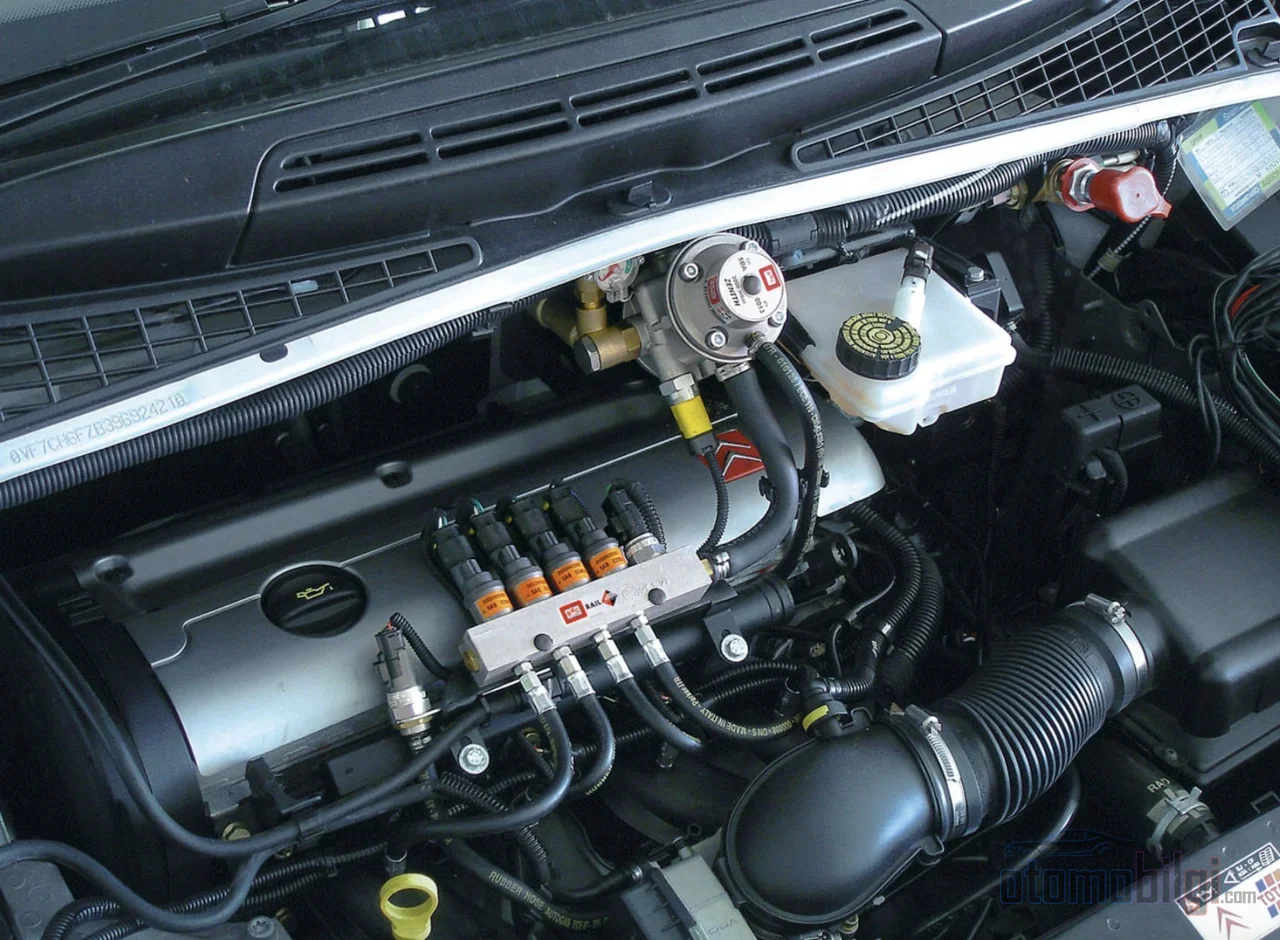
The component list of a conversion kit is simple: LPG tank, regulator, fuel rails, adapter, plugs, and electronic control. The hard part lies not in the parts but in the quality of the installation. The faults produced by a poor installation - switchover errors, multivalve problems, broken electronic connections - are usually due to workmanship rather than parts.
Worldwide standards are also based on this fact: in the USA, conversion systems must be certified as compliant with regulatory rules; NFPA 58 or equivalent standards and OEM installation publications are referenced for propane conversions. The practical takeaway is this trio:
- Choose a certified, documented conversion kit.
- Have the installation done only by an authorized, licensed technician.
- Stay away from DIY installation; gas systems are not an area for trial and error.
Does an LPG Conversion Really Save Money?
Before getting into the math, three variables need to be distinguished: installation cost, increased consumption, and the price-per-liter difference. Installation $800-2,500 range. The conversion increases fuel consumption due to LPG's energy density by 10-20% - meaning that when calculating per liter, you must factor in this drop. On the other hand, the price-per-liter advantage is big: LPG is usually 40-60% cheaper than gasoline, and is sold at half price at many pumps.
The net outcome of these three variables shows up in cost per kilometer: even after accounting for the increased consumption, LPG generally costs 20-30% less per kilometer. The saving on the fuel bill comes not from the vehicle being more efficient on LPG, but from the unit price difference outweighing the consumption disadvantage.
| Variable | Typical Value |
|---|---|
| Kit and installation cost | $800-2,500 |
| Increased consumption | 10-20% |
| Price-per-liter advantage | 40-60% |
| Net saving per kilometer | 20-30% |
| Strongest justification | Annual usage above 20,000 km |
Which usage profile is profitable?
The math is simple: with the installation cost fixed, savings grow linearly with kilometers. Drivers who cover 20,000 km or more per year and high-mileage commercial vehicles are the group for which the conversion has the strongest financial justification. Drivers with high annual mileage and mostly open-road driving can even expect the installation to pay for itself within a few months. In contrast, with low mileage and mostly short city use, the payback period lengthens; moreover, the LPG system's susceptibility to cold-start problems on short trips deepens the disadvantage. A realistic warning is also needed in markets where the LPG-gasoline price gap is narrowing: assessing how sustainable that gap is in your own market should be part of the calculation. If mileage is low or the price gap is questionable, canceling the conversion is also the right decision.
Valves and Spark Plugs: LPG's Effect on Engine Life
LPG's effect on the engine is not one-directional, and honesty is needed here: there are both advantages and risks. On the positive side, LPG burns cleaner; carbon buildup and oil contamination decrease, wear on friction parts drops, and the life of some components like pistons is extended. The driving feel is also generally smoother and quieter - a natural result of the dry gas's combustion character.
The name of the risk is valve seat recession. LPG is a dry fuel; it lacks the surface lubrication provided by gasoline components, and exhaust valves run hotter especially under high load. Dry combustion can erode the metal through micro-welding of the valve surface to the seat and can prevent the valve from closing completely. Also, a rich LPG mixture causes valves and seats to overheat; that's why providing the correct mixture is critical - system calibration here is not a performance detail but a matter of durability.
- Valve protection: Valve life can be supported with special LPG additives or methods similar to gasoline injection.
- Spark plug selection: Spark plugs developed for LPG engines use a longer insulator nose and increase service life.
- Pre-conversion check: Valve adjustment and mechanical condition form the foundation of running on gas.
There is another limit to keep in mind: prolonged continuous LPG use can cause thermal pitting in ignition engine components. Running the car on gasoline from time to time after the conversion both distributes this thermal load and keeps the fuel system functional.
Post-Conversion Maintenance and Typical Failures
An LPG vehicle adds an extra layer of maintenance on top of a gasoline car. The most commonly encountered failures by component are:
- Filters and regulator/reducer: the main items of periodic maintenance.
- LPG injectors: clog over time and create dosage deviation.
- Multivalve and tank hardware: the heart of the safety and filling-stop functions.
- Electronics and transition issues: ignition delays during fuel switching, flashing of the control unit light; usually caused by the ECU or connections.
On the daily-use side, some costs should also be known: reduced trunk volume due to the tank, cold-start difficulties, and an overall increase in maintenance needs. The long-range advantage, however, is tangible - depending on the vehicle, you can generally travel over 1,200 miles without refueling. On the emissions front, LPG produces almost no fine particulate matter; emitting approximately 10 times fewer particles than gasoline vehicles, even older cars with LPG can approach the emission values of modern gasoline and diesel engines.
The Decision Point: Who Is a Conversion Meaningful For?
We can reduce the rest to an engineering checklist. A conversion makes sense when the following three conditions are present: the engine has indirect injection and is mechanically sound, annual mileage is high (ideally over 20,000 km), and in your region the LPG station network and the price difference compared to gasoline are sustainable. If any one of these conditions is missing, the savings calculation can quickly erode; if two are missing, the conversion cost most likely will not pay back.
Final check: when choosing a system, prioritize reliability - proven full sequential vapor injection is a more solid investment for most users in daily use, against the theoretical superiority of liquid systems. With certified parts, authorized installation, and regular filter-regulator maintenance, an LPG vehicle can become a solution that respects both your wallet and engine life.
Sources
- Understanding LPG fuel systems
- What is an SVI LPG system?
- Batch vs Sequential Injection
- Autogas system generations
- Propane Vehicle Conversions - Alternative Fuels Data Center
- Converting Vehicles to Propane Autogas
- Is converting your car to LPG worth it?
- Does car LPG gas auto conversion damage your engine?
- LPG vs Gasoline Calculator
- LPG cars in the UK
- LPG Cars in 2026
- Is LPG conversion still worth it in 2026?
- What is LPG and should I convert to it?
- Valve seat recession on LPG
- LPG Cylinder Head Conversions
- Does running on gas burn out valve seats?
- Which spark plugs are suitable for LPG engines?
- Long term continuous use of auto-LPG
- Common Problems With LPG Converted Cars
- Common LPG Problems Sorted by Component
- Why drive on LPG?
- Liquid Propane Autogas Injection FAQs