Behind the Scenes of Porsche Mission S and the Sportwagenschmiede '35 Strategy
Share This Page
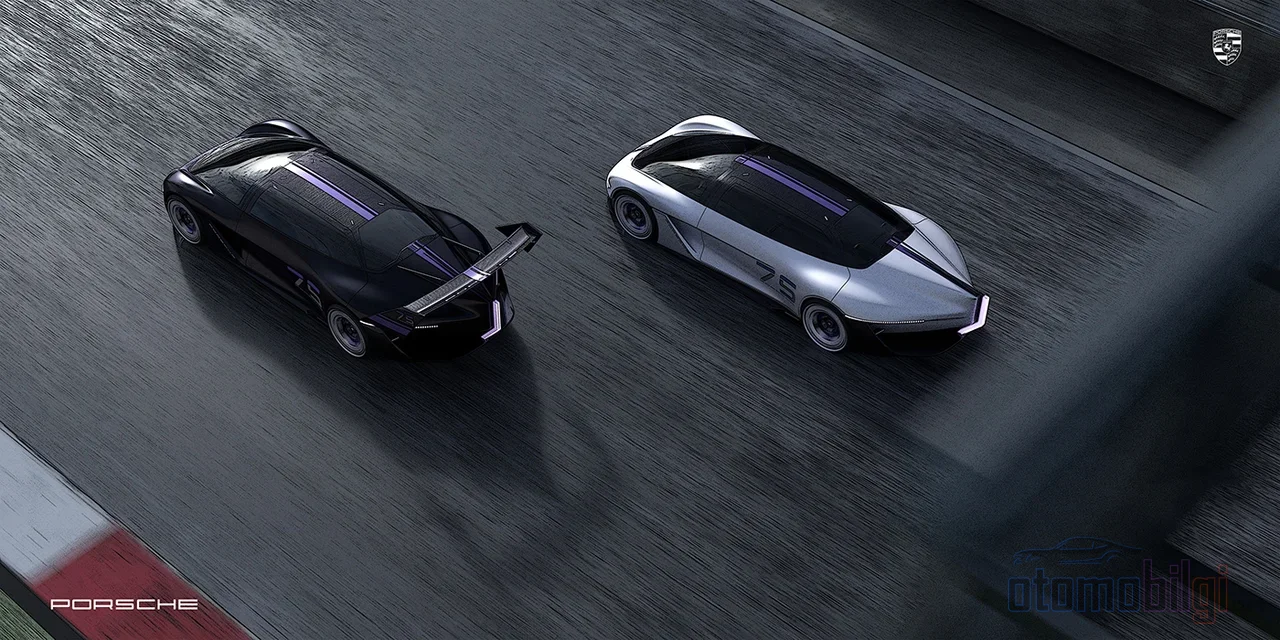
Porsche is preparing to unveil the Mission S concept to the world on October 15, 2026; the car previews a new supercar line positioned above the 911 and carries the legacy of the Carrera GT and the 918 Spyder. But the real intrigue of the unveiling lies less in the car itself than in the picture surrounding it: the Mission S is being presented as the flagship of Porsche's Sportwagenschmiede '35 strategy extending to 2035. Value instead of volume, fewer models and higher margins; behind a concept unveiling stands the brand's most ambitious transformation plan in years.
Highlights
- World premiere of the Mission S concept October 15, 2026
- In the teaser 8,000 rpm redline is visible
- Average price target in the top segment of around 330,000 euros
- By 2035, a total of around 9,000 positions are planned to be cut
- Target of reducing 20% in costs and the number of model variants
What is the Mission S concept and what will we see on October 15?
The Mission S is, in Porsche's own words, a concept car that lays the groundwork for a new model line above the 911 and previews a mid-engine platform. This is no small distinction: in the company's more than half-century of history, no halo model ever called the 911's summit into question; both the Carrera GT and the 918 Spyder stood beside their turbocharged siblings, not above them. The Mission S arrives claiming to break this order for the first time in the brand's history, which is why Porsche describes it as the spiritual successor of the Carrera GT and the 918 Spyder.
The road to the unveiling is unfolding unconventionally. Porsche chose to show the car in small pieces; the first teasers revealed LED headlights, a rear wing, and a sloping silhouette. In the latest share, the missile-style dashboard and the 8,000 rpm redline came to light. That rev count is meaningful on its own, but the detail next to it is drawing more talk: the Park and Drive indicators point to an automatic, most likely a dual-clutch transmission. As for the design language, there are clearly visible references to the Mission X concept shown in 2023.
The official language is measured. Porsche describes the car as a tribute to the sports car and to Ferry Porsche's vision: "Timeless, minimalist, and focused." The drivetrain, engine type, and production decision remain unclear until October 15; they are expected to be clarified shortly after.
Internal combustion or electric? The eagerly awaited drivetrain
Porsche is being secretive about the engine, so there are two readings in the field. The 8,000 rpm redline in the teaser and the automatic transmission signal strengthen the internal combustion possibility; rumors are also circulating that the production version could come with a flat-eight engine. However, this claim is not based on any official statement and must be treated as a rumor. On the other hand, the Mission S name itself recalls the Mission series the brand uses for its electric concept cars. The definitive answer appears to be coming on premiere day.
The competitive landscape and likely positioning
A model positioned above the 911 naturally points to the supercar front. At rumor level, rivals mentioned are Ferrari's 849 Testarossa and McLaren's 750S . There are strong signals about whether the production version will actually make it to the road: Porsche's "model line" phrasing carries the hint of a family that could include multiple derivatives, not just a single vehicle.
What does the Sportwagenschmiede '35 strategy promise?
To read Mission S correctly, one needs to look at the strategy announced at the 2026 Capital Markets Day. Sportwagenschmiede '35 is the name of the plan extending to 2035, and its aim is clear: to strengthen profitability, capital efficiency, and cash generation. Porsche aims to position itself as "the most desirable sports car manufacturer," and on the roadmap to this goal, value takes precedence over volume. Automakers used to proudly announce sales figures like gold bars; now the numbers discussed in the boardroom are price, margin, and personnel expense lines. This is one of the clearest signs that times have changed.
The strategy's figures cluster around a triple 20%: In the upper segment, the average sales price will be raised by approximately 20% to 330,000 euros in the mid term; sales and distribution costs will be reduced by 20% through a more efficient organization; and the number of model variants will also be cut by approximately 20% . This trio is the technical counterpart of the formula "produce fewer cars, earn more."
| Strategy Goal | Figure | Time Horizon |
|---|---|---|
| Upper segment average sales price | ~330,000 euros (20% increase) | Mid term |
| Reduction in sales and distribution costs | 20% | Mid term |
| Reduction in model variant count | ~20% | Mid term |
| Additional layoffs | ~5,000 (total ~9,000) | By 2035 |
| Additional restructuring costs | 300-400 million euros | Short term |
| 2026 operating sales profitability forecast | 5.5-7.5% | 2026 |
What will change in the product range?
Simplifying the model lineup does not only mean cutbacks; there is also a restructuring component. The plans include the possibility of a flagship D-segment SUV that could be positioned above the Cayenne; although the project's name has not been announced, it is referred to in the background as K1 , and this designation is unofficial. On the other hand, the Macan is planned to meet an internal combustion and plug-in hybrid successor in 2028. In addition, preparing the electric 718 Boxster line for the future shows the effort to keep both poles in the range: electrification on one side, high-priced internal combustion supercars on the other.
Why is Porsche taking such a risk?
The background is not a calm picture. Profit, from around 6 billion dollars in 2024, fell to just 101 million dollars in 2025 ago. Behind this collapse are two-headed pressures: problems in the Chinese market and the costs of the electric vehicle transition. In other words, the Mission S is not the showcase product of a growth story; it is the visible face of a plan to save profitability by shrinking. From the outside it looks like a promotional event; from the inside, the most attractive slide of the shareholder presentation.
The cost of the restructuring is also serious. The package announced on July 27, 2026 foresees approximately 5,000 additional layoffs by 2035; added to the 3,900 positions agreed in February 2025 and the 500 people announced by CEO Michael Leiters earlier this year, the total reaches approximately 9,000 - one fifth of the workforce. The process is expected to bring 300-400 million euros in additional costs to the company, and one-off effects at the level of "high three-digit million euros" are projected throughout 2026.
Is the plan bearing fruit?
A light is also visible through the clouds. As the first results of the restructuring, a 34% increase in operating profit was reported and the 2026 targets were maintained; with an emphasis on a strong balance sheet and liquidity, the company projects 5.5-7.5% operating sales profitability for 2026. In the first nine months, 178,532 vehicles were delivered. However, the picture is not yet complete: According to claims in the industry press, approximately 4,100 more people could be laid off to close a general expenses gap of around 700 million euros. This is not a verified company decision; only a sign that the transformation is not over.
How much strategy does a concept launch tell?
The October 15 premiere of the Mission S, on the surface, is the launch of a single car; digging deeper, it is the opening of a stage where Porsche's risky transformation framework in the luxury segment is on display. The car is presented as a concrete example of the low-volume-high-margin strategy: an effort to balance the books with a small number of high-priced, high-prestige models. At the other end of this equation lies volume loss, erosion in the number of models, and the decision to take on farewells with thousands of employees.
As someone who has been following this industry for more than thirty years, this must be said: Until now, Porsche has always considered the idea of adding a model on top of the 911 among the deterrent risks. The brand's core identity was built on leaning on the 911 for more than a quarter century. Changing this order is less a technical decision than one of the identity decisions. The Mission S carries this risk, and if it succeeds, it will add a new layer to Porsche; if not, the calculations of a company caught between an average price target of 330,000 euros and a workforce shrunk by one fifth will become even more difficult.
The answers to be given on premiere day - engine, production decision, pricing policy - will be the first concrete test to measure the seriousness of the strategy. The rest depends not so much on how the car handles, but on how well it holds up on the sales ledger.
Sources
- Driven by the love for sports cars | Porsche USA - Mission S preview
- Porsche Teases Mid-Engine Supercar Called 'Mission S' - Car and Driver
- The Porsche Mission S Supercar Concept Revs to 8000 RPM - Road & Track
- Porsche presents new strategy through to 2035 - Porsche Newsroom
- Sports Car Forge '35 | Porsche AG Investor Relations
- Porsche Plans 20% Price Rise for Top-End Models - WSJ
- Porsche keeps forecast as restructuring begins to pay off - Reuters
- Porsche to axe one in five jobs by 2035 - Reuters
- Porsche could face another 4,000 job cuts, Handelsblatt reports - Reuters
- Official: More Porsche Job Cuts Are Coming - CarBuzz