Unknown Facts About the Porsche Mission S and the 2026 Strategy Plan
Share This Page
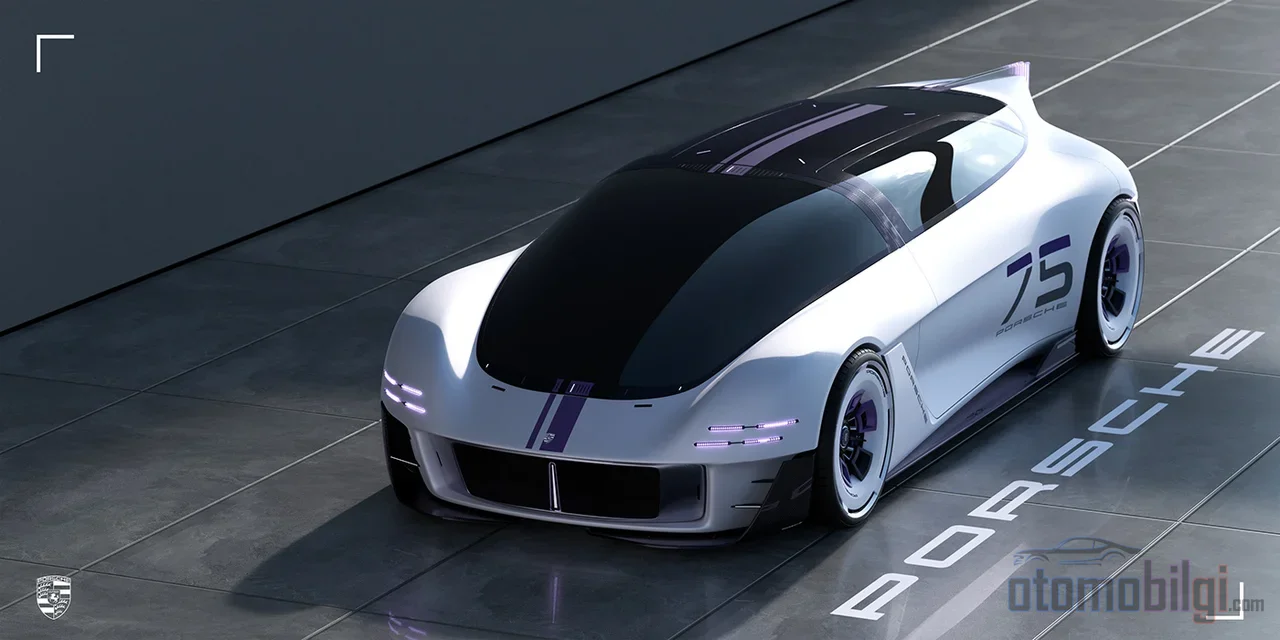
Porsche, Mission S is officially confirming its new super sports car bearing that name on October 15, 2026; the same week, at its Capital Market Day, the company also laid out its new strategy extending to 2035. The short summary: a new model line positioned above the 911, fewer but more expensive cars, price increases of up to 20% in the premium segment, and a selective retreat on electrification. Here is the story behind the two announcements read within a single frame.
Highlights
- The official unveiling of the Mission S concept takes place on October 15, 2026.
- 2025 operating profit fell from 5.3 billion euros to 90 million euros; the margin dropped from 14.5% to 0.3%.
- The new strategy anticipates a 20% price increase on premium-segment models.
- The plan includes a Macan-sized internal combustion SUV and a flagship three-row SUV with a V8 engine.
- Despite long delays, the electric 718 successor program has not been abandoned.
Mission S: A New Peak Above the 911
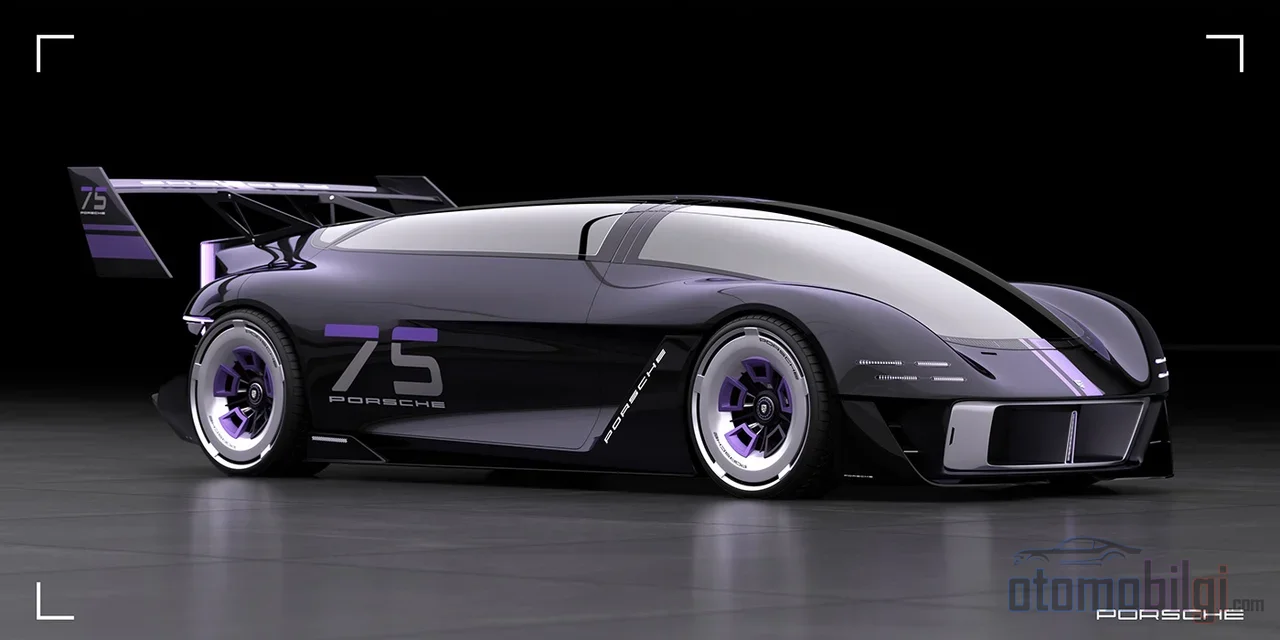
With the teaser video it released on October 7, Porsche presented its long-rumored super sports car to us under the name Mission S. The car is positioned in a territory the brand has not touched in decades: above the 911. The company confirmed that the Mission S architecture will enable a full model line above the 911 - meaning we are talking about the foundation of a new family rather than a one-off halo car.
Such ventures are not foreign to Porsche's history. Production of the Carrera GT in Leipzig began in 2004, and the car, at a price of 450,000 euros, became the brand's most expensive production model. Yet even back then, the 911's place at the top never changed; the Carrera GT and later the 918 remained exceptions standing alongside the 911. That is precisely what makes the Mission S different: it promises an official model line - so it is no coincidence that commentators describe the move as "monumental."
Is the 911's throne under threat?
That is the most frequently asked question after the teaser: will the Mission S replace the 911? Based on the teaser, it is said to be within the realm of possibility; the 911 has been the brand's "cash cow" for decades, and it cannot be said that Porsche appears intent on pushing it aside. A more realistic reading is that the Mission S will fill a price and performance tier the 911 cannot reach, while the 911 remains the backbone.
The second question concerns the drivetrain: is the Mission S electric or internal combustion? There is no definitive statement. Rumor has it that the teaser points to a flat-eight, meaning a boxer eight-cylinder engine. The Ferrari 849 Testarossa and the McLaren 750S are cited as rivals, which shows the car is aiming directly at the classic super sports car ranks. The definitive answer will come at the unveiling on October 15.
Capital Market Day: The New Strategy Extending to 2035
At the Capital Market Day, which fell on the same date as the Mission S teaser, October 7, Porsche formalized its strategy extending to 2035. The announcement's title is self-explanatory: "New sports cars, greater exclusivity, stronger profitability." In short, the company is signaling a shift from volume-driven growth to a low-volume, high-margin model.
The known elements of the plan can be summarized as follows:
- In top-segment models a 20% price increase target - framed as an exclusivity move.
- Workforce reduction: the published figures range between 25% and 30%; the difference stems from how the scope is defined.
- Filling product gaps and increasing bespoke models.
- In cost reduction, the main lever is parts sharing - beyond the price increases, the real gains are expected to come from here.
The newly appointed CEO Michael Leiters, took office on January 1, 2026, and in his very first statements said he would focus on a more efficient, leaner model lineup and reducing dependence on volume. The plan at the Capital Market Day is the concretization of those words. Another significant decision by Leiters is geographic: he ruled out the possibility of building a factory in the United States to counter tariffs.
Why Was This Strategy Necessary Now?
Behind Porsche's radical reckoning lies a profitability collapse as swift as lightning. In 2025, operating profit with a collapse of nearly 98% fell from 5.3 billion euros to 90 million euros; the operating margin slid from 14.5% to 0.3%. Global sales dropped from 310,718 units in 2024 to 279,449 in 2025, a decline of 10% . Revenue remained at the level of 36.272 billion euros.
This picture has three main causes. First, the 3.9 billion euro restructuring loss taken due to the slowdown in electric vehicle sales - meaning EV investments being written off on paper. Second, China: in one of the brand's largest markets, sales fell by approximately 28% in 2024 and by approximately 26% in 2025. Third, the US tariffs on imported vehicles, which rose to 15% (briefly 25%). Porsche is maintaining its 5-7% profit margin forecast for 2026; the new strategy aims to make this recovery permanent.
Analytically, a harsh assessment is also on the agenda: it is emphasized that Porsche has transformed from "crown jewel to millstone" for the Volkswagen Group, and that the company is preparing for a lower-sales era. The commentary that Porsche's "poor man's Ferrari" image has officially come to an end points to the brand's shift toward a Ferrari-like exclusivity.
The New Model Roadmap: Redrawing the Lineup
The product side of the strategy is as much talked about as the financial side. Four major moves stand out in Porsche's announced roadmap:
- Mission S: A super sports car line above the 911; perfectly aligned with the low-volume, high-margin logic.
- A new internal combustion SUV: A model with an ICE (internal combustion) engine is planned, in Macan dimensions.
- A three-row flagship SUV (K1): Larger and "less electric"; it was reported that it will not be electric and will come with a V8 engine instead.
- Electric 718 successor: Despite long delays, the program's continuation has been officially confirmed.
There is a critical detail in this picture: it is reported that petrol Boxster/Cayman successor plans have been canceled and the focus has shifted to the mid-engine hypercar, namely the Mission S. So Porsche has not given up on the idea of an electric sports car, but is acting selectively by segment: while keeping a single electric project alive in the small sports car, the return to internal combustion and V8 engines is coming to the fore in SUVs. The current lineup - 911, Panamera, Macan, Cayenne and Taycan - will be rebuilt upon this transformation.
The new balance of the electric transition
Porsche's electrification line is now not a one-way commitment but a hybrid balance. On one side is the price of backing down from its 3.9 billion euro writedown EV strategy; on the other, the fact that the electric 718 has not been canceled shows that the brand will stay electric in segments where there is demand, rather than making a complete reversal. The new ICE-heavy SUVs, meanwhile, can be read as a pragmatic response to market reality by a company that wants to restore profitability quickly.
Two Announcements, One Reckoning
Squeezing the Mission S reveal and the strategy announcement into the same week is no coincidence. The new super sports car is the showcase product of the "greater exclusivity, stronger profitability" headline: a low-volume, high-margin model that recalibrates the brand's perception at the top. The Macan-sized ICE SUV and the V8 flagship SUV added alongside it are the volume-side equivalent of the same logic - fewer models, higher average prices, more parts sharing.
The risks are of course not negligible. The collapse in China looks hard to reverse in the short term, US tariffs remain uncertain, and the figures of the workforce reduction (25% or 30%?) have not yet become clear. But by Porsche's own statement, this is no longer a rumored plan, but an official roadmap to be followed through 2035. The Mission S presentation on October 15 will be the first concrete stage of this new era.
Sources
- New sports cars, greater exclusivity, stronger profitability: Porsche presents new strategy through to 2035 - Porsche Newsroom
- Porsche braces for era of lower sales as it leans in to luxury - Reuters
- Porsche turnaround blueprint calls for filling product gaps, bespoke models; CEO nixes U.S. factory to counter tariffs - Automotive News
- Porsche Could Displace the 911, Based on the Teaser for a Mid-Engine Supercar Called 'Mission S' - Car and Driver
- Despite Lengthy Delays, Porsche Says It Still Plans to Launch the Electric 718 Sports Car - Car and Driver
- Porsche teases mid-engined hypercar but axes plans for petrol Boxster, Cayman successor - CarExpert
- Porsche's New Flagship SUV Won't Be Electric, Will Have A V8 - Motor1.com
- Porsche - Wikipedia