BMW Backtracks on Electric Targets and Returns to Gasoline
Share This Page
BMW delivered the message the automotive world has long been waiting for at its Capital Market Day event held in the final days of this year: rather than a rapid full-electric transition timeline, the company will continue investing in internal combustion and hybrid technologies. The official framework is not a step back, but a technology-open strategy built on profitability and resilience; the forecast that the electric transition in the US market will be a journey of ups and downs stands out as the rationale behind this choice. Munich is keeping walking the electric path; but it is also keeping gasoline and hybrid engines seriously on the table.
Highlights
- BMW Group held Capital Market Day 2026 September 29-30, 2026 in Gmund and Munich.
- The company renewed its commitment to investing in internal combustion and hybrid technology; the strategy is based on a technology-open profitability line.
- The Strategic Automotive EBIT margin target 8-10% band is being maintained.
- BMW brand BEV sales reached 24,048 units in the first quarter of 2026, accounting for 35.1% of deliveries.
- Plant Spartanburg received an investment of $1.7 billion ; three new EVs will be produced at the facility from 2026 onward.
What Was Revealed at Capital Market Day?
BMW Group hosted capital market participants in Gmund and Munich with a two-day program. The strategic and financial update was presented by Chairman of the Board Milan Nedeljković and Finance Member Walter Mertl, while Development Member Joachim Post conveyed the innovation and technology strategy. The scope of the presentations was not limited to powertrains: artificial intelligence, humanoid robotics, and regional developments in China and Europe were also part of the agenda.
The main message on paper was clear. The company announced it will continue pursuing the 8-10% Automotive EBIT margin target it set at the beginning of this decade, and defined its plans on the axis of resilience, competitiveness, and profitability. Profit margin was the apparent hero of this event; electrification was presented not as the only right path, but as one of several paths.
Within the figures there is also a regional commitment: BMW aims to increase the share of locally produced vehicles adapted to Chinese customer preferences to at least 95% by 2030 . This is not the plan of a company abandoning the electric transition, but of one that reads the market on a market-by-market basis. In China, it will follow electric demand, while in the US, internal combustion and hybrid production capacity will survive according to the volatile picture there.
Is BMW Abandoning Electric Vehicles?
No; but the picture is confusing enough to prompt the question. The official stance, as reflected in one of the established publications of the financial world, can be summarized as follows: BMW will continue investing in internal combustion and hybrid technology, warning that the electric transition in the US will be a journey of rapid ups and downs. This is not a commitment based on a belief in the immortality of gasoline vehicles; it is the practical consequence of the forecast that the transition will take longer than expected.
The company's own past commitments are also meaningful in this context. BMW had previously announced its goal of delivering more than 10 million fully electric vehicles to customers by 2030; the framework laid out in 2020 projected that half of sales would fall under electrification by 2030. At the time, these goals were considered ambitious, and they still are today; however, the company prefers to adjust its timeline according to demand rather than turning it into law.
On the sales side, the picture is not bad for now. In the first quarter 2026 results, BMW brand's BEV sales reached 24,048 units ; above the 22,794 units recorded in the same period of the previous year, an increase of 5.5 percent. The more striking figure was this: electric models accounted for 35.1% of the brand's total deliveries. For a company that is abandoning electric vehicles to sell more than one-third fully electric in its first quarter looks, to put it mildly, internally inconsistent.
Technology-Open Strategy: Five Drivetrains, One Brand
For someone who has been around this business, BMW's approach is not foreign. Years ago, even when alternative fuel debates had not yet reached the streets, we saw manufacturers that committed early to a single solution struggle in market shifts. BMW appears to have learned this lesson well: the company emphasizes that it is the first brand to offer five drivetrain types simultaneously - gasoline, diesel, plug-in hybrid, battery-electric, and, from 2028, hydrogen fuel cell.
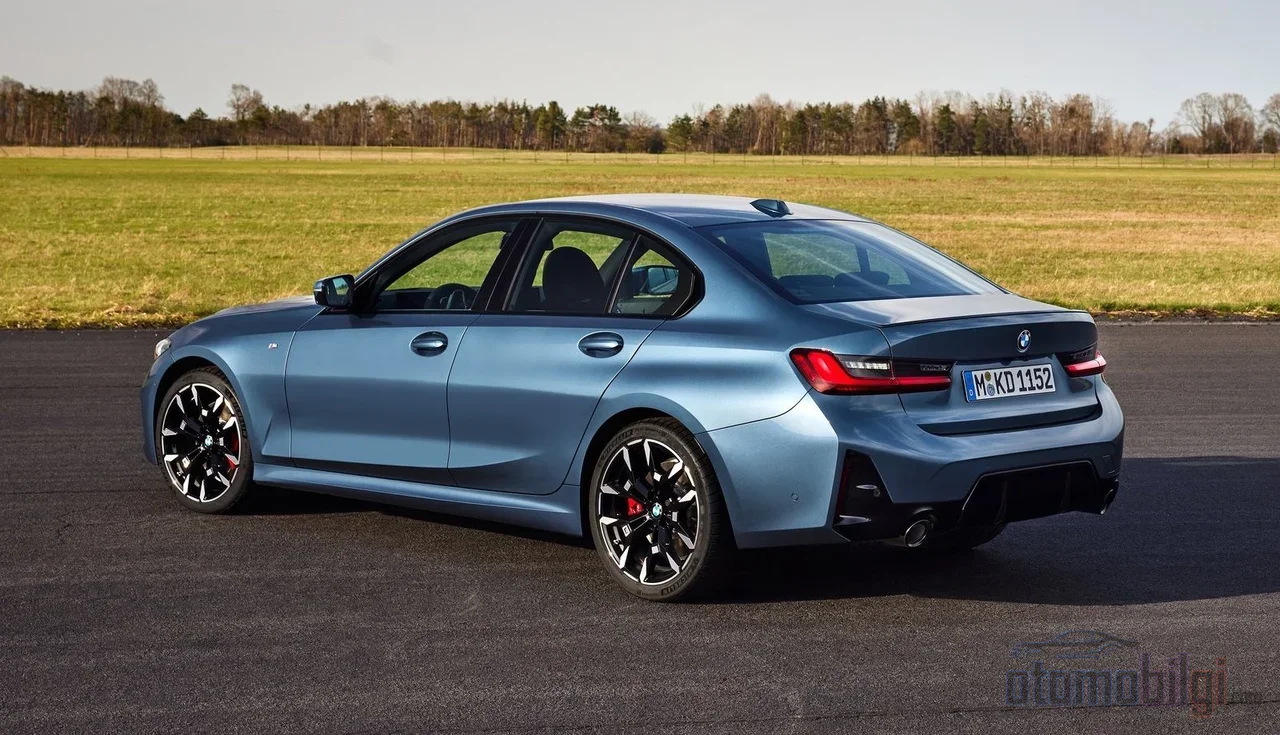
The practical outcome of this diversity is evident in the new models. The new 3 Series pairs mild-hybrid gasoline engines with Neue Klasse technology; alongside the fully electric i3 in the same showroom, it also retains an internal combustion option. One body, two different energy paths. Whichever the customer chooses, BMW's production line and profit sheet keep running. In the past, brands used to play only one side in this dilemma; now they are splitting the board in two.
The electric side is not standing still either. Neue Klasse EVs will use new cylindrical cells with higher energy density than current batteries; this means longer range and shorter charging times. The company had previously made clear that these vehicles would be profitable, delivering at least equivalent profitability per EV sold compared to current electric models. In other words, the electric path has not been abandoned; it simply has to pass the profitability test.
The Dual Track Running Parallel with Neue Klasse
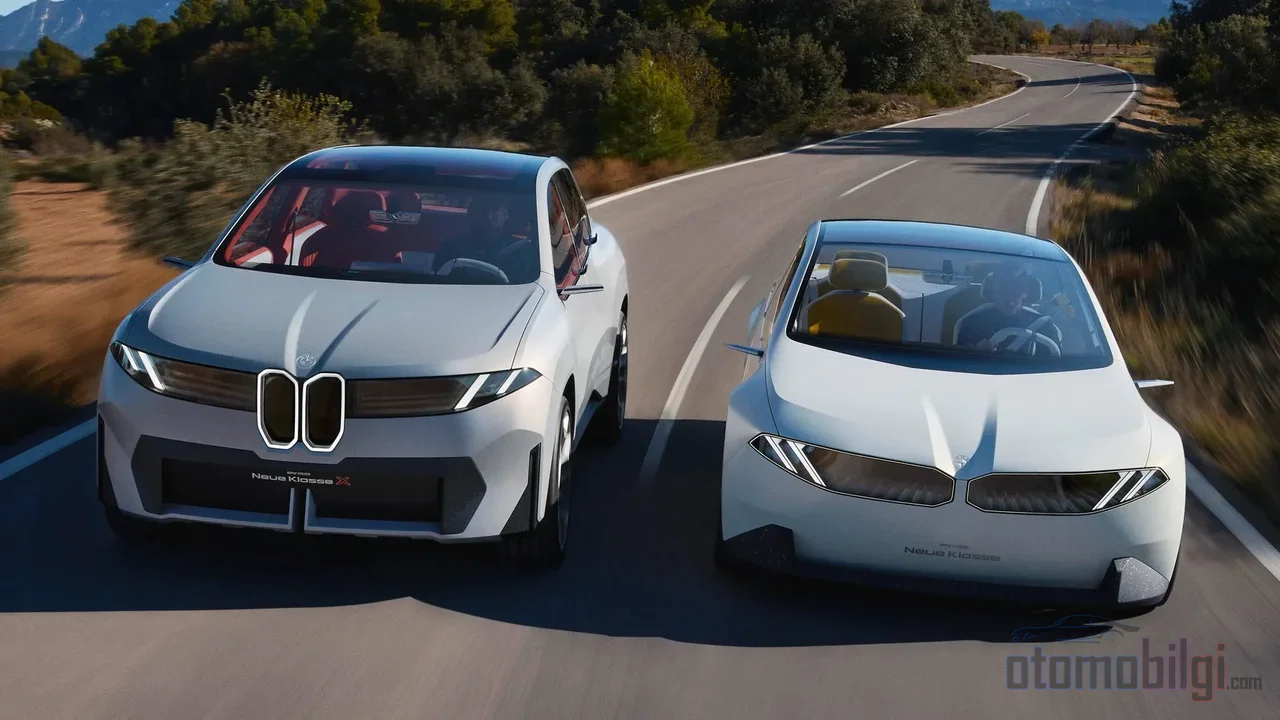
Neue Klasse represents a new phase in BMW's electric transformation starting from 2025, and its first product, the 2027 BMW iX3 , is hitting the roads. This platform continues to be the backbone of the brand's electric future. On the other hand, internal combustion and hybrid investments are also intensifying in the same period. The two tracks are not in opposition to each other; they walk side by side.
The US leg carries particular weight in this strategy. BMW invested $1.7 billion in Plant Spartanburg (South Carolina); starting from 2026, three EVs will enter production at the facility. The first EV produced in the US, the iX5 Its production starts next year, with six EV models targeted by 2030. Claiming that a company investing factories and money in electric vehicles at this scale is fleeing EVs would be a claim hard to explain with the numbers.
Market data, however, show both sides of the picture. As EV demand cooled in the US, manufacturers pulled down the prices of electric models; US EV sales fell in the last quarter of 2025 by 17% - the first major decline in a decade - and market share dropped to 5.7% in the same period. The US market share of electric vehicles fell from the 21% level of 2025 to 13.7% in the first quarter of 2026. It was also announced that BMW lowered its 2026 profit forecast for regional reasons. In such an environment, keeping internal combustion and hybrid capacity alive is as much a financial necessity as an engineering choice.
Rivals Are on the Same Path: Mercedes, VW and Porsche
BMW's move is not an exception; it is part of the general trend of the German automotive industry. Porsche had lowered its global EV targets in July 2024 - previously it aimed for 80% of sales to be electric by 2030. Together with the Volkswagen group, it recalibrated its EV plans in October 2025; plans previously based on an assumption of 5 million annual EV volume in Europe have now been revised down to an expectation of around 3 million.
The picture voiced by the Financial Times in March of this year is broader: Bentley, Lotus, Audi and Porsche have pulled back their plans to become fully or 80% electric within a decade. The global automotive industry is collectively moving away from its EV targets. Volkswagen, under Porsche's influence, lowered its 2026 profit forecast; the operating sales return expectation fell from the previous 4.0-5.5% range to at most 1%.
The Mercedes-Benz front looks somewhat different. While the company introduces its first AMG electric crossover, other models are being discontinued; vehicles such as the VW ID4 and Volvo EX30 leaving the stage show that manufacturers are splitting onto different paths in the electric market in 2026. Everyone is heading to the same goal, but not at the same speed, and not with the same means.
| Brand | Move | Highlight Figure |
|---|---|---|
| BMW | Internal combustion and hybrid investment commitment; technology-open strategy | 8-10% Automotive EBIT margin target |
| Porsche | Lowering global EV targets | Abandoning the 80% EV target for 2030 |
| BMW and VW group | Revising EV volume assumptions in the EU | Annual expectation of ~3 million EVs |
| Volkswagen | Lowering the 2026 profit forecast | Operating return of at most 1% |
| Mercedes-Benz | Sustaining electric models; a differentiated approach | First AMG electric crossover |
Why Has the EV Transition Slowed?
The global picture is not uniform. Data from the International Energy Agency show that global electric car sales in 2025 grew by 20% to 20 million shows that they exceed a quarter of newly sold vehicles. An energy research organization's assessment is similar: even though the growth rate is slowing - 33% last year, 60% the year before - sales are on track for a record. The slowdown appears largely US-focused; the China and European markets are more resilient.
In contrast, the investment banking side is more cautious. Some analysts keep the possibility of a lasting slump on the table, noting that EV sales volume declined 2% annually and that negative growth is possible. The difference between the two readings is not about the market's direction, but about whether this fluctuation is temporary or permanent.
Hybrid models stand out in this gap. Expert assessments show that hybrids are winning over buyers because they offer better fuel economy than gasoline vehicles without the hassle of charging infrastructure. In this respect, BMW keeping its plug-in hybrid and mild-hybrid investments on the table is a move that suits the market's current state - like insurance for the transition period.
A Reversal, or a Balanced Reading?
BMW's return to internal combustion investment is in some tension with the market's overall data. Forbes' assessment this year is striking: gasoline-only vehicles fell to 49% of global new vehicle sales in the first half of 2026; in 2021 that figure was 73%. In other words, the EV and hybrid share continues to grow, just not at the expected pace. A manufacturer committing to gasoline investment at exactly this point will be read by some as inconsistency, by others as realism.
The position BMW management has long defended is part of this debate. Company head Oliver Zipse has criticized plans targeting the phase-out of gasoline vehicles by a specific date, arguing that this approach would remove cheap vehicles from the market. This perspective forms the ideological foundation of today's technology-open strategy: offering consumers options and setting the schedule according to the market's rhythm rather than the state or regulatory targets.
The resulting picture is not a retreat, but an adjustment. BMW continues to move toward an electric future with the Neue Klasse and its Spartanburg investments; yet by keeping gasoline, diesel, hybrid and even hydrogen options on the same table, it is building a structure that will protect its profit margin whichever energy path wins. Automotive history has shown that in turns like these, it is not the one with the fastest promises but the one that can withstand the most scenarios that survives. BMW's move is precisely the product of that lesson.
Sources
- BMW Group Capital Market Day 2026 – Corporate Events
- Capital market day 2026: key messages
- Strategic & Financial Update
- BMW bets on petrol cars as it warns of US 'rollercoaster' EV transition
- The Neue Klasse: The BMW Group enters a new era
- Electric Drives – BMW Group
- BMW Q1 2026 Quarterly Statement
- BMW to build three EVs at Spartanburg plant beginning in 2026
- BMW: Neue Klasse at least as profitable as current EVs – Reuters
- The electric shock: brands scaling back EV targets
- Porsche and VW scale back EV plans
- Global carmakers retreat en masse from EV targets – FT
- Why automakers are taking different EV approaches in 2026 – Automotive News
- IEA Global EV Outlook 2026 – Executive summary
- Are Global EV Sales Really Slowing Down? – BNEF
- Why are EV sales slowing? – Goldman Sachs
- Hybrids 'having their moment' – CNBC
- EVs And Hybrids Push Gas-Only Cars Below Half Of Global Sales – Forbes
- BMW Leader Blasts Push to Phase Out Gas Powered Vehicles
- 2027 BMW iX3 – Car and Driver