Stellantis Aims for 45,000 Annual Sales in India with Jeep and Citroën
Share This Page
Stellantis aims to launch 12 products in the Indian market under its Jeep and Citroën brands within the next three years and to raise its annual sales to approximately 45,000 units . The plan, which includes a new investment of around ₹4,000 crore , stands out as the most comprehensive India strategy in the automotive world in recent days. This roadmap, which forms the India leg of the company's global FaSTLAne 2030 strategy announced in May 2026, envisages the first launch taking place in the second quarter of 2027.
Highlights
- Stellantis is making an additional investment of ₹4,000 crore in India
- Within three years, 7 new models and 5 major updates are coming
- Targeting annual sales of 45,000 units - tripling - the target
- The first launch is expected in the second quarter of 2027 is expected
- Localization rate at Jeep to be raised to ~90%
What is Stellantis's India target and what is its scope?
The core of the plan is clear with the numbers: 12 products, a three-year framework, and a goal of reaching 45,000 units per year. Of these 12 products, 7 are described as completely new models and 5 as comprehensive updates of existing models. Although the lineup is weighted toward SUV segments, it also includes an MPV and a premium pick-up . The company gives the investment amount as ₹4,000 crore added on top of the ₹4,000 crore commitment announced years ago - which pushes the cumulative commitment to a very serious level.
To understand the scale of the target, one must look at the current picture. The combined monthly sales of Stellantis's two brands in India have long been running below 1,000 units. According to August 2026 data, Citroën sold 927 units (770 of which were C3 and 61 eC3), while Jeep sold only 226 units. So the 45,000-unit annual target means at least threefold growth from the current base. Speaking as someone who has been through the trenches of this business: tripling growth in three years in the automotive industry is not a pipe dream, but it only falls to companies that hit their product cadence and grow their dealer network. That is why Stellantis is presenting the plan not merely as a product announcement, but together with its production and distribution infrastructure.
The strategy behind the plan: FaSTLAne 2030
The India plan is not an announcement conjured out of thin air. Stellantis had announced its global strategy in May 2026, covering the 2026-2030 period and 60 billion euros in value. FaSTLAne 2030 , as this program is named, includes commitments ranging from 11 new vehicles to a 50% expansion target in market coverage. The India roadmap is openly presented through official channels as the local leg of this strategy.
The global picture also supports the background of the plan. Stellantis's consolidated shipments in the first quarter of 2026 reached approximately 1.4 million units (a 12% year-on-year increase), and in the second quarter 1.6 million units (a 10% year-on-year increase). While the company signals a recovery on a global scale, it is turning to markets where there is room to grow but competition is intensifying; India is one of the most prominent examples of that definition.
What's in the lineup: 7 new models, 5 updates
Industry readings on the lineup's composition are largely in agreement: a significant portion of the 12 launches comes from Citroën. On the Citroën side, additions such as an MPV, an A-segment car and a C-segment SUV are expected; on the Jeep side, it is said that a pick-up will be added alongside products spanning three different SUV segments. There is no definitive breakdown in first-hand sources of how many products each brand will get; the official framework is 7 new and 5 updates out of 12 products in total. As someone who has read these pages for many years, let me note: reading product distribution claims with caution until launch day approaches is a healthy reflex.
Powertrain options and electrification
The company's powertrain approach is not tied to a single technology. Management states that ICE, hybrid, plug-in hybrid and battery-electric options will be offered; in secondary communications, CNG is also mentioned. This is a position that matches the reality of the Indian market: the price threshold is still the most decisive variable in sales, and in a market where EV purchases do not go beyond certain price ranges and usage profiles, a single-track electrification strategy would have been too risky. In the past, India launch plans were mostly built around a single petrol engine; now, manufacturers approaching with portfolio logic embed different energy options into the same product family.
Production and localization: the cost side of the plan
The quietest but most critical component of the plan is on the production side. In September 2026, Stellantis took full ownership of the Thiruvallur manufacturing facility, which operates through a partnership affiliated with CK Birla Group. Moving from a complicated partnership structure to full control means operational flexibility for a three-year intense launch program - schedule changes, capacity decisions and supply chain interventions can now be managed from a single hand.
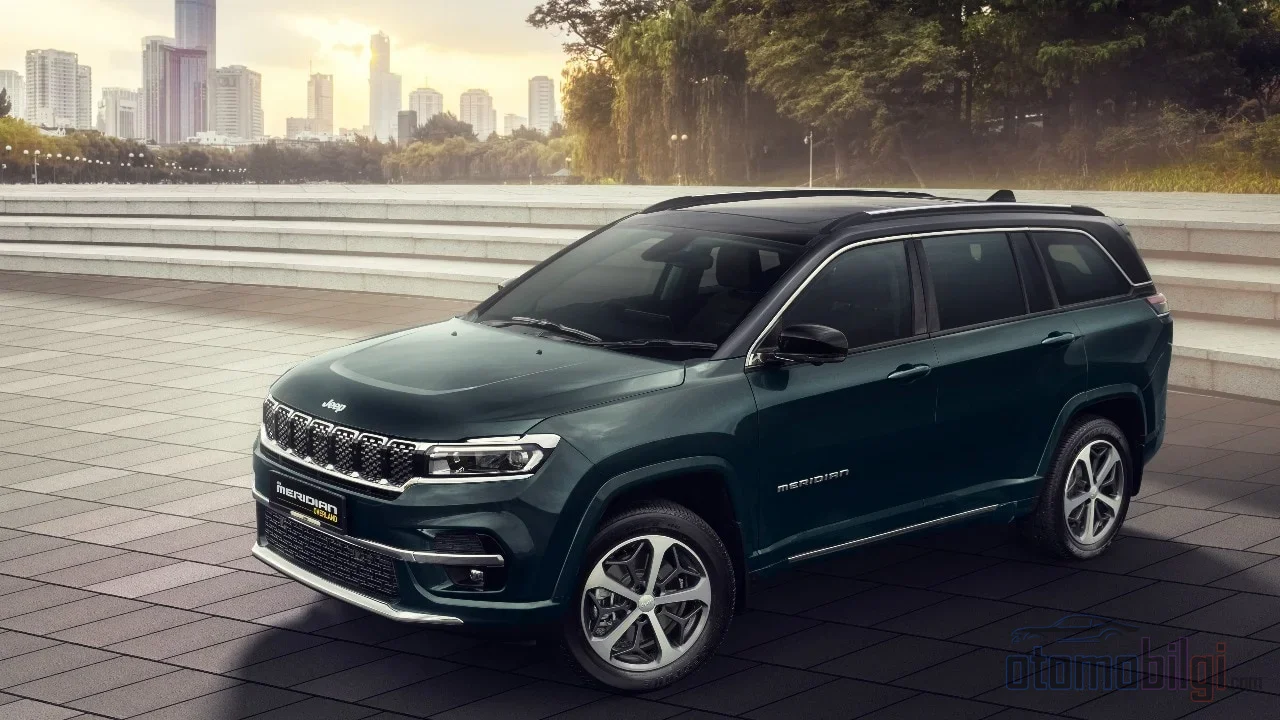
Localization rates also form the foundation of the plan's cost equation. In Jeep vehicles, localization will be raised from the current 70-75% level to approximately 90%; on the Citroën side, this rate is already above 90%. In a market like India, where taxation is tightly linked to localization rates, these figures are indispensable assets for price competition.
| Item | Detail |
|---|---|
| Total launches | 12 products (7 new + 5 major updates) |
| Segments | SUV-heavy, one MPV, one premium pick-up |
| Additional investment | ₹4,000 crore (on top of the previous ₹11,000 crore) |
| Sales target | ~45,000 units per year (three times the current base) |
| First launch | Second quarter of 2027 |
| Localization | Jeep from 70-75% to ~90%; Citroën 90%+ |
| Strategy context | FaSTLAne 2030 (€60 billion, 2026-2030) |
India as an export base
The India plan is not only a domestic market story. Citroën vehicles are currently exported to 5-6 countries, while Jeep vehicles, including Japan and Australia to 3 countries It is being exported. On the production side, right-hand-drive exports to West Asia, Africa, and Indonesia continue, while engine and transmission exports to Europe also continue. The more ambitious goal is this: by developing left-hand-drive versions of the vehicles launched in India, Stellantis aims to export to more than 50 countries. Stellantis aims to
This approach is not new in the automotive industry, but its scaled-up form is fairly striking. In the past, Indian production was mostly limited to small, low-cost models; today, brands are turning a product pipeline fed by the local market into an export base as well. Thiruvallur's transition to full ownership is a move that supports this dual-role structure.
Current position: dealer network and sales facts
Stellantis has approximately 300 sales and service points in India, and about 80% of the network operates in the Stellantis Brand House format, selling and servicing both Jeep and Citroën under the same roof. Combining the two brands in a single physical facility is a sensible solution for dealerships to survive in a low-volume market: a structure that shares costs and manages its brands under the same roof. The company is evaluating expansion into Tier-II, Tier-III, and select Tier-IV markets, as well as alternative service models such as shared facilities and mobile service; the fact that it has not set a numerical target for the dealer network means the network will grow along with volume.
The picture on the sales side is mixed. Stellantis' India sales grew 71% year-on-year in the first quarter of 2026, and this growth was driven by Citroën's renewed lineup. Citroën's global sales reached 373,700 units (a 4.4% increase) in the first half of 2026; India, as the main contributor to the 35% sales increase in the Asia-Pacific region, pushed the brand's market share above 1%. But the absolute figures are still low: there have been periods when the combined monthly sales of the two brands fell below 1,000 units. In other words, even a dazzling percentage like 71% is calculated on a small base; the real test of the 45,000-unit target will be to permanently expand this base.
BS-VII emission norms: the regulatory reality ahead of the plan
Stellantis' three-year launch program coincides with a critical threshold in India's emission regulations. The Indian government is proposing BS-VII (Bharat Stage VII) emission norms in three phases starting from April 1, 2029 (until April 2035). The standards are expected to align closely with Europe's Euro 7 norms. The first phase will cover new cars and SUVs; the norms cover cars, SUVs, commercial vehicles, and buses, and envisage a 20-50% emission reduction for trucks and heavy vehicles.
The scope of the new rules goes beyond classic exhaust limits: brake and tire emission limits, battery durability rules and stricter checks under real-world driving conditions are on the agenda. Tightening of the NOx, HC and particulate matter limits is expected. India skipped BS-V in 2020 and moved directly to BS-VI; BS-VII is read as a harbinger of a similar leap. The press reports that vehicle costs may rise and manufacturers will have to carry out engine upgrades. The direct impact of these norms on Stellantis's plan has not yet been disclosed; still, the fact that the launch wave spread across 2027-2029 coincides with the norm transition timetable does not seem like a coincidence - the plan is already preparing for this transition by keeping hybrid and electric options broad.
Is the target realistic?
Whether the 45,000-unit target is reasonable is a topic of debate in the industry, and the grounds of the debate are concrete. The current monthly sales picture is far below the target; while Citroën shows strong growth momentum, Jeep's sales are extremely low and the brand's perceived reliability in India has still not settled. On the other hand, since all elements of the plan - product volume, increased localization, production control, export expansion and the dealer network - point in the same direction, this does not look like a typical statement of intent in the newspapers, but like an operation plan with a measured axis. The outcome depends on whether the first launch can deliver in 2027; that turning point will determine whether there will be 45,000 units in the market after three years, or slightly above today's picture.
Sources
- Stellantis to invest ₹4000 crore, launch 12 products in 3 years
- Stellantis Unveils €60 Billion Strategic Plan to Accelerate Growth and Profit
- Stellantis Reports Q1 2026 Estimated Consolidated Shipments of 1.4 Million Units
- Stellantis Reports Q2 2026 Estimated Consolidated Shipments of 1.6 Million Units
- Citroën Picked Up Speed in the First Half of 2026
- Stellantis lines up 12 Citroen, Jeep launches for India by 2030
- Stellantis to invest Rs40bn in India and launch 12 models
- India to roll out BS-VII emission norms from April 2029 in 3 phases
- Govt proposes BS-VII emission norms from April 2029
- Citroen Car Sales in India – Monthly Sales Data
- Jeep Car Sales in India – Monthly Sales Data