Do Portable Chargers for Electric Cars Actually Work?
Share This Page
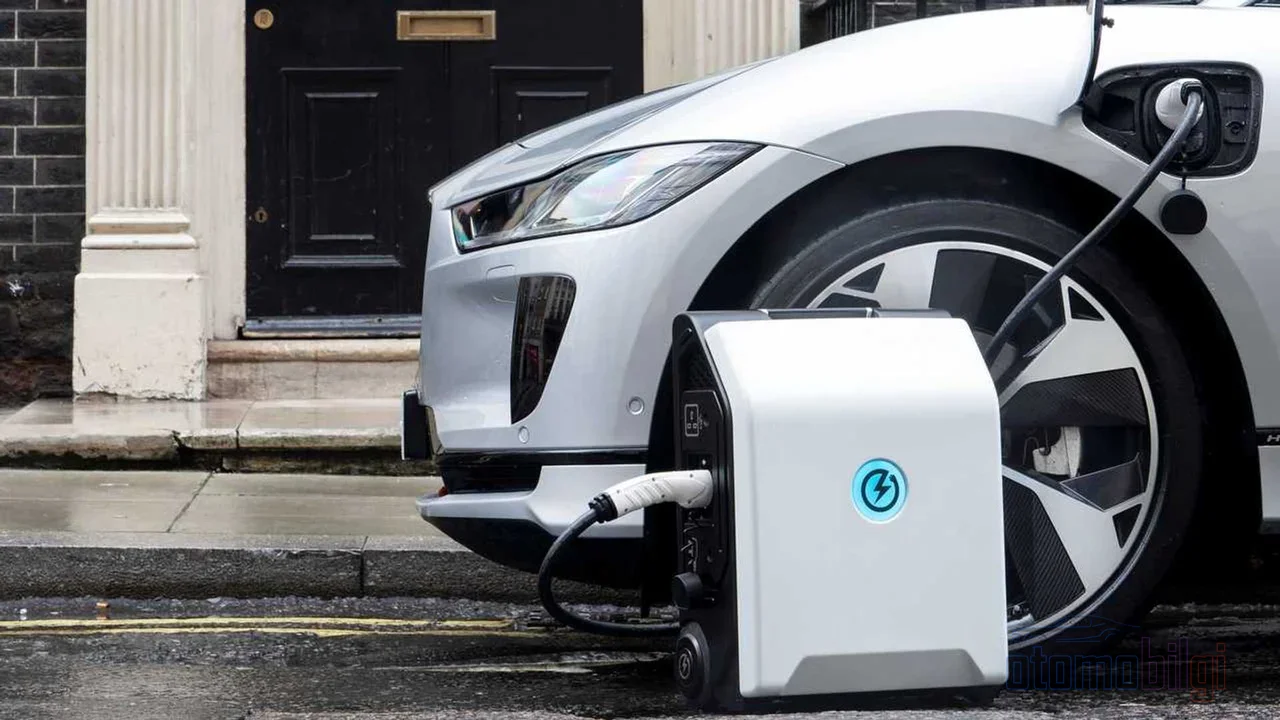
A portable charger works, but its usefulness is limited: It is not a substitute for daily charging; it provides emergency range for a vehicle with a depleted battery to reach the nearest outlet or fast-charging station. Portable AC units running from an outlet typically 32-64 km provide extra range in that interval, while powerbank-type devices deliver less. Used correctly, it is the smartest spare part in the trunk; used on faulty electrical wiring, it carries a serious fire risk.
Highlights
- Portable AC chargers add roughly 3-64 km of range per hour; it varies by power class.
- A power station with a capacity of 1,500-2,400 Wh, 5-12 km provides emergency range; meaningful charging takes 8-12 hours.
- An extension cord should never be used: A continuous current of 12-40 A creates heating and fire risks in thin cables.
- As of the first half of 2026, the number of electric vehicles in Türkiye exceeded 450 thousand, and the number of commercial charging sockets exceeded 45 thousand .
- Charging cables are a target for thieves due to their copper value; locked ports, alarms, and cameras are among the deterrent measures.
What Is a Portable Charger and How Does It Differ from a Fixed Unit?
A portable EV charger (EVSE) means a unit that is not wall-mounted, requires no permanent installation, and can be plugged into outlets. It differs from fixed wallboxes in three ways: it uses a plug-outlet connection, it is in a portable form factor, and it requires no installation. This simplicity is both its biggest advantage and its weakest point; the device is limited by the quality of the outlet and circuit that feeds it.
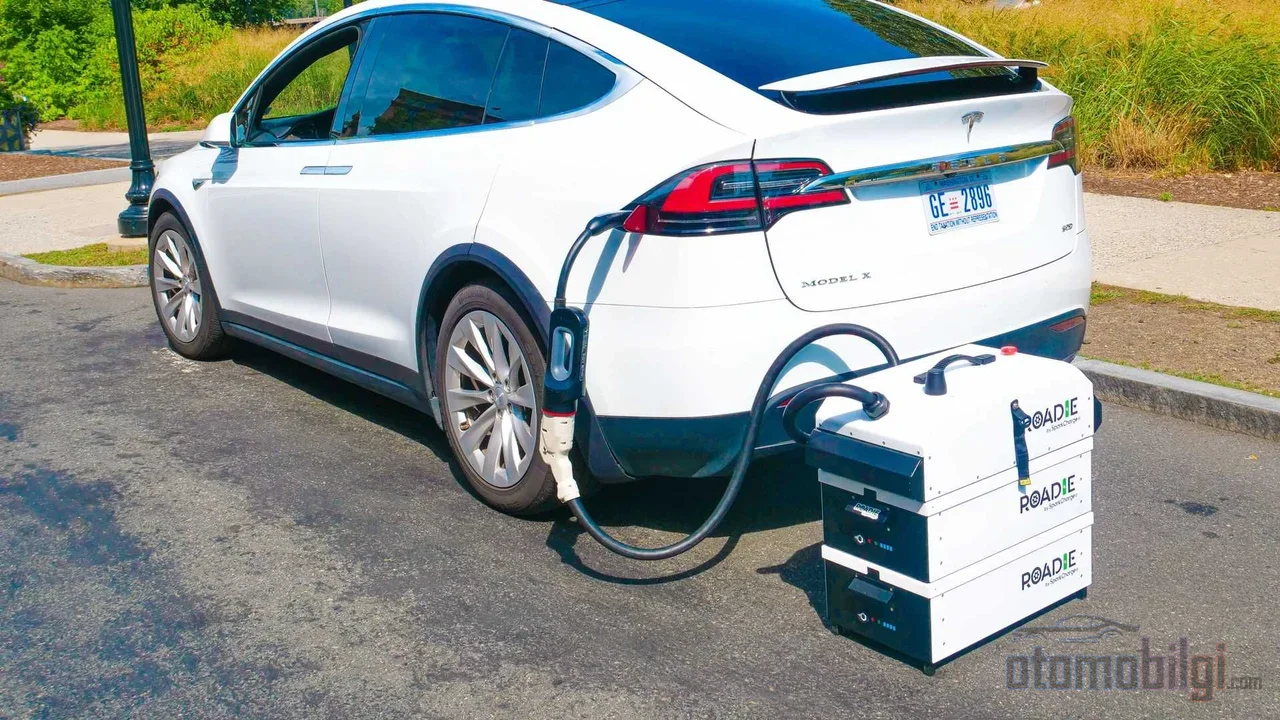
There are two basic types on the market. Running from an outlet, portable AC chargers, in older consumer models, 9.6 kW could offer up to power; in Europe, the connection standard is the 7-pin Type 2 connector. Commercial portable DC units on the other hand 20 kW can go up to, but these are large wheeled systems consisting of multiple batteries; they do not fit in a hatchback or SUV trunk and are transported by roadside assistance vehicles. When we say a solution carried in the trunk, most drivers mean not this second category, but AC units and cables.
Cable length is a decisive detail in practice. About 5 meters is sufficient for most scenarios; 5-10 m is standard for portable devices. Although a longer cable seems convenient, it becomes impractical in terms of friction and storage; staying around 5 m is generally the right choice.
How Many Kilometers of Range Does It Provide? Real Capacity Limits
Let's talk numbers, because that is the only honest way to measure the benefit of portable charging. Portable AC devices running from an outlet provide a charge that will deliver a total of 32-64 km of range; this is not a substitute for home or station charging, it is only an emergency buffer. For powerbank-type devices the picture is even more modest: small models 8-16 km, larger ones 32 km or more extra range can provide.
Hourly range by power level
| Solution | Power / Current | Hourly Range |
|---|---|---|
| Level 1 (120 V, US standard) | Standard outlet | 5-11 km |
| Portable Level 2 | 32 A (7.6 kW) | Approximately 46 km |
| Portable Level 2 | 40 A | Approximately 58 km |
| Portable power station | 1,300-1,500 W output | 5-12 km in 8-12 hours |
| Commercial mobile DC station | Up to 20 kW | Serious range within minutes |
The power station side is a particularly interesting subcategory. A unit with 1,500-2,400 Wh capacity, together with typical efficiency losses (about 85%), provides 5-12 km of emergency range. There are also more ambitious examples: Anker SOLIX C2000 Gen 2 offers over 3 kWh of storage with an extra battery and 2,400 W AC output, delivering 8-15 km of range in compact EVs. So roughly in exchange for an hour of waiting, you get the energy to reach the next fast charging station - for someone whose battery runs out at midnight on the highway, this difference is the difference between meeting a tow truck and rescuing yourself.
Recalculating charging time in advance makes your job easier. The simple formula is this: battery kWh multiplied by depth of discharge, divided by the charger's kW power, gives the duration in hours. For example, with a 32 A unit, half of a 60 kWh battery charges in about 3.9 hours . Doing this calculation before putting a unit in your trunk aligns expectations with reality.
Charging from a Standard Outlet: Under What Conditions Is It Safe?
Let's be clear here: a portable charger is only as safe as the circuit it feeds from. Certified Level 1 devices can be safe for overnight charging with proper wiring; most of the risk comes from amateur installations and practical mistakes.
- Do not use an extension cord. Charging draws a continuous current of 12-40 A for hours; thin extension cords heat up and create a fire risk. International electrical codes also require the connection to be made directly to a suitably rated outlet.
- Check the outlet before each use. Loose outlets, burn marks, covers that are hot to the touch, and breakers that won't stay on indicate wiring problems.
- Never modify the plug. Instead of cutting and adapting an incompatible plug to fit the outlet, use only a certified adapter appropriate for the amperage.
- Cable quality is not negotiable. Uncertified cheap cables lose their water-tightness and dust resistance and carry a short circuit risk.
In home charging, a dedicated line, the correct cable cross-section, and appropriate protective elements are the right choice in the long term. New building and parking regulations coming into force in 2026 also introduced strict fire safety rules for the positioning of charging stations. In Türkiye, the picture is changing for apartment buildings: after June 23, 2026, individual charging station applications in multi-unit buildings are no longer accepted; applications are made through the site management. For drivers living in apartments where the process of having a unit installed in common areas progresses slowly, the importance of portable solutions is therefore increasing - but that doesn't mean safety rules will be bent.
How to Choose a Unit for Your Trunk? 13A or 16A?
With portable AC units, the amperage rating directly determines charging speed. In the UK context, the common comparison is between 13 A and 16 A: 13 A is the standard household socket level, while 16 A is faster but requires a stronger circuit. The adjustable amperage feature lets you set the charging speed according to the capacity of the electrical installation where you are - since you will encounter different socket and fuse arrangements when traveling abroad, this feature is effectively a necessity.
A practical checklist:
- Confirm the socket type and fuse capacity at your destination in advance; Level 2 requires a 240 V socket (dryer or RV type).
- Verify the connection standard: Type 2 for AC, CCS for DC. J1772-based devices work with an adapter on vehicles with NACS ports.
- Keep the cable length in the 5-10 m range; 5 m is sufficient for most situations.
- Remember a little-known detail: the 12 V auxiliary battery in your vehicle is not charged by the EVSE. To protect it, a separate 12 V battery maintainer is needed; otherwise the vehicle may not work even if the main battery is full.
Charging Cable Theft at Public Stations: Risks and Precautions
Charging cables attract thieves' attention because of the copper inside them; EV charging cable theft is a common problem in the UK and the US, and Germany has seen a notable increase in cable thefts targeting stations. Theft is not just a financial loss: when a station is left cableless, your ability to charge at that point disappears too. In other words, cable theft directly affects every EV owner who depends on the infrastructure.
Measures that work on the driver's side are concrete:
- Lock the cable to the vehicle or the charger; a locked charging port is the most basic barrier.
- If possible, use an anti-theft device with an alarm system.
- Charge in safe, visible, and well-lit areas; since most public stations are already covered by CCTV, these points are a deterrent.
- When charging is complete, do not leave the vehicle at the station unnecessarily, and plug the cable properly into its holder - it is both a safety and a courtesy rule.
The infrastructure side is also on the move. Cables made of cut-resistant composite material have come to the fore; some operators are using tear-resistant material embedded inside the cable. Some manufacturers are offering AI-assisted cable theft prevention modules that can be retrofitted, as well as station-side locks. In short, the cable lock is your job, the cut-proof cable is the station's job - together the two make sense.
Is Portable Charging Really Sensible in Türkiye?
Türkiye's charging infrastructure is growing rapidly: the number of high-speed charging stations, which was 5 thousand in 2024 with support and incentives, has risen to 16,650 and reached that figure. As of the first half of 2026, the number of electric vehicles exceeded 450 thousand, and the number of commercial charging sockets exceeded 45 thousand; the vehicle count reached 464,873 in July 2026. The market is advancing ahead of forecasts, and in medium scenarios the number of BEVs is expected to surpass the 2 million mark by 2030.
Where does the portable charger fit in this picture? Typical usage scenarios in Türkiye are as follows: In city driving, the infrastructure is dense enough that most drivers don't need a portable unit - a well-planned route largely eliminates the need. On long journeys and in rural areas, however, the picture changes; relying on fast charging and heading to public DC stations is the scenario where "dead battery" calls are most common. An AC unit in the trunk with a 5 m cable means the chance to gain the last 20 kilometers from a rural household outlet. For apartment dwellers in multi-unit buildings where the individual application door closes after June 2026, a spare cable and portable unit also serve as a practical bridge until the site management process is concluded.
The regulatory side also takes the portable-fixed distinction seriously: In the Customs Tariff Schedule, fixed and portable charging stations are classified separately under tariff position 85.04. The start of a new era in charging tariffs in 2026 shows that the cost calculation will now be based not just on kW, but on where and how you charge.
Frequently Asked Questions
Can a portable charger fully charge the vehicle?
No. These devices provide only enough emergency range to reach the nearest station or outlet; they are not designed as a primary charging method.
Does it work in every home?
A standard outlet is sufficient for Level 1; a 240 V outlet is required for Level 2. Be sure to confirm the outlet type and fuse capacity at your destination.
Does slow AC charging harm the battery?
Quite the opposite, slow AC charging is gentler on battery health. In daily use, keeping the charge between 20% and 80% reduces cell stress; prolonged exposure to temperatures below 0 °C and above 30 °C should be avoided.
Conclusion: Is It Worth Carrying in the Trunk?
My decision is clear: A portable charger is not a simulation product, it is a measurable safety margin - an extra range of 5-64 km with safe use at the right installation and simple anti-theft precautions, it is a backup cable that can be protected. But for someone who doesn't know the capacity limit, it is also a nice disappointment. Set up your main charging on a fixed unit and station network, and treat the one in the trunk like your insurance policy: Hopefully you'll never open it, and when you do, it does exactly its job.
Sources
- A guide to portable EV chargers
- Portable EV Car Charger Buying Guide (2026)
- EV Emergency Charging from a Power Station
- UK Type 2 Portable EV Chargers: 13A vs 16A Guide
- ChargePoint Leads Fights Against Industry-Wide EV Charger Cable Theft
- Prevent EV Charging Cable Theft
- The number of high-speed charging stations in Türkiye has reached 16,650
- Electric Vehicle and Charging Market in Türkiye: 2026 First Half Data
- Is the Era of Charging an Electric Vehicle in an Apartment Building Over?
- Profitability analysis of Türkiye's electric vehicle charging market
- Keep your EV battery in good shape
- EV Battery Charging Best Practices