How Does Riding the Clutch Damage Your Vehicle?
Share This Page
Yes, repeated short-distance driving genuinely harms a diesel engine; because the engine never reaches the exhaust gas temperature needed to complete regeneration, part of the fuel mixes into the oil sump and thins the oil, and the battery cannot recover the capacity it consumed with each start. A single 5-kilometer trip is not a problem; the problem is the pattern of repeated, never-ending half-completed regenerations.
Highlights
- For regeneration 15–30 minutes, above 60 km/h of speed and 2,000–2,500 rpm driving is cited as the typical condition.
- Fuel dilution in oil above 1.5% warrants caution, above 5% is considered critical ; the only definitive method is an oil analysis.
- Engine oil reaches its optimum temperature in 15–20 minutes ; the coolant warms up in 5–10 minutes .
- A single start can consume 5–10% of the battery's capacity; on short trips the alternator cannot compensate for this.
- Short trip definition: driving under 16 km or shorter than 15 minutes ; in winter this window widens even further.
What Is Regeneration and Why Can't It Complete on Short Trips?

The diesel particulate filter is an emissions component that traps the soot, i.e. fine particulate matter, leaving the exhaust. As the soot it traps begins to accumulate, the filter needs to clean itself; this process is called regeneration. The soot in the filter is burned when the exhaust gas is hot enough, and the filter returns to its empty capacity. Three conditions must be met simultaneously: sufficient exhaust temperature, a certain engine load, and the duration required to sustain these conditions.
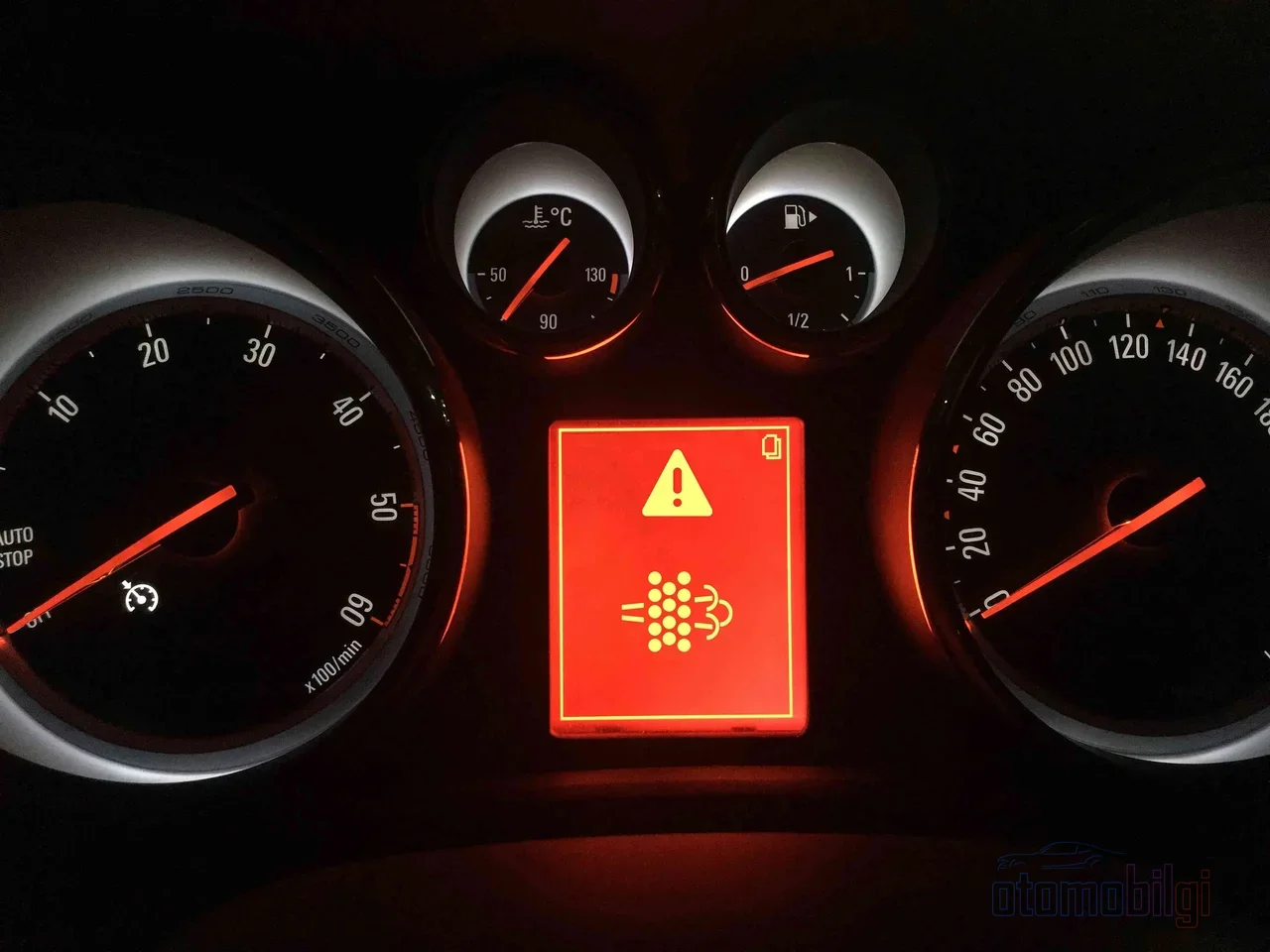
Short-distance driving undermines all three conditions. On a 10-minute drive from home to work in the morning, the engine is still in its warm-up phase; the exhaust temperature may perhaps reach the regeneration threshold, but you park the car before the filter is fully cleaned. Meanwhile, the engine has continued to produce soot. Result: the soot load increases a little more with each cycle, the electronic control unit triggers regeneration more frequently, fuel consumption rises, and eventually a DPF fill warning appears on the instrument panel.
The critical point is this: A single interrupted regeneration is not a disaster; the repeated pattern is the problem. Every half-completed regeneration enlarges the accumulated soot for the next attempt and shortens the regeneration interval. Thus the filter's usable life is rapidly depleted.
How Many Kilometers and How Many Minutes Are Needed for Regeneration?
There is no exact universal number; calibration varies by manufacturer, model, and filter size. The commonly accepted practical condition is: 15–30 minutes at above 60 km/h, within the 2,000–2,500 rpm range of uninterrupted driving allows the control unit to complete regeneration. Some manufacturer documents also describe more demanding conditions; for instance, in heavy-duty diesels it is stated that approximately 30 minutes of driving at above 30 mph may be required. Stop-and-go style use, speeds below 25 mph, and 10–15 minute cycles where the engine is shut off before fully warming up are counted among risky patterns that may require manual intervention.
One detail must also be honestly noted: regeneration is not mathematically impossible on every short trip. If the engine is warm, the fuel tank is full and traffic is flowing, the control unit can initiate regeneration even on a short cycle. However, you should not rely on this; it is no substitute for planned driving.
Oil Dilution: The Quietest Victim of Short Trips
On short trips, part of the diesel fuel condenses on the cylinder walls and seeps down into the oil sump with the piston movement. This is called fuel mixing with oil, or oil dilution. Additionally, when engine load is low, fuel does not burn completely and raw fuel accumulates in the cylinders; this leads to the same outcome. Diluted oil loses its viscosity; the oil film thins, and wear of bearings, cylinder walls and camshafts accelerates.
The thresholds are clear: when the fuel ratio in the oil exceeds 1.5% a warning signal, and when it exceeds 5% a critical situation is at hand. Excessive dilution carries a fire risk, and in extreme cases can go as far as diesel runaway, where the engine burns its own oil and begins to rev uncontrollably. The trap here is this: it is not possible to reliably detect 5% dilution by smell; the only certain method is a laboratory oil analysis compliant with standards.
There is also a temperature dimension. Coolant reaches operating temperature in 5-10 minutes; however, engine oil only reaches optimum temperature after 15-20 minutes. Approximately 100 °C is needed for the oil to evaporate the condensation inside it. In vehicles that never reach this temperature, the oil mixes with water and fuel, laying the groundwork for sludging. This is why repeated short trips are considered one of the most aggressive usage patterns for oil and significantly shorten oil change intervals. Heavy short-trip use also produces excessive soot, which can exceed the oil's capacity to suspend contaminants.
Why Are Modern Diesels More Fragile in This Regard?
Modern diesels with DPF and SCR systems are far more dependent on exhaust temperature than older mechanical diesels. Old engines were more tolerant of cold, inefficient operation; today's systems require specific temperature windows for full function. This is why the harm of short-trip use is felt faster and more tangibly in today's diesel than in a vehicle from years ago.
Battery Fatigue: The Cost of Every Start
The third silent victim of short trips is the electrical system. A single starting process consumes an estimated 5-10% of battery capacity; when you park the car 10 minutes later, the alternator has no time to fully replenish this loss. The battery constantly operates in a low state of charge. Over time, sulfation, permanent capacity loss and premature aging occur; the added load of cold starts in winter accelerates this picture.
It is also worth noting: in a vehicle with a healthy charging and starting system, short trips alone are not expected to kill the battery. The problem is the pattern of insufficient charging repeated for weeks. If you use your car mainly on short trips, occasionally measuring the battery voltage and supporting it with an external charger when necessary is a reasonable precaution.
How Does a Clogged DPF Pull the Turbo and Oil System Down With It?
These three systems do not operate independently; a clogged filter triggers a chain reaction. When the DPF becomes clogged, flow resistance in the exhaust increases and the load on the turbocharger changes; a clogged filter can contribute to turbo failure. The reverse also holds: a faulty turbo can carry engine oil to the exhaust side, and the oil forms non-combustible deposits inside the filter, turning it into a filter on which regeneration is no longer effective. In this scenario, the control unit triggers regeneration more frequently but can no longer clean the filter that has ceased to function.
Ash accumulation is a separate dimension. Soot is burned off at high temperatures; however, ash from oil additives cannot be burned and permanently fills the filter. Wrong oil selection, especially using oils without low SAPS properties, accelerates ash build-up and brings the clogging forward. For this reason, sticking to the oil manufacturer's approval in a diesel with a DPF is not a preference but a necessity.
Is One Long Drive a Week Enough?
This is the most frequently asked question by short-distance drivers, and the answer is conditional. Driving 20-30 minutes at highway speed per week can help balance the soot load in a healthy system; a long highway run done once a week can also periodically clean the filter. However, this is not a magic solution. If the filter has a high ash load, there is a sensor fault, or there is a problem on the SCR side, no amount of highway driving will resolve the clogging; pushing a vehicle with an active fault code onto a long drive is the wrong move.
This calibration difference is also why the recommended duration and speed parameters vary from brand to brand. While one model may suffice with 20 minutes at 60 km/h, another may require a longer duration and higher speed. The DPF section in your vehicle's owner's manual is always the most reliable reference.
How Do You Tell That Your Vehicle Is Regenerating?
- Idle speed rising above normal and fluctuating
- A noticeable heat smell from the exhaust along with a hot metal odor
- A visible drop in the instantaneous fuel consumption value
- The cooling fan kicking in while the engine temperature is normal
- Rising exhaust gas temperature on a fault scan tool
When you see these signs, the right thing to do is to keep the vehicle on the road at a safe speed until regeneration is complete. If there is power loss, repeated failed regenerations, or an active fault code, you should not take the next step without a live data scan. Knowing the relevant classic fault codes helps: codes relating to soot accumulation, filter efficiency, and the pressure sensor circuit are used to distinguish whether the problem lies in the filter itself or on the detection side.
Practical Maintenance and Driving Advice for Short-Distance Drivers
Short-distance use is not a sin; it is a usage condition. When managed correctly, a diesel vehicle can survive in this pattern too. Applicable recommendations are as follows:
- At least once a week, if possible, 20-30 minutes plan driving at highway speed and steady rpm; if regeneration has started, do not interrupt it.
- Shorten the oil change interval; the short-trip pattern is the most demanding condition for oil, and going below the manufacturer's interval makes sense.
- Have oil analysis done at regular intervals; track fuel dilution by measurement, not by smell.
- Use only manufacturer-approved, low-SAPS specification oil.
- Monitor the battery voltage; apply periodic external charging if necessary.
- Avoid running the vehicle unnecessarily at idle before getting in; prolonged idling also produces soot and does not provide the conditions for cleaning.
- When the warning light comes on, do not delay and do not consider filter deletion; this is not a legal repair path on public roads and does not eliminate the root cause of the problem.
And a note for those buying used: a low-mileage diesel is not always a safe choice. The odometer can be misleading; idle hours, regeneration history, and accumulated soot-ash load tell the vehicle's true age much better. A diesel with low recorded mileage but used only on short trips for years may be more worn than a high-mileage example that has covered long distances.
Conclusion: A Measurable Problem, A Manageable Pattern
The effect of short-trip use on a diesel engine is not a mystical prophecy but a measurable engineering fact: the temperature window required for regeneration closes, the soot load increases, oil dilution exceeds warning and critical thresholds within the 1.5-5% range, and the battery remains constantly undercharged. Once this pattern is noticed, the solution is not to sneak a long trip in behind the problem's back, but to shorten maintenance intervals, take oil analysis seriously, and establish a habit of planned weekly driving. If the system is sound, a few simple habits significantly extend the life of both the filter and the engine.
Sources
- Diesel DPF Short Trips & Short Journeys: Regen Problems
- The Effect of Short Trips on Diesel Engine Wear
- DPF regeneration: How to keep your diesel particulate filter in top shape
- The Impact of Short Trips on Engine Oil Life
- The Impact of Short-Trip Cycles on Diesel Engine Oil Performance
- Can the DPF cause Turbocharger Failure?
- DPF regeneration for dummies
- What Can Affect Your DPF?
- Short trips sometimes harm your car battery