Is the 2026 Suzuki Jimny a Small but Determined Adventure Vehicle?
Share This Page
The Suzuki Jimny is a compact adventure vehicle in Türkiye, still sold brand new with the 2026 model year, a true 4x4 with a ladder-type chassis and rigid axles. It is structurally an entirely different vehicle from C-segment SUVs; it promises no comfort on asphalt, but in return it goes off-road where most of its class rivals cannot. In city use its compact size is an advantage, while on the highway its 102 horsepower output remains modest.
Highlights
- Single engine in Türkiye: 1.5 K15B petrol, 102 hp and 130 Nm
- One-piece ladder chassis, rigid axles and LSD-equipped true 4x4
- 37° approach, 49° departure angle, 210 mm ground clearance
- Cargo: seats upright 85 L, up to 830 L with seats folded
- Average consumption: 7.5 L in the catalog, can reach 9-10 L in user measurements
What need does the Jimny answer?
Almost every SUV on the market is built around comfort and family practicality. The Jimny answers a different question: can a car be built that is usable every day, with the mechanical foundation of a true off-road vehicle, without compromising on size? The answer lies in a body on a one-piece ladder chassis, with a curb weight of 1,110 kg, a 2,250 mm wheelbase, and the same construction used in pickup trucks. This chassis provides a foundation that is both heavier and more durable than the unibody of contemporary crossovers, and it resists body flex on rough terrain.
That is why its segment label is ambiguous. Some sources classify it as a mini SUV or a B-segment SUV; yet what distinguishes the Jimny from crossovers is its body type, not its size. The vehicle itself creates a category: an adventure vehicle with city car dimensions and an off-road vehicle skeleton. A buyer who does not embrace this duality will find either a great deal in the Jimny or nothing at all.
Engine and transmission: the character of the K15B
In the Turkish market the Jimny has a single engine option: K15B a 1.5-liter, naturally aspirated petrol engine with this code. Positioned lengthwise above the front axle, this four-cylinder unit produces 102 hpat 6,000 rpm and 130 Nm of torque at 4,000 rpm. The figures are modest by 2026 standards; top speed is limited to 140 km/h . But this engine's job is not acceleration; it is to deliver uninterrupted and predictable traction. Thanks to its naturally aspirated nature, throttle response is direct, there is no such thing as turbo lag, and precise speed control with the left foot is easy in off-road driving.
On the transmission side, the version coming to Türkiye uses a 4-speed torque converter automatic. Four speeds is a low number for 2026; since the automatic operates at high revs, it also pushes consumption up. Nevertheless, this transmission has a simple and durable structure that suits the vehicle's rustic character. In the manual version, the driver directly manages the differentials through drive modes such as 2H, 4H and 4L; for someone with serious off-road intentions, choosing the manual is a sensible point of discussion.
Fuel consumption: the gap between catalog and reality
In catalog values the Jimny averages 7.5 L/100 km consumes; it is stated as 8.4 L in the city and 6.9 L on the highway. Measurements from drivers who use the automatic transmission versions daily point to a 9-10 L range in the city. The explanation for the difference is technical: running the 1.5-liter naturally aspirated engine with a four-speed automatic keeps the engine in a high rev range, especially in stop-and-go traffic. One should not find this consumption profile unexpected in a small, light gasoline vehicle; considering the 40-liter fuel tank, range planning is comfortable on the highway and requires some care in the city.
What a real 4x4 means: ALLGRIP PRO and the ladder chassis
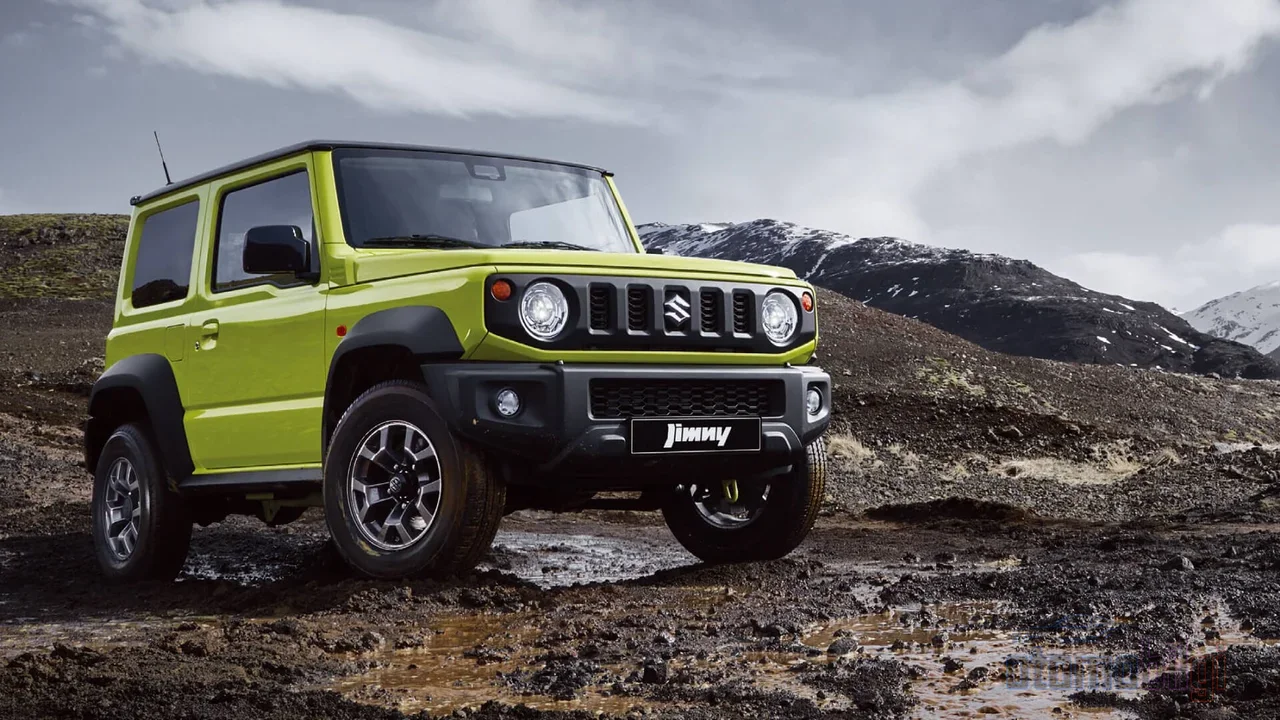
The Jimny's 4x4 system, ALLGRIP PROis a part-time system that deliberately preserves old technology in an era when much of the industry has moved to full-time 4x4. There is no center clutch or torque-balanced axles; the system is simple, mechanical, and predictable. The vehicle's rigid (fixed) axles at the front and rear, together with the ladder chassis, maximize wheel suspension movement on challenging terrain: while one wheel rises, the others maintain their contact with the ground.
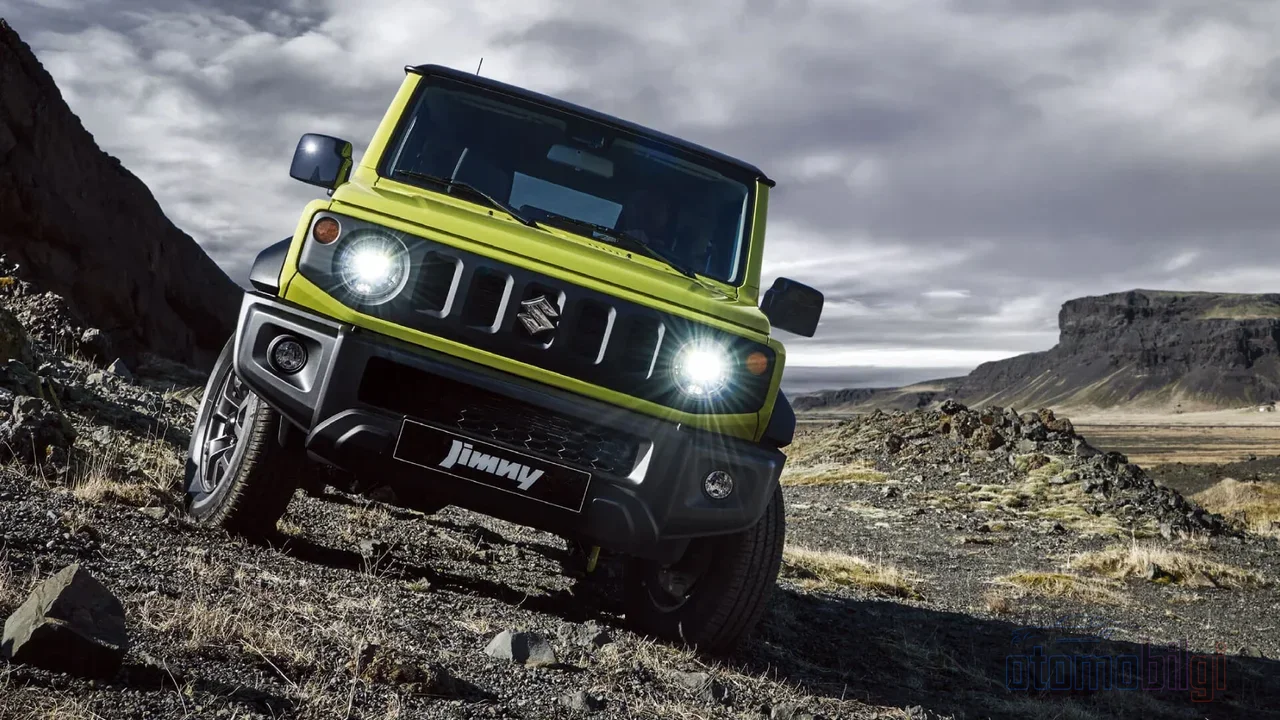
Geometry values are the numbers that best summarize the vehicle's identity. A 37° approach angle and a 49° departure angle, along with 210 mm of ground clearance, allow the Jimny to traverse ramps, potholes, and rocky terrain far more comfortably than crossovers. The limited-slip differential (LSD) and hill start and descent assist systems are aids added on top of this mechanical foundation. The vehicle's 1,110 kg curb weight both prevents it from getting bogged down off-road and keeps the limited engine power sufficient. Since no modern city SUV has this mechanical package, they cannot be compared with the Jimny in terms of off-road capability.
How is it in the city? The advantage of compact size, the price of rigid axles
City use is the most debated aspect of the Jimny, and both sides of the debate are right. Small dimensions, short overhangs, and a tight turning radius make parking easier; the high driving position improves traffic foresight. Most long-time owners report that city use is practical beyond expectations; some have used the vehicle only in the city for years and do not say they regret it.
The price is paid on the comfort side. Rigid axles transmit asphalt joints and potholes to the body with little softening; the suspension is firm, and the vehicle's short wheelbase accentuates jolting on broken sidewalks. At higher speeds the picture becomes clearer: you encounter a character where the steering requires frequent corrections, engine hum and road-wind noise increase, and body sway in sudden maneuvers must be considered normal. Cruising on asphalt above 80-90 km/h falls outside the Jimny's natural operating range. Anyone buying this vehicle purchases not highway performance but a predictable mechanism that can move on any surface.
Interior and luggage practicality: four people fit, but luggage?
The front row in the cabin is successful: the driving position is high, front seat space is adequate, ergonomics are sound, and the seats are comfortable. An effective heater and a well-insulated cabin experience are also details praised by users. The problem starts behind the rear seats: with the seats upright, cargo volume is only 85 liters - a borderline value even for two suitcases. When traveling with four people, the cargo area shrinks to practically nothing.
When the rear seats are folded, the volume rises to 377 liters, and in the maximum folding configuration, capacity reaches 830 liters. In other words, when configured as a two-person escape vehicle, the Jimny is generous with equipment carrying; when configured as a four-person family vehicle, everyone has to plan in advance what goes where. This calculation must be made before the purchase decision.
Strengths and weaknesses: a balanced verdict
- Plus: Off-road capability beyond its class with ladder frame, rigid axles, LSD, and hill assists
- Plus: Compact size, high driving position, easy parking
- Plus: Predictable responses, enjoyable character, and an iconic cult status
- Plus: Cargo volume expanding from 85 liters to 830 liters with folding seats
- Minus: Harsh, bumpy asphalt ride caused by the rigid axles
- Minus: Increased consumption with the 4-speed automatic working at high revs (measured 9-10 L in the city)
- Minus: Modest performance with 102 hp / 130 Nm, 140 km/h top speed
- Minus: Cramped interior, cargo limited to 85 L with the seats upright
If the verdict must be reduced to a single sentence, it would be this: the Jimny is not the best vehicle in any single area, but it accomplishes something very few vehicles can manage - what a small, light, and mechanically pure 4x4 can accomplish. The part-time 4x4 system being considered old technology does not change this balance; simplicity here is not a flaw, but a prerequisite for durability and repairability.
Jimny or C-segment SUV: which buyer should choose which?
In a C-segment SUV, you find comfort, equipment, safety assistants, and low consumption; but nearly all of them are monocoque-bodied and cannot go where the Jimny goes off-road. Comparing the Jimny with a C-segment SUV is actually asking the wrong question; the right question is which features are non-negotiable in your usage profile.
- For someone who regularly goes off-road and is looking for a second or weekend vehicle, the Jimny is a clear choice.
- Those who want a city-focused vehicle that is easy to park with strong character will be happy with its urban advantages - provided they accept the stiff suspension.
- For someone for whom it will be a four-person family's only vehicle, expecting comfort on long journeys and a large cargo area, the Jimny is the wrong choice.
- Users who prioritize high cruising speed and quietness on the highway should turn to alternatives with more powerful and modern transmissions.
For this reason, the Jimny, still sold new in Türkiye, is one of the rare examples in the market: a car bought not by reading a price list, but by writing out its use case. It is a vehicle with a clear identity - small but determined, limited but honest. For the buyer who knows in advance where it can go and how much load it can carry, this consistency is the biggest piece of equipment not found on any rival's spec sheet.
Sources
- Suzuki Jimny - Suzuki Tugmaner Automotive
- If You Have a Jimny, You Need Nothing Else - Suzuki
- Suzuki Automobile Current Price List - Suzuki Türkiye
- Suzuki Jimny Driving, Comfort, Engine and Transmission
- Should You Buy a Suzuki Jimny? Off-Road Test and User Experiences
- 2026 Suzuki Jimny Unveiled: Here Are Its Features and Price
- Suzuki Jimny GLX 1.5 4x4 2026 Technical Specifications
- Suzuki Jimny Review
- 2019 Suzuki Jimny Review | Practical Motoring
- suzuki jimny - Ekşi Sözlük
- Second-Hand Suzuki Jimny - DonanımHaber Forum
- Suzuki Jimny 1.5 GLX test drive - Otogundem