Suzuki's Master Plan: Modular Electrification and Software Transformation
Share This Page
Suzuki's master plan is a comprehensive transformation strategy built on modular powertrains, shortened development cycles, lightweight construction and a software-defined architecture: the 94 hp and 174 hp electric units entering service in 2027 with eSky , a Nissan e-Power-style generator-type hybrid layout, and a speed advantage against Chinese rivals are the main headlines that will shape the small car specialist's future.
Highlights
- Two modular electric units: 94 hp for the A-segment 94 hp, 174 hp for the B/C-segment 174 hp
- First product eSky: launching on sale in the UK and Europe in 2027
- Development time to be reduced to 24 months by 2030; currently 40-48 months
- Despite the ~80 kg increase from safety equipment, a target of saving more than 100 kg The foundation of the strategy: the 10-year
- Technology Strategy 2025 announced in September 2025
The Framework of the Strategy: Right x Light Mobile Tech
Suzuki's master plan is not a decision that emerged overnight; it is the concretized and advanced version of the Technology Strategy 2025 , the 10-year technology plan the brand announced on September 9, 2025. The plan is presented under Suzuki's long-emphasized "Minimizing Energy" technology philosophy and "Maximizing Essential Value" policy with the "Right x Light Mobile Tech" concept. The company's distinctive field approach is also defined within this framework: the principles of Genba, Genbutsu, Genjitsu, Genri and Gensoku, summarized as "3Gen2Gen", meaning going to the field, seeing the facts on site, and adhering to principles.
Three main pillars stand out in the current version of this philosophy. The first is modular powertrains that bring together electric, hybrid and range-extender forms in a single architecture. The second is a substantial shortening of development cycles. The third is the transition to a software-defined vehicle (SDV) architecture. Suzuki defines the software-defined approach not as an exaggerated technology promise, but as a means of realizing "exactly fit-for-purpose" high-performance electric components.
How Do the Modular Electric Units Work?
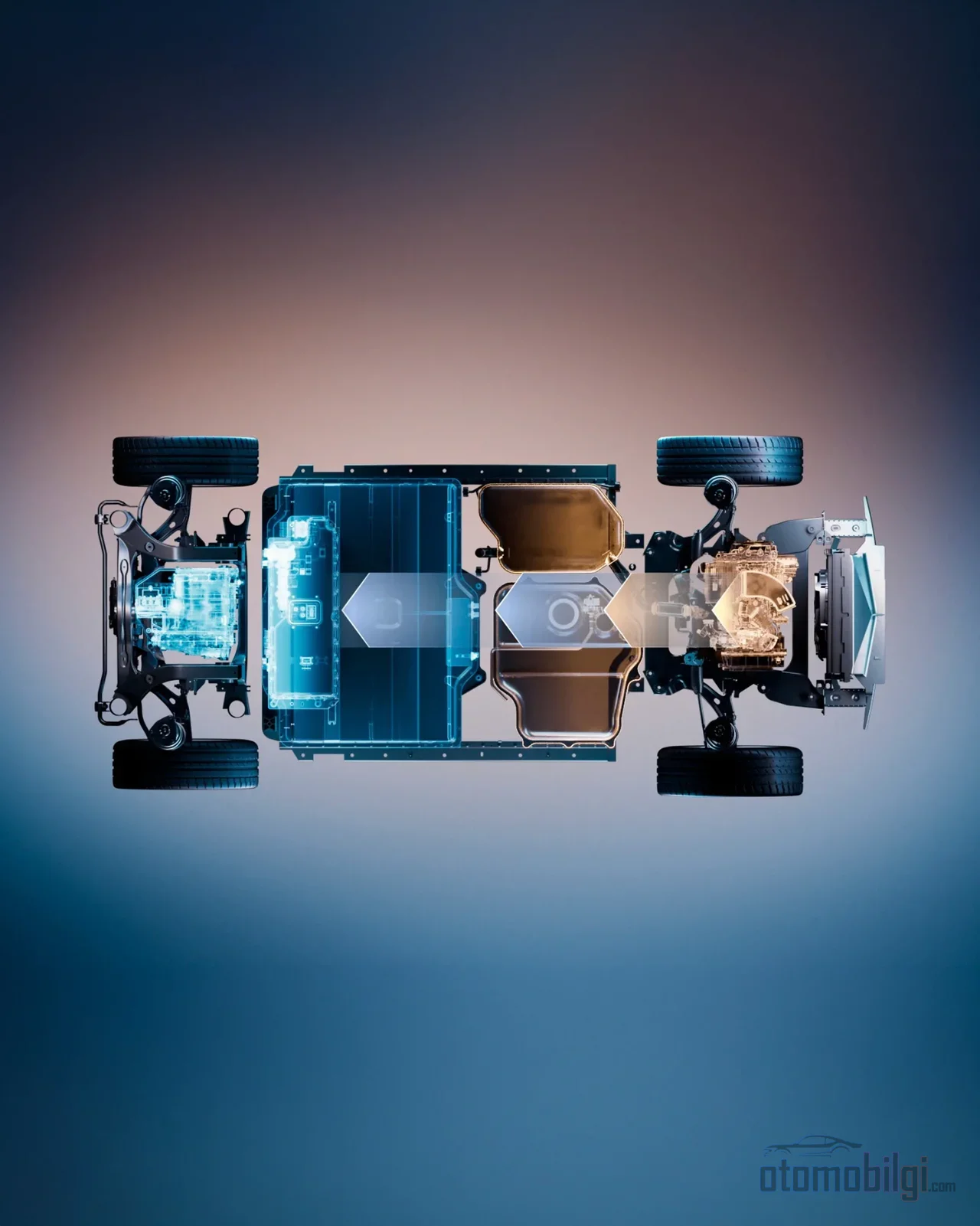
The technical heart of the plan is the electric front axle developed at two different power levels. The version designed for the A-segment and city cars produces 94 hp , while the version catering to B and C-segment models delivers 174 hp of power. In both units, the electric motor, inverter and transmission are packaged together - this is the concrete embodiment of Suzuki's approach of building its vehicles almost like interlocking LEGO blocks.
The real power of modularity comes from the replaceability of the battery pack. On top of the base unit, different drivetrain layouts can be built depending on the battery size:
- Fully electric (BEV) layout
- Generator-type series hybrid in which the wheels are driven only by the electric motor
- Range-extender version
- Plug-in hybrid layout
This transition can be made without changing the core engineering of the electrification axle. When the battery is swapped for a larger unit, the result is a vehicle with a range extender or a plug-in hybrid. In addition, 13 hp or 40 hp a rear axle that can be equipped with small electric motors delivers an all-wheel-drive option and can theoretically be matched with three powertrain layouts. Larger models will use a 174 hp (130 kW) front e-Axle and an optional 40 hp (30 kW) rear e-4WD unit.
Why a Generator-Type Hybrid Layout?
In B- and C-segment models, the electrification axle will be combined with a generator-type gasoline engine. In this scheme, the internal combustion engine never drives the wheels; its job is only to run a generator that feeds a small battery. The tractive force on the road is produced entirely by the electric motor - the same logic as Nissan's e-Power system. For Suzuki, this approach makes sense in two ways: it merges the brand's hybrid experience with an electric driving experience, and by eliminating the transmission-engine connection, it keeps the modular axle common to every layout.
Being able to switch between different layouts also supports Suzuki's position in developing markets. Not every market is ready for full electrification at the same time; being able to offer hybrid, range-extender and fully electric versions sitting on the same architecture is a major advantage in markets with high demand for variety.
eSky: The First Concrete Product of the Plan
The first application of the strategy is the eSky electric city car, expected to go on sale in the UK and Europe in 2027. The production specifications of the Japan version have already been announced: 26 kWh LFP battery capacity, 310 km of WLTC range and a 47 kW (63 hp) electric motor. In the European version, power is expected to rise to 94 hp; it is stated that in Japan, due to kei-class regulations, motor power will be software-limited to 63 hp.
The car is clearly written with small-car mastery: 1,030 kg curb weight, 3,395 mm length, 2,460 mm wheelbase and 4.4 meters turning radius paint a package focused on urban use. On the equipment side, a heat pump, V2L (energy transfer from the vehicle to external devices) and a 10.1-inch touchscreen are offered as standard. The Japan launch is planned for this autumn.
Even before the eSky, Suzuki had already taken its first step in electrification: its first series-production electric vehicle, the e-VITARA was unveiled in Milan; production began in the spring of 2025, and the car uses the HEARTECT-e platform, developed specifically for electric vehicles. The e-Vitara's motor options are listed as 142 hp, 172-174 hp and 181 hp in the AWD version. The eSky's 94 hp modular unit, unlike this first vehicle, is a direct product of the strategy's own architecture.
The Weight War: 100 kg of Savings Against an 80 kg Increase
Modern safety requirements are making cars heavier every year; Suzuki is aware of this. According to the company's own calculations, new safety equipment adds roughly 80 kg will add extra load. In response, Suzuki aims to achieve more than 100 kg of weight savings through new manufacturing techniques and platform optimization. The "Right is Light" philosophy covers every part, from interior materials to plastic components. For a brand specialized in small and light vehicles, this is not just engineering but a matter of identity.
How Does Development Time Get Cut in Half?
Perhaps the most ambitious headline of the plan is the timeline. Suzuki aims to reduce its current vehicle development cycle, which takes 40-48 months, to 24 months by 2030. Alongside this, a 30 percent improvement in development efficiency and a 50 percent improvement in production efficiency are projected. The use of simulation, virtual development, and artificial intelligence in standard platform vehicles is among the tools for this goal.
There are three mutually reinforcing factors behind this acceleration: modular powertrains making the same components reusable across different vehicles, the global production network providing scale, and the centralized "brain" software architecture facilitating integration. India holds a central position in the strategy; it stands out in the 10-year vision with a production target of 4 million, and the emphasis on hybrids, biogas (CBG), electric vehicles, and rapid development are the headlines of this vision.
The Small Car Specialist's Answer to Chinese Rivals
The motivation behind the plan is clearly stated: Suzuki emphasizes that competition from Chinese manufacturers has intensified in emerging markets such as Asia and South America. A traditional manufacturer working with long development cycles cannot keep its models current against Chinese rivals that renew their models every year. This is the real meaning of Suzuki's goal to halve the development time: keeping pace with the speed of Chinese manufacturers.
The industry as a whole is heading in a similar direction in the transition to software-defined vehicles. Analyses show that Chinese manufacturers have advantages in scale, speed, and integration in this transition, and that SDVs have become the key to competitiveness in China. Similarly, Renault has announced two electronic architectures, aiming to launch its first European SDV in 2026 and halve the time-to-market for new features. Industry forecasts say that more than half of new vehicles globally will be software-defined by 2030. Suzuki's plan is not an attempt to join this wave; it is an attempt to build its own unique, light, and right-sized version in the small car segment.
Of course, the risks are not absent. It is assessed that the strategy has the character of "a revolution, not an action plan"; the simultaneous rollout of numerous developments carries implementation risk. It is also stated that, due to its size and positioning in the UK market, the eSky variation will largely remain limited to the fully electric version, with a dual-motor AWD option potentially coming over time. The flexibility that modularity would bring for small markets may remain limited here.
Conclusion: Speed, Lightness, and Right Size
Suzuki's master plan can be summed up in three words: modularity, speed and lightness. Common front axles of 94 hp and 174 hp, swappable batteries and a generator-type hybrid layout are all reduced to a single architecture; it aims to cut development time to 24 months by 2030; and it champions the principle of "right size, low weight" in every component. The eSky in 2027 will be the first test of this architecture. Suzuki, confident in its decades of accumulated expertise in the small car segment, is this time trying to transform that expertise into a structure capable of responding to the pace of its Chinese rivals.
Sources
- Suzuki Announces Technology Strategy 2025 for 10 Years Ahead
- New Suzuki masterplan: hybrid tech and Lego-like EVs to meet the Chinese challenge
- Suzuki Confirms Light Range Extender Setup Alongside Modular Strategy
- Suzuki aims to halve vehicle development time to stay on China's tail
- Suzuki e Sky
- Suzuki e Sky Revealed As Adorable City EV
- Tech-ready: accelerating innovation
- Software-Defined Vehicle - 2026 Capital Market Day
- Why China has an edge with SDV technology
- Suzuki Announces Growth Strategy for FY2030