Unlocking a Car with Your Phone: How Does the Digital Car Key Work?
Share This Page
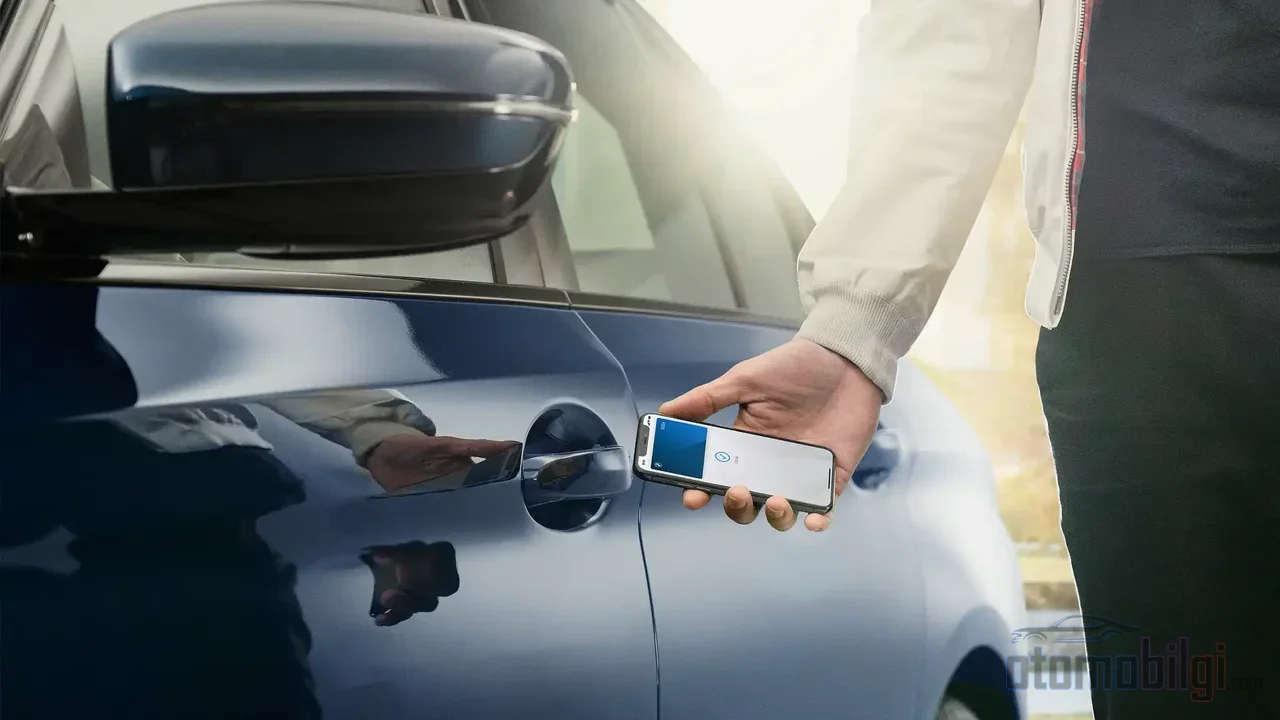
Unlocking your car with a phone means your smartphone turns into a digital car key: you can unlock the door by touching your phone to the door handle, the car can recognize you via Bluetooth as you approach, and you can even start the car from your phone. The key uses three radio technologies at once; NFC handles short-range touch operations, Bluetooth Low Energy handles proximity detection, and UWB provides secure positioning with centimeter-level accuracy. In other words, the phone in your pocket is actually a key containing three separate radios.
Highlights
- Digital keys use NFC, Bluetooth LE and UWB technologies together; each covers a different distance
- UWB, with centimeter-level distance accuracy, is the strongest defense layer against relay attacks
- Even if the iPhone battery dies, the digital key can keep working over NFC for about 5 hours continue to work
- Genesis Digital Key 2 allows sharing the key with up to 3 people ; BMW Digital Key allows up to 5 people
- CCC Digital Key is the global standard that protects cryptographic keys with secure elements on both the phone and vehicle side
So how exactly does this system work? How does the phone in our pocket replace the classic key? Let's take a look step by step, because this involves three technologies that don't compete with each other but shake hands instead.
How Does a Digital Car Key Work?
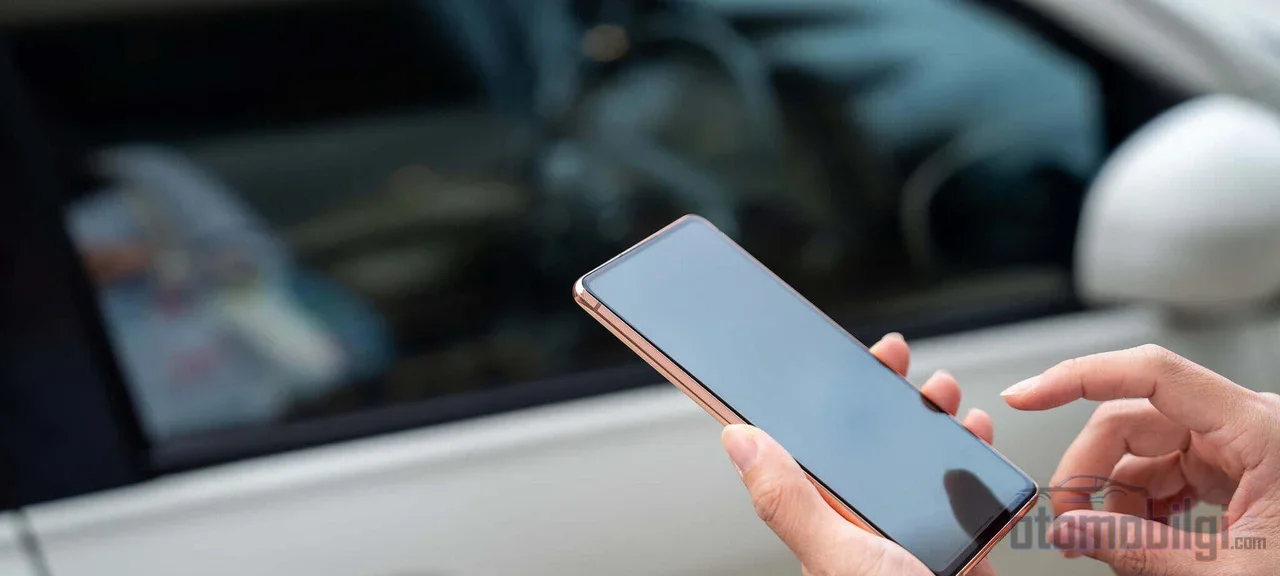
In its simplest form, a digital car key lets you access the vehicle, unlock it, start it, and share the key with others via your smartphone. The key sits as a virtual item in a wallet app on your phone; just like your credit card sits in Apple Wallet or Google Wallet.
The secret doesn't lie in a single technology. For example, in the Tesla Model 3, the phone key is the primary key by default, and the car detects the phone's proximity via Bluetooth. On the industrial side, Huf's "Phone as a Key" system uses all three signaling methods at once: BLE, UWB and NFC. Each does a different job and they complement each other.
To use an analogy: Bluetooth is the friendly doorman who notices you from afar; NFC is the guard who asks "do you know me?" when touched to the door; and UWB is the radar that measures both your distance and direction with centimeter-level accuracy. When the three work together, you get a system that does everything a classic key fob does.
NFC: Touch the Door and You're Done
NFC, or Near Field Communication, is a technology that operates at 13.56 MHz and can only perform transactions at a distance of a few centimeters. Just like tapping your credit card at a store, you bring your phone close to the door handle or the reader on the B-pillar to unlock the door. This method is called "tap-to-lock / tap-to-unlock": locking by touch and unlocking by touch.
NFC's superpower is its low energy requirement. So much so that even if your phone's battery is completely dead, NFC can still communicate by using the energy the vehicle itself emits. That's why NFC is positioned as a fallback for other technologies or as a last resort backup. You'll soon see just how lifesaving this is in the "what happens when the phone dies" section.
Bluetooth Low Energy: The Car Notices You As You Approach
BLE is the low-energy version of classic Bluetooth. BLE chips with small batteries are frugal enough to run for years; the system needs very little data for secure communication between the phone and the car, and pairing is done with algorithms compliant with Bluetooth SIG standards. So there's no need to fear that "the connection will drain your battery" - the technology was designed precisely for this.
In practice, this means passive entry. In the PKE (Passive Keyless Entry) systems of the pre-phone key era, the car detects whether the key is close enough and performs authentication using the challenge-response method. The digital key applies the same logic with BLE: you approach with your phone, the doors unlock by themselves, and once you get in and press the button, the car starts. The phone is in your pocket or bag, and no one presses anything.
UWB: A Safety Layer with Centimeter-Level Precision
Now let's get to the most serious part. BLE and NFC are powerful technologies, but both have a weakness: neither can definitively answer the question "is the key really here, or was the signal relayed?" Attackers exploit this gap with classic key fobs: two people carry the key's signal a few hundred meters away with an antenna and unlock the car without the owner's knowledge. This is called a relay attack.
UWB, or Ultra-Wideband, enters the scene exactly at this point. This wireless technology locates the device with very high precision from a distance of roughly ten meters between the phone and the car, offering range accuracy at the centimeter level. The car can verify not only that the key is "in range" but that it is physically right there. Even if the signal is copied, the distance measurement won't hold up, so the attack fails. That's why UWB is today the de facto industry-standard protection layer against relay attacks in vehicle entry.
In use, all three come together: BLE detects the approaching key, UWB provides high-precision positioning and secure authentication, and NFC takes on the contactless tap backup when the phone is dead or at times when there is no smartphone at all.
How to Share a Digital Key: The New Face of Car Sharing
My favorite thing about the digital key is that it can do what a physical key fob cannot: be copied. You can send the key to others with a few taps through the wallet app.
Concrete examples are as follows: Genesis Digital Key 2 allows sharing with up to 3 people via Samsung Pass, Google Wallet, and Apple Wallet, and the primary user can control the sharing hours and terminate access at any time. Hyundai Digital Key 2 works on the same logic, allowing up to 3 people. The BMW Digital Key can be shared with up to 5 people with compatible iPhones. On the Android side, sharing is carried out only through a "trusted circle" that works with selected devices and vehicles.
Consider how suitable this is for car sharing and rental: you don't hand over a key to a middleman for your car; you send a digital permission limited to an hourly range, and when the time is up, the permission is automatically revoked. The quick issuance and revocation of the key is also listed among the priority use cases for key sharing in the roadmap published by the NFC Forum in February 2026.
What Happens If Your Phone's Battery Dies?
This is the most frequently asked question, and the answer is better than you might think. Even after the iPhone battery is completely depleted, the digital key can continue to work for about 5 more hours; but with an important detail: only via NFC. UWB-based passive entry does not work in this power-saving mode. In other words, you can open the car by touching the phone to the door, but you cannot expect the doors to unlock automatically as you approach.
Why? Because NFC is a near-field communication technology that consumes no power; it can communicate with the vehicle even with the dead phone's battery. The NFC Forum's roadmap also clearly emphasizes that NFC is the only wireless technology that works even when the phone is in "power reserve" mode. Additionally, BMW provides an official guide on how the digital key behaves in each situation, such as lack of power on the iPhone, no cellular connection, airplane mode, or low power mode; meaning manufacturers take these scenarios seriously and are transparent.
There are also phone-free scenarios. With Genesis, if you don't have your phone with you, it is possible to unlock and start the vehicle with the NFC Key Card; this card, which you can carry in your wallet, serves exactly as a classic spare key. In other words, digitalization doesn't completely eliminate the physical backup; it transforms it into a thinner form.
Standards and Safety: Who Protects Your Key?
Behind the digital key's rapid spread in the automotive industry lies a standard: the Car Connectivity Consortium's (CCC) Digital Key ecosystem. This standard enables mobile devices to securely store, authenticate, and share digital keys, and it is the only digital key solution developed as a global standard. The Digital Key Specification 3.0 defines NFC, BLE, and UWB technologies together; Release 3 defines the standard interface between the vehicle and the mobile device as an NFC-based wireless interface.
On the security side, things are serious. CCC standards use secure elements in both smartphones and vehicles to isolate cryptographic keys from everything else; this provides protection against tampering, cloning, and side-channel attacks. Rapid key revocation is also one of the standard's core features: if your phone is stolen, you can remotely invalidate the key.
Alysia Johnson, one of the industry's leading figures, highlights three points in the context of the phone becoming the car key:
The NFC fallback mechanism, rapid key revocation, and post-quantum security planning are the cornerstones of digital keys' future.
And the standard seems to be working: CCC Digital Key certifications accelerated noticeably in 2025; in other words, automakers are joining this system en masse.
Which Brands Offer Digital Keys?
The subject is now well beyond the experimental stage. I've compiled the standout examples in the table:
| System | Technology | Sharing |
|---|---|---|
| Apple Car Key | UWB + BLE (iPhone 11 and later for remote entry) | Varies by brand |
| Genesis Digital Key 2 | Touch: NFC; Premium: UWB + BLE | Up to 3 people, with time control |
| BMW Digital Key | UWB + NFC | Up to 5 people |
| Tesla Model 3 | Bluetooth proximity detection | Default as the primary key |
Apple Car Key is supported by BMW, Rivian, Kia, and Hyundai; it was also announced that it will come to Xiaomi Auto vehicles in August 2026. GM, meanwhile, announced that digital key was rolled out in September 2026 for 2026-2027 model year Cadillac EVs, with more models to follow. MINI Digital Key Plus offers locking/unlocking, starting, and sharing on both iPhone and Android. Vehicles supported by Genesis Digital Key 2 include the MY23 and later G90, the MY23+ GV60 Performance, and various G70, G80, and GV80 models.
We know Apple Car Key is on the way on the Toyota and Lexus side, but there is still no official confirmation of the claim circulating on forums that "a monthly fee will be charged after the trial"; so I recommend taking that detail with a grain of salt for now. Some things you just have to wait and see!
A Future Without Phones: Battery-Free Key Fobs and More Than a Key
The roadmap published by the NFC Forum in February 2026 shows very clearly where this technology is headed. There are three focus areas, and each one is exciting in its own right.
First, key form factor flexibility. Thanks to NFC's energy harvesting feature, keychains, cards, and even passive wearables that generate their own power will be able to carry digital keys. So whether or not you have your phone with you, the watch on your wrist or the card in your wallet could be your key.
Second, hybrid solutions. Layering NFC, BLE, and UWB is becoming standard: while BLE and UWB provide completely hands-free entry, NFC serves as the backup layer as the only wireless technology that can work even when your phone is in power-saving mode.
Third, more than just a key. The NFC key will also be able to carry user profiles: when you get into the vehicle, your seat position, climate settings, and payment accounts could load automatically. It's even said that the European Union's Digital Product Passport data could be stored within the key. The keychain is no longer just something that opens the door; it's becoming the digital identity between you and your vehicle.
Conclusion: Is the Phone Ready to Be a Key?
The technical answer: yes, and it already happened. The phone key is already standard on Tesla; manufacturers like Genesis, BMW, Hyundai, and GM are rolling out their official systems; and the standards side has been brought under one roof. The division of labor among the three technologies makes sense: BLE senses proximity, UWB guarantees security, and NFC comes to your rescue at your most difficult moment (standing at the door with a dead phone battery).
My recommendation is this: set up your phone key, but also check whether your brand offers an NFC card or a card backup. The digital key is powerful, but it's truly powerful when used wisely. On your next vehicle purchase, add the question "does it open with a phone?" alongside "how many horsepower?". I believe this question will very soon become the most natural part of the buying decision.
Sources
- Cars That Use Digital Keys in 2026
- Phone as a Key – How the Huf digital car key works
- Roadmap: Enhancing NFC Digital Keys
- Genesis Digital Key 2 | MyGenesis
- Digital car key | Design for Driving - Android
- Keys - Tesla Model 3 Owner's Manual
- How to add your car key to Apple Wallet - Apple Support
- CCC Digital Key - Car Connectivity Consortium
- CCC Digital Key Certifications Surged in 2025
- Share a digital car key - Android Help
- Can I share my BMW Digital Key - BMW USA FAQ
- Digital Key: no power / airplane mode - BMW USA FAQ
- GM's key - now in your digital wallet - GM News
- Apple Car Key Support Coming to Xiaomi Auto Vehicles - MacRumors
- From Key Fob to UWB - VicOne
- UWB Smart Car Access Explained - NXP
- How Ultra Wideband Chips Expose Car Thieves' Secrets - IEEE Spectrum
- Relay Attack Mitigation, Ranging Accuracy, and Power Use - PatSnap Eureka
- Securing digital keys when your phone unlocks the car - Help Net Security
- Digital Car Key Specs: NFC, Bluetooth LE and UWB
- BLE, UWB and NFC for Keyless Entry - Electronic Design
- Key Fobs Explained - Autopi