Ways to Charge Your Plug-in Hybrid at Home: Wall Outlet or Wallbox?
Share This Page
A plug-in hybrid vehicle is charged at home in two ways: a slow overnight charge from a standard outlet that requires no installation, or a wallbox connected to a dedicated 240V line that fills roughly four times faster. Which is the right choice depends on your battery capacity, your daily electric range usage, and your home's electrical infrastructure; this page compares both options in terms of time, cost, and installation.
Highlights
- A standard outlet (Level 1) typically fills a PHEV in 8-12 hours ; a wallbox (Level 2) does the same job in 1.5-3 hours .
- The total cost of wallbox installation averages around $1,700 ; simple jobs can drop to as low as $500.
- Most plug-in hybrids are limited to 3.3-7.2 kW charging power and cannot use DC fast charging at all.
- Charging at home is noticeably cheaper than public charging: a user adding 30-60 kWh per week pays roughly $5-15 per week.
First, the Basic Distinction: Does Your Hybrid Really Need to Be Plugged In?
Before investing in charging infrastructure, you need to clarify which hybrid class your vehicle falls into. Conventional (full) hybrids do not require plugging in: they fill their relatively small batteries through regenerative braking, that is, by converting kinetic energy into electricity while slowing down. For these vehicles, mounting a charging unit on the wall has no practical value whatsoever.
Plug-in hybrids (PHEVs) are a different design. Their batteries typically have a 10-20 kWh capacity - well below the 60-100+ kWh batteries of fully electric vehicles, but large enough that regenerative braking alone cannot fill them. This energy can only come from an outlet. The conclusion is clear: if you do not regularly plug in your PHEV, you are forgoing most of the electric range advantage.
On the charging side, PHEV limits are also clear. Most models do not accept AC charging power above 3.3-7.2 kW; the 11-19.2 kW range adopted by electric vehicles is more than enough for them. Moreover, most plug-in hybrids do not support DC fast charging at all - which confirms that expensive Level 3 infrastructure is already pointless in a home and workplace scenario. The right question for a PHEV is not "which fast charger," but "is a standard outlet enough, or is Level 2 a must?"
What Determines Charging Times?
Three variables determine the fill time: battery size, the state of charge when you start charging, and the charger's power. The starting point matters more than you think; raising the battery from 20% to 80% is significantly faster than a full charge from empty. The real upper limit, however, is set by the vehicle's own on-board charger: no matter how many kW the wallbox promises, the vehicle will not draw more.
Typical values are as follows:
| Charging Level | Power | PHEV Fill Time |
|---|---|---|
| Level 1 - standard 120V outlet | ~1-1.2 kW | 8-12 hours (from empty) |
| Level 2 - 240V wallbox | 3.3-7.7 kW | 1.5-4 hours (from empty) |
| Level 3 - DC fast | 50-400+ kW | Not supported by most PHEVs |
Level 1 figures vary somewhat across sources; while some manufacturer manuals give 5-6 hours for a full charge, 6-10 hour figures are also common. The difference stems from battery capacity and usable fill definitions: models with larger batteries naturally take longer to charge. The common denominator is this: Level 1 is usually enough to plug the car in at night and find it full in the morning; it is not enough for a distance that comes up during the day.
Charging from a Wall Outlet: A Slow but Free Start
The biggest advantage of the standard outlet is not its cost, but its zero installation. Most plug-in hybrids come with a portable charging cable with a J1772 connector in the trunk of the car; meaning you can start tonight without buying any extra equipment. For a driver covering a typical PHEV range per day, 1 kW charging overnight is usually sufficient.
Let's also honestly write down the limits. An output of about 1 kW per hour pushes a fully depleted battery beyond 8 hours. Using the portable cable plugged into the outlet long-term is not as favorable safety-wise as wall-mounted units; you should work without an extension cord, checking the condition of the outlet's wiring. The standard outlet is a good starting point - but not the destination for most PHEV owners.
Wallbox (Level 2): Why Are Many Drivers Switching?
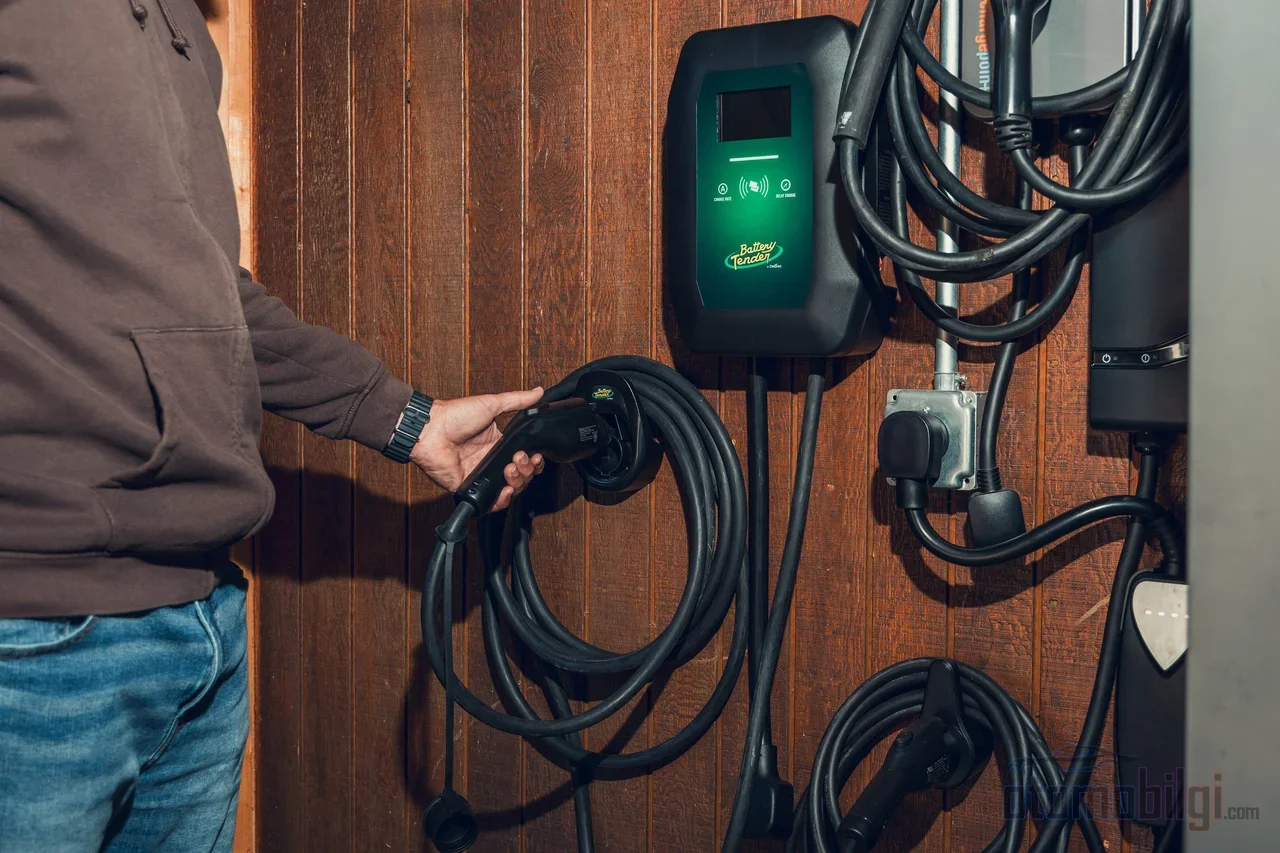
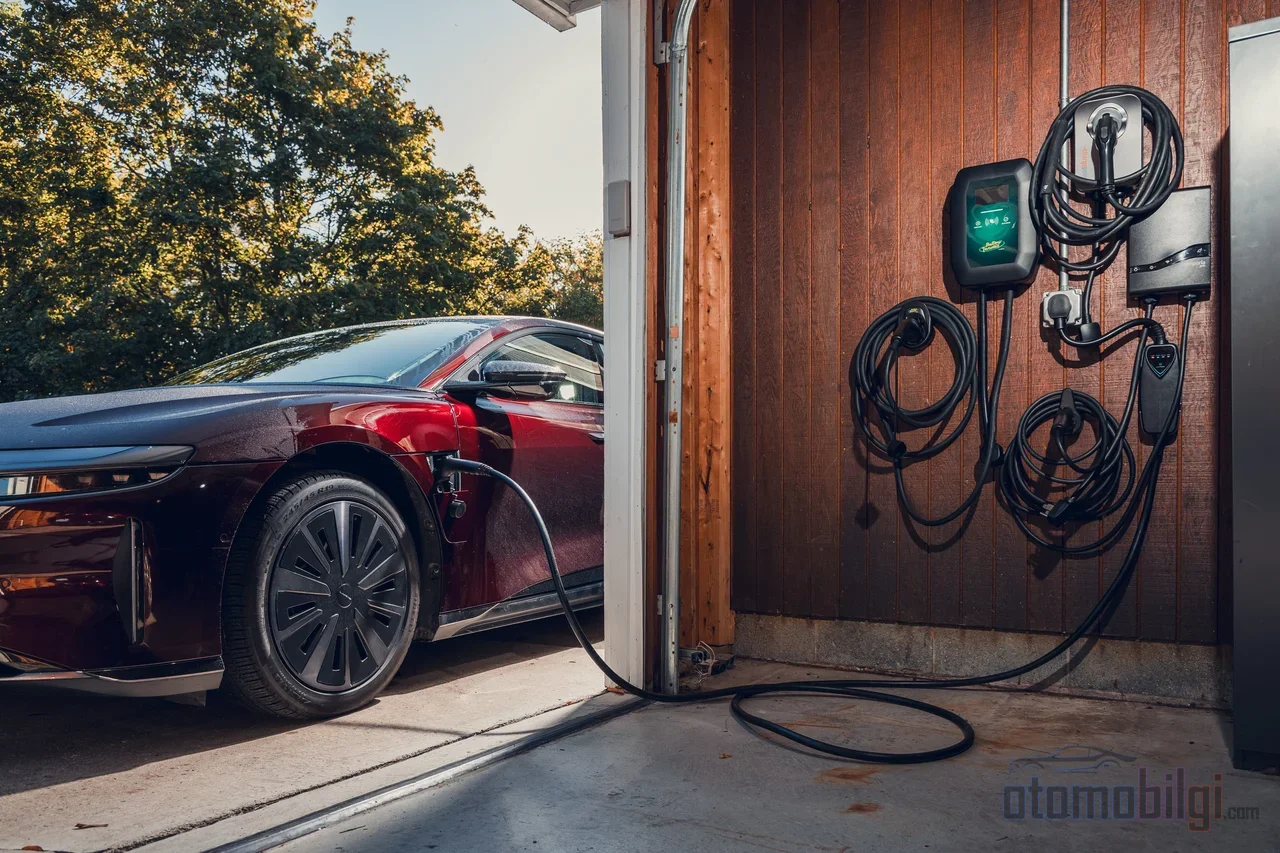
A wallbox is a wall unit connected to a dedicated 240V circuit and typically delivers 3.3-7.7 kW . Practical result: a full charge drops to 1.5-3 hours; it stays under 4 hours even in examples with larger batteries. Since the PHEV's on-board charger is already limited to around 7.2 kW, there is no need to pay extra for the more expensive 11 kW+ units intended for EVs.
How Much Does Installation Cost?
The unit itself ranges from 300 to 1,200 dollars ; together with electrician labor, a home Level 2 installation comes to 749 to 2,500 dollars (averaging ~1,700 dollars). In simple jobs close to the panel, it can drop to around 500 dollars. Two hidden cost items need to be accounted for: permit fees fall in the 100-400 dollar band, and if there is no suitable circuit in the existing panel, running a new circuit can add 600 to 1,200 dollars . Plug-in units go up to 9.6 kW while hardwired units reach 19.2 kW - the difference is practically negligible for a PHEV, but the hardwired solution offers a permanent and clean installation.
Good news on the incentives side: the 30% federal tax credit (capped at 1,000 dollars) under the IRA in the US is still in effect, but it is planned to expire on June 30, 2026. Some regional programs also provide up to 2,000 dollars in support for home Level 2 installations. A note in case of a possible panel upgrade: some modern units can monitor the home's total consumption and automatically reduce charging power; this load management makes panel upgrades unnecessary in most homes.
Comparison: Standard Outlet or Wallbox?
| Criterion | Standard Outlet | Wallbox (Level 2) |
|---|---|---|
| Upfront equipment cost | 0 with the cable that comes with the car | ~400–700 dollars (average 300–1,200) |
| Installation | Not required | Dedicated 240V line, electrician and permit |
| Total installation cost | None | 749–2,500 dollars (avg. ~1,700) |
| Charging time (from empty) | 8–12 hours | 1.5–3 hours |
| Flexibility | Usable while traveling | Fixed installation |
| Safety for continuous use | Limited | Built-in safety features |
The outlet side has a defense too: there are drivers who say "if you already have a 220V outlet and a quality cable, a wallbox adds little value; the only difference was the cable." The opposing view is based on safety and speed - manufacturer-certified wall units come with protections designed for continuous high current draw. My engineering reading is this: if your daily distance is below your PHEV's range and overnight charging is enough for you, the outlet is a rational choice; if you fully use the range or need a mid-day top-up, a wallbox pays for itself quickly. In terms of charging losses, the difference is small - no measurable efficiency difference has been found between good equipment; losses are at the ~5-8% level on both sides.
Charging at Work: The Value of a Second Outlet
Workplace charging means an employee having access to Level 1, Level 2 and, in some cases, DC stations at their workplace. For a PHEV owner, the math is simple: charging at the place where you park your car for about 8-9 hours a day complements overnight home charging and significantly increases your electric range usage. With two charging sessions - at home at night, at work during the day - many users rarely visit a gas station at all.
On the employer side, the process is built around access management: if it is not clarified in advance who can use which station and when, along with registration, liability and sharing rules, the stations quickly become a bottleneck. The practical advice for the employee is also concrete: home charging is almost always cheaper; if cheap or free charging is offered at work, use it; if it is not offered, asking your employer for low-power (Level 1/2) points, especially for PHEVs, is a low-cost request.
Clear Answers to Common Questions
- Does a plug-in hybrid require a special charging device? No. Most PHEVs charge from standard AC charging equipment; plugging into a standard outlet with the cable that comes with the vehicle is sufficient.
- Won't it fail to charge overnight from a standard outlet? It can charge - most PHEVs fully charge overnight from a 120V/standard outlet. Special hardware is not required, it is just slow.
- Can PHEVs use DC fast charging? Most cannot. The high-cost Level 3 infrastructure is already pointless for this class.
- Doesn't regenerative braking replace plug-in charging? It does not. Regenerative braking only recovers a certain amount of energy and is effective at maintaining the small hybrid battery in stop-and-go traffic; it only partially supports the PHEV's large battery. Electric range comes from the plug.
- Are charging time and range affected in winter? In winter, due to reduced capacity, the vehicle spends more time charging the battery and range drops; this does not mean permanent damage, as it recovers with the arrival of spring. It is thought that extreme heat and cold accelerate battery degradation, but it is also noted that cold generally does not harm hybrid batteries - official warranty data paints a more reliable picture on this subject.
The decision: Outlet or Wallbox?
The decision can be reduced to three criteria. First is daily distance: if you drive less than the range, a standard outlet will do the job. Second is the time window: if you need more than one full charge per day or short top-up charges, Level 2's 1.5-3 hour cycle is decisive. Third is the electrical infrastructure: if there is a circuit close to the panel with adequate amperage (40-50 A recommended; in homes with 150-200 A service, an upgrade is often unnecessary), installation cost stays in the lower band and the case for a wallbox strengthens.
Also remember the cost balance: home charging is significantly below public charging (0.20-0.40 dollars/kWh) and priced at about one-third of DC fast charging. Whichever hardware you choose, a PHEV that is regularly plugged in generates more value than any PHEV that is not - the infrastructure debate is essentially a question of "how fast and how convenient," not "should I plug in at all."
Sources
- PHEV Charging at Home: Costs, Times, & Choosing a Charger - GreenLancer
- Tested: Best Home EV Chargers for 2026 - Car and Driver
- Charger Types and Speeds - U.S. Department of Transportation
- Hybrid vs. Plug-in Hybrid Cars: What's Right for You? - Edmunds
- The Ultimate Guide to Level 2 EV Charger Installation Costs - Qmerit
- Why you shouldn't charge your EV from a standard wall outlet - GARO
- Portable chargers vs dedicated wallbox - Cord Power Technologies
- Hardwired Or Plug-In: Which EV Charger Should You Choose? - HelloTech
- Workplace Charging - Plug In America
- Workplace Charging for Electric Vehicles - AFDC, U.S. DOE
- Charging Your EV - BAAQMD
- How Long Does It Take to Charge an Electric Car? - Mazda USA
- The Performance of Hybrid Batteries in Cold Weather - Best Hybrid Batteries