What Happens If You Don't Use Your Hybrid Car for a Long Time?
Share This Page
If you park a hybrid vehicle for an extended period, the weakest link, the 12 volt auxiliary battery, typically dies within 2-4 weeks; the high-voltage battery, thanks to its low self-discharge, usually gets through 1-4 weeks without trouble, but in periods such as 30-60 days it enters the risk of over-discharge. Before leaving the vehicle idle, keeping the high-voltage battery in the 40-60% range, running the vehicle every 14 days for at least 30 minutes, and disconnecting the 12V battery terminal if necessary largely eliminates this risk.
Highlights
- The 12V auxiliary battery can be depleted within 2-4 weeks due to parasitic drain.
- In the high-voltage battery, the risk of over-discharge can emerge in as little as 30-60 days.
- The ideal storage charge for lithium-ion packs is the 40-60% range.
- Manufacturer recommendation: the hybrid vehicle should be run for at least 30 minutes every 14 days.
- Sub-freezing outdoor parking can temporarily reduce range by 20-30%; it does not cause permanent damage.
There Are Two Batteries in the Vehicle - Which One Is the Real Culprit?
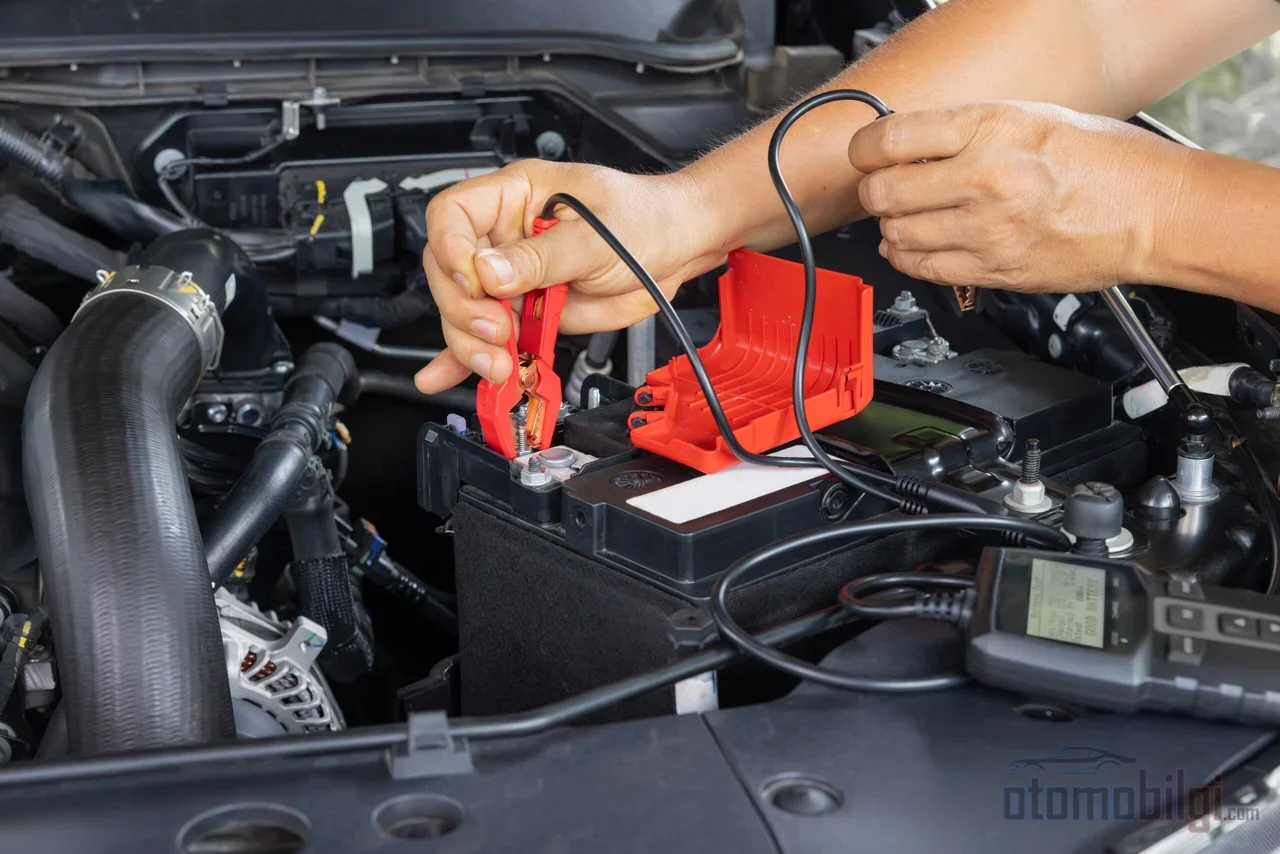
A hybrid car actually contains two separate batteries. The first is the large high-voltage (traction) battery that drives the electric motors; the second is a 12 volt auxiliary battery, similar to the one in gasoline cars but noticeably smaller. In Toyota hybrids, this 12V battery is about half the size of a conventional starter battery - and it is precisely this smallness that creates the first problem in a long parking scenario.
The logic chain is simple: when you switch off the ignition, the high-voltage battery completely disconnects from the electrical system and isolates itself. When you want to restart the vehicle, the 12V battery kicks in first; it powers up the computer and triggers the relays that connect the high-voltage battery to the system. If the 12V battery is dead, the vehicle will not start even if the traction battery is full. In other words, the real culprit behind most "my hybrid died" complaints is not the big battery but the small one.
The reason the 12V battery drains so quickly is parasitic drain: the alarm, the keyless entry receiver, and standby computers draw current even when the vehicle is off. There is also a frequently overlooked detail - every remote command you send from the mobile app "wakes up" the vehicle and drains the 12V battery. It has been observed that with Bluetooth left on, the battery can die within a week even in an airport parking lot.
What Happens Over Time? A Week-to-Month Discharge Timeline
The picture changes clearly depending on the idle period. In the 1-4 week range, hybrid vehicles generally experience no problems; a slight battery discharge and a minor efficiency drop on restart may be observed. When entering the 1-3 month band, the high-voltage battery may start losing charge, condensation may form in the fuel tank, and other systems may begin to degrade. For idle periods
Here a critical point needs to be clarified: the discharge behavior of the two batteries differs greatly from one another. The high-voltage battery has an extremely low self-discharge rate; a healthy pack can wait 2-3 months without any problem. In contrast, it is stated that in some cases the traction battery can become unusable in as little as 30-60 days - this difference is explained by the low-level current drawn over time by the management electronics (BMS) inside the pack. For anyone who wants to reduce the risk to zero, the practical conclusion is the same: for parking periods longer than a month, the vehicle must be started periodically or additional precautions must be taken.
What Is the Ideal Charge Level for Storage?
For traction batteries with lithium-ion chemistry, the recommended charge range for long-term storage is 40-60%. The pack should be left neither fully charged nor deeply discharged; both extremes shorten cell life. For storage exceeding three months, the 50% level is considered safe, and this level, approximately 3.8 volts per cell, keeps the battery ready for use. The common practice among plug-in hybrid owners points in the same direction: the battery "likes" to be kept at 50-60% charge during long parking periods.
The second variable is ambient temperature. For most batteries, the ideal storage temperature is around 15°C ; temperatures approaching 0°C are risky. For this reason, a climate-controlled garage is the ideal scenario. If the vehicle must be parked outdoors, a shaded area should be chosen and the heat load coming through the rear window should be minimized.
Full Hybrid or Plug-in Hybrid: Differences in Parking Behavior
There are significant differences between the two hybrid types in terms of long-term parking, and this difference stems mainly from battery size:
| Feature | Full Hybrid | Plug-in Hybrid |
|---|---|---|
| Battery size | Small pack | Larger pack |
| Charging source | Engine and regenerative braking, charges itself | Requires charging from an outlet |
| Electric range on a single charge | None (only brief electric assistance) | Typically 20-40 miles |
| Preparation before long-term parking | Charge level is adjusted by driving | Charge is set to 50-60% and unplugged |
The advantage of the plug-in hybrid is that you can set the charge level precisely before parking: simply charge it to 50-60% from an outlet and unplug. In a full hybrid, the level is balanced by the engine and regenerative braking; you cannot intervene directly. The effect on the battery of using a plug-in solely as a hybrid without ever plugging it in remains an unsettled debate - it can be assumed that both usage styles avoid the extremes that shorten lifespan, but a definitive answer requires looking at the pack chemistry and the specific vehicle.
Practical Checklist for Long-Term Parking

The following steps reduce the risk in a measurable way if you are going to leave your vehicle parked for weeks or months:
- Before parking the vehicle, bring the traction battery into the 40-60% range; with a plug-in hybrid you can do this from an outlet.
- The official recommendation from Toyota and Lexus is as follows: the vehicle should be started every 14 days ; Lexus suggests approximately 60 minutes They recommend keeping it in "Ready" mode, driving for at least 30 minutes and repeating the process once. For fairly new vehicles, a 30-60 minute drive every 2-3 weeks is sufficient for both the hybrid and 12V battery.
- Alternatively, running it in ready mode for at least 15-20 minutes every few weeks charges the battery and circulates the fluids.
- For long parking periods, use a smart trickle charger for the 12V battery. Caution: this device only protects the 12V battery, not the high-voltage traction battery.
- During very long storage periods, disconnecting the 12V battery terminal cuts parasitic drain and prevents over-discharge.
- Keep the fuel tank at least half full; add a fuel stabilizer if needed. This reduces condensation forming in the tank.
- To guard against flat spots on tires and brake corrosion, roll the vehicle slightly and use wheel chocks instead of the parking brake.
- Do not send remote commands via the app; every command wakes the vehicle and drains the 12V battery.
The most expensive misconception on this list is the assumption that short trips will "revive" the battery a little. Short trips accelerate the premature death of the 12V battery; what truly charges the battery is long, continuous drives. A drive of at least 20 minutes per week is the minimum level required to charge the 12V battery.
The Combined Effect of Cold Weather and Long Storage
Cold weather and long parking affect battery health through two different mechanisms, and these must be distinguished from each other. A single night outdoors in sub-zero conditions can temporarily reduce battery efficiency by 20-30% : low temperature slows the chemical reactions in the cells and usable performance drops. However, this effect is temporary; cold alone does not cause permanent damage.
The permanent threat is actually at the other extreme: high temperature can lead to the cells overheating and degrading; in particular, heat buildup caused by insufficient cooling time between drives shortens battery life. Combined with long storage, the picture should be read as follows: for a vehicle parked outdoors in winter, both the discharge rate and starting difficulty increase; for a vehicle parked in summer heat, the aging rate of the cells rises. The ideal goal is to avoid both extremes - meaning a cool, dry and shaded parking spot.
A chemistry-based note: nickel-metal hydride (NiMH) cells self-discharge by approximately 1% per day, while the self-discharge of lithium-ion is significantly lower. Since modern pack and battery management systems largely manage this weakness of NiMH, generalizing these raw chemistry values directly to vehicle packs is misleading.
What Should You Do When You Return to the Vehicle?
When storage is over, do not rush. The order should be as follows:
- Check all warning lights on the dashboard; pay particular attention to the hybrid system warning.
- Monitor battery performance; if the charge has dropped significantly, wait for the battery to charge before moving into intensive use.
- If the vehicle is in a "hybrid system stopped" type situation, modern Toyotas allow a system off-on equivalent: disconnect the 12V battery, wait 10-15 minutes and reconnect it.
- If you have left the vehicle idle for months, schedule a professional service inspection.
One more warning about the 12V battery: once this battery is fully depleted, it may become internally damaged and enter a state of constant self-discharge. In other words, even if the vehicle starts after a long idle period, it is sensible to assume that the battery is no longer reliable and to consider replacing it. Traction batteries, on the other hand, are more forgiving - most hybrid batteries last 8-15 years, and manufacturers' warranty figures show that, with proper maintenance, long idle periods are unlikely to cause permanent damage to large packs.
Summary: Proper Storage Is a Trivial Maintenance Task
Storing a hybrid vehicle for weeks ceases to be risky with the right charge level and the right running interval. To keep the formula concise: leave the traction battery at 40-60%, protect the 12V battery with a trickle charger or by disconnecting the terminals, run the vehicle for longer than 30 minutes without exceeding 14 days, and park the vehicle in a cool, shaded spot. For storage exceeding the one-month limit, there is no doubt - do not leave it without taking extra precautions.
Sources
- How Long Can A Hybrid Car Sit? Battery Tips
- What Happens When a Hybrid Car Sits Too Long?
- How long can a hybrid car be parked without running down batteries?
- Leaving Your Toyota Hybrid Parked? DO THIS To Avoid Battery Issues
- How Long Can a Car Sit Before the Battery Dies?
- How Long Can a Hybrid Sit Unused? Expert Q&A Guide
- How to Maintain Hybrid Car Batteries During Long Periods of Inactivity
- Preparing Your Battery for Seasonal Storage
- How to store lithium based batteries
- Is keeping a Li-Ion battery's charge in [40%,80%] better?