Which Plug Fits Which Vehicle? Types of Electric Vehicle Charging Sockets
Share This Page
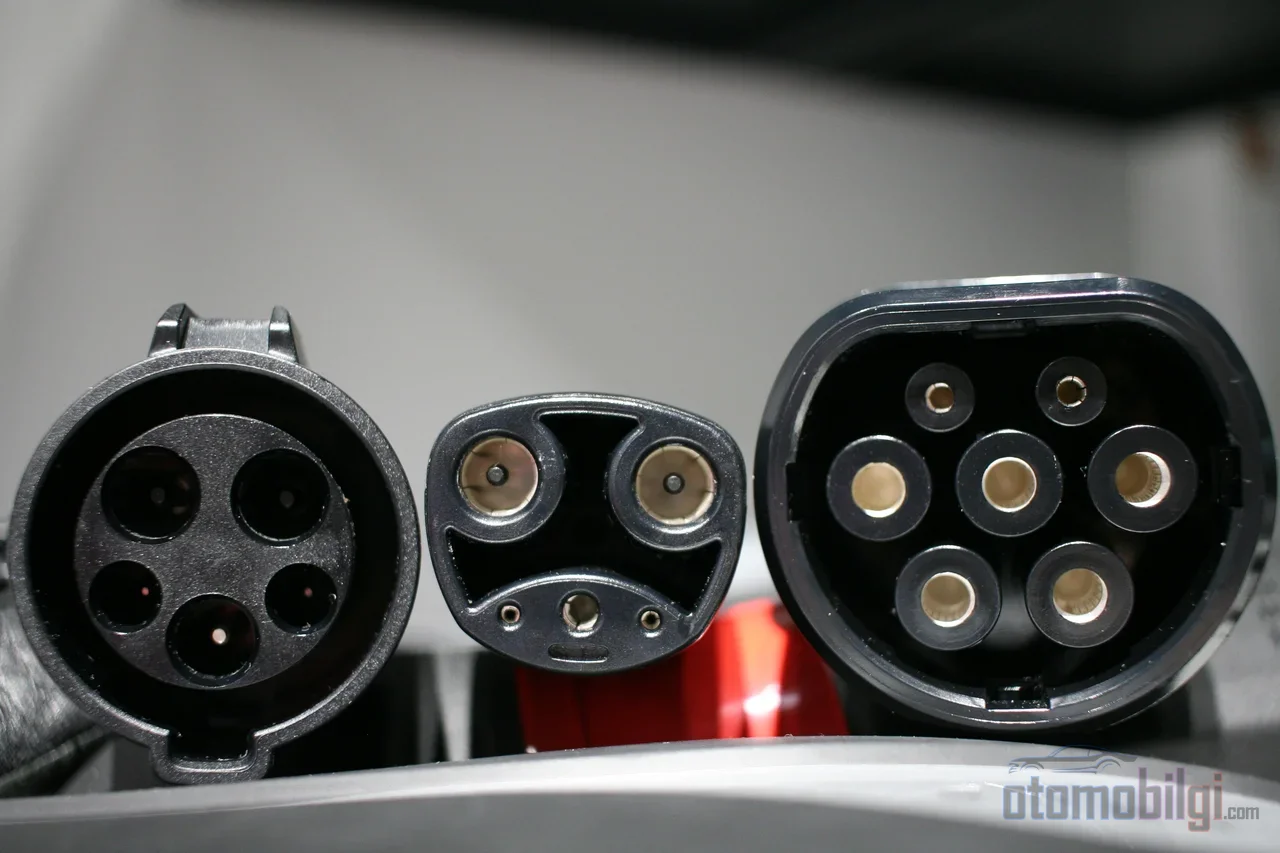
In practice, electric vehicle charging sockets in Türkiye fall into two types: for AC charging Type 2, and for DC fast charging CCS2 (Combo 2). CHAdeMO, formerly the fast-charging standard, CHAdeMO is now seen only on older models, mostly of Japanese origin. In other words, knowing plug compatibility when buying a vehicle or pulling up to a station means knowing the difference between these three names.
Highlights
- In Türkiye, the AC charging standard is the 7-pin Type 2, and the DC fast charging standard is CCS2.
- CCS2 provides both AC and DC charging from a single socket with two DC pins added beneath the Type 2.
- CHAdeMO vehicles have a separate fast-charging inlet; these models also feature a Type 2 socket.
- As of March 2026, the total number of sockets in Türkiye reached 42,051.
- When buying second-hand, having the socket pins clean and aligned is as critical as battery health.
Why Two Different Plugs Exist: The Difference Between AC and DC
The root of the issue is a technical distinction. In AC charging, the alternating current coming from a household outlet or wall unit is converted to direct current by the vehicle's built-in onboard charger, which feeds the battery. This conversion is limited by the capacity of the vehicle's own unit; no matter how powerful the station side is, the speed remains at that unit's ceiling.
In DC fast charging, however, the rectifier is located in the station itself. Direct current is sent straight to the battery, bypassing the onboard charger. The power limit is now determined jointly by the station and the battery. For this reason, AC and DC charging require two separate electrical paths, and plug designs solve these two paths differently: CCS2 combines both paths in a single socket, while CHAdeMO carries DC to a separate inlet.
Type 2: The Common Language of AC Charging in Türkiye
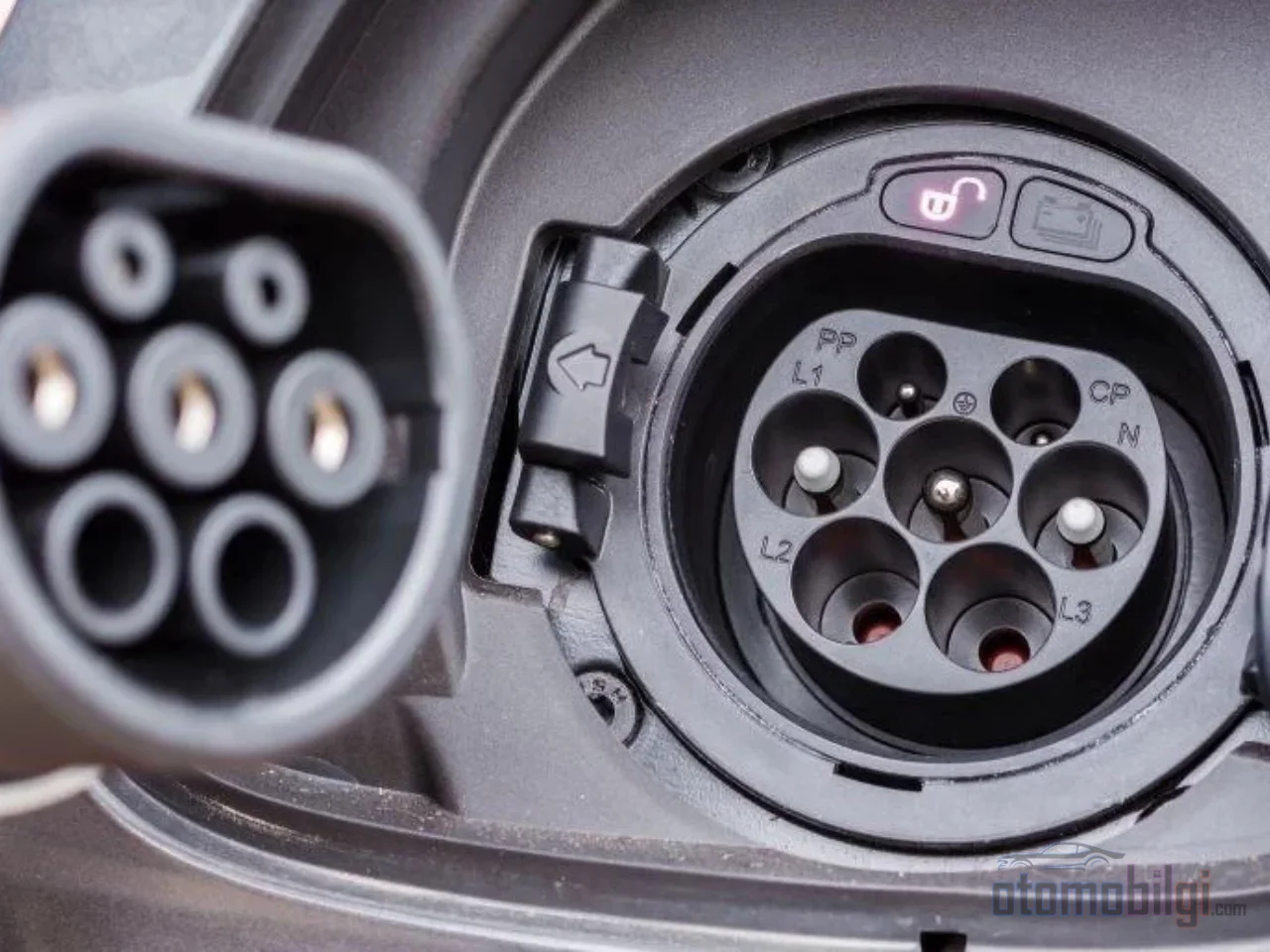
Type 2, also referred to as Mennekes after its manufacturer in some sources, is a 7-pin connector defined in the IEC 62196-2 standard. Since it can carry three-phase power, it works with both single-phase home charging (approximately 7 kW) and at three-phase stations with up to 22 kW of power. It contains a built-in locking mechanism; the plug is mechanically locked into the socket during charging.
In Europe and Türkiye, Type 2 has been the mandatory standard for AC charging in public infrastructure since 2014. So today, every vehicle in Türkiye fitted with a wall unit or connected to a public AC station plugs into the same socket, regardless of plug brand. Some older models feature a 5-pin, single-phase, non-locking Type 1 connector; the Nissan Leaf from 2010-2017 is a typical example. These vehicles are becoming increasingly rare in Türkiye, and those wanting to charge a Type 1 plug vehicle need to think about the cable in advance.
CCS2: AC and DC Fast Charging with a Single Socket
The name CCS already summarizes the method: Combined Charging System, i.e. a combined charging system. The design is simple and elegant from an engineering standpoint - two large DC pins are added below the Type 2 connector. In AC charging, the vehicle uses the upper Type 2 portion and the lower DC pins remain empty; in DC fast charging, the lower section comes into play and current flows directly to the battery. One socket, two functions.
On the power side the ceiling is high: CCS2 stations reaching 350 kW commercially are becoming widespread, with the standard defined up to 500 kW. EU legislation has also settled the direction: high-power DC charging points installed after November 18, 2017 are required to include at least a Combo 2 (CCS) connector. In Türkiye, DC fast charging at public stations is in practice covered by CCS2; example networks offer fast charging in the 50–180 kW range with CCS2, while on the AC side, power of up to 22 kW is seen with Type 2.
Which models have a CCS2 socket?
Almost all new electric models sold to the European market use the Type 2 + CCS2 combination. This list includes a significant portion of the models widely available in Türkiye, such as the Tesla Model 3 and Model Y, MG4, BYD Dolphin, VW ID.4, BMW i3/i4/iX, Ford Mustang Mach-E, Audi e-tron and Hyundai Kona Electric . Manufacturers supporting CCS include names such as BMW, Mercedes-Benz, Hyundai, Kia, MG, Renault, Nissan, Polestar, Honda and Tesla. In short, as of 2026, these are the only two sockets found in practice on newly sold passenger EVs in Türkiye.
CHAdeMO: The DC Standard That Lost Its Place
CHAdeMO is a 9-pin, round and bulky connector with a locking lever; its name comes from a Japanese phrase meaning "how about a cup of tea?". Unlike CCS, it does not include AC charging, so vehicles with CHAdeMO have a separate Type 2 socket in addition to the fast charging inlet. When you first see these vehicles with two separate covers on the body, you now know the reason.
Typical CHAdeMO power levels are in the 50–100 kW band; on the specification side things are more ambitious - CHAdeMO 2.0 targets 400 kW, while 3.0, evolving toward ChaoJi, targets 500 kW and above. There is even one area where the standard is not technically behind: CHAdeMO is the only protocol with certification for mass-production vehicle-to-grid (V2G). However, the market could not compensate for this advantage. The share of CHAdeMO connectors in European charging networks has fallen below 30%, appearing in less than 15% of newly installed fast chargers; major networks have stopped installing CHAdeMO at new locations due to low usage. Nissan's new models have also changed course: the Ariya and the anticipated third-generation Leaf are switching to CCS instead of CHAdeMO.
What should a CHAdeMO vehicle owner do?
Nissan Leaf, Mitsubishi Outlander PHEV, Kia Soul EV (first generation), Toyota Prius Plug-In or Citroën C-Zero models like these are still on the road and circulating in the second-hand market in Türkiye. These vehicles take AC charging via Type 2 without any problem; the issue lies on the DC side, because the number of CHAdeMO sockets is steadily decreasing at new stations. CCS and CHAdeMO communication protocols are fundamentally different, and there is no practical, reliable CCS↔CHAdeMO adapter in the consumer market; although some manufacturers have adapters that connect CHAdeMO vehicles to CCS2 stations, these are not standard equipment and require your vehicle's approval. For a CHAdeMO vehicle used for long trips, it is still necessary to plan the route according to the CHAdeMO-socketed stations along the way.
What Affects Plug Compatibility in Practice in Türkiye
The standards side has become clear, but the field picture is also growing rapidly. As of February 2026, the number of high-speed charging stations in the country 16,650 was reached, and the number of electric vehicles is approaching 200 thousand. In March 2026, the total number of sockets was 42,051 announced; 1,397 sockets were added in a single month. The number of registered stations in licensed charging networks is 1,710, and the number of units is 2,951. In Istanbul, there is a charging point every 2-3 km; the network continues to densify in Ankara and Izmir.
A regulatory step facilitating compatibility has also arrived: With the Charging Service Market regulation, the locations, socket numbers, types, and power of public stations were made publicly available data for the first time. In other words, it is now possible to answer the question "does this station have CCS2, what is its kW power?" before setting off. The regulation foresees certain standards for at least 5% of public units, as well as on highways and state roads. On the pricing side, public charging ranges from 6-12 TL per kWh for AC and 9-16 TL for DC (March-July 2026 data); ceiling prices are higher at ultra-fast stations. Market analysis predicts that the number of public stations could rise to 118-122 thousand by 2032.
Which Vehicle Has Which Socket? Quick Matching Table
| Vehicle / Group | AC Inlet | DC Fast Charging Inlet |
|---|---|---|
| Tesla Model 3 / Model Y, MG4, BYD Dolphin, VW ID.4 | Type 2 (upper section of CCS2) | CCS2 (same socket) |
| BMW i3 / i4 / iX, Ford Mustang Mach-E, Audi e-tron, Hyundai Kona Electric | Type 2 | CCS2 |
| Nissan Leaf (older generations), Toyota Prius Plug-In, Mitsubishi Outlander PHEV | Type 2 (separate socket) | CHAdeMO (separate socket) |
| Nissan Ariya and newer generations | Type 2 | CCS2 (CHAdeMO abandoned) |
| Older EVs from 2010-2017 (e.g. early Leafs) | Type 1 or Type 2 | CHAdeMO |
Let's add as a note: The NACS standard used in North America is not found in vehicles sold in Europe and Türkiye. The round, compact plug seen in content produced abroad or in videos aimed at the US market is a socket with no equivalent at stations in Türkiye.
Home Charging and Plug Speed: Realistic Expectations
Most wall units installed at home 7 kW are rated; in homes with a three-phase electricity subscription 11 kW, and at fastest 22 kW stations, on the other hand, usually appear on public networks. Since all of these values are AC, the speed depends on the vehicle's onboard charging unit; even if the wall unit is 22 kW, a vehicle with an 11 kW onboard unit charges at 11 kW.
A classic 3-pin home outlet also works technically: it delivers about 2.3 kW of power and can fill an empty battery overnight. But this is an emergency backup, not a permanent solution; the plug and wiring are not designed for continuous high current, and charging must absolutely never be connected through an extension cord.
Why Is Socket Inspection Critical in a Used Vehicle?
When buying a used electric vehicle, everyone looks at battery health (SoH); few people look at the socket itself. Yet that is often where a negotiable defect is to be found. The checklist is short and concrete:
- The pins should be neat, clean, and aligned; a burnt or melted pin means poor contact and heating.
- If there is corrosion or foreign matter inside the socket, connection resistance increases, charging slows down, and the risk grows.
- Verify the connector type: if you are buying a vehicle with CHAdeMO, evaluate in advance whether it matches the fast-charging network on your regular routes.
- Test the vehicle's charging equipment (cable, adapter); missing or faulty equipment is a separate cost item.
In short: the socket is the vehicle's only physical interface with its charging infrastructure and must be inspected along with the battery in a used purchase.
Conclusion: Reducing Plug Compatibility to Two Names in Türkiye
Practical matching in Türkiye in 2026 has been simplified: Type 2 for AC, CCS2 for DC fast charging. CHAdeMO matters only in the older, largely Japanese-origin models you will encounter on the used market, while Type 1 is now a historical connector. If you are buying a new vehicle, you have largely solved your socket compatibility problem automatically; if you are looking at a used one, take the socket type and pin condition as seriously as battery health. As the network keeps growing - with more than 42,000 sockets and a 2032 target of 118,000-122,000 stations - the compatibility issue is becoming less a technical matter and more one of planning with the right information.
Sources
- CCS vs CHAdeMO vs Type 2: EV connector types explained – Electroverse
- CCS vs CHAdeMO: 6 Key Differences – Setec Power
- Electric car charger types, connectors and speeds – RAC
- EV Charging Connector Types and Speeds – Pod Point
- Combined Charging System – Wikipedia
- What is CHAdeMO EV charging? – cinch
- Electric vehicle charging types – TEHAD
- Electric Vehicle Charging Types – Bemis
- Electric Vehicle Socket Types – Otowatt
- Electric Vehicle Charging Socket Types – e-garaj
- Are electric car chargers all the same? – KIA Türkiye
- Number of high-speed charging stations in Türkiye reaches 16,650 – Anadolu Agency
- ChargeIQ Electric Vehicle Bulletin – March 2026
- Charging Service Market – Energy Experts Association
- Charging Service Regulation (consolidated) – Lexpera
- Electric vehicle charging prices 2026 – OSARJ
- Profitability of the Turkish charging market – PwC Strategy&
- Things to watch out for when buying a used EV – Skywell
- SoH check for used EVs – elektrikliarac.com