Why Do EV Batteries Catch Fire and How Do Systems Prevent It?
Share This Page
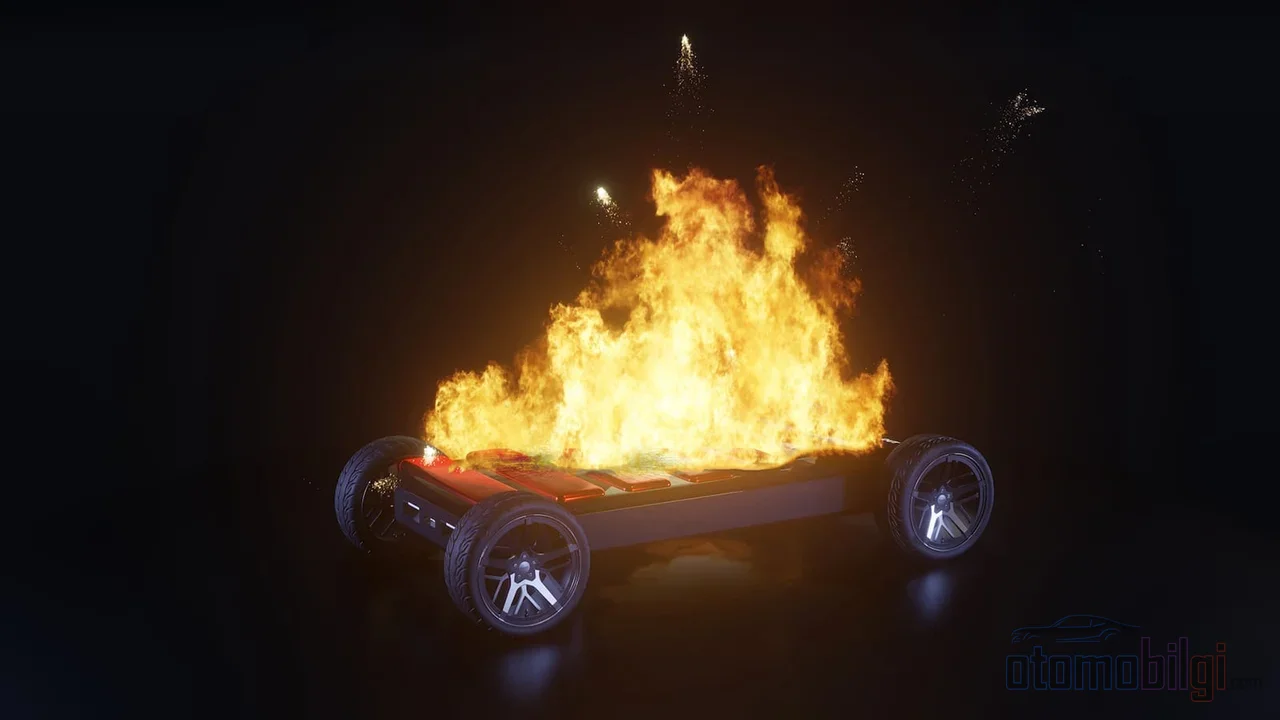
Electric vehicle batteries catch fire due to thermal runaway, a self-sustaining chemical chain reaction that occurs when heat generation exceeds heat dissipation in lithium-ion cells; modern battery packs try to prevent this with layered measures such as separator chemistry, flame-retardant electrolyte additives, inter-cell thermal barriers, controlled venting channels and BMS monitoring. Below, we examine this mechanism step by step and the manufacturers' line of defense layer by layer.
Highlights
- Thermal runaway can raise a cell's temperature above 600°C ; the process results in ignition within minutes.
- Without barriers, cell-to-cell propagation can occur in less than 60 seconds .
- NMC cells become unstable in the 150–210°C range, while LFP remains stable up to 230–300°C
- . With venting channels and fire-resistant barriers, NTP (No Thermal Propagation) packages aim to extinguish a single-cell failure before it spreads through the pack.
- Statistically, battery fires are rarer than gasoline vehicle fires, but when they do occur, they are much harder to manage.
What Exactly Is Thermal Runaway and How Does It Start?
Thermal runaway, in Turkish "ısıl kaçak", is a sequence of reactions that begins the moment heat generation exceeds heat dissipation in a lithium-ion cell and accelerates itself through a positive feedback loop. The logic chain is simple: as temperature rises, exothermic chemical reactions speed up; accelerating reactions produce more heat; and more heat speeds up the reactions even further. Once the loop is established, cell temperature can exceed 600°C and the process can end in ignition or explosion within minutes.
The critical point is that this is not a single event but a staged sequence. The order roughly proceeds as follows: first comes internal failure and heat buildup; then the polymer separator breaks down, causing an internal short circuit. The short circuit multiplies the heat, the electrolyte decomposes and produces gas, and internal cell pressure rises. At the highest temperatures, the cathode material begins to release its own oxygen. This final step explains why the fire is so hard to extinguish: the battery produces its own fuel and oxygen inside.
Triggers: Paths to Internal Short Circuit
In academic classification, thermal runaway is typically triggered by an internal short circuit caused by mechanical, electrical or thermal abuse. The common feature is that, whatever the abuse scenario, it eventually results in the anode and cathode making contact inside the cell. The main triggers:
- Mechanical damage: Crushing, puncture, dropping or collision; uncontrolled current generates intense heat.
- Overcharging: Exceeding design voltage limits destabilizes the internal materials; faulty or low-quality charging equipment can bypass BMS protection.
- Manufacturing defects: Microscopic metal particles, separator defects or contamination can turn into internal short circuits months or even years later.
- Excessive heat: High ambient temperature, a nearby fire or insufficient cooling.
One detail is important from an engineering standpoint: in aged cells with low SOH, the heat generated by micro internal short circuits can reach a level sufficient to trigger thermal runaway on its own. In other words, the risk appears not only at the moment of an accident but also in the later years of cell life.
Chain Reaction: From a Single Cell to the Entire Pack
A modern EV pack contains hundreds, even thousands of cells, and this is where the real threat begins. The probability of thermal runaway rises as the number of cells increases; one cell catching fire is not yet a disaster - the real disaster is the heat spreading to neighboring cells. If there are no thermal barriers and ventilation is insufficient, this cell-to-cell propagation in less than 60 seconds can be completed.
The picture on the extinguishing side is also different. The process releases dozens of gases, most of which are toxic: acids such as HF, HCl and HCN; CO, NH3, SO2, carbonates and formaldehyde. Since HF and CO concentrations begin to rise even before runaway starts, monitoring these gases can provide early warning. Cooling, meaning large quantities of water, is the primary intervention target; even after extinguishing, the risk of delayed re-ignition persists due to residual heat left in the cells, and prolonged monitoring is required.
Safety on the Materials Side: Separator and Electrolyte Chemistry
Flammable polymer separators and liquid electrolytes are identified as the root cause of lithium-ion safety hazards. That is why the first line of defense is built inside the cell, in the material chemistry. On the separator side, the goal is film layers that maintain their structure when exposed to heat or shut down in a controlled manner: flame-retardant separators are among the most critical components for preventing or limiting thermal runaway from the start. There is also an important balance: in smart separators, electrochemical performance under normal operating conditions is not affected by the flame-retardant layer.
On the electrolyte side, phosphorus-based additives, fluorinated compounds and ionic liquids constitute the main classes of flame-retardant additives. These additives reduce the electrolyte's heat release and raise the initial heat release temperature; negative electrode samples operated with flame-retardant electrolyte showed less heat generation and a higher onset decomposition temperature. In overcharge scenarios, the use of gamma-butyrolactone (γ-BL) significantly reduces the risk of explosion. There are limits, though: since the leakage risk in liquid electrolyte persists despite additives, researchers are turning to alternatives such as solid electrolytes.
Cell Chemistry Choice: NMC or LFP?
The biggest safety decision, made even before pack design, is the cell chemistry itself. NMC offers high capacity and power but compromises on high-temperature thermal stability; LFP is safer, cheaper and generally longer-lasting.
| Feature | NMC | LFP |
|---|---|---|
| Thermal runaway onset | 150-210°C (around 160°C in some measurements) | 270-300°C (stable up to 230°C in some measurements) |
| Thermal stability | Less stable, more prone to runaway | Superior thermal stability |
| Gas production after runaway | More | Lower |
| Capacity and power | Higher | Lower |
| Known weak point | Higher combustion temperature | Prone to cell imbalance |
The difference in starting temperature across different measurements is not a contradiction, but a difference in measurement method and cell format; both sets of figures point to the same conclusion: NMC enters thermal runaway earlier and hotter, while LFP experiences it much later.
Pack Architecture: Barriers, Vent Channels and NTP
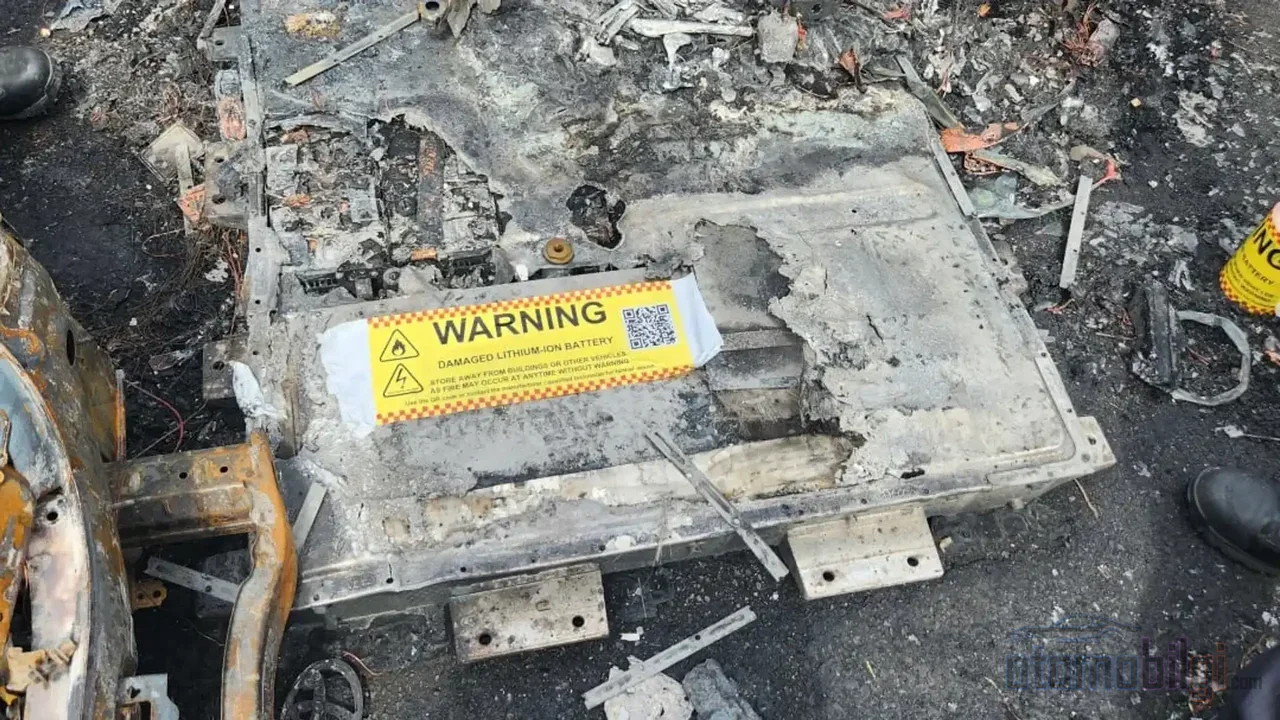
Whatever the cell chemistry, the manufacturer's second line of defense is the physical architecture of the pack. The goal is to prevent a single cell failure from spreading to the entire pack, and this is called the NTP, or No Thermal Propagation approach. Three components come together: fire-resistant barriers, vents and a smart BMS monitoring every cell.
Inter-Cell Thermal Barriers
Thermal barriers and insulation layers physically cut off heat propagation when a cell enters thermal runaway. A 2026 review shows that thermal barriers significantly suppress the spread of hot gas and flames escaping from a cell. In practice, aerogel blankets and intumescent, i.e. heat-swelling coatings, are placed between cells; ultra-thin barrier materials can provide both thermal and mechanical protection throughout the vehicle's entire life.
Exhaust and Vent Channels
When gas accumulates, an explosion is inevitable; that is why controlled venting is critical. A manifolded vent channel design directs hot gases out of the pack, and the channels must be specially designed so that they do not become blocked with solid material. CATL has offered a commercial example of this approach with exhaust channels integrated into the pack and barriers that stop flame propagation in the event of a thermal anomaly. The logic is clear: if you cannot completely prevent runaway, you confine it to a single cell.
BMS and Monitoring: Catching Runaway Before It Develops
The battery management system, BMS, continuously monitors temperature, voltage, current and overall battery health; it detects abnormal conditions and takes corrective action before thermal runaway develops. As of 2026, the secret of safer packs is the BMS seeing and correctly interpreting the right signals: voltage anomalies, temperature differences between cells and gas emission data are evaluated together.
The monitoring layer is expanding rapidly. Gas emission sensors and temperature anomaly detection are increasingly being integrated into large battery installations; a dedicated technical white paper was published in February 2026 for infrared-based thermal monitoring and early warning systems. The industry's emphasis on this field is also shown by the numbers: while the EV battery thermal management systems market was at $7.0 billion in 2025, for 2026 it is $9.2 billion forecast, and by 2033 it is expected $75.1 billion to reach. On the regulatory side, NHTSA is coordinating research and activities under a Battery Safety Initiative for EV battery safety.
Will Solid-State Batteries Eliminate the Risk in the Future?
Solid-state designs carry ions with solid materials instead of a liquid electrolyte. Since solid electrolytes are generally non-flammable, they are thought to significantly reduce the likelihood of thermal runaway; they also offer higher energy density and faster charging potential. However, the picture is not yet definitive: commercial deployment remains limited and serious engineering challenges must be overcome. In short, solid-state is the strongest future promise on the materials chemistry side, but today's packs still rely on a layered defense architecture.
Are EV Battery Fires More Frequent Than Gasoline Car Fires?
A balanced answer to the question: no, statistically they are rarer; but harder. Approximately 25 fires per 100,000 sales occur in fully electric vehicles, while this figure for gasoline cars is around 1,530 ; an assessment based on the review of four separate studies also confirms that gasoline cars are more fire-prone than electric ones. It is even stated that hybrid vehicles catch fire more often than EVs.
It is also a fact that this figure should not be read on its own. The methodology of the comparison, the distribution of vehicle types and the definition of fire are open to debate; there are also criticisms that popular charts can be misleading. Moreover, the rarity of EV fires does not make them easy: due to thermal runaway they are particularly difficult to manage, extinguishing can take hours, and long-term monitoring is required because of the risk of re-ignition. The correct summary is this: electric vehicles catch fire less often, but when they do, the incident requires a distinct intervention discipline different from a gasoline car fire.
From an engineering perspective, the picture is encouraging: thermal runaway has not been completely eliminated, but through a multi-layered defense - selected cell chemistry, flame-retardant materials, physical barriers, controlled venting, and sensor-based early warning - it has been turned into a manageable event. Eliminating the risk altogether now depends on scaling up new chemistries such as solid-state.
Sources
- What is thermal runaway in lithium-ion batteries
- Understanding thermal runaway: The science behind lithium battery fires
- Thermal runaway mechanism of lithium ion battery for electric vehicles: A review
- Characteristic Differences of Thermal Runaway Triggered by...
- A review on mitigating thermal runaway propagation
- EV Battery Packaging to Prevent Thermal Runaway
- NTP Technology: Preventing EV Battery Thermal Runaway
- A Guide to Flame-Retardant Electrolyte Additives
- NMC Battery vs LFP Safety
- Thermal Runaway Characteristics and Gas Composition
- How Often Do Electric Cars Catch Fire?
- Report: EVs Less Likely to Catch Fire
- Battery Safety Initiative
- EV Battery Thermal Management Systems Market