How Are Championships Determined in World RX?
Share This Page
In World RX, championships are decided by the total of the entire weekend, not a single race: drivers first accumulate intermediate points in four qualifying heats, the top 12 names advance to the semi-finals, three drivers from each semi-final move up to the final, and the points earned from every event throughout the season are counted to declare both the drivers' and teams' champions. In other words, the winner is whoever finishes first on track, but the championship goes to the most consistent performer - just like in a series finale, where you can only understand the story if you have watched the whole season, not just one episode!
Highlights
- An event lasts two days: 4 qualifying heats, 2 semi-finals and 1 final
- Every race requires taking a Joker Lap ; in the new World Cup format, this number rises to two
- The final winner wins the event but may not necessarily be the one who collects the most championship points
- The World Championship, which ended in 2025, transformed into a European Championship + World Cup format starting from 2026
- Last world champion: Johan Kristoffersson
How Does a Race Weekend Work? The Format Step by Step
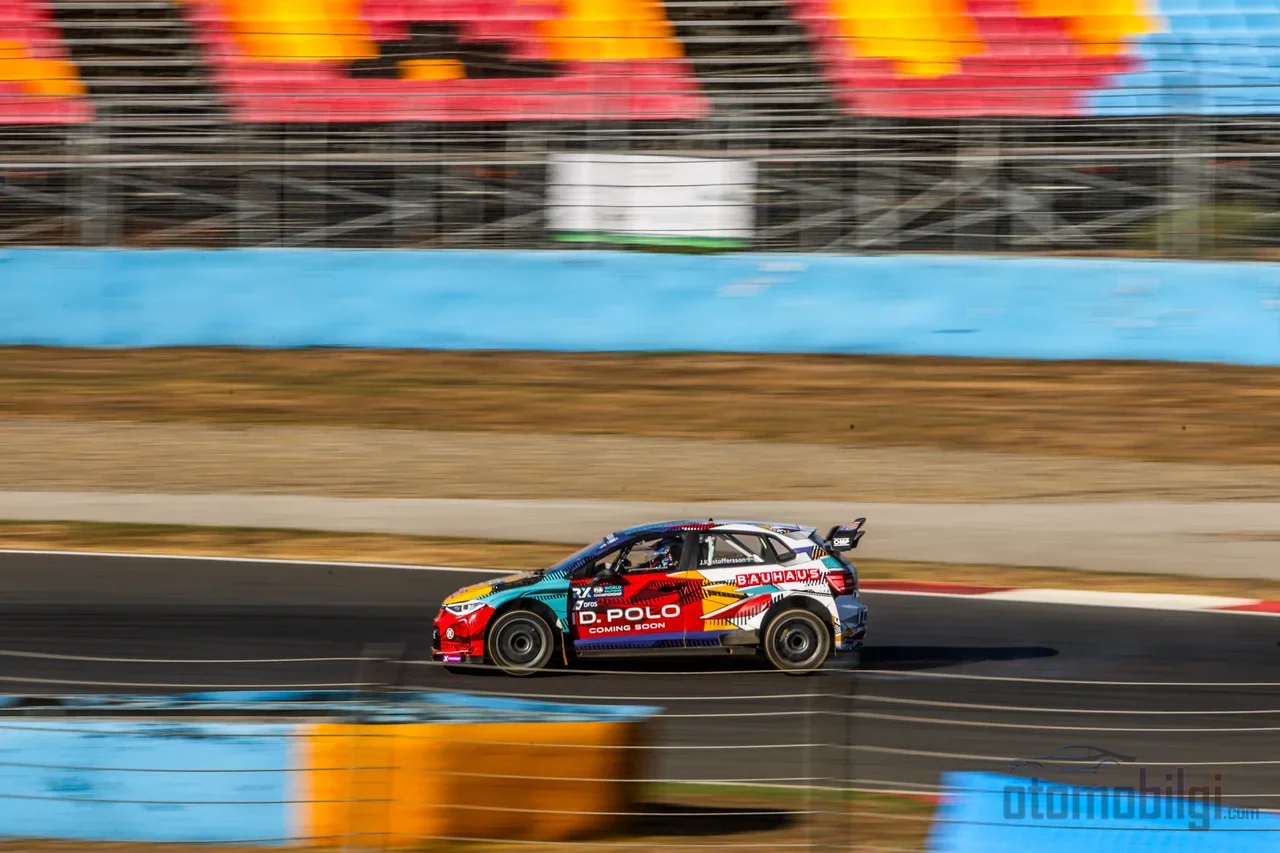
What rallycross lovers appreciate is this: an intensity that starts with practice in the morning and builds up to the final in the evening. In Formula 1, you watch qualifying and then wait for the race on Sunday; in World RX, everything happens within the same weekend, almost back to back. The classic format (based on the 2014-2021 era) consisted of two-day events, and the circuits were closed courses mixing asphalt and gravel. In other words, in the same lap you can both hold your line and slide out - you can imagine how much fun that is!
A typical weekend flows like this: Saturday morning free practice, then the first two or three qualifying heats in the afternoon. Sunday morning brings a warm-up session, followed by the remaining heats and the finals. Each qualifying heat is a small race with 3-5 cars; across the four heats, every driver accumulates points based on time and position rankings. At the end of the four rounds, whoever has the fastest total race time is declared the winner of that qualifying heat.
Warm-Up Order, Draw and SuperPole
So who decides the starting order? In the era of fuel-powered cars, this was done by a draw - for the first start in the first heat, you left it to the hands of chance. In the electric RX1e era, the system changed: after free practice, each driver sets a single fast lap, and the result of this session determines the starting order. This is called SuperPole and it is genuinely thrilling; one lap, one mistake, and your position is set. It is like answering your favorite question on an exam and writing the answer only once - afterwards, you have no chance to change it.
From Qualifying Heats to the Final: Who Advances?
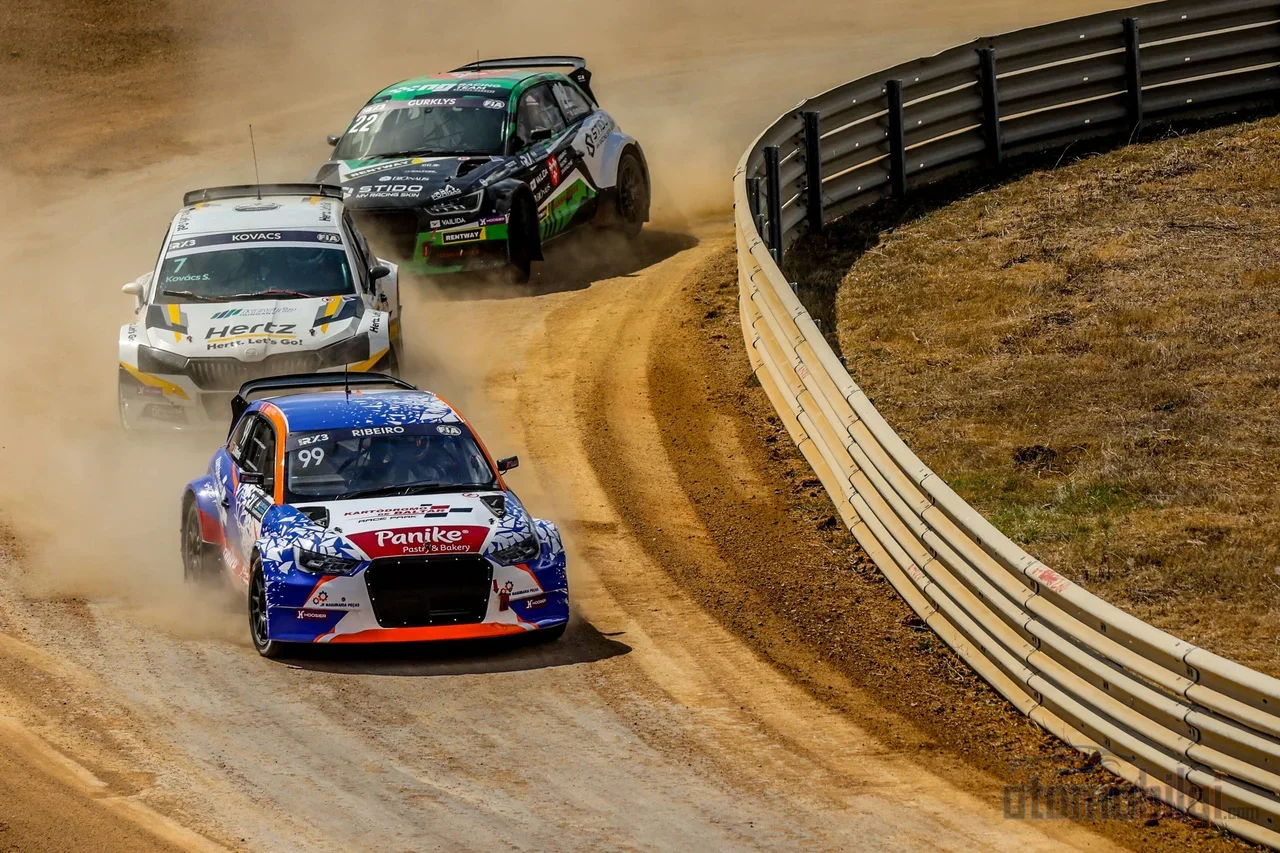
The backbone of the format is the qualifying heats. In each heat, 3-5 cars race, every race includes a Joker Lap, and drivers earn intermediate points based on their positions. When the four heats are completed, the drivers with the highest points in the intermediate standings - 12 drivers - advance to the semi-finals . Those who remain also earn points based on their qualifying position - meaning the weekend does not end early, every stage counts.
Six cars in each semi-final, six laps (including the Joker Lap), and the top three from each semi-final advance to the final. The final again has six cars, six laps: the winner is declared the event winner. But here's the interesting part: the final winner may not be the driver who collected the most championship points that weekend. Why? Because points are distributed across three stages: qualification + semi-finals + final. Someone who racks up huge points in qualifying but gets a bad start in the final can go home with more points than the final winner. Confusing, I know - but once you get the logic, you can't let go.
Innovations of the Electric Era
The RX1e era (which began in August 2022 at Höljes) changed the format a bit further: the weekend was split into five parts - SuperPole, qualifying heats, Progression Race, semi-finals and final. The qualifying heats were run over 5 laps with a maximum of 5 cars. In the Progression Race, all drivers raced based on the overall standings, and those with the best cumulative performance in the qualifying heats chose their starting positions first; the top 10 in this race advanced to the semi-finals. In the semi-finals, the number of cars rose to 10, and the top two drivers from each semi-final, plus the third-place driver with the faster time, advanced to the final.
The Points System: How Much Is Each Stage Worth?
Now let's get to the math. The scoring has been revised several times over the years. When you put the eras side by side, the difference becomes much clearer:
| Era | Qualifying Heats | Semi-Final | Final |
|---|---|---|---|
| 2014–2021 | Top 16 scored 16–15–14...–1 | 6–5–4–3–2–1 | 8-point bonus for the winner, then 8–5–4–3–2–1 |
| 2022–2024 | No intermediate points, distributed at the end of the weekend | - | Top 15 scored 20–16–13–12–...–1 |
| 2025 | 3–2–1 for the top three in qualifying | Included in the overall standings | 25 for 1st, 20 for 2nd, 17 for 3rd, down to 1 for 18th |
As you can see, the format changed significantly from era to era. Under the 2025 scale, the final results distributed points across a much wider range; the entire 18-car field counted. Throughout the season, these event points are accumulated, and the driver with the highest total is declared world champion. The teams' championship works on the same logic: the team's drivers' points are combined to form the team standings. We saw the best example of this recently - Johan Kristoffersson was the last champion among drivers, and Kristoffersson Motorsport was the last champion among teams.
The Joker Lap: The Little Detail That Breaks the Format
In my opinion, this is the brightest idea that sets rallycross apart from other motorsports. Every circuit has two routes: the main route and the Joker lap route, which every driver must use once per race (twice in the new World Championship format). The driver decides on their own when during the race to take this extra route - do they take it early to hold their rivals behind, or pull off a surprise on the last lap? This is exactly where the strategy begins.
There's also a penalty side: a driver who jumps the start normally has to take their Joker obligation, which is once, twice end up having to; two false starts mean outright disqualification. In other words, jumping the green lights by a millisecond comes at a very heavy price. This rule somewhat restrains impulsive moves on the track - literally speaking.
The Big Change in 2026: From World RX to the European Championship
Now let me give you the most important current piece of information, because the "World RX" name in this article's title has become history. The FIA World Rallycross Championship ended after the 2025 season; from 2026 onward, the series has been replaced by the FIA European Rallycross Championship, and an independent World Cup will be organized. The FIA announced this as "a bolder and simpler format" - the top class will once again race exclusively with internal combustion engines, and the electric RX1e cars were gradually phased out.
In fact, this decision also answers a long-standing criticism: the multi-stage points system (heats + semi-final + final) could be genuinely confusing, and during the electric transition era there were always fan voices missing the sound of engines. The new World Cup format announced for 2026 features 8-car semi-finals and finals, two mandatory Joker laps per race, and a new SuperPole structure. In other words: fewer stages, clearer rules, more tactics.
Moreover, this transformation has a trace very close to us: in September 2025, the World and Championship double-header was held at Istanbul Park, and Kristoffersson took his third victory of the season there, taking a step toward his 8th title. At the start of that season, only 20 points separated the top four drivers - in my view, this is the best proof of how much consistency the format's points structure demands.
Frequently Asked Questions: How Is the Championship Won?
Do final victories determine the championship? No, not just the final. The total points earned from every event throughout the season are calculated; the driver who reaches the highest total becomes champion. To win an event, however, it is enough to make it to the finals that weekend and win the final - but your championship points may be higher depending on your heat and semi-final performance.
Why might the winner of the final not have scored the most points? Because points are distributed across all three stages: the heat sessions, the semi-finals, and the final. Someone who drives brilliantly in the heats but suffers misfortune in the final can overtake the final winner in the points table. In the classic era, winning the final meant a bonus point, but not the entire weekend's total.
What is the Joker lap for? It adds strategy to the racing. Every driver must use the alternative route at least once per race; the driver decides when to do it, and this decision can determine the outcome of the race.
Where are these races held? On closed circuits, with surfaces mixing asphalt and gravel. Tracks such as Holjes, Montalegre, Mettet, and Istanbul Park have been among the hosts of this format.
Why Is This Format So Addictive?
I think you get it: the power of rallycross lies in cramming everything into a single weekend. Practice, qualifying, heats, semifinal, final - all within two days, and points count at every stage. Even one bad heat can burn your semifinal ticket; conversely, someone who consistently runs second or third can seize a final chance. The stage-based points system tells us something motorsport rarely says: it is not a single brilliant moment but consistency that gets rewarded. The new European Championship and World Cup format in 2026 tries to simplify this even further. I am eagerly waiting - and what about you, do you think a single final's revenge or an entire weekend's revenge tastes sweeter?
Sources
- FIA World Rallycross Championship - Wikipedia
- FIA sets bold new course for rallycross from 2026 - FIA
- The FIA Rallycross World Cup Sporting Format is revealed - FIA Rallycross
- WRX: All you need to know about FIA Rallycross - Red Bull
- Rallycross Explained - Peugeot Sport
- FIA World Rallycross Championship (WRX) - e-formula.news
- Kristoffersson prevails in epic Istanbul duel - FIA
- The stage is set for Qualifying Day - FIA Rallycross
- 5 Nations BRX new points structure for 2023 - RallycrossBRX
- Rallycross Stars at Istanbul Park for the Double Final - TOSFED