Rally or Rallycross? Two Different Disciplines from the Same Root
Share This Page
Short answer: rallying is a discipline raced from A to B with a single car against the clock, while rallycross is run on a short circuit with several cars side by side in direct races lasting a few minutes. Born from the same passion for automobiles, these two branches offer two completely opposite worlds in terms of format, car philosophy, and the skills demanded of the driver. Let's put them side by side.
Highlights
- Rallying is stage-based and against the clock; rallycross with a group start is run on a short circuit
- In every rallycross race, drivers must take a joker lap must take
- Top-level RX1 cars 570-600 hp of power and do 0-97 km/h in under 2 seconds
- The first rallycross races 1967 were run at the Lydden Hill circuit in England
- The World Championship ended in 2025; the European Championship took over at the top
Rally or Rallycross? What is the fundamental difference?
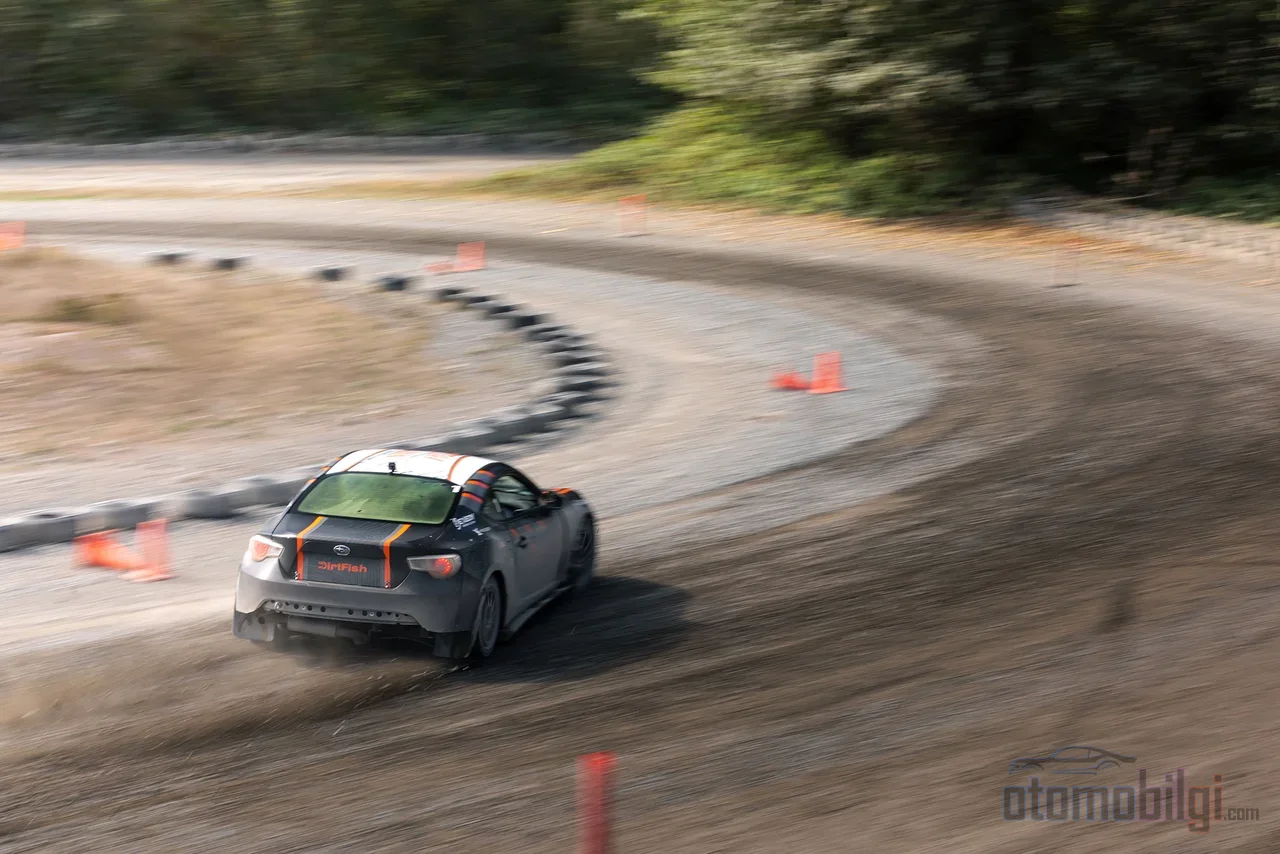
When you think of rallying, bring this to mind: you are alone. In a forest, on a mountain, on a mountain road, or on a dusty gravel strip, you race against the clock by yourself. There is a co-driver in the seat next to you reading the pace notes, and ahead of you are surfaces that constantly change. Stages are sometimes run more than once; the weather changes, the surface changes, and you try to go into the blind sections relying on the speed notes called pace notes. In the World Rally Championship (WRC), drivers have to adapt to constantly changing conditions precisely for this reason.
Rallycross, as its name suggests, is a cross: a short circuit, a route where asphalt and gravel sections are used alternately, and most importantly a group start. There is no lining up in a single file and racing against the clock; you put your car alongside the others and battle. Races last a few minutes, but every few minutes is as intense as a final. To me, rallycross is like the best of circuit racing and the best of rallying meeting under the same tent.
Even history tells the story: the first races were held in 1967 at the Lydden Hill circuit in England as part of the British Championship, then came the European Championship, and in 2014 the FIA World Rallycross Championship began. In other words, rallycross was born to combine the adrenaline of rallying with the combative format of circuit racing.
How do race weekends work?
This is where the most crucial difference that sets rallycross apart from rallying lies. In a rally weekend, the winner of an event is the one who posts the fastest total time across all stages. In rallycross, however, a weekend flows like a tournament; let's look through the classic era of World RX:
- The event lasts 2 days and the grid for the first heats is determined by a draw - meaning chance is also part of the game.
- 4 heat rounds are run: in each, 3-5 cars complete 4 laps; the winner is determined by the total time of the 4 laps, and points are distributed as "intermediate points".
- The top 12 names advance to the semi-finals: 2 races, each with 6 cars and 6 laps. The top 3 of each semi-final move up to the final.
- The final is also 6 cars and 6 laps; whoever wins the final is the winner of the event.
But there's a subtle twist: in the classic points system, the driver who wins an event may not be the one who scored the most points at that event. Due to how close the points are in the heats, carrying a big score into the final is essential. So the name lifting the trophy on Sunday may not have opened up a gap in the championship standings - this is one of the most debated aspects of rallycross.
The joker lap: rallycross's tactical victory
In rallying, strategy mostly comes down to tire choice and pace notes. In rallycross, however, a tactical bomb goes off in every race: the joker lap. Each driver must, once per race, take an alternative section of the track that adds 2-3 seconds to their lap time. Why? Because if everyone drove the same lap, the race would turn into a procession with the leader leading a line of followers. The joker exists to create gaps and guarantee overtaking.
The tactics are elegant too: the leader usually takes the joker late, to use their advantage on an empty track. A driver stuck in the pack or behind a slow rival may choose to take it early. A spotter with a bird's-eye view of the track helps like a chess coach on the radio telling the driver "now go." The rules are serious too: a false start means two joker laps, two false starts mean disqualification. Skipping the joker in a heat carries a 30-second penalty; skipping it in the semi-final or final means the last row and zero points. And the latest development: in the newly announced FIA Rallycross World Cup format, every race has two mandatory joker laps - the tactical layer is getting even thicker.
The cars: same soul, two different bodies?
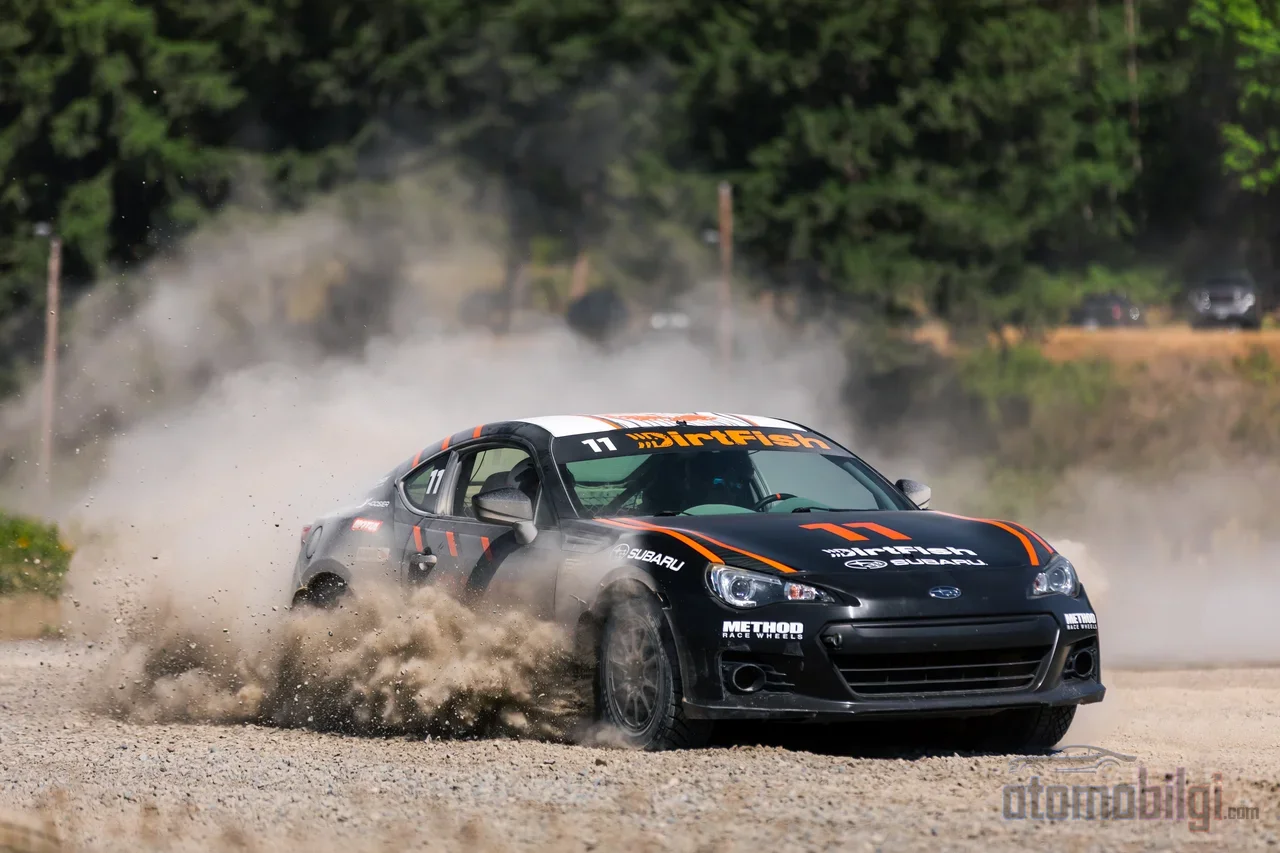
Look at a rally car prepared for gravel side by side with a rallycross car prepared for circuit racing; the contrast is striking. A rally car is set up for long days, varying surfaces and service intervals; racing on gravel is a discipline entirely apart from asphalt. A rallycross car, on the other hand, is a monster built for short, wild bursts.
| Class | Power | Drive | Weight | Note |
|---|---|---|---|---|
| RX1 (Supercar) | ~570-600 hp, 840-920 Nm | 4x4 | ~1,300 kg | 0-97 km/h under 2 s |
| RX2 | 310-320 hp | 4x4 | 1,100 kg | 2.4 L naturally aspirated |
| RX3 | 220-250 hp | Front-wheel drive | 920-1,000 kg | 0-97 km/h ~4.5 s |
| RX1e | 680 hp, 880 Nm | 4x4 | 1,300-1,330 kg | 0-97 km/h 1.8 s |
| RX2e | 335 hp, 510 Nm | - | 1,290 kg | Entry-level electric |
At the heart of the RX1 sits a 2.0-liter turbocharged 4-cylinder engine; with its 45 mm intake restrictor it produces ~570-600 hp, though unrestricted it has a capacity of ~1,000 hp / 1,500 Nm. 50 psi of boost, a Sadev 6-speed sequential gearbox, launch control... It does 0-97 km/h in under 2 seconds - that's faster than a Formula 1 car. The electric front has also advanced quickly: from 2022 onward, the top-tier RX1e offers 680 hp and instantaneous 880 Nm of torque with its two electric motors, while in 2024 sustainably fueled internal combustion cars also returned to the grid. If it were you, which would you choose - vroom vroom, or silent terror?
What awaits a pilot moving from rallying to rallycross?
A rally driver learns to adapt to changing surfaces, pace notes and unpredictable weather; according to some, rally drivers face a far wider range of challenges than their circuit counterparts. This wide range is a big advantage when moving to rallycross - but there are new things to learn too: wheel-to-wheel battles, the risk of contact, split-second decisions in races lasting a few minutes, and the joker strategy. In rallying you never think "where is my rival right now?"; in rallycross you have to think every second. Petter Solberg, who won championships in both disciplines, is the finest proof that this transition is possible, with car control remaining central in both worlds. Indeed, after his 2003 WRC title, Solberg became history's first World Rallycross Champion in 2014; by winning again in 2015, back to back, he wrote his name into the record as the first driver to hold two different FIA world titles.
Legends, Türkiye and the picture in 2026
Looking at the rallycross podium record, the names line up: Johan Kristoffersson with 64 podiums at the top, followed by Timmy Hansen (49), Andreas Bakkerud (30), Mattias Ekström (27), Kevin Hansen (24) and Sébastien Loeb (17). In the wins table, the Volkswagen Polo with 50 victories leads, chased by the Peugeot 208 (21) and Audi S1 (16). It's also a nice detail that Solberg's nickname is "Mr. Hollywood"; his career, which began in Norway in 1995 with hillclimb and rallycross championships, extended to the WRC in 1999.
The Türkiye front is a source of pride: the finals of the 2025 FIA World and European Rallycross Championships were run as a double-header at TOSFED Istanbul Park on 20-21 September 2025, with both the year's World and European champions decided in Istanbul. The latest World Champion was recorded as Johan Kristoffersson, and the latest team champion as Kristoffersson Motorsport.
So what happens now? Honestly: the FIA World Rallycross Championship came to an end in 2025, and from 2026 the FIA European Rallycross Championship has taken over the top category; the 2026 European series consists of six rounds, opening at Bikernieki in May and stopping at Mondello Park in July. But rallycross is not dead - on the contrary, it is living on in new forms. The newly announced FIA Rallycross World Cup will hold its first event on 5-6 December in Jakarta, featuring 8-car semi-finals, a new Superpole format, banked corners, jumps and a technical joker section. Meanwhile, RallyX Americas is opening its doors in Crandon in September and in Montalegre in October. Fans were sad when the series closed; the view of legendary name Andreas Bakkerud has changed:
I think we've reset.
Everyone seems set to see that he was right: the format has been renewed, the calendar is in place, and interest has returned.
Which one is your style?
Let me sum it up: Rally means patience, trust in pace notes, and battling nature that changes by the hour. Rallycross is a burst of a few minutes, door-to-door racing, the joker tactic, and an adrenaline bomb mixed with contact. One is like a chess match, the other like a boxing match - both require intelligence, but the way you flex your muscles is completely different. And there is no better excuse to watch both: add rally stages to your team one weekend, and a rallycross final the next. From that camera angle, watch just once the moment six cars dive into the first corner at the group start, and you will instantly know which one is your style. So which one are you - the speed master of the silent forests, or the chess player of the joker lap?
Sources
- RALLYCROSS EXPLAINED | Peugeot Sport
- FIA World Rallycross Championship - Wikipedia
- The FIA Rallycross World Cup Sporting Format is revealed!
- FIA sets bold new course for rallycross from 2026 - FIA
- Rally-raid, rallycross, WRC: Differences in disciplines - Red Bull
- Race or Rally? These WRC stars have done both - WRC.com
- Is rallycross finally set for its next big boom? - DirtFish
- How to set up a rally car for gravel and asphalt - DirtFish
- Let's go for a ride along in a 600-hp Subaru Rallycross car - Motor Authority
- RallyX Americas Unveils 2026 Calendar, Classes - RallyX
- FIA Unveils 2026 European Rallycross Championship calendar - Mondello Park
- Rallycross Stars at TOSFED Istanbul Park for the Double Final - TOSFED
- What you need to know about rallycross - Red Bull Türkiye
- Petter Solberg: Double World RX Champion - Motorsport.com TR
- Solberg: "Never Give Up" - Sporx
- Petter Solberg - TR Wikipedia
- Why Rally Is Different - fit4race