Why Is It So Hard to Overtake in Rallycross?
Share This Page
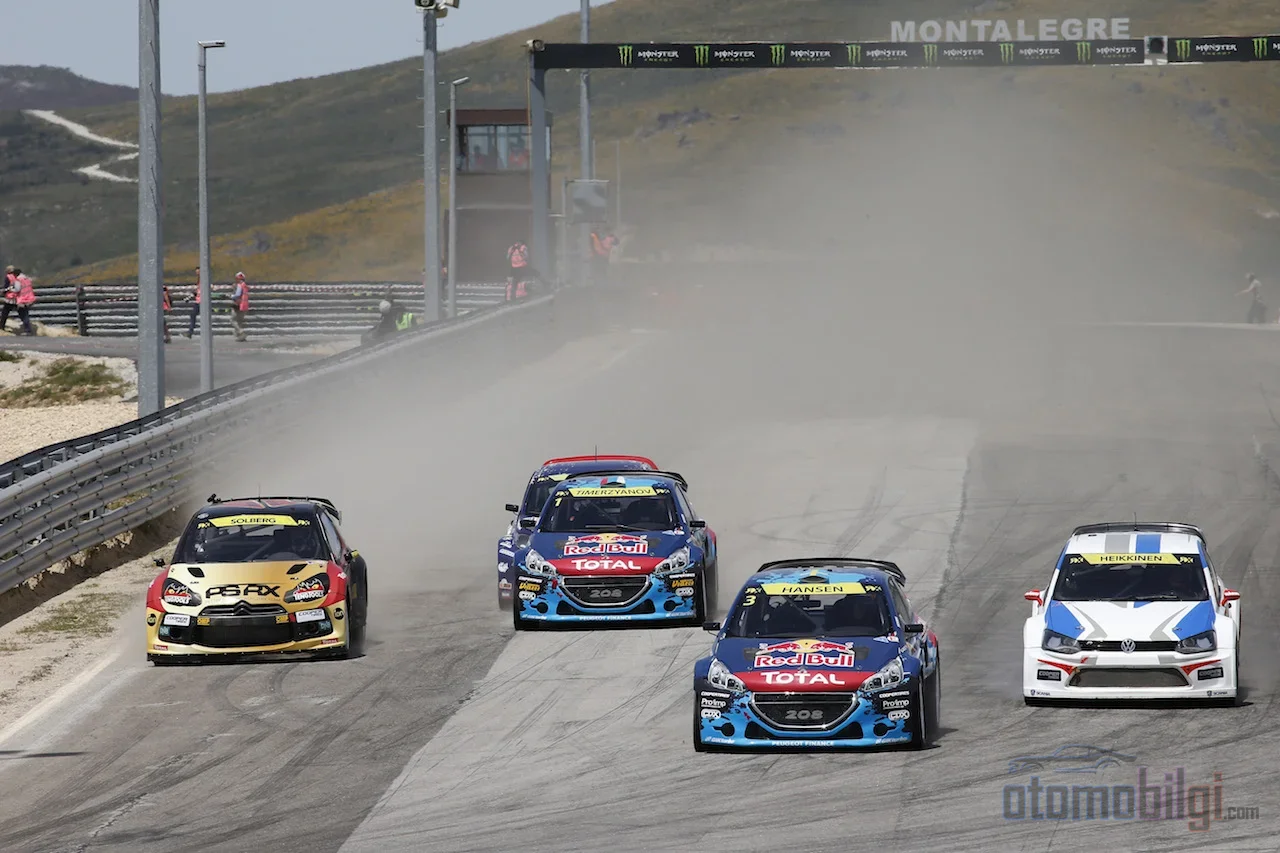
Overtaking in rallycross is one of the hardest tasks in motorsport; because on a short and wide track, six cars race wheel-to-wheel while the joker lap, which everyone must take once, constantly reshuffles the order. The difficulty of overtaking is more tactical than technical: taking the joker on the right lap puts you ahead, taking it on the wrong lap drops you into the middle of the pack. In classic rally you race against the clock, in circuit racing you watch for opportunities over dozens of laps; in rallycross, you fight both your rivals and the joker at the same time, on both dirt and asphalt.
Highlights
- The joker lap is mandatory once per race; on average it creates a 2-3 second loss.
- In a 6-lap final, 3 seconds means a 3-4 car gap.
- A driver who forgets to take the joker receives a +30 second penalty in the qualifying heat.
- In the new FIA Rallycross World Cup format, there are two mandatory joker laps per race.
- Rallycross's roots go back to the Lydden Hill circuit in England in 1967.
Rallycross, Rally and Circuit Racing: Why Is Overtaking Different in All Three?
Let's first clarify the basics, because understanding the overtaking problem comes down entirely to the format. In classic rally, drivers race against the clock on special stages; in other words, they do not directly compete with a rival on the track. There is almost no such thing as overtaking, because the rival is usually not even beside you. In circuit racing, you have dozens of laps; tires come up to temperature, strategies develop, and opportunities arise over time.
Rallycross combines the harshest aspects of these two worlds: sprint-style, wheel-to-wheel races on short circuits that blend asphalt and dirt. Because the track is short, overtaking opportunities per lap are very few. And because the track is wide, it seems like you could pass anywhere in theory; but if you brake too late on a dirt surface, or if there is a huge dust cloud behind the car in front of you, the width doesn't help you much. This is exactly why rallycross has a solution of its own: the joker lap.
What Is the Joker Lap and Why Does It Change Everything?
The joker lap is defined in FIA rules as an alternative route that is longer than the main route; that is, an additional section that deviates from the track's normal line and sets you back in terms of distance and time. Taking this lap once during the race is mandatory. Let me give a simple analogy: imagine a food competition where you must wash your spoon at least once. You choose when to wash your spoon, but everyone else keeps eating in the meantime. However you make the choice, it comes at a cost; the point is to pay that cost in the least time possible.
The loss is usually 2-3 seconds around. It may sound like a small amount, but 3 seconds in a 6-lap final means 3-4 cars lined up back to back. There is also a penalty side, and it is merciless: skip your joker in the qualifying heat and you get +30 seconds, skip it in the semi-final or final and you start last with zero points. A driver who jump-starts has to complete two joker laps instead of one; a second jump-start violation results in outright disqualification. The new FIA Rallycross World Cup format heats things up even more: 8-car semi-finals and finals, two mandatory joker laps per race, and a new Superpole system. Two jokers complicate the strategy exponentially, because the question is no longer which lap you will take it, but which one you will take early and which one late.
Early Joker or Late Joker: The Math of Two Schools
Joker timing falls into two classic schools, and there is no single answer as to which one is right; the right answer depends on where you are at the start of the race.
Early Joker: Escape from the Pack
For a pilot stuck in the middle of the pack, accelerating despite the slow car ahead, an early joker makes sense. When you divert to the joker route, you get out of the dust and mud cloud ahead of you, in other words the dirty air, and run in clean air. But there is a price: after moving up, you may keep struggling with traffic; clean air does not mean nobody is ahead of you. Delaying the early joker also carries a cost; the slow cars remaining ahead can block the road and slow you down even more.
Late Joker: The Leader's Luxury
For the leader ahead, the math is reversed: if he delays the joker until the last moment while running on an empty track, he maximizes his advantage in clean air. The risk is the last-lap surprise; coming out of the joker, you could end up door to door with a rival about to accelerate. Those who watch Formula 1 will recognize this: joker timing is like the undercut and overcut decision in pit stop strategy compressed into a much narrower time window. In F1 you can make your decision over several laps; in rallycross that decision is made over a few corners, and the track changes every lap. Air temperature, ground temperature, the position of the joker entry point, and the track's deterioration during the day; when the area around the joker entry gets covered in mud, that route slows down too. That is why two races run on the same track on the same day call for different strategies.
Is Contact Inevitable: The Tension of the Merge Point
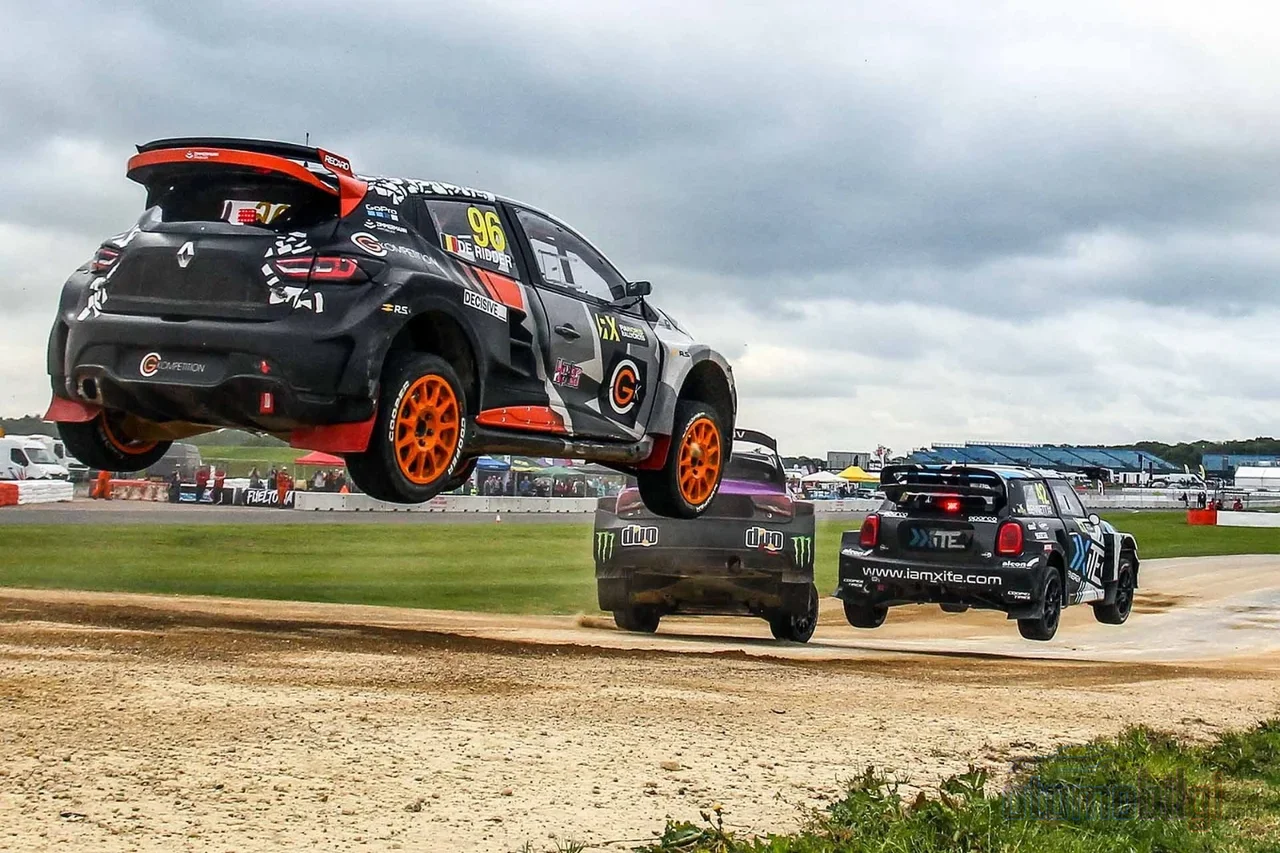
The real problem with the joker is this: because everyone takes their joker on different laps, groups of cars split up and then merge again on the track. This merge point is the most tense moment of the race. While the car coming out of the joker route is recovering its speed, the rival coming at full throttle on the main line can be slow to notice it. The collision between Tom Daniel Tanevik and Derek Tohill at the joker exit on the opening lap at Höljes is a vivid example of this; in a World RX final too, O.C. Veiby and Klara Andersson made joker-related contact. Liimatainen, meanwhile, rolled over as a result of a contact incident in the semi-final.
FIA rules explicitly penalize deliberate or reckless contact; in other words, contact is not required by the rules and the format was not designed with intentional contact as an element. But the reality is this: a short, wide track where six cars converge on the same point from different routes makes contact a natural consequence. A driver who wants to overtake has to factor in this risk; shutting the door on a rival is not a technical error, but sometimes a conscious tactic.
Gaining Positions with the Joker: Real-Time Chess Within the Race
The joker is not just a loss of time; if played correctly, it is a weapon. Drivers constantly make calculations against each other during the race: if the leader will take their joker on the final lap, the driver behind takes it early and tries to make up the loss in clean air; if the leader takes it early, those behind find themselves in traffic. All of this is decided in the cockpit, while racing, within seconds. You are not holding a strategy meeting over the radio; you can neither see the track nor what is ahead of you, only react.
There is also an example that breaks the book: Johan Kristoffersson won the 2015 Portugal race with an unconventional strategy by taking the joker on the first lap. He showed that an early joker can make a difference on tight city circuits. The lesson in the sim racing world is also clear: if there is a vehicle ahead of you that you cannot pass, take the joker as early as possible, otherwise do it on the final lap. A race in a sim racing championship final in Atlanta, where the joker maintained the tension until the final lap, is cited as a perfect example of a joker lap; the common lesson drawn is the same: if you want clean air, take it early.
Rallycross in Türkiye and the 2026 Season
This exciting format is alive in Türkiye as well. Istanbul Park became a stop of the World and European Rallycross Championship: the World Championship was held here on November 9-10, 2024, and then the FIA World and European Rallycross Championship Türkiye round was organized on the same circuit on September 20-21, 2025; Saturday featured practice, qualifying and semi-finals, closing on Sunday with the finals. In our country, the TOSFED National Rallycross Championship is also run separately, and according to the 2026 National Rallycross Regulations, the joker lap is mandatory once in each of the qualifying, semi-final and final; the semi-final is run with a maximum of 5 laps and 7500 meters, and the final with a maximum of 6 laps and 9000 meters.
The international front is busy as well. At the opening of the 2026 FIA European Rallycross season, Johan Kristoffersson, with KMS, signed off on a 1-2 finish and the grid featured one of the strongest elite lineups seen since 2018, with 30 SuperCars. The FIA World Motor Sport Council also approved the arrival of the RX5 category; meaning a future is being built that is fed from the lower categories. Spa-Francorchamps joining the World Rallycross calendar is a bonus too: at that famous circuit, the standard route and the joker route will have parallel jump points, which will add a completely new dimension to joker strategy.
Was the Joker Everyone's Idea: A Critique of the Format
The joker concept is not unique to rallycross; WTCC tried it at Vila Real in 2017 as an effort to artificially increase overtaking and drew criticism from some quarters. But rallycross is different: the joker has been part of the sport's identity since its birth. In this format, run at Lydden Hill since 1967, the joker is not an artificial addition but the heart of the race. Still, the debate never ends; the switch to two mandatory jokers complicates strategy, and disagreement over contact continues. My view is quite clear: it is precisely this chaos that makes rallycross the most enjoyable sprint format to watch.
So if it were you, which would you choose: an early joker to escape the clean air, or a late joker for maximum advantage on an empty track? Next time you watch a rallycross race, pay attention to every car that diverts to the joker route; in that driver's head, a chessboard you cannot see is being played.
Sources
- Joker Lap Timing in Rallycross: Early or Late? - Otomobilgi
- 2026 FIA Rallycross Sporting Regulations (FIA)
- RALLYCROSS EXPLAINED | Peugeot Sport
- 2025 Sporting Regulations RallyX
- The FIA Rallycross World Cup Sporting Format is revealed
- Over it goes! Contact sends Liimatainen into a roll
- Have Nitro Rallycross penalties been fair? - Dirtfish
- What you need to know about Rallycross - Red Bull Türkiye
- 2026 National Rallycross Rules - TOSFED
- September 20-21, 2025 World RX of Türkiye - Mobilet
- Kristoffersson fronts KMS 1-2 finish at 2026 FIA European Rallycross season opener
- FIA World Rallycross Championship - Wikipedia
- What is a Joker!? - Steam Community