Where Was Rallycross Born? From a TV Fabrication to the World Championship
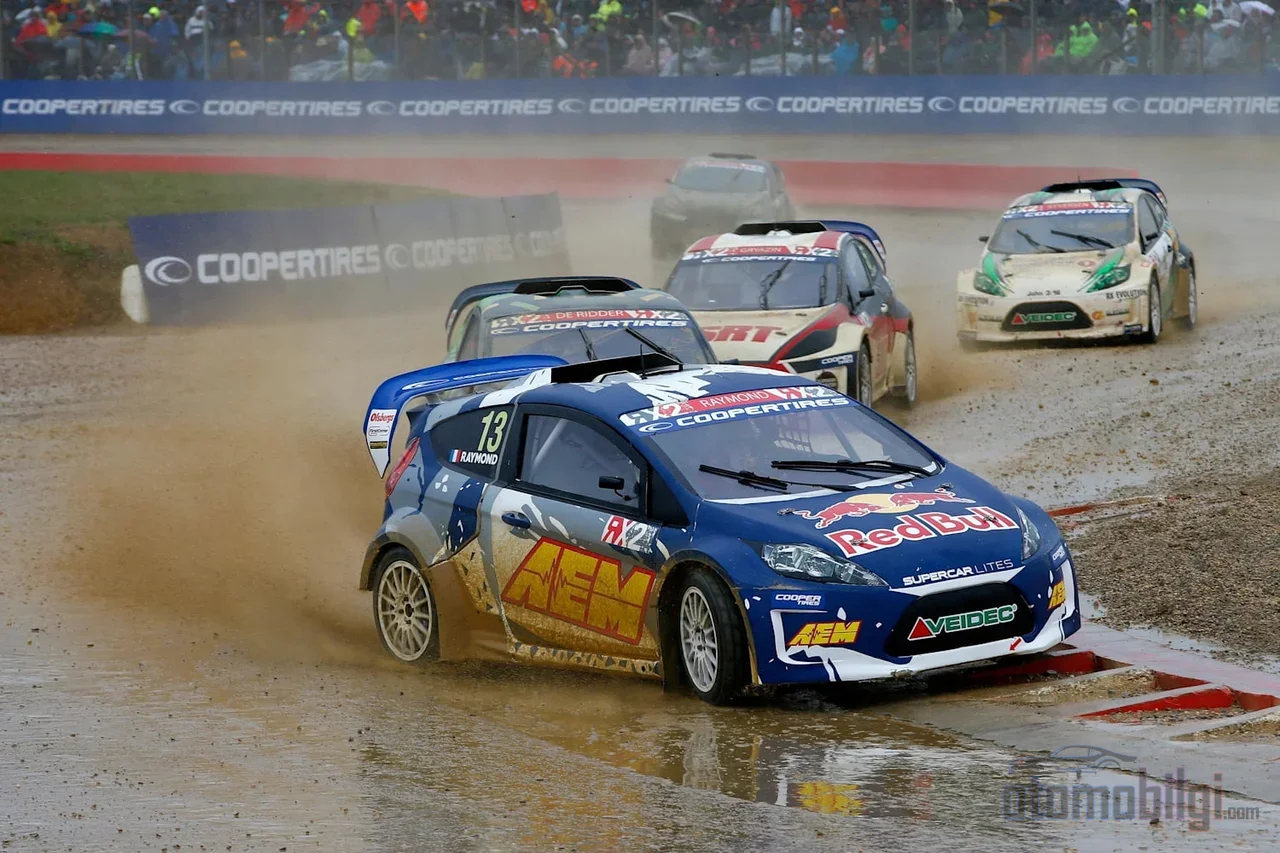
Share This Page
Rallycross was born on February 4, 1967 at the Lydden Hill circuit in the Kent region of England; meaning this discipline was designed for a television program, and its first race was won by Vic Elford in an original Porsche 911. Cars racing side by side on a short, mixed-surface circuit; it combined the challenge of rallying with the fast excitement of autocross and, at the beginning of the past six decades, turned into a motorsport watched around the world today.
Highlights
- The first rallycross race was held on February 4, 1967 at Lydden Hill, and Vic Elford was the winner.
- The sport was invented directly for television; the first TV championship series began on September 23, 1967.
- The first circuit designed and built specifically for rallycross was the Eurocircuit in the Netherlands, on April 17, 1971.
- A joker lap is mandatory in every race; drivers who fail to take it receive a 30-second penalty.
- With 2026, the world championship reverted to a European championship and electric vehicles were abandoned.
Where Was Rallycross Born? A Birth Story as a Television Invention
Let me ask you a question: How many motorsports have been invented with camera angles in mind? I believe the number is one. That is exactly how the story of rallycross begins. In November 1966, a television producer had filmed the RAC Rally with cameras but saw that the race was not reaching a wide audience. The logic was simple: Rallying was wonderful, but a car passing through a forest in the dead of night meant the viewer saw it once every eight hours. So what if we gathered that excitement on a mile-long circuit, with four cars side by side? Compressing seven days and three thousand miles into seven minutes - that is exactly the idea behind its birth.
The place where this idea found its stage was Lydden Hill in Kent. Circuit owner Bill Chesson had purchased that land in 1955 and had already opened the area to racing. Lydden's natural amphitheater structure, its varying gradients and mixed surfaces, was tailor-made for television: Four cameras could follow the cars at every moment of the circuit. When short sections of gravel and asphalt were added on top of the grass-racing terrain, the resulting picture still defines the discipline's standard circuit design today: a mix of asphalt and dirt/gravel, a closed circuit, sprint-style racing.
Even the name was found just days before the very first race: rallycross, a single word combining rally and autocross. And on February 4, 1967, the flags were waved. The winner was Vic Elford, who would later rise to Formula 1 and win the Monte Carlo Rally. He was followed by Brian Melia in a Ford Lotus Cortina; Tony Fall completed the podium in a BMC Mini Cooper S. Not bad for a beginning, right?
The Early Years: From the TV Screen to the Millions
The first race was an experiment, but the spark caught instantly. That same year, two more TV events were held at Lydden, and a proper championship began on September 23, 1967: a six-round series, three at Lydden and three at Croft in Yorkshire. The second round reached 1.2 million viewers on screen. The numbers kept on growing; nearly 10 million Britons were watching the events on television. If you compare that number to the population of the 1960s, you can imagine the scale of the phenomenon. The first championship was decided in April 1968, when Tony Chappell, driving a Ford Escort Twin Cam, won the final round.
Another first also took place in November of the same year: the first international rallycross broadcast live from Lydden. Here a funny coincidence comes into play. That week the RAC Rally had been cancelled due to a foot-and-mouth disease outbreak, and the foreign drivers had returned to their home countries. The result: there were only Britons on the starting line, and Andrew Cowan won with a Hillman Imp. The amateur event held the following day opened its doors to everyone; the sport was no longer just television's plaything, but that of anyone with a car in their garage.
Meanwhile, a small historical note: Legends about cool-looking old events always circulate. Events such as the one held in the Brands Hatch car park in 1963 and the 1964 races at Prescott and the Saab facility are real, but those were a format in which a single car ran against the clock. The birthplace and date of rallycross as we know it today, where four cars battle side by side, are clear: Lydden Hill, 4 February 1967. The British authorities were not late either; the sport entered the 1968 Motor Sport Year Book with its official definition: racing on part of a permanent circuit, on a combination of sealed and unsealed surfaces.
Lydden Hill: Why Is It Still the Home of Rallycross So Special?
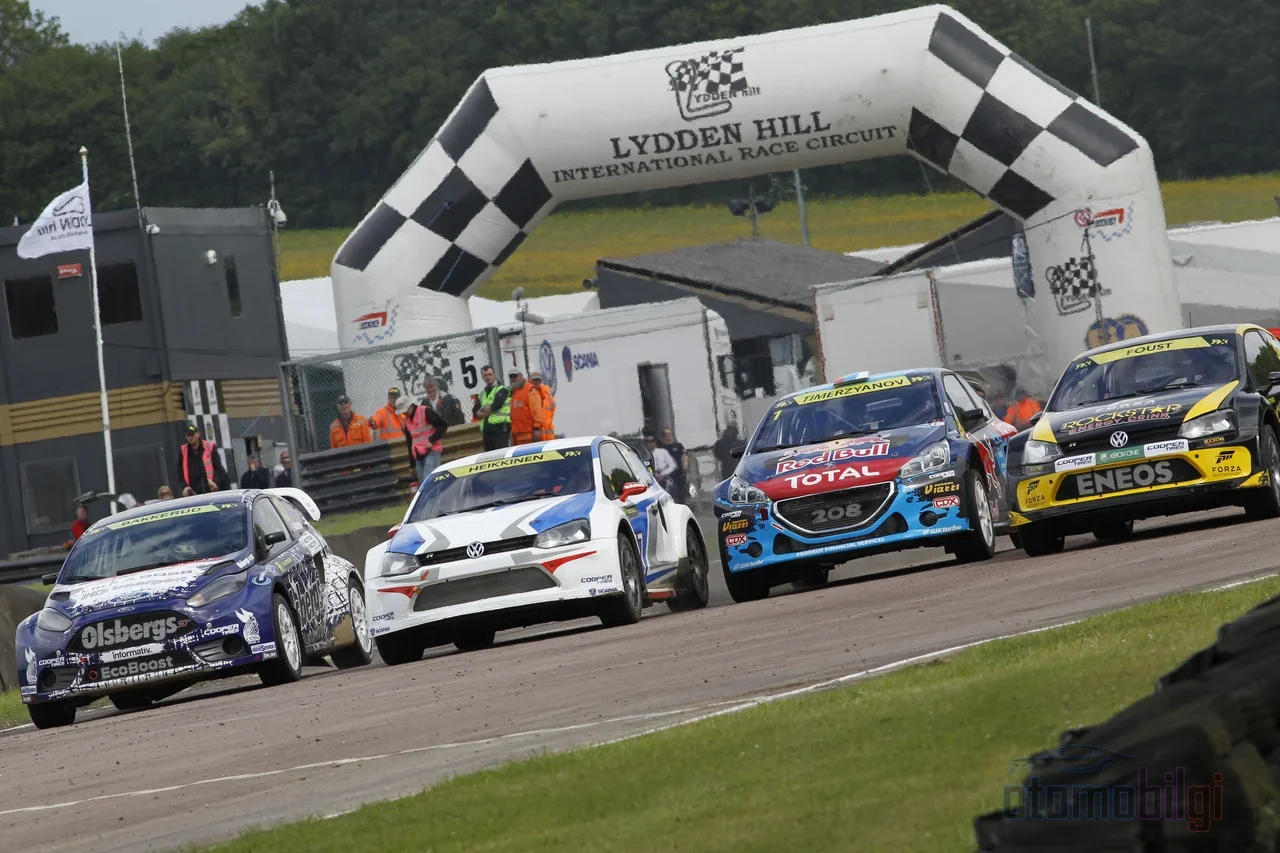
With its roughly one-mile mixed-surface circuit, Lydden Hill has long been called the Home of Rallycross, and that title is not a marketing slogan. Since 1973 it has hosted rounds of the European Rallycross Championship and, later, rounds of the world championship. For a circuit to have continuously witnessed everything from its birth to the great championships is a rare thing in motorsport.
Lydden's formula is simple but hard to imitate: spectators can see the cars from almost every point of the circuit, and the gradients and surface changes ask the driver a different question on every lap. A wheel that cannot find grip on gravel launches you when it hits the asphalt; and the reverse is equally true. In the early period, Saabs and VW Beetle examples stayed competitive for years once turbochargers and, in some cases, four-wheel drive were added; Mini Cooper S and Escorts attacked; in muddy events, even relaxed specials like a velvet-upholstered Lotus Europa took the stage. In the 1970s, Swedish rally stars such as Stig Blomqvist, Per Eklund and Björn Waldegård began trying rallycross - the sprint format also tempted rally's sharp drivers.
But the peak came after that. Before four-wheel drive became the standard, the Norwegian Martin Schanche resisted for years with a rear-wheel-drive Zakspeed MkII Escort; then redrew the top segment with its four-wheel-drive Escort called X-Trac, featuring a hydraulically controlled adjustable differential. The Ford RS200 Evolution, Will Gollop's Metro 6R4 Bi-turbo, the bi-turbo four-wheel-drive Porsche 911s of Finns like Matti Alamäki... In this golden age of the Supercar era, the effective power of the engines is considered to have been around 750 hp; the higher figures whispered behind the scenes were generally the product of dreams without a turbo restrictor. In short, rallycross was the laboratory that kept the spirit of Group B alive in its purest form.
The Joker Lap: How a Single Lap Turned a Championship Upside Down
The cleverest rule that separates modern rallycross from rally, in my view, is the joker lap. At every circuit there is a short alternative route off the main course, and every driver must use this route once in every race of an event - in the heats, the quarter- and semi-finals, and the final. If you skip the rule, you take a 30-second time penalty; you can't make up that much difference in a race.
The tactical depth here is enormous. Do you wait to take the joker lap until your rivals are blocked, or quietly drop to the back at the start of the lap? Do you cut off a rival ahead the very second they enter their joker lap? Think of a rallycross race like the final quarter of a basketball game: if the score is close, a single decision decides the match. The rest of the format also supports this intensity: an event lasts two days, starts with four heats of three-car races, and the driver races continuously. In rallying, a day means one set of sections and maybe one crash; in rallycross, fate is decided every five minutes.
The World RX Years, the Electric Adventure and the 2026 Turning Point
The sport's arrival on the world stage brought the growth everyone had dreamed of, but it also brought setbacks. The World RX era also brought electric vehicles to the discipline: the top class raced for a while with the RX1e electric and RX1 internal combustion classes. However, when the FIA took direct control of the world and European rallycross championships in 2025, grid numbers and outside interest had not reached the desired level. On the other hand, according to the FIA's own statement, every world and European event had been reaching an audience of over 30 million in recent years, and spectator numbers at the season opener in Portugal grew by 25% year on year. In other words, a sport whose stage has shrunk but whose camera feed is still watched by very many.
Then came the big move: With 2026, the FIA converted the world rallycross championship back into a European championship and dropped electric vehicles entirely. The top class now races solely with internal combustion engines, running on sustainable fuels; in addition, an independent world cup concept was announced. This decision sparked undeniable debate in the motorsport community: while the general retreat from electric racing (one series switched to hydrogen, another came to an end) was criticized, on the other side a growing audience and a fresh organizational start were being defended. The 2026 Euro RX calendar also consists of 7 rounds, including Lousada in Portugal, plus Latvia and Hungary.
On the names front, there is continuity. WRC champion Petter Solberg went down in history as the first double World RX champion and the first driver to win world championships in two different FIA disciplines; he had also won Lydden Hill in 2015. After him, eight-time world champion Johan Kristoffersson claimed his first European Rallycross Championship title at the Portuguese round. So even in the new chapter of the story, that "fastest and most ruthless wins" spirit we know from rallycross's childhood years has not changed.
Rallycross in Türkiye: Istanbul Park Now at the Summit
On our side, things are not bad at all - quite the opposite, they are a source of pride. TOSFED Istanbul Park, whose foundations were laid in 2003, hosted world rallycross for the first time since 2015 on November 9-10, 2024, and on September 20-21, 2025 it hosted a joint event of both the world and European championships. In other words, the fastest rallycross drivers in the world discussed joker lap tactics in Istanbul. Moreover, the annual Türkiye Rallycross Championship continues; the 2026 final is planned for November 28-29. Watching a world championship at your own country's circuit is a unique opportunity for anyone interested in this sport - if I were you, I wouldn't miss it.
Conclusion: Why Is a Sport Born on Television Still Alive?
The story of rallycross is one of motorsport's most honest lessons: If you can keep the excitement short, make it visible, and put a result at stake in every second of it, the audience will come. This format, invented in Kent's soil in 1967 for a television program; lived its golden age with Supercars, rewrote the strategy book with its joker lap, rolled back its electric experiment, and entered a new Europe-centered structure in 2026. The format still feels like one of the newest motorsports even after nearly six decades. And it all began when four cameras followed a Porsche 911 at Lydden Hill.
Sources
- Rallycross - Wikipedia
- Lydden Hill Race Circuit - Wikipedia
- FIA European Rallycross Championship - fia.com
- WRX: All you need to know about FIA Rallycross
- EVs binned in major rallycross overhaul by FIA - DirtFish
- FIA World Rallycross reverting to European championship for 2026 - Racer
- Bold New Era for FIA World Rallycross Championship Begins 2025 - FIA
- Rallikros Yıldızları Çifte Final İçin TOSFED İstanbul Park'ta - TOSFED
- Türkiye Rallikros Şampiyonası Final Yarışı - TurkMotorspor