What Happens on a Rallycross Race Day?
Share This Page
A rallycross race day begins with morning qualifying sessions, heats up with the elimination heats, and reaches its peak within the minutes of the semi-final and final in the afternoon: a champion is born within a single day. In this discipline, the joint child of rally and circuit racing, everything is short, intense, and just as chaotic - and for us spectators, an absolute adrenaline feast. In this article, we will follow a race day from start to finish, step by step, through our eyes from the grandstand.
Highlights
- Classic format: 4 qualifying heats, 2 semi-finals and 1 final - all within a single weekend.
- Every driver must take a joker lap once in each race; this lap usually costs 2-3 seconds .
- RX1 cars ~570-600 hp can go from zero to 97 km/h in under 2 seconds .
- The winner of the final may not be the driver who collected the most points of the day - yes, really!
What is rallycross and why is it so addictive?
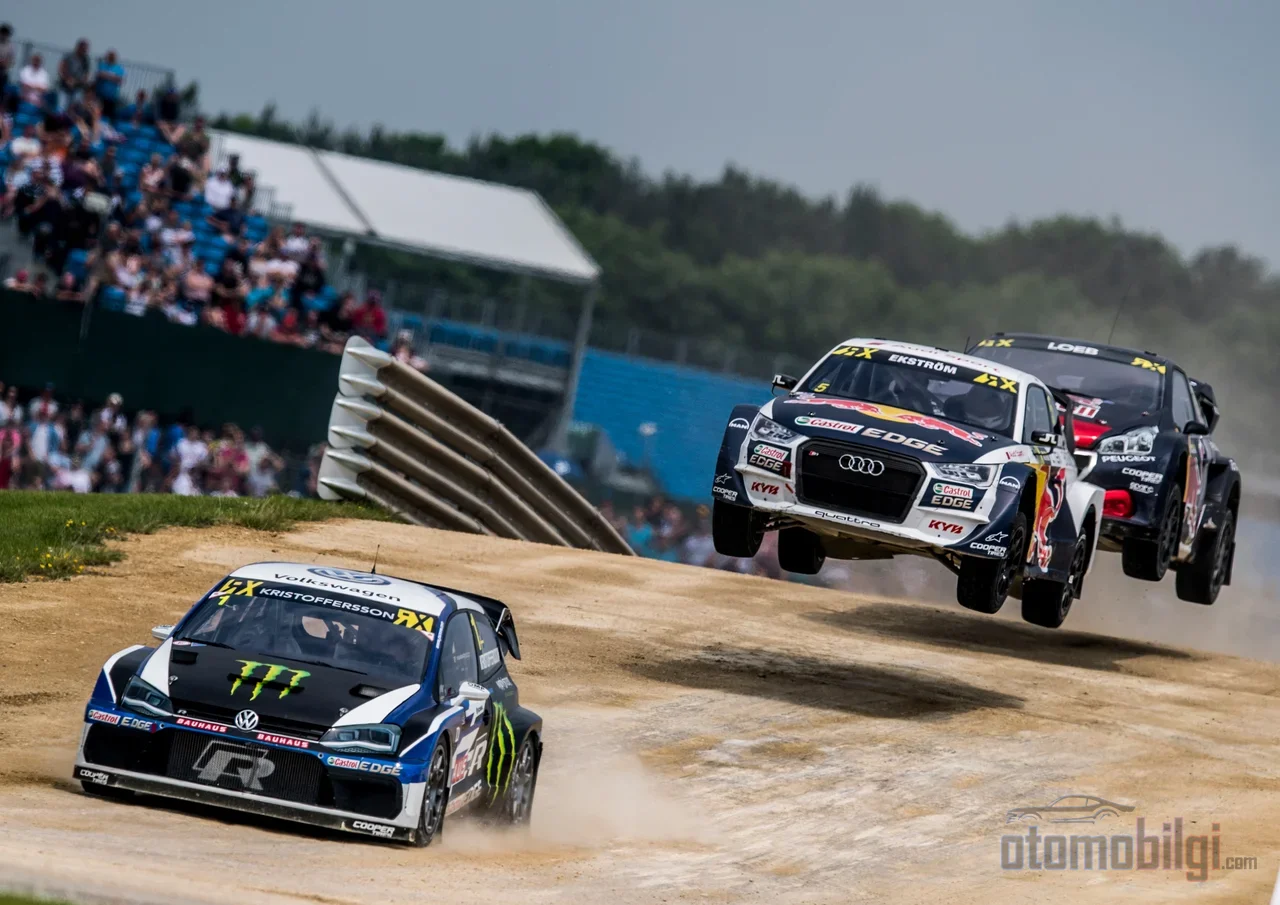
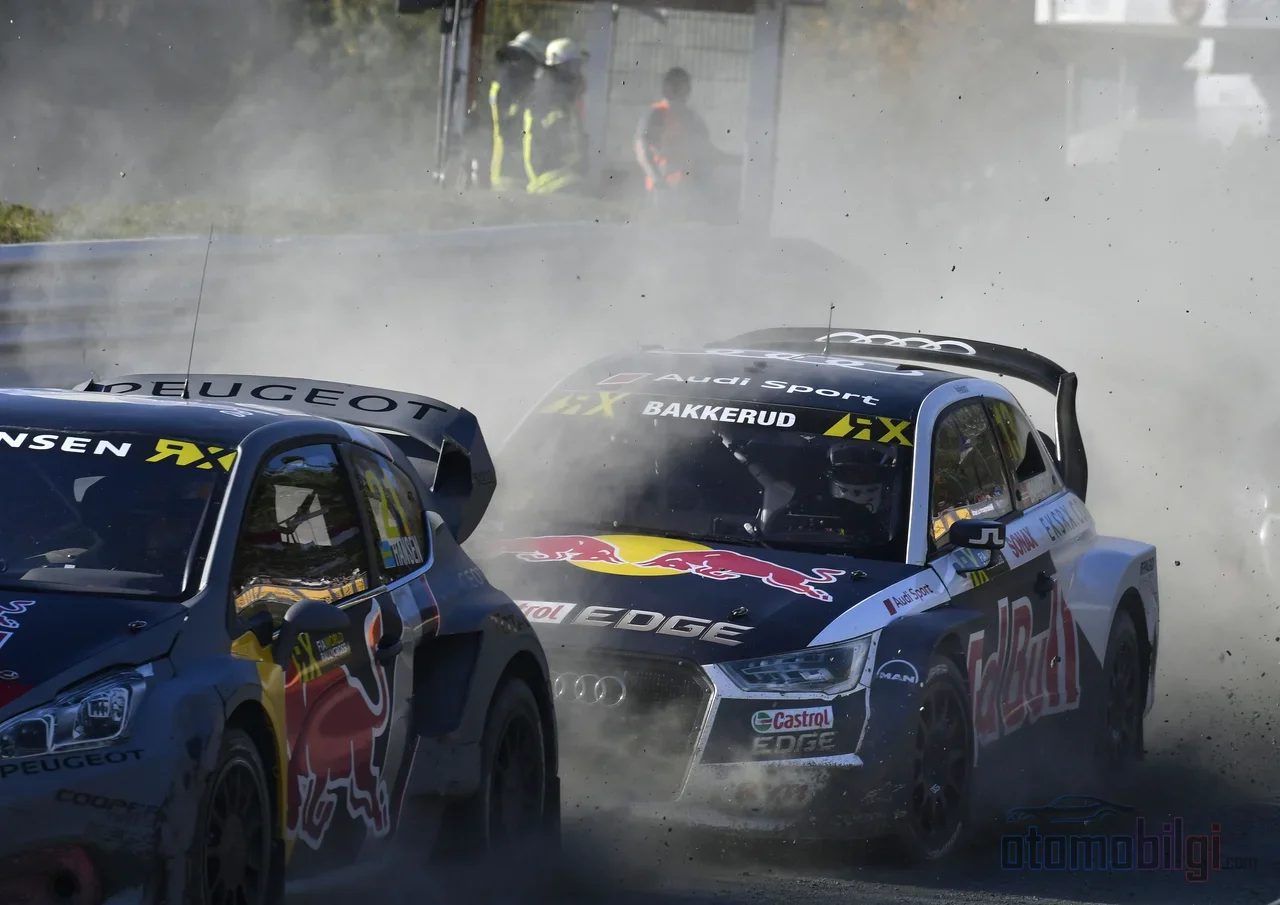
To describe rallycross in one sentence: sprint races run on short circuits where many vehicles start side by side, on a mix of asphalt and gravel. In rally you follow a single car and wait for a while; in rallycross, six cars dive into the same corner together. The first races were held in 1967 in England at the Lydden Hill circuit, and the FIA World Rallycross Championship started in 2014. So this sport is both deeply rooted and young - a perfect combination for curious fans like us.
The secret of its addictive nature lies in the format itself: races last only minutes, but within those minutes nearly every lap features an overtake, a tactical move, or a touch of bodywork. By the time you walk to your car, a final may have already ended. Imagine, you cannot even find the time to open a bag of chips in the grandstand!
Morning: How do the qualifying heats work?
The event spans the weekend, but the heart of the excitement is the final day when the semi-finals and final are run. When you sit in the grandstand in the morning, the first thing you watch is the qualifying heats. In the classic World RX format, each event includes 4 qualifying heats and every car runs a 4-lap race in each heat. 3-5 cars take to the track at the same time, meaning a crowded but not suffocating intensity.
The starting order of the first heat is determined by a draw; in subsequent heats, the grid is arranged according to the previous standings. The points system is generous: the fastest driver receives 50 points , followed by 45, 42, 40, 39, 38, and so on. That's why every morning race is actually a battle for position for the final. It's no coincidence that the drivers seem to lock in every lap as if their lives depended on it!
What did the points table say in each era?
The points systems have changed throughout the championship's history; between 2014 and 2021, points were distributed from 16 downwards to the top 16 in the qualifying heats, with extra points given as 6-5-4-3-2-1 in the semi-final and 8-5-4-3-2-1 in the final. A question will surely come to your mind while in the grandstand: "Does the winner of the final become the champion?" The answer is interesting: The winner of the final becomes the champion of the event, but may not be the driver who collected the most points. So a name who runs very strong in the morning but is unlucky in the final can finish higher in the points standings. As a spectator who knows this detail, you instantly get that big brother/big sister vibe with those around you, guaranteed.
The joker lap: Hidden chess on the track
Rallycross's cleverest rule is the joker lap (Joker Lap). Every driver, in every race, must take the joker lap once: an alternative to the main route, usually a section that adds 2-3 seconds to the lap. In short, no one gets a clean race; everyone pays a penalty once. The question is: when will they pay it?
This is where tactics come into play. The driver ahead leaves the joker until the end of the race to maximize the advantage of a clear track; a driver stuck behind a slow or blocked rival can take it early and make up the loss at that moment. Getting ahead at the start is critical because overtaking opportunities on the track are limited - the joker lap is a miraculous rule that turns the race out of a mere procession and produces gaps and dramatic moments. If you stand at the start of the joker turn in the grandstand, you also get the advantage of watching drivers talk tactics with the spotter in the tower over the radio; teams that learn from the radio when each driver takes their joker follow the strategy moment by moment.
What happens to those who break the rules?
The joker lap is taken seriously: a driver who makes a false start takes 2 joker laps , while two false starts mean disqualification. Skipping the joker in a heat brings a 30-second penalty , while skipping it in a semi-final or final means the last row and zero points. When going off track, cars on the main track have priority. Using the joker in practice laps is optional. So the joker is not just an alternative route - you could call it the backbone of the race.
Afternoon: The rhythm of the semi-finals and final
After the qualifying heats are over, the fastest 12 drivers advance to the semi-finals. In the semi-finals, 6 cars, run 6 laps and the grid is lined up two-by-two. The first 3 drivers from each semi-final advance to the final. So at this stage of the day, eliminated drivers become guests in the grandstand, while we wait knowing the final six.
The final format is slightly different: again 6 cars and 6 laps, but this time the grid is lined up three-wide . The driver with the most points among the semi-final winners starts on the pole side. These final 6 laps are the sum of the whole day: in a race of nearly 2 minutes, the mood of the season can be decided. And remember that famous detail: the final winner becomes the event's champion, but the driver who collects the most points on the day may be someone different. Knowing this difference in the grandstand puts you one step ahead in post-podium conversations.
Why is the format so short and intense?
Rallycross is a "sprint-style" discipline; races last minutes and start with a group start. This brevity is no accident: the track is short, the competition is fierce, and every lap is like a mini final. Watching both the qualifying heats and the semi-finals and the final over the course of a weekend offers a far more intense experience than waiting patiently for days at a long rally event. Which do you think is more fun - one long two-hour race, or short bursts of collisions coming one after another within a single day? My vote goes to the latter.
The paddock and grandstand atmosphere between races
Between races, the paddock - the area where teams prepare their cars - is every bit as fun as the track. Event organizers pay attention to the various activities in the paddock and spectator areas; meaning you experience not just the racing, but a full day-long event experience. The antilag sounds of the cars, the mechanics' final touches, the drivers' brisk walks - they all let you smell the next race coming.
Rallycross events are also family-friendly: there is no alcohol or drug use, no rude behavior, and respect for other spectators is essential. This makes it easy, say, for a high school student to comfortably attend the event with family or a group of friends. Also, a few weeks before the events, spectator guides are published; the schedule, maps, and parking areas are indicated in these documents. Ticket sales in Türkiye are also done through an official system, so you can secure your spot in advance and plan your day.
What should you pay attention to when choosing a grandstand?
- Position: A spot close to the start of the joker lap is pure gold for watching tactics.
- Safety: Stay in the official spectator areas, don't enter forbidden zones, and don't stand on the track or in the lanes.
- Corner logic: Don't watch from the outside of a corner or below an obstacle; follow the signage.
- Hearing protection and the sun: RX1 cars 840-920 Nm of torque; and the sound is just as impressive, remember that.
- Pets: If you bring your dog, keep it on a leash.
The cars: Who are the monsters on the track?
The top class of rallycross RX1 (Supercar) class: 2.0-liter turbo 4-cylinder engines, approximately 570-600 hp of power, 840-920 Nm of torque, 4x4 drive, and a 6-speed sequential gearbox. Thanks to these engines, which can reach ~1,000 hp at full free, the car completes 0-97 km/h acceleration in under 2 seconds - faster than even an F1 car! Weight is approximately 1,300 kg including the driver. In short: once you hear that sound, forgetting it is impossible.
The electric side should not be forgotten either. In the RX1e class, two electric motors produce a total of 680 hp and 880 Nm of instant torque; the 0-97 km/h time is 1.8 seconds . The top class became fully electric in August 2022, but in 2024 internal combustion cars made a return. At the entry level, there are options like RX2e (335 hp, 510 Nm) and RX3
Legendary names: Who are we watching in the stands?
The Rallycross podium list is full of legends: Johan Kristoffersson holds the title of most recent drivers' champion with 64 podiums. He is followed by Timmy Hansen with 49 podiums, while Petter Solberg and Andreas Bakkerud have 30 each, Mattias Ekström 27, Kevin Hansen 24, Niclas Grönholm 21 and Sébastien Loeb 17 podiums on the list. On the manufacturers' front, the Volkswagen Polo leads with 50 wins, while the Peugeot 208 has 21, the Audi S1 16, the Citroën DS3 9 and the Hyundai i20 7 wins. And of course Ken Block , who gathered millions of views with his Gymkhana series, also signed two podiums in rallycross history.
Is it possible to watch rallycross in Türkiye?
Yes, and much more! On September 20-21, 2025, an event was held in Istanbul at Istanbul Racing Circuit (TOSFED Istanbul Park) as part of the FIA World and European Rallycross Championships; the 2024 final was also in Istanbul on November 9-10. The Istanbul Metropolitan Municipality (IBB) provided transportation support to Istanbul Park from the Sabiha Gökçen Metro Exit and Pendik between 09:00-17:00 on the event days - so you can also get to the event without a car, which is a big advantage for urban fans like us.
There is movement on the national side too: 2026 Türkiye Rallycross Championship is on TOSFED's national calendar, and the final race will be run on November 28-29, 2026 . Following the spectator guide and race schedule documents before attending events allows you to plan the grandstand and parking in advance. As an example of a spectator app, some events have spectator access to the track on Saturday; so be sure to check the schedule in advance so you don't miss anything.
Practical tips for attending your first event
A short checklist, even a simple reminder that fits in your pocket: buy your ticket in advance from the official system, check the map in the spectator guide and choose your grandstand, use the transport support if available, find a spot close to the joker lap and include the paddock activities in your schedule. Thanks to the short race format, the whole day flows almost without a single gap; all you have to do is let yourself go with the flow.
Summary of a day: Why should you try it at least once?
A rallycross race day is actually like a movie: you meet the qualifying heats in the morning, the tension rises in the afternoon semi-finals, and the final delivers the explosion. Watching the joker lap tactic, hearing the sound of the RX1 monsters, observing the teams in the paddock and following live as 6 out of 12 drivers advance to the finals - it all fits into a single day. If you go once, you won't need to convince anyone the next time; because rallycross is a discipline that never lets go of those who watch it.
Sources
- RALLYCROSS EXPLAINED | Peugeot Sport
- World RX gears up for biggest event of the season
- FIA World Rallycross Championship - Wikipedia
- Things you need to know about rallycross
- The 2025 season of the FIA World Rallycross Championship in Istanbul
- 2026 National Competition Calendar Announced - TOSFED
- Türkiye Rallycross Championship Final Race
- Full support from IBB for the FIA World and European Rallycross Championships
- 20-21 September 2025 FIA World and European Rallycross Championship
- Spectating Safely
- Spectator Info - NW Rally Association
- A Rally Spectator's Survival Guide