Surface and Tire Strategy in Rallycross
Share This Page
In rallycross, dirt-gravel and asphalt sections are intertwined on the same course; that's why teams determine tire compound, pressure settings, suspension, and differential setup according to surface transitions, and even joker lap timing is planned around this mixed structure. In other words, the winner in rallycross is not just the fastest driver, but the team that reads the ground beneath the course best.
Highlights
- Rallycross tracks are made up of a combination of asphalt and dirt (gravel/sand) surfaces; each lap is driven in two worlds.
- Not taking the joker lap in the heats means a 30-second penalty; in the semi-finals and final it means starting last and scoring zero points.
- Golden rule: if the surface is hard and consistent, go with a stiff setup; if it is bumpy and loose, go with a soft setup.
- Low tire pressure increases the contact patch; that is the secret of grip on loose surfaces.
- In the FIA Rallycross World Cup, the rule of two mandatory joker laps per race applies.
Just think about it: in one corner your tire is gripping the asphalt like glue, and three seconds later it's sliding in a cloud of dust. That is exactly what rallycross tastes like - in this mix. In this discipline that blends circuit racing and rally on the same track, the surface is everything; from tires to suspension, from gear ratios to joker lap strategy, every decision is shaped by the color of that surface. So come on, let's take a close look at how a car survives in the middle of these two worlds!
Why Does a Rallycross Track Include Both Asphalt and Dirt?
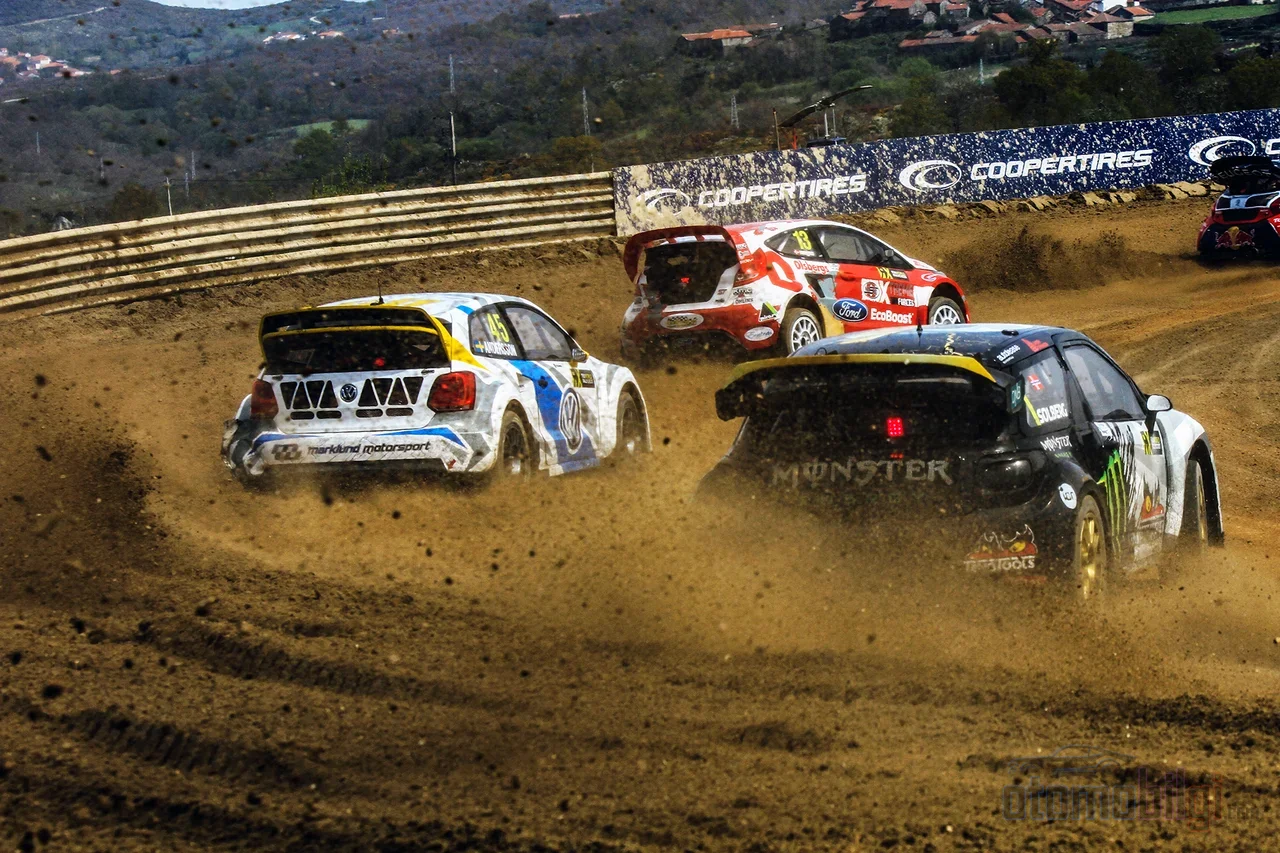
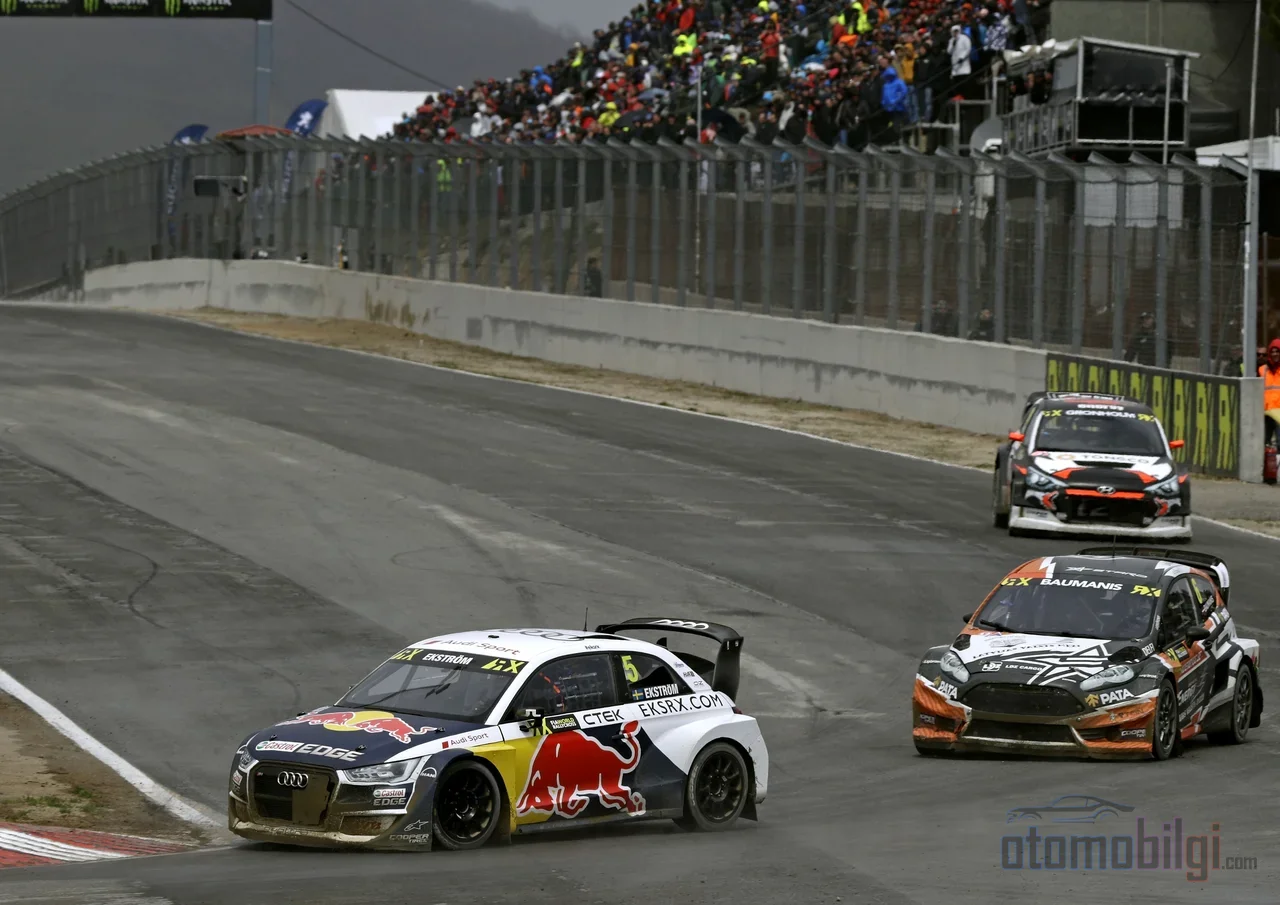
The answer is very clear: because the soul of rallycross lies exactly in this mix. The discipline combines the fierce competition of circuit racing with the aggressive character of rally on a single course. Drivers battle one-on-one on short tarmac-gravel mixed circuits; on these tracks, designed so that spectators can see most of the race, no one can take their eyes off the cars. The tightness of the corners and the surface transitions demand truly high performance from the drivers.
These tracks can be permanent or temporary. In fact, organizers in Hong Kong once even planned to build a track in the city center that was half mud and half tarmac; only four days were allotted for construction. So a rallycross track is not just a hobby somewhere - it's an engineering project: part of it is a flat, consistent, gray concrete stage; part of it is a loose, bumpy dirt maze that constantly surprises the driver.
Every rallycross track has two routes: the main route that everyone uses, and the joker lap that every driver must take at least once per race. This small detail is the heart of strategy. But we'll get to it by first going through the tires and suspension.
Tire Choice: Gravel Tires or Tarmac Tires?
The difference separating the two tire types is actually visible to the naked eye. Rally (gravel) tires are high-profile and have large tread patterns; their job is both to grip loose soil and to withstand rocks and stones appearing in the middle of the road. The pronounced tread pattern of gravel tires practically "bites" into the surface. Circuit tires are exactly the opposite: low-profile, minimally patterned, and designed to maximize the tire's contact area on smooth asphalt.
Moreover, this business doesn't end with the question "gravel or tarmac." Manufacturers even have different compounds within their rally tire series for the same surface: on asphalt, the compound scale extends from 5 to 9, and you even see options like 7+ on the soft end. In short, tire selection is not a cabinet but a scale; the team makes its decision on that scale according to the character of the circuit's asphalt and the weather conditions. Starting out with a low initial pressure and managing tire temperature is also among the classic recommendations.
Why Is Tire Pressure So Important?
Because pressure directly determines the area of the tire that touches the ground, that is, the contact patch: lower pressure means a wider contact patch. This is precisely one of the most effective ways to give grip to a tire sliding on loose soil. But be careful: optimal pressure is determined separately for every vehicle, every tire type, and every road condition. This is why teams wrestle with those famous pressure charts on the circuit.
Suspension and Differential: How Does the Setup Change According to the Surface?
Here is where the heart of rallycross engineering beats. The general rule is one sentence but worth its weight in gold: the harder and more consistent the surface, the stiffer the setup; the more uneven and slippery it is, the softer the setup should be. Asphalt is consistent and grippy; therefore, circuit cars work with very low and stiff setups, using the tire's contact area to the fullest. Gravel, on the other hand, is loose and slippery; a "semi-soft" suspension is preferred here. The car sits higher off the ground, and the soft suspension uses weight transfer to press the tire into the firm ground beneath the loose soil. Isn't that a lovely analogy? Soft suspension is like a hand holding a hand that "pushes" the solid ground beneath the soil into the tire.
On uneven dirt sections there is also the matter of durability: solid, durable parts, wheels, and skid plates are a must. Lightness is a good thing, but durability must not be compromised there. If a stone blows out a tire, even the lightest car's story is over.
| Feature | Dirt / Gravel | Asphalt |
|---|---|---|
| Tire profile | High profile, large tread | Low profile, minimal tread |
| Suspension | Semi-soft, car sits high | Stiff, car sits very low |
| Pressure logic | Lower, contact patch is enlarged | Adjusted for maximum surface contact with the ground |
| Gear ratios | Shortened, low-end torque prioritized | Long, high top speed targeted |
| Driving style | Drift is a fundamental element, controlled sliding | One ideal line, adhesion |
What About the Differential and Gearbox?
In rallying, alignment is usually kept simple, because conditions constantly change; aggressive settings rarely pay off and can even make the car shaky under braking. On tarmac, however, things turn around: plenty of camber and toe adjustment can be used comfortably. On the differential side, keeping the front differential looser on loose dirt is a common approach; on tarmac, a locked differential provides stability under braking. These practices from the simulation world show that real teams apply the same principles in different measures.
Gear ratios also speak to the surface: rally drivers often shorten the ratios, because torque at low revs saves you on loose ground. A circuit driver, on the other hand, may choose long ratios to reach a high top speed on the straights. The same car, two different characters!
Drifting on Gravel or Tarmac? The Difference in Driving Style
On tarmac, the car behaves almost as it does on a circuit; there is a single ideal line and the driver sticks to it. On gravel, the game changes completely. Drift here is not a show, it is a fundamental tool: the car's angle is set at corner entry and matched with the exit angle. Thanks to the controlled slide, you can get on the throttle earlier. As the legendary Andreas Mikkelsen summarized it, when sliding, the tires bite in the direction you want to go.
When you slide through a corner, the tires bite in the direction you want to go; a controlled slide lets you get on the throttle earlier.
But there is another side of the coin: tire life management. Sliding too much, especially at high speed and under braking, seriously damages the tire. That is why drivers first brake while keeping the car straight, then slide. So it is neither "slide, slide, slide" nor "grip, grip, grip"; it is a weighted balance. Moreover, the line that looks ideal on gravel may not be the fastest: the driver searches for more grip in the alternative tracks left by the cars ahead. The line memorized on a circuit becomes a map that is read anew every lap here.
When Should You Take the Joker Lap? What Is Its Connection to the Surface?
Now we come to the most enjoyable part of the strategy. The joker lap is the mandatory extra route each driver takes per race. The good news: in real rallycross, this lap usually adds only a few seconds to your time. The bad news: there is a penalty if you do not take it. Not taking the joker lap in the heats results in a 30-second penalty; in the semi-final or final, you get the last row and zero points. So the joker lap is not a choice, it is a must; the choice is when to take it.
So what does the surface have to do with it? Think about it: if the joker route passes through the dirt section, its slipperiness changes depending on how many cars have passed over the track at that moment. The first car through leaves a clean line, while those behind drive on a dirty, bumpy surface. That's why sim racers often repeat this tactic as a priority: if you drop back early and find yourself in dirty air, take your joker early and use the clean-air advantage to close in on the cars ahead. The race phase is also decisive: early-race gaps favor a long joker lap, while stages where position battles heat up may favor a short one. What's more, the length of the joker route varies from track to track; at some circuits it adds only a few seconds to a normal lap, while at others it's designed as a longer alternative route.
The rules are a moving picture too. The FIA Rallycross World Cup format requires two mandatory joker laps per race, a significant departure from the "one joker per race" rule we knew before. In other words, the strategy playbooks are being rewritten and reading the surface is more valuable than ever.
Knowing the Track: Camera Scans and the Information Advantage
After all this technical detail, you might ask: "Okay, but where do the teams get all this information?" The answer is homework. From amateur categories to professional series, drivers do a preview of the track before the race by walking it or reviewing it; knowing where the asphalt section ends, where the dirt part picks up dust, and where the joker route nearly matches the main track directly shapes setup decisions and joker timing. At the top level, such as World RX, this knowledge becomes an advantage where teams lock in their tire compound and pressure choices hours in advance. The one who knows the track best and adapts fastest to changing conditions wins; even with identical engine power.
Do These Strategies Really Work at Istanbul Park?
Absolutely! And we saw it up close: the Turkish round of the FIA World and European Rallycross Championship, "World RX of Türkiye," was held as a double-header final at Istanbul Park on September 20-21, 2025, organized by TOSFED. This was the first time Istanbul Park had hosted the World Rallycross Championship since 2015; the course was prepared by TOSFED and the circuit management. In fact, the 2024 World Championship final had also been held at the same venue, Istanbul Racing Circuit. So the world's best drivers come to Türkiye to watch and take part in this strategic battle, where the asphalt-to-dirt transition tests teams on everything from tires to joker timing. What's more, under the Türkiye Circuit Championship, maxi and super group cars also race on the same course; meaning our own drivers are studying at this school of two worlds too.
Summary: Those Who Read the Surface Win
In rallycross, the surface is not just a backdrop; it is the starting point for every decision, from tires to suspension, from differential to gear ratios, from joker lap timing to driving style. Firm and consistent asphalt calls for a stiff setup, loose and bumpy dirt for a soft one; treaded gravel tires versus low-profile tarmac tires; a single line on asphalt, smart sliding on gravel. A team that supports this picture with track reconnaissance and places its joker lap according to the condition of the surface is one step closer to the podium. Which do you think is harder: finding the balance with one car on two surfaces, or catching the right moment for the joker lap? Let's talk in the comments!
Sources
- How to set up a rally car for gravel and asphalt – DirtFish
- Rally through a driver's eyes: how to race on gravel – Škoda Motorsport
- Rallycross Explained – Peugeot Sport
- FIA Rallycross World Cup – FIA
- EVs binned in major rallycross overhaul by FIA – DirtFish
- WRX: All you need to know about FIA Rallycross – Red Bull
- What you need to know about rallycross – Red Bull Türkiye
- Rallycross – Wikipedia
- Rallycross Stars at Istanbul Park for the Double Final – TOSFED
- World Rallycross Championship at Istanbul Park – Motorsport.com TR
- Hong Kong half-mud, half-tarmac circuit – SCMP
- Optimising Your Rally Car for Peak Performance – Foundry Autos
- Pirelli's Rally Tire Range – Caneva Rally
- 5 tips to win in Dirt Rally 2.0 rallycross – Red Bull