How Do Penalties and Appeals Work in Rallycross?
Share This Page
The penalty and appeal process in rallycross consists of the Stewards reviewing on-track infringements based on video footage and telemetry data, applying time penalties, position drops or disqualification when necessary, and teams being able to file applications against these decisions through the channels provided by the rules. In short, every hard contact on track or a skipped joker lap ends with a report flying to race control over the radio.
Highlights
- Every driver must complete one joker lap in each qualifying heat and in the fifth race.
- A joker lap costs an average of 2-3 seconds; the strategy rests entirely on this balance.
- Steward decisions are made by examining all available evidence such as video, telemetry and reports.
- Under the FIA rallycross regulations, Steward decisions cannot be appealed; in TOSFED, appeals are handled according to the General Competition Rules.
- In a single race of a Superstars season, 12 penalties were handed out to 8 drivers and 14 of the 19 finishers had their positions changed.
My favorite thing about rallycross is that everything happens so fast that you often spend the time watching trying to figure out what happened. But those little penalty icons appearing on screen or the time penalties announced after the race are, in fact, the invisible heroes of the excitement. So how exactly is a driver skipping a joker lap, squeezing another driver to the edge, or pushing someone off the track assessed? Let's take it step by step, because this system is not as convoluted as you might think.
Skipping the Joker Lap: The Clearest Rallycross-Specific Infringement
What sets rallycross apart from other categories is the joker lap. Drivers must take the alternative route on the track once per race, and this lap costs an average of 2-3 seconds. It sounds simple, but the trick lies exactly here: deciding when to take your joker lap is just like playing the right card at the right time in a card game. If you take it early, those behind can pass you; if you take it late, everyone is watching you at the end of the race.
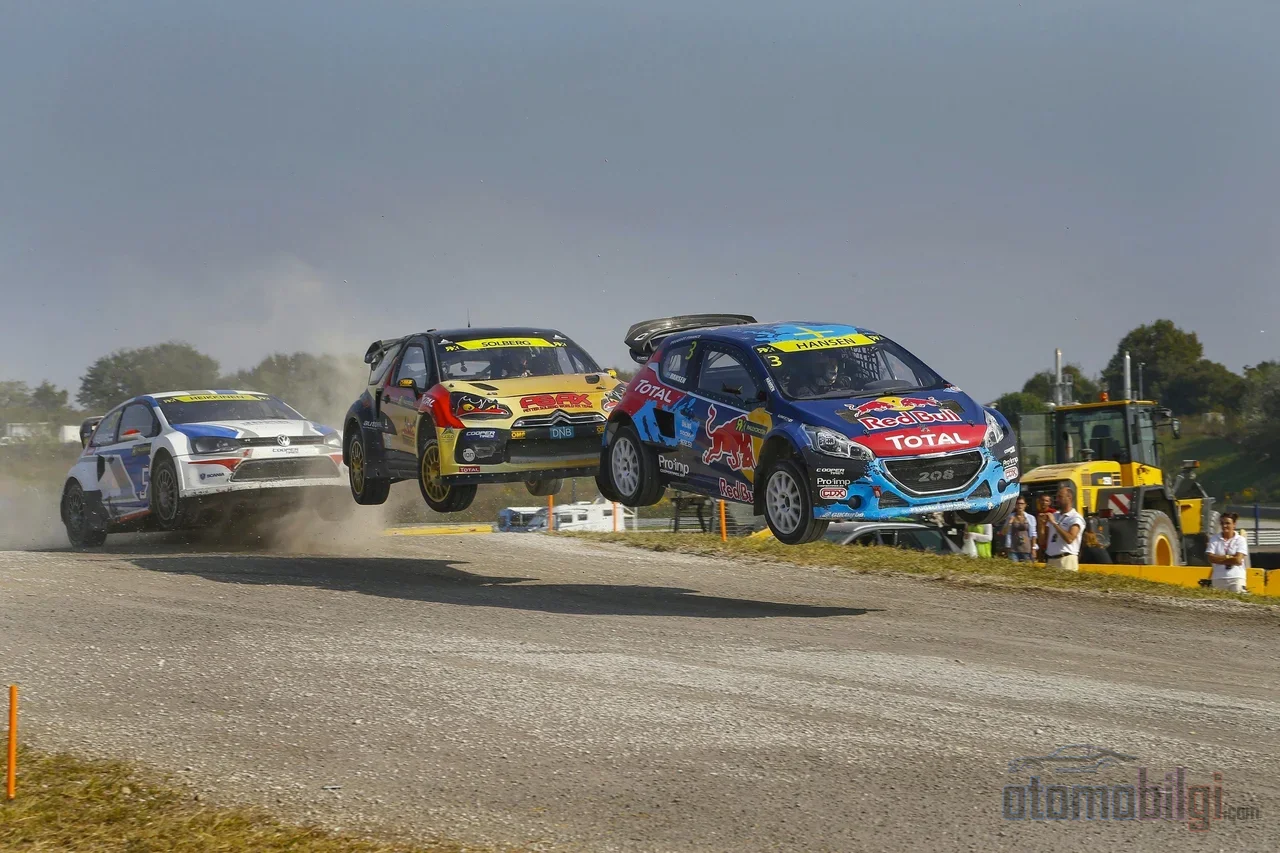
The 2026 FIA Rallycross Sporting Regulations (the current version published on August 15, 2026) governs the joker lap under Article 34.1: the joker lap is mandatory in each qualifying heat and in the fifth race. In addition, the starting order in the fifth race is the same as in the first race. The double joker lap strategy, as Petter Solberg did in the 2015 Mettet RX semi-final, is also among the examples that went down in history; taking a lap early and throwing the rivals into chaos is one of the most classic moves in rallycross.
So what happens if you never take the joker lap? Let me be honest: the regulations are clear on how the requirement is governed per heat, but I don't have a detailed article text on the penalty to be applied for a missed lap. The general framework is this: infringements are reported to the Stewards, and the Stewards may apply the penalty provided for in the International Sporting Code (ISC). In other words, a driver who forgets the joker lap has left the decision on the stewards' table.
What Evidence Does Race Control Look At When Making a Decision?
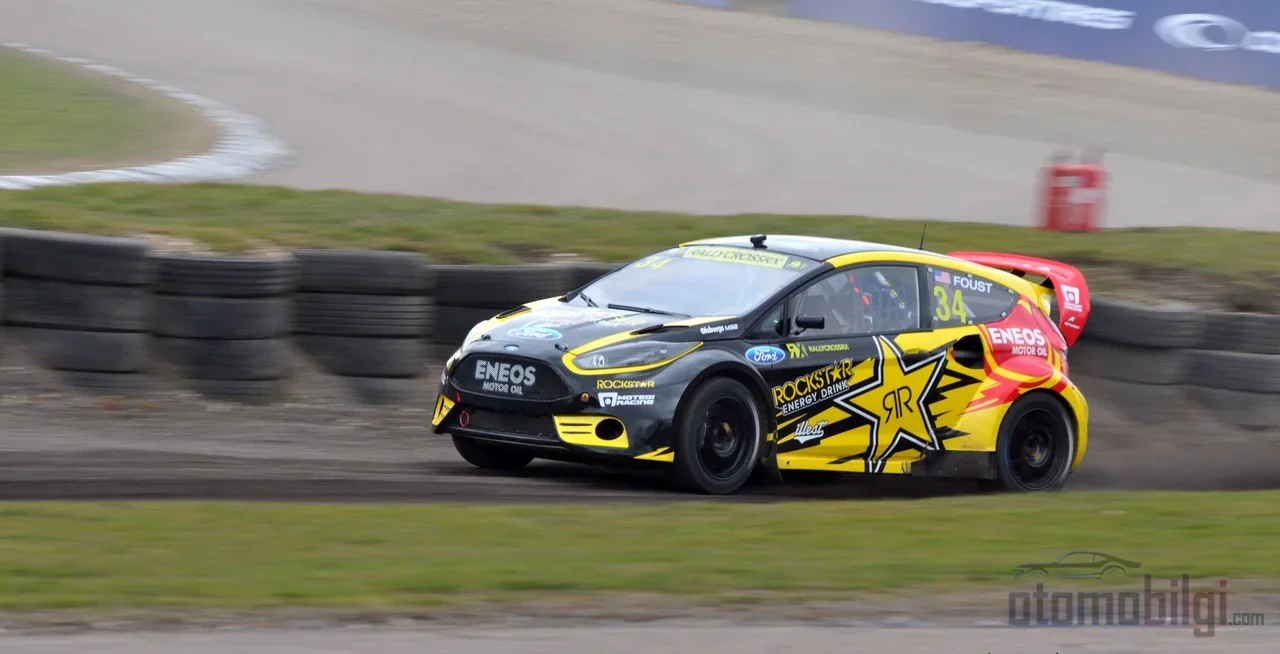
When you think about how on-track decisions are made, you probably picture someone shouting "he's cutting the corner" into the radio. The truth is, the process is far more meticulous. Before evaluating an incident, the Stewards examine every piece of evidence at their disposal: video footage, the car's telemetry data, and reports from race officials. So that "was he ahead or behind" debate is settled with data, not gut feeling.
In some categories, things go one step further. In MotoGP, dedicated monitoring cameras, image recognition software, sensors and timing devices work together; moreover, these monitoring cameras can be different from the ones you see on the TV broadcast. So the image you see on your screen may not be the same image the stewards see. Even in the world of sim racing, this logic is modeled realistically: factors such as time spent off track, moments with the throttle open, and re-entry speed are calculated to measure whether an advantage was gained.
There is also a human side to the decision-making mechanism. According to the regulations, the Race Director must remain in race control throughout the race and maintain radio contact. So decisions are not made remotely from an airport waiting lounge; a team is standing right at the center of the incident.
Types of Penalties: From Time Penalties to Disqualification
Penalties in motorsport are not one-size-fits-all; each one exists for a different purpose. For violations during qualifying or practice, a lap time deletion is usually enough. In-race violations, however, come with an escalating ladder - let's look at examples from neighboring categories:
- Time penalty: Seconds added to the driver's total time. For example, under the 2026 FIA rules, a 5-second penalty is applied on the fourth and every subsequent track limits violation.
- Position return: The driver who gained an advantage is asked to give back the position they took. In MotoGP, messages displayed on the dashboard inform the driver of this obligation.
- Long Lap penalty: A long route around the outside of the track, costing roughly 2-3 seconds, which escalates into a heavier penalty if not served within 3 laps.
- Drive-through / stop-go: After learning of the penalty, the driver must pass through the pit lane or serve a stop-go penalty within 2 laps.
- Disqualification: The top step of the ladder; complete removal from the race.
As you can see, the system is designed like a stepped ladder: a minor violation gets a minor penalty, a brazen violation gets a major one. And the most important criterion is this: was an advantage gained? If there is no advantage, there is usually no penalty either; if the driver immediately gives back the position gained, the matter is closed without ever reaching a court.
Track Limits: How Is the "Inside or Outside" Debate Settled?
Track limits, meaning the boundaries of the track, are the most hotly debated topic in motorsport. In MotoGP, the definition is clear: having both wheels outside the track boundaries at the same time counts as a violation, but if the tire is still in contact with the boundary line, it is still considered "inside". Standard kerbs count as track, while double kerbs do not. In F1, the white line is part of the track; the car is considered off-track if no part of it touches the track. In other words, the same question can get a different answer in different categories.
In MotoGP a cumulative system applies: a warning comes on the third violation, and an automatic long lap penalty on the fifth. There is also a separate "clear advantage" rule; even a single violation can be penalized independently. First-lap violations are generally not recorded, but there is a rule concerning the final lap: a violation in the last lap that affects position can change the race result if the other driver's clear disadvantage is proven. Cutting (shortcut) violations, on the other hand, are easier to measure than track limits; if a driver who cuts the track in a race does not lose at least 1 second, they immediately receive a long lap penalty.
The authority to decide rests entirely with the panel of stewards, and there is an interesting rule here: no penalty is given if there is no clear footage. Benefit of the doubt to the accused, the motorsport version. On the rallycross side, let me say that track limit details are not written down article by article in the regulations; the general principle is that every breach of the regulations is reported to the Stewards. So on rallycross-specific matters like the joker lap the rules are clear, while on matters like track limits the stewards' room for interpretation is broader.
Objections and Appeals: Is There a Way to Challenge Decisions?
Here is the part that will surprise you: the FIA rallycross regulations contain a very critical article, and to summarize it in the spirit of "it says exactly this": Stewards' decisions cannot be appealed. In other words, if the panel of stewards has made a decision, the classic route of protest against that decision is closed in FIA rallycross. The 2025 International Sporting Code has also seen new additions to the section stating that objections to steward decisions are inadmissible. In some national series things go even further; in 5NBRX's 2025 judicial system, neither a protest nor an appeal can be made against the race director's decisions - an approach that has even sparked debates.
So are you completely helpless? No. There are examples where the route of applying to the FIA International Court of Appeal remains open after a protest rejected by the Stewards. In other words, the door that is closed is objecting to a steward decision; the door that is open is the appeal mechanism. I can summarize their differences like this:
- FIA rallycross: Breaches of the regulations are reported to the Stewards; no protest can be made against Stewards' decisions.
- TOSFED (Türkiye): According to Article 30 of the 2026 National Rallycross Rules, all objection and appeal applications are made in accordance with the TOSFED General Competition Regulations.
- Rule violations: According to TOSFED rules, any violation is reported to the officials who can impose the penalties set out in Articles 12.2 and 12.3 of the FIA International Sporting Code.
If you are watching rallycross in Türkiye, this distinction matters: the objection process here runs through the national federation's own general regulations. So the same incident can end with different procedures at a stage in Europe and a stage in Türkiye.
Did Controversial Penalties Really Change the Race Result?
The short answer: yes, sometimes it changed it completely. The 2021 Nitro Rallycross season is the best example of this; throughout the season there were controversial penalties as well as controversial moves, and the penalty Doran received for an incident that determined the race outcome was, at best, considered controversial by fans. In other words, a penalty was given, but not everyone was convinced.
There is also another striking example from a different category: at the end of one race, a total of 12 penalties were handed out to 8 drivers, and the positions of 14 of the 19 finishers changed. Imagine someone who thinks they made it to the podium learning, on their way home, that their ranking had changed. On the WRC side, Ogier's penalty controversy even led to calls demanding a change to the series' format. In F1, meanwhile, the penalty Verstappen received for gaining an advantage off the track at the start in Saudi Arabia caused the FIA to come in for serious criticism.
The common message of these examples is this: on-track decisions don't just reshuffle the names on the results sheet; they can affect championship points, team budgets, and even the future of the rulebook.
How Is a Penalty Communicated and When Does the Driver Find Out?
This may be one of the details you're curious about: while cornering at 300 kilometers per hour, how does the driver know about a penalty? In MotoGP, penalties drop directly onto the dashboard as messages; track limit warnings, position drops, time penalties, long lap or pit lane orders appear on screen with separate codes. Teams, in turn, are informed through monitors in the garage and on the pit board. In Rallycross, the basic logic is the same: the decision comes from the Stewards' Panel, is communicated to the team, and the driver learns of the penalty during the race or between heats.
Final Word: Rules Are Rallycross's Hidden Wild Card
In Rallycross's half-minute races, everything moves so fast that even timing the joker lap correctly can be a game changer. The penalty and appeal system is part of this speed, too: stewards review video and telemetry, violations are punished on an escalating ladder, and appeal procedures show serious differences depending on the category. Next time a ranking changes at the end of a race, you won't be surprised; behind the curtain there is a team that has spent hours watching footage and comparing data. When do you think is the latest a joker lap should be taken? My bet is on those who leave it to the final lap.
Sources
- 2026 FIA Rallycross Sporting Regulations (08/15/2026)
- TOSFED 2026 National Rallycross Rules
- Rallycross Explained – Peugeot Sport
- What Are MotoGP Track Limits? Rules, Penalties and Enforcement Explained
- The Beginner's Guide to F1 Penalties
- Track Limits, Shortcuts and Long Lap Penalties
- Have Nitro Rallycross Penalties Been Fair? – Dirtfish
- Ogier Penalty Controversy Prompts WRC Format Change Calls – Motorsport.com
- 2025 5NBRX Judicial System
- Understanding Track Limits – Le Mans Ultimate