Why Do Rallycross Drivers Face Such Physical Strain?
Share This Page
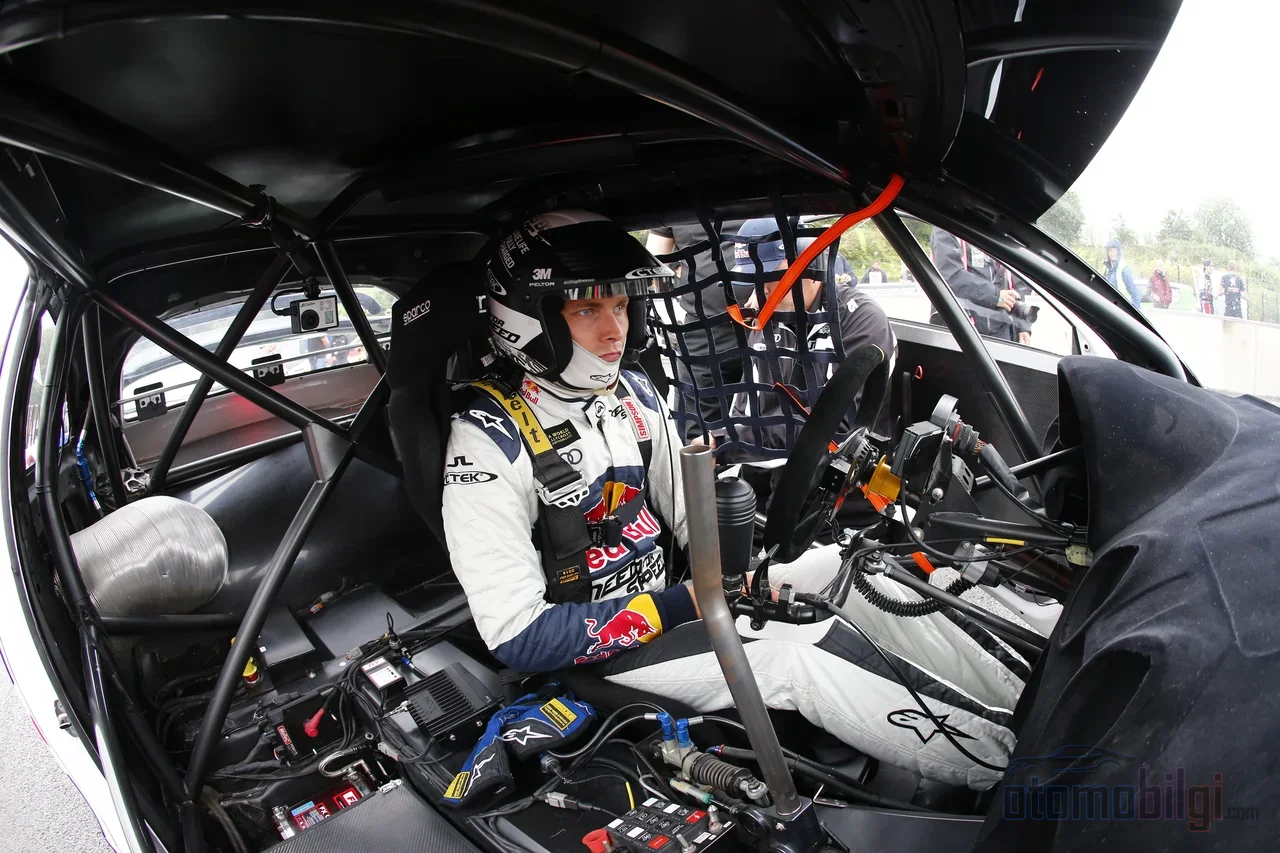
Rallycross drivers struggle so much because the format compresses them into short but relentlessly intense segments such as semi-finals, finals and the joker lap: practice, qualifying and finals pile up in a single day, the body battles high g-forces while the mind has to make decisions within seconds. It seems the real story of this sport is hidden in the body behind the wheel.
Highlights
- According to the 2026 rules, completing one Joker Lap is mandatory in every race.
- Under national rules, the course is open for practice for each driver for only 10 minutes one day before the race.
- In motorsport, the head and helmet weigh about 7 kg ; under sharp forces, this loads the neck with as much as 42 kg .
- The 2025 season final was held at Istanbul Park, and Ali Türkkan became world champion.
- With neck training, drivers can only lift up to 40 kg using their neck muscles alone.
What Does a Rallycross Weekend Do to a Driver's Body?
What sets rallycross apart from other motorsports is not duration but intensity. Races last only minutes, yet within those minutes loose surfaces, jumps, the first-corner battle and the joker lap tactic all exist at once. For the driver, this means fighting a force that keeps pushing and pulling "like a rock sliding down a hill." Imagine trying to control a supermarket cart downhill - except every single second, the wheels are on loose gravel.
What's more, you have almost no preparation time. Under national rallycross rules, the course opens for practice one day before the race, and each competitor is given only 10 minutes . That means the driver can only etch the car's behavior on the track and the jumps into mind and body within a few laps. Don't picture someone casually cruising a warm-up lap; this is a short and sharp rehearsal.
The pace crammed into a single day
Rallycross's format makes the job even harder. This structure, progressing through semi-finals and finals, puts the driver in race after race within a single day. Look at the Saturday program of the 2025 season final held at Istanbul Park: practice sessions, qualifying laps, semi-finals and finals are all crammed into the same day. So the driver has to keep the body in "ready" mode from the morning practice all the way to the last final. This naturally raises the endurance question: how do you keep your body standing while running disjointed sprints?
The joker lap tactic is not just a mental decision point but a physical one too. It is known that the alternative section of the track costs an average of 2-3 seconds, and this lap frequently determines the race result. The driver is doing three things at once: watching the rivals, deciding whether or not to take the joker lap, and controlling the car.
What Do G-Forces Actually Do to Drivers' Bodies?
Let me be honest from the start: there is no separate data set that directly measures the effect of rallycross cars on a driver's body. But when physical load in motorsport is studied, the figures that emerge clearly show what the body behind the wheel is battling. Under hard braking, drivers can apply approximately 160 kg of force to the pedal, forces of up to 6g can be felt in the body, and 4-5g can be sustained regularly in high-speed corners. Heart rate staying above 170 per minute throughout the race, and even fluid loss of up to 4 kg in long races, are also part of this picture.
| Type of load | Measured value | What does it mean? |
|---|---|---|
| Force applied to the pedal | ~160 kg | Leg strength is constantly demanded during hard braking |
| Force felt by the body | Up to 6g | Organs and neck are loaded with multiples of body weight |
| Head + helmet weight | ~7 kg | Under hard force it can weigh as much as 42 kg on the neck |
| Race heart rate | Above 170 bpm | The body is working with steady running energy |
| Fluid loss | Up to 4 kg | In long, intense races, dehydration reduces performance |
The most extreme values in the table do not belong directly to rallycross, but to the top tiers where the highest forces occur. But the real question awaiting you here is this: does the car shaking you at every jump and every hard acceleration strengthen your neck on its own? The answer is no. This is a topic discussed among drivers as well, and the known picture is this: what suffices is deliberate neck training with resistance bands and special devices. The body does not automatically develop a defense against the force it is exposed to; whatever you develop, you develop in the training gym.
Why Do Drivers Work Their Neck Muscles So Much?

Because the neck is the body's hardest-working region at every jump, brake, and corner of the car. The head and helmet together weigh about 7 kg; under hard force, this lands on the cervical spine as a highly multidirectional load of as much as 42 kg. Moreover, this load does not always come from the same direction: it pulls downward on landing from a jump, pushes backward under hard acceleration, and swings sideways in corners. Strengthening a single muscle group in a single direction is therefore not enough.
The real reason the neck is so important is that you need to see where you are going. It is about precision - we are talking about percentages and tenths.
That is exactly why drivers work their necks at least 5 times a week, and with training alone on the neck muscles they reach 40 kg can lift up to. Methods include resistance bands attached to the head, weighted helmets, and special neck devices. Some find single-plane work with a weight plate insufficient; the recommendation is to work against resistance in all planes -forward, backward, sideways, and rotation. Even simple bodyweight exercises like holding head-to-shoulder alignment in a side plank position are part of drivers' neck routines. Let's add a note about overdoing it: excessive strain in neck training can show up as headaches and stiffness, so it is essential to progress gradually.
How Do Drivers Plan Their Endurance and Reflexes?
Although rallycross's short races look like sprints, a program lasting a whole day makes endurance mandatory. It is known that in endurance racing, drivers do high-intensity interval training of 60-90 minutes several times a week along with heat adaptation; looking at rallycross's sprint logic, we can say that this kind of interval work fits the format's rhythm quite well. In other words, the driver's fitness must be rebuilt not just once, but in every race that follows one another.
Physical preparation has a real program, and its parts can be summarized as follows:
- Neck and shoulders: Working in all directions with resistance bands, weighted helmets, and special devices.
- Legs: Hamstring and quadriceps strength to handle the repeated pedal-pressing load during braking.
- Torso (core): Postural strength and core stability with carrying exercises and fundamental movements.
- Cardio: High-intensity interval training and heat adaptation work.
- A preventive outlook: Combining strength training with physiotherapy-style "prehab" work to prevent injury from the start.
The reflex side is a completely different training area. Drivers practice reactions with fast visual stimuli, work with reaction time and peripheral vision programs; brain training tools focused on making decisions within seconds under pressure also appear in these routines. The scientific side is also interesting: racing drivers have been measured to have faster reaction times than physically active people of similar age. Since driving is a multitasking skill that manages several things at once, mental preparation is taken as seriously as physical preparation.
The Mental Cost of Contact Racing: Is Fatigue Only in the Muscles?
Rallycross's invisible fatigue starts here: the cars race in a format with constant contact between each other and a battle from the first corner. The driver struggles not only with physical strength but also with the mental pressure created by positions that can change at any moment. It is known that cognitive fatigue affects the driver's attention, perceived effort, and decision quality; therefore, preparation must be planned well before training.
Let me explain this with an everyday analogy: think of trying to cram math first and then history at the last minute on exam day. When you do two mental tasks at the same time, both suffer; in racing, this shows up as the risk of missing the joker lap decision while tracking race position. An interesting detail is this: in endurance racing, young drivers say that what drains the most energy is sometimes not physical exertion but tension and waiting. So mental load is just as real as physical load, and drivers have to manage it with training, planning, and experience.
Those Who Bear This Price in Türkiye
All of this has its equivalent in Türkiye. The 2025 season finals were held under the name "World RX of Türkiye" at TOSFED Istanbul Park on September 20-21, 2025; meaning rallycross's worldwide summit raced in Türkiye at the same facility Formula 1 uses. Moreover, that weekend Ali Türkkan reached the world championship, and this was recognized as one of the greatest achievements in Turkish motorsport history. Behind these achievements, we must not forget that that invisible training desk we listed above stands.
There is also an interesting nuance in the approach of Turkish drivers: Ali Türkkan says that rally training is built on endurance rather than explosive power. Although rallycross's short-intense sprints seem to highlight explosive power, a program lasting a whole day requires both needs to be met at the same time. So in the debate of "endurance or power," the honest answer is probably "both."
The Human Behind the Camera Footage
Next time you watch rallycross, pay attention to how the driver keeps their head straight right after a jump, how they take off their damp suit to cool down between heats, or their reflex at the moment they see the joker lap signal. What you see is no coincidence; it is the result of a neck trained five days a week, a planned conditioning program, and years of reflex practice. Do you think knowing the effort behind this footage changes the way you watch a race? I think it completely does.
Sources
- PUBLISHED ON 15.08.2026
- National Rallycross Rules – TOSFED
- Rallycross Stars at TOSFED İstanbul Park for a Double Final
- The 2025 Season of the World Rallycross Championship in Istanbul – Red Bull Türkiye
- Ali Türkkan Explains: How Do You Become a Rally Driver? – Red Bull Türkiye
- RALLYCROSS EXPLAINED | Peugeot Sport
- FIA World Rallycross Championship
- Neck workouts, cardio sessions and mental exercises
- The Ultimate F1 Neck Training Workout: How to Build G-Force Resistance
- (PDF) VO2peak, Body Composition, and Neck Strength of Elite Motor Racing Drivers
- Reactivity, stability, and strength performance capacity in racing drivers
- Race Car Driving Neck Strength and Conditioning
- Neck Training: Exercises, Benefits, and Safety
- Cognitive Fatigue in Motorsport
- How Do WRC Rally Drivers Train For Mental Stress
- Rally through the eyes of a driver – Škoda Motorsport
- Le Mans Playbook: How Race Drivers Build Endurance
- 24 Hours of Le Mans – How do drivers cope with tiredness?
- The neck-training routines of race car drivers
- The Joker Lap in FIA World Rallycross racing | Corpus Christi
- Brain Training for Motor Sports