How Do Rallycross Teams Read Data?
Share This Page
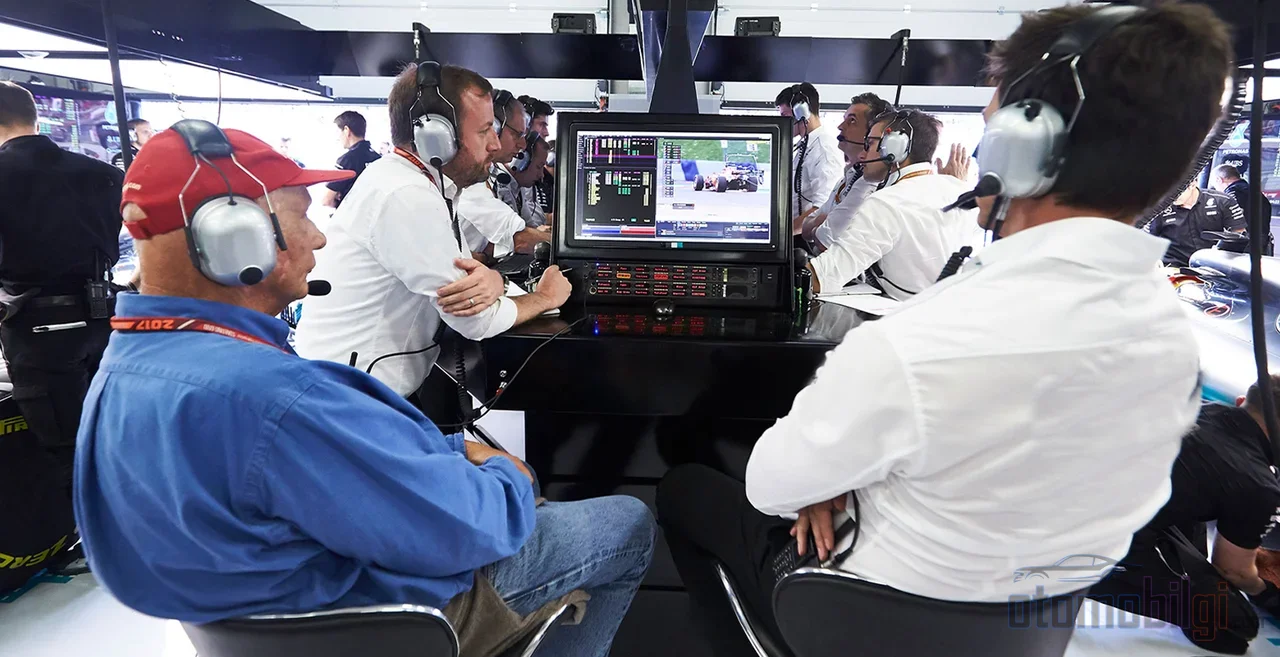
Rallycross teams read telemetry data by comparing throttle-brake traces, speed curves and g-force records lap by lap from the car; this comparison feeds every tactical decision from joker lap timing to setup changes. So behind those breathtaking jumps you see on the track, there is not just courage, but also a computer pouring out thousands of data points per second. So how does this data in a Supercar's brain turn into strategy on the pit wall? Let's get to it.
Key Takeaways
- A joker lap costs an average of 2-3 seconds per lap
- Skipping the joker in a heat means +30 seconds, while in the semi-final/final it means the last row and zero points
- F1 teams process data from 300-600 sensors per session; rallycross teams work with far more modest budgets
- The new FIA format has two mandatory joker laps per race and 8-car semi-finals
- Live telemetry is used for health and strategy, while detailed analysis relies on logged data
What Is Telemetry and How Does It Differ from Data Logging?
Let's start with two different concepts, because they are often confused. Telemetry means the car's sensors sending data to the pit wall in real time. Data logging, on the other hand, is the writing of information to a recording device inside the car; when engineers return to the car, they download this data and analyze it at their leisure. If you want an analogy: telemetry is a live broadcast, logging is a recorded one. A live broadcast has excitement, but you can't pause and rewind it.
That's why the division of labor in practice works like this: the team on the pit wall monitors the car's health with live telemetry and makes strategy calls. Detailed lap-by-lap analysis is usually done with logged data, between sessions. So the engineer's real work is often spent not in the pits, but at a computer in the garage at night.
So what comes out of the car? A rough list looks like this:
- Driver inputs: throttle, brake pressure, steering angle, gear
- Vehicle movement: speed, GPS position, lateral and longitudinal g-forces
- Chassis data: damper travel, suspension movements
- Tire and brake temperature-pressure values
- Engine and system health data
If you look at the F1 side for comparison, the picture is completely different: a Formula 1 car collects measurements from 300-600 sensors per session, and artificial intelligence automatically processes data such as tire temperatures. An F1 team once manually filtered through 5,000 tire images per session; today AI does that job. Rallycross teams are far from those budgets, but they use the same basic logic on a smaller scale.
The Five Basic Charts: How Is the Data Read?
Raw sensor data looks like a pile of Excel sheets to you, but for engineers there are five basic charts, and each answers a different question. Set up the analogy like this: they are like the five basic tests in the car's hospital report.
- Speed trace: The fundamental chart. It shows how fast the car is at every meter.
- Time delta: It answers the question of where time is being lost. You stack two laps on top of each other, and you see where the gap opens up.
- Brake trace: When was the brake released, was it released abruptly? Everything including trail braking is right here.
- Throttle trace: How late and how gradual was the throttle application on corner exit?
- Friction circle: When you plot horizontal and vertical g-forces together, how much the car was played with at its limits becomes clear.
The real skill lies in separating the responsible party from what the data says. If the brake release happens suddenly and the steering was turned in early, the understeer is driver-caused. But if the same understeer keeps happening in the same corner with the same inputs, it's a setup problem. Or if lap times drop over the stint: if the inputs deteriorate, it's the driver getting tired; if tire temperature and pressure are all over the place, it's the car getting tired. Same symptom, two different diagnoses.
Joker Lap Strategy: Early or Late?
Rallycross's sweetest tactical headache is the joker lap. It's an alternative route that's longer than the main lap; that's exactly how it's defined in TOSFED's National Rallycross Rules. Its average cost is 2-3 seconds per lap. But those seconds are not just a time penalty, they're also a trump card: if you take the joker at the right moment, you can pass ahead of your rivals and strategically change positions.
The debate is always the same: take it early or take it late? The driver who takes the joker early catches clean air and escapes traffic. The one who takes it late can respond to a rival's move and keeps the position advantage until the final corner. Even in sim racing communities, this topic is still contentious. The answer changes depending on the flow of the race and your rivals - and that's where data comes in: you can't make the right move without knowing which lap will have heavy track traffic and how many seconds the joker route costs.
What Happens If You Skip the Joker?
Something serious. Skipping the joker in a heat is a +30 second penalty. If you skip it in the semi-final or final, it's over: last place and zero points. So that 2-3 second loss requires strategy not just according to the joker's location, but according to the heart of the race.
On top of that came a format change: The FIA Rallycross World Cup's new sport format has two mandatory joker laps and 8-car semi-finals and finals per race, plus a new Superpole arrangement. The old single-joker tactical playbook suddenly gets old; two jokers mean two separate timing decisions. A shame for the old strategists, isn't it?
Mid-Race Week: The Road from Data to Decision
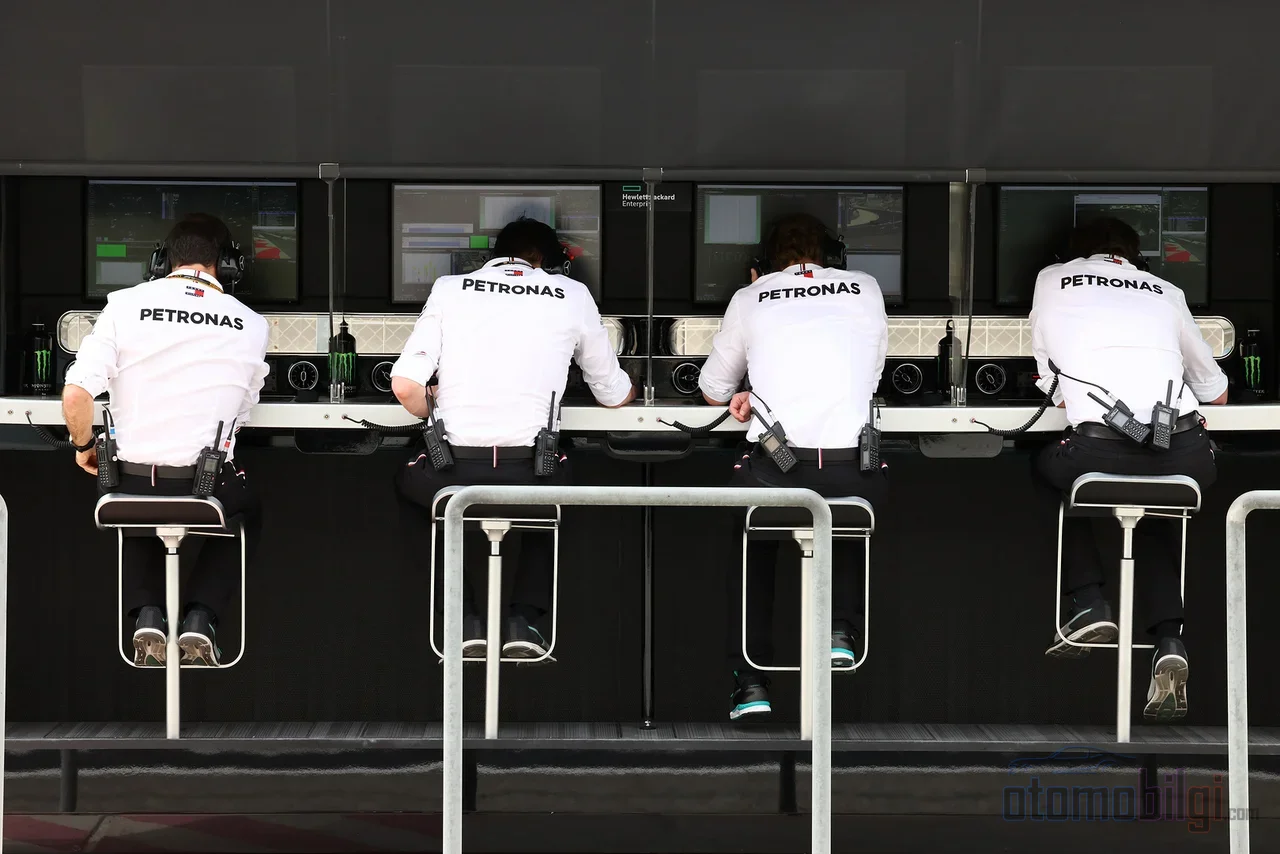
Now let's get to the real question: what is done with this data throughout the week? Most teams follow a similar cycle:
- Before the event: A starting setup is determined using the track's data from previous years, and realistic goals are set.
- Practice: A baseline is established; then each change is applied one by one. One change at a time - otherwise you'll never know what worked.
- Qualifying: Tire preparation and push lap timing are driven by data.
- Race: With live data, car health and pace, strategy calls come in from the pit wall.
- Afterwards: Every session turns into a development plan for the next event.
Delta analysis is the most concrete example of this. Say you lost three tenths of a second in total - that usually comes from 2-3 corners. The time delta shows where the gap opened up; the brake trace confirms early and aggressive brake release, the speed trace points to a low minimum speed, and the throttle trace flags a late exit. Three graphs, one story. Factory engineers, meanwhile, treat the data during the week primarily as a validation tool: the real learning happens in tests before the event and in structured processes.
The competitor side is a bit meager: teams mainly get GPS position and speed data about rivals, plus publicly visible information (such as tire choice). You can only access your own car's deep data, not your rival's. Think about it - even just knowing which lap your rival will take their joker lap is worth its weight in gold.
Why Do Small Teams Fall Behind?
Everything is fine so far, but there is one reality: advanced telemetry systems are expensive. Market reports clearly state it too - budget constraints in smaller racing organizations limit the spread of these systems. Team size, budget, technical expertise and regulatory requirements all come into play. Data analysis is not just buying software; it also means finding a brain that can read the data.
Still, not everything is bleak. As an example of small-scale operations, there is a university team known for its solar-powered race cars: their car collects roughly 250 data points per second, and they monitor it on a tabbed screen with 26 graphs. It is not on F1's scale, but the same discipline applies: collect, compare, act. Moreover, with modern loggers it is even possible for drivers to analyze their own data - learning to turn laps and read deltas is not hard. What is hard is knowing how to read the data.
The World RX Format and Data Infrastructure in Türkiye
The format in which all of this plays out also shapes the data itself. The classic rallycross layout was built on 10 laps and 10 cars; the joker lap works within this narrow time window as an element of tension reminiscent of pit stop drama. With the new FIA format, 8-car semi-finals and two mandatory jokers per race mean engineers rewriting their spreadsheets from scratch.
Türkiye's side has also been picking up speed. Last year, the FIA World and European Rallycross Championship round was held at Istanbul Park on September 20-21, 2025; the 2025 world and European champions were decided in Istanbul. As for the domestic championship, TOSFED's National Rallycross Rules published in February explicitly regulate the joker lap, and the Türkiye Rallycross Championship final race will be run on November 28-29, 2026. The Spa circuit, which has entered the world calendar, will have a joker route parallel to the standard route - meaning even the track design is being made with the joker strategy in mind.
For teams in Türkiye, data infrastructure is still a developing field. At the national level, budgets are more modest; the small-team constraints we mentioned above apply here as well. But in an environment where championships are getting closer to each other and World RX is coming to Istanbul, the establishment of a data-reading culture also seems inevitable.
How Much Time Does Data Gain You?
Perhaps the question on your mind is this: how many seconds will all this equipment and effort gain me? The honest answer: there is no universal number. For those new to a vehicle or to data analysis, the gains come early and are large; for experienced drivers, it comes down to the level of percentages. The most important gain is often consistency rather than lap time - being able to complete every lap at the same quality is one of the habits most easily reinforced by data.
There is also this: data does not replace the driver. The sensors tell you what happened; the why still requires the driver and engineer to think together. That is exactly why rallycross remains a human sport - it just now carries a data assistant in its pocket. Which do you think is harder: taking the joker at the right lap, or finding which corner cost you that tenth of a second?
Sources
- Race Data Analysis Explained: Telemetry to Lap Time Gains
- Rallycross Explained | Peugeot Sport
- National Rallycross Rules 2026 (TOSFED)
- FIA Rallycross World Cup Sporting Format Announcement
- The Joker Lap in FIA World Rallycross Racing
- RX2 Cars Technology: The Rallycross Tech Guide (Red Bull)
- Why Electric Rallycross Makes Sense (Racecar Engineering)
- Artificial Intelligence in Supercars
- Racing Telemetry Market Report
- How Solar Team Twente Races on Real-Time Data
- World RX of Türkiye, 20-21 September 2025
- Türkiye Rallycross Championship Final Race 2026
- Things You Need to Know About Rallycross (Red Bull Türkiye)
- The Spa Circuit on the World Rallycross Calendar