Britain's Luxury EV Venture Jaguar Type 01 Unveiled
Share This Page
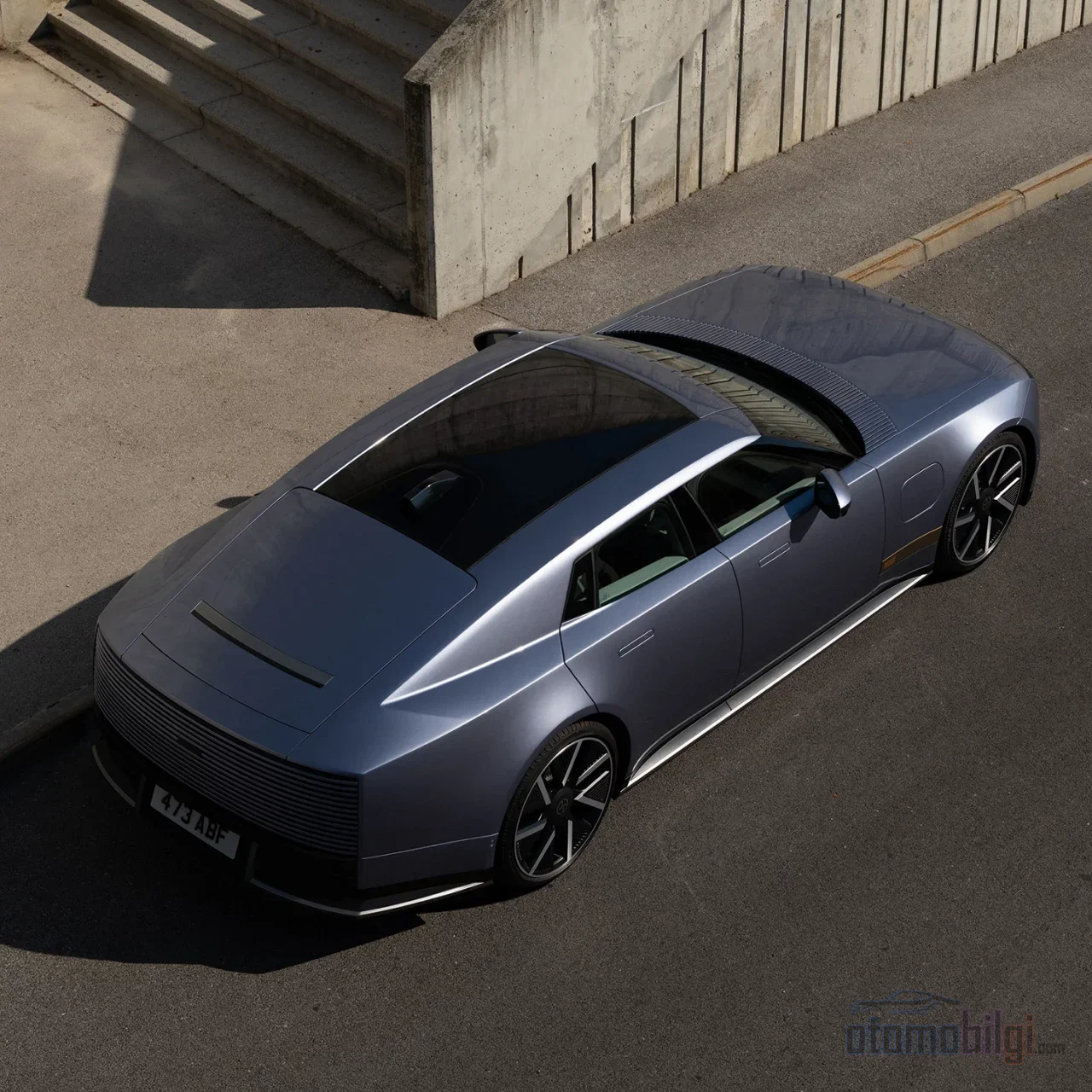
Jaguar's first production electric GT Type 01, was officially unveiled with its world premiere held in New York on October 6, 2026. The vehicle is a four-seat luxury grand tourer built on an 1,015 hp powertrain producing 850 volt architecture and promising a range of up to 720 km under WLTP. The model, to be designed and produced in England, starts at £129,950, with the first customer deliveries expected in the second half of 2027.
Highlights
- Three-motor powertrain: 1,015 hp, approximately 1,365 Nm of torque
- 118 kWh usable battery, 850 V architecture, 350 kW DC charging
- 0-100 km/h in 3.2 seconds, top speed 241 km/h
- Up to 720 km WLTP, 400 miles of range per EPA
- Starting price in England is £129,950; deliveries in the second half of 2027
What is the Type 01 and why did Jaguar choose this name?
The Type 01 is the first concrete production product of Jaguar's from-scratch electric transformation strategy. Positioned as a four-door, four-seat luxury GT, the car is the first tangible sign of the brand's new creative philosophy it calls "exuberant modernist." The phrase "A copy of nothing" used in the official launch language continues the "Copy Nothing" campaign that sparked major controversy in 2024.
The naming is also a deliberate historical reference: the "Type" suffix is based on the brand's legendary models like the C-type and E-type. The trailing "01" signifies that it is the first automobile of the new era; the idea of electric propulsion and zero exhaust emissions is also attached to this number. The project's internal name during development was Project Pantera, with the code name X900. The vehicle was designed, developed, and will be produced entirely in England.
The launch night carried a message beyond technical specs as well: Jaguar announced award-winning actress Florence Pugh as its first brand ambassador. In the past, car brands had engineers speak at their launches; now in the luxury segment, a cultural position is also part of the job. This should be considered a natural extension of Jaguar's effort to redefine itself.
Technical hardware: 1,015 hp, 850 volts and three motors
At the heart of the Type 01 are three electric motors: one at the front, two at the rear. This arrangement provides continuous all-wheel drive while producing 1,015 hp (approximately 1,030 PS) of power and 1,365 Nm of torque. 0-100 km/h acceleration takes 3.2 seconds; 4.0 seconds is also enough for the 100-180 km/h transition. Top speed is 150 mph, or 241 km/h, which is quite a sufficient ceiling for an electric GT. Beneath this power lies a battery with NMC prismatic cells with a usable capacity of 118 kWh , and the architecture is designed as 850 volt .
The charging side is of the kind to meet expectations: with 350 kW DC fast charging support, 321 km of range can be added in 13 minutes, and charging from 10% to 80% takes about 22 minutes. The range figures, however, require attention to definition differences: in the WLTP cycle up to 720 km, with an EPA figure of 400 miles. Jaguar admits that at a steady highway speed the realistic range is around 320 miles. This gap between the advertised figure and real-world road conditions is now a familiar situation with electric vehicles; the fact that Jaguar openly states it itself is an honesty that deserves credit.
Chassis and aerodynamics
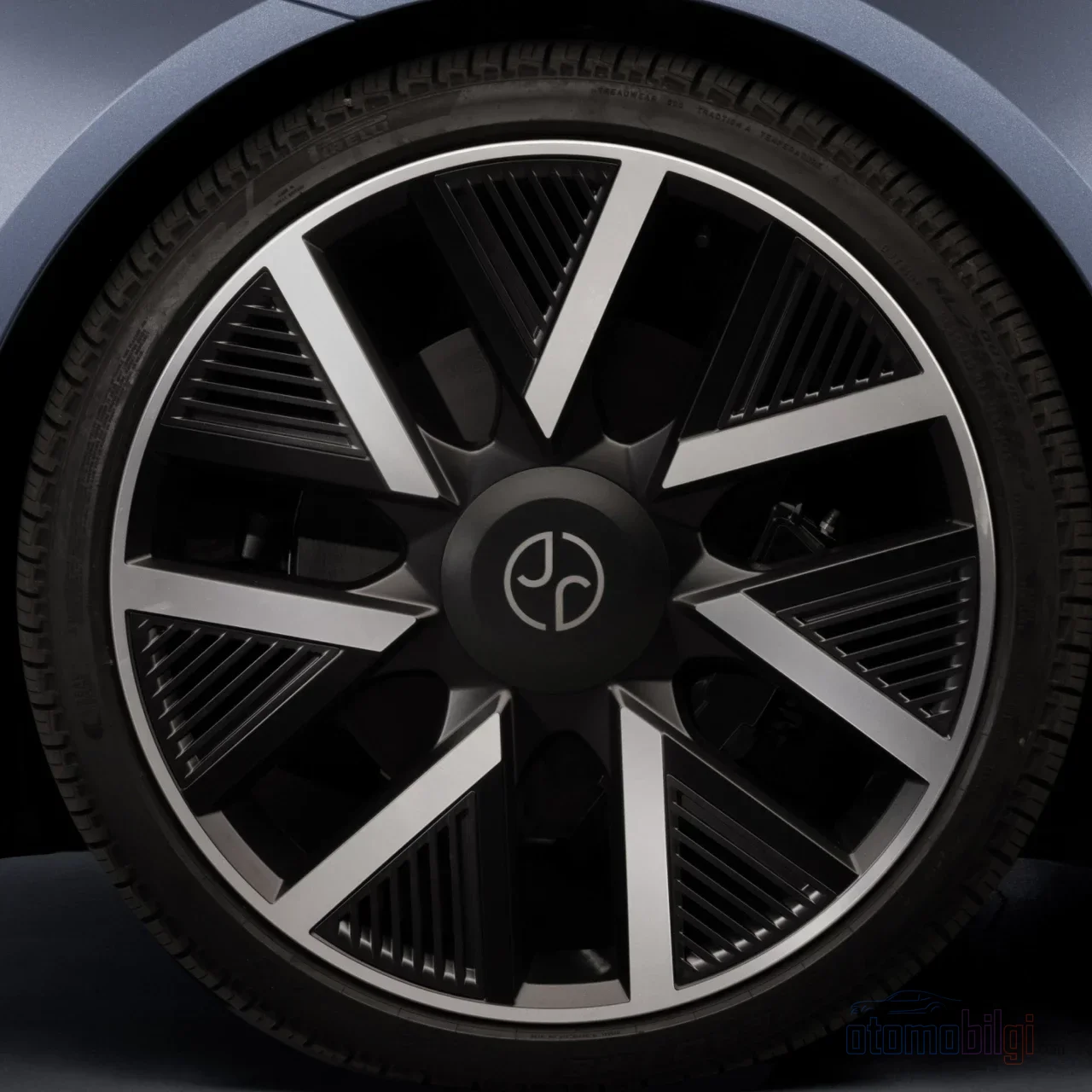
The structural battery body has a measured 57,000 Nm/degree torsional rigidity, making it Jaguar's stiffest structure ever; a value comparable to carbon monocoque super sports cars. 73% of the structure is aluminum, and the weight distribution is 50:50. There is air suspension at all four corners and active rear steering working at an angle of 6.5 degrees. The wheelbase is 3,200 mm; in contrast, dry weight is over 2.5 tons. On the aerodynamic side, a 0.23 Cd drag coefficient with 21-inch wheels, active vanes, and a three-position deployable spoiler generating 75 kg of downforce stand out. Along the way to these results there were 7,000 wind tunnel tests and a testing program reaching hundreds of thousands of hours, spanning from the -30 °C Arctic to Death Valley at over 40 °C; Jaguar describes it as "the most extensively tested vehicle in its history."
Interior: a four-seat, leather-free, screen-heavy cabin
The cabin is a rigid four-seat layout organized around a longitudinal "central spine." A 24-inch single-piece OLED display screen, a 7-inch touchscreen auxiliary display working with phone logic, a full-width "Panoramic Soundbar" and seats with Sensory Audio function are the main features. No leather is used; in Jaguar's new understanding of luxury, the material choices have changed too. A striking detail: there is no rear window. This is a result of the long glass roof and the rear crash structure; as the designers put it, glass would leave nothing more than a "mailbox slot" behind.
This is where the debate begins. A screen-heavy cabin without physical buttons does not appeal to everyone's taste; some reviews suggest this interior could age over time, and that unlike competitor cabins perceived as warmer, the Type 01 lacks an emotional layer. Also, the weight of over 2.5 tons, the limited four-seat cabin, and the proportions of the body, which do not reconcile well with practicality, can contradict the "zero compromise" claim. Jaguar openly says it interviewed 2,500 people across six continents in customer clinics and that this car does not try to please everyone; it is a car that has scored a few extra points but lost some customers, and the company defends this as a deliberate choice.
Price and delivery: when, and for how much?
The pricing clearly shows Jaguar's new position in the luxury segment. In the UK the starting price is £129,950; in the US, a base of $130,500 is being discussed. While it is considered that the company initially targeted a base of around £120,000, it is stated that approximately 10,000 customers per year spending an average of £150,000 with options would be considered a successful equation for the business. The target of an average $130,000 transaction value in the US is also part of this strategy.
The timeline is as follows: orders open in early 2027, with first customer deliveries expected in the second half of the same year. Some sources list it as the 2028 model year, which is a typical year shift caused by the delivery calendar running right up to the edge; the official window is clearly the second half of 2027.
| Feature | Type 01 |
|---|---|
| Power | Up to 720 km WLTP, 400 miles EPA |
| Torque | Approximately 1,365 Nm |
| 0-100 km/h | 3.2 seconds |
| Battery | 118 kWh usable (NMC prismatic) |
| Architecture | 850 volt, 350 kW DC charging |
| Range | 720 km per WLTP, 400 miles per EPA |
| Wheelbase / Cd | 3,200 mm / 0.23 |
| Starting price | £129,950 (UK), $130,500 (US) |
| First deliveries | Second half of 2027 |
Jaguar's gamble: repositioning in the luxury segment
To understand the Type 01, one needs to look at where the brand has come from. An aging customer base, growing competition and commercially lackluster recent years pushed Jaguar to a radical decision: to build fewer but more expensive and exclusive cars. The retail network has shrunk to roughly 80 dealers; meanwhile, JLR's announcement of 4,000 layoffs during a period strained by a cyberattack and tariffs shows just how difficult ground the company is navigating.
Jaguar Managing Director Rawdon Glover's remarks around the launch sum up the intent: this car is about repositioning Jaguar at that price point. In other words, the Type 01 is not a volume product on its own; it is a commitment that the brand will never be what it once was. The automotive press calling it "the biggest gamble in Jaguar history" is not for nothing; there are plenty who say that if this sinks, Jaguar dies.
The technical claim behind the product is serious: more than 360 patent applications have been filed, and the Type 01 is described as "the most technically advanced Jaguar ever." One direct rival is the Porsche Taycan Turbo GT; that car has 1,019 hp and its price starts below the Type 01. So the Britons have put forward a power advantage while daring to keep the price higher; from here on, the competition will be fought over software, charging experience and brand appeal.
What's next? Signals of a second model
It is widely reported that the second model to follow the Type 00 concept will almost certainly be an SUV, though the possibility of a more formal limousine and a sports car is also raised. All three will use the common JEA platform (Jaguar Electric Architecture); it is particularly emphasized that this architecture shares nothing with an electric Range Rover or a Range Rover GT. The expectation of three models in total after the rebrand shows that the brand's plan is not limited to a single car.
Ultimately, the Type 01 is the first step of a move in which Jaguar is playing not its sixth life, but its last. In terms of technical equipment, architecture and testing program, it is a serious undertaking; whether it is accepted is left to the decision of the customers whose verdict history will now record.
Sources
- JAGUAR TYPE 01: A NEW ERA BEGINS
- JAGUAR TYPE 01 SIGNALS NEW ERA WITH NEW YORK WORLD PREMIERE
- Jaguar Type 01 four-door Grand Tourer. An original work of ...
- Jag's ninth life: at long last, here's the Jaguar Type 01
- 2028 Jaguar Type 01 Revealed as the Historic Brand's ...
- New Jaguar Type 01: Full story on British brand's bold ...
- Jaguar Type 01 Electric GT Starts at $130500
- 2027 Jaguar Type 01 breaks cover with $300K price
- Jaguar Type 01: 80 Dealers and a $130000 Average Sale