How to Plan Charging on a Long Trip?

Share This Page
When taking a long trip in an electric vehicle, charging planning means setting your route based not only on distance but on the charging infrastructure, selecting the DC stations along your route in advance, and leaving a range buffer at every stop. A well-constructed plan makes the journey predictable even during holiday-return traffic; an unplanned trip is the most common source of range anxiety. This guide explains how to build that plan step by step.
Highlights
- Set off with vehicles that have home charging 90-95% is the ideal starting charge level.
- When the battery drops to about 20%, a charging stop should be planned, and a buffer should be left for emergencies.
- With fast charging, not exceeding the 80% threshold shortens the total journey time.
- In Türkiye, there are more than 180 operators and over 38,000 stations; charging access is available in all 81 provinces.
- The rule of thumb for planning stops on a long road: roughly a charging break every 180-250 km. a charging break.
Why Is Charging Planning More Than Distance Calculation?
Route planning is the process of determining the most suitable path between the starting point and the destination. Unlike the habit with gasoline vehicles, the goal here is not only to find the shortest route, but also to factor in what power, what connector type, and how busy the stations along that route are. When the route, station power, connector compatibility, arrival buffer, and backup stops are not considered together, charging uncertainty arises; when all five are combined in a single plan, that uncertainty largely disappears.
The process can be summarized in five steps: first, roughly determine your vehicle's real-world range; rely not on the catalog value but on the practical figure your own usage provides. Then mark the main DC stations along your route, choose intermediate stops, and assign a backup station to each stop. The final step is to check, via apps before setting off, that the stations you have selected are operational and available.
How Large Should the Range Buffer Be?
The backbone of the plan is matching the battery level to the distances between stops. Setting off at 90-95% charge with vehicles that have home charging is a reasonable start; reaching this level with overnight charging is no problem. Along the way, charging when the battery drops to around 20% is the simplest way to leave a safety margin for emergencies (a station that is down, queues of vehicles, detours).
To give a numerical rule of thumb: in a vehicle with a catalog range of about 480 km, charging up to 80% and following the no-approaching-zero rule, planning a stop roughly every ~320 km in practice is a sensible framework. General guidance suggests stops on long roads in the 180-250 km range; weather conditions, your speed habits, and the vehicle's consumption determine which range is right for you.
What actually reduces range?
Freezing temperatures, strong winds, and uphill driving significantly reduce the charging range; mild weather, tailwinds, and downhill roads extend it. High speed is also among the main factors that lower range, because aerodynamic drag grows with the square of speed. When range reaches a critical level, the most effective measure is without a doubt slowing down; turning off the air conditioning or heating, contrary to expectations, does not provide a meaningful gain. Additionally, reducing unnecessary weight - for example, removing an unused roof box - measurably increases battery efficiency.
How to Make Effective Use of Fast Charging Breaks?
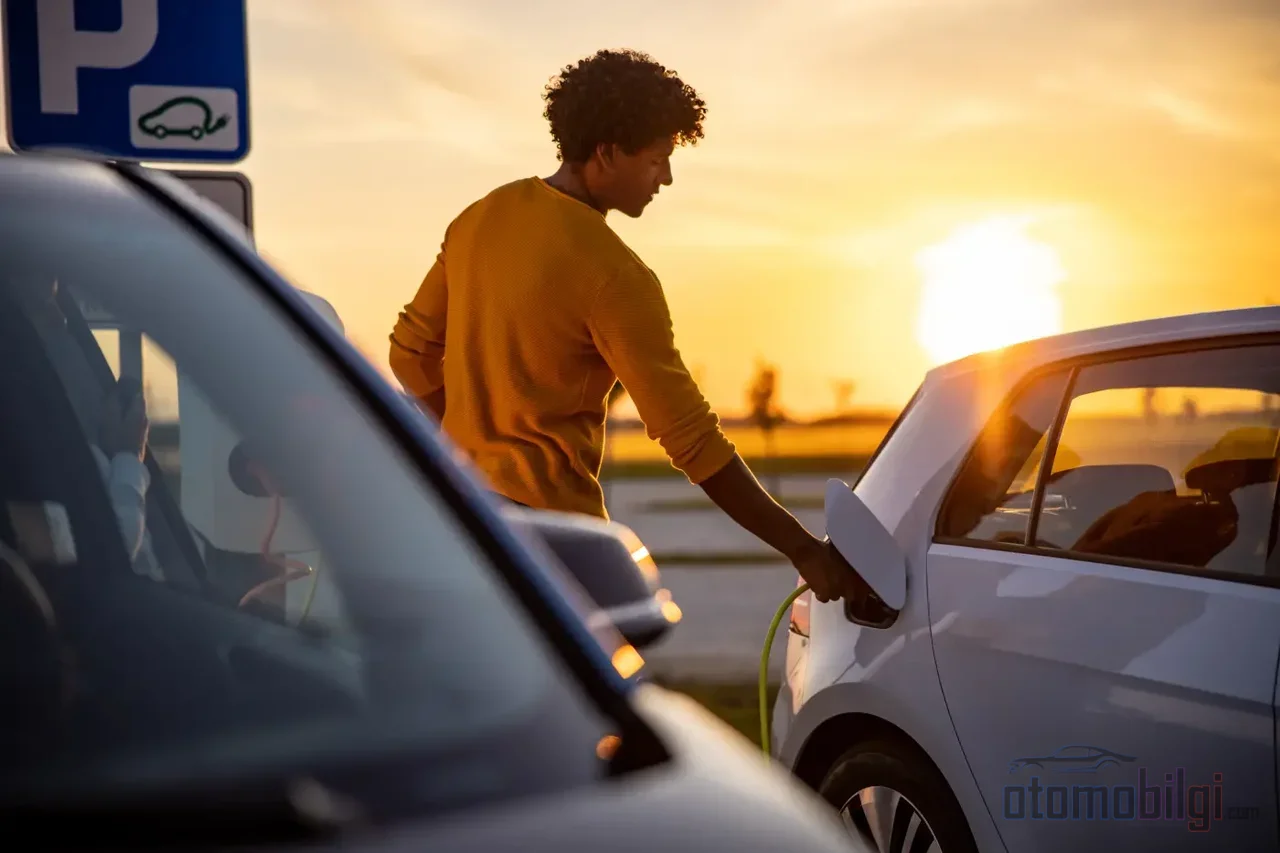
The fundamental characteristic of DC fast charging is this: as the battery charge level rises, the charging speed drops. The glass of water analogy is common and accurate - the glass fills quickly at first, and then fills drop by drop toward the end. For this reason, not exceeding 80% during fast charging shortens the total travel time; rather than waiting at a fast charger for the last 20%, completing it at the next stop or at your overnight accommodation offers a time advantage.
The power on a station's sign is not the same thing as the power your vehicle receives. Every vehicle has its own maximum DC charging speed; for example, a model with a maximum charging speed of 55 kW cannot exceed this speed even at a 150 kWor 350 kWstation. Knowing your vehicle's actual DC charging speed when choosing a station saves both time and resources; the most powerful station is not the right station for every vehicle.
Stop frequently or drive longer?
There are two legitimate strategies, and which one is better should be left to personal preference. The first approach advocates stopping more often and driving faster, spending less time at each stop; since you stay in the fastest section of the charging curve, total stop time decreases. The second prefers filling each stop to 80% and driving longer distances between stops; fewer stops but longer breaks. You will clearly see which one suits your driving rhythm within a few trips.
Charging at Accommodation: Turning the Night into Energy
The most efficient charging breaks of a long journey often happen at night. AC charging (Level 1/2) at your accommodation saves both time and money: after you have eaten and gone to sleep, the vehicle charges on its own, and in the morning you are ready to depart with a full charge. These stops are slower than fast charging, but because they work throughout the night, the time disadvantage practically disappears.
The critical point is verification: before making a reservation, research whether the accommodation's charging units are operational; if possible, confirm by phone. Apps that combine hotel and charging filters make this search easier, but shared data may be outdated. Have a backup plan as well, to avoid arriving and finding a broken unit.
Which Apps Are Useful for Route Planning?
In-car navigation, general-purpose map apps and dedicated route planners do different jobs; the strongest combination is to use all three together. Car navigation gives turn-by-turn directions, a map app manages traffic and food stops, while an EV planner builds the stop layout taking range and charging time into account. The standout tools are:
| App | Standout feature | Who it suits |
|---|---|---|
| ABRP | Calculates routes based on make/model, starting charge and station preferences | Those who want detailed range and time simulation |
| PlugShare | Crowdsourced reviews and photos showing whether a station is working; 725,000+ stations | Those researching backup stations and accommodation charging |
| Chargemap | Route and stop calculation based on vehicle and preferences | Travelers focused on Europe |
| Voltla | Station finding, availability and routing for many brands | Practical station and price tracking in Türkiye |
| istasyon | Price comparison across 180+ operators and route planning | Those who want to choose stops by comparing price differences |
In Türkiye, ChargeIQ also offers filtering by AC/DC socket type and station rating; apps like Lixhium and CV operate in the same field. In practice, the sticking point is still payment: when you arrive at a station, you may need to start charging with that station's own operator app. Although roaming agreements are becoming increasingly widespread, checking which app the stations you will visit work with before a trip is a safe habit.
Where Is Türkiye's Charging Infrastructure in 2026?
Türkiye's charging infrastructure has grown enormously in the last two years, with station access available in all 81 provinces. According to current station data, the country has more than 180 operators and over 38,000 stations ; the network within and between major cities is at a sufficient level for today's journeys. The per-kilometer cost of public DC charging remains noticeably lower than a gasoline vehicle; this is the most tangible item that positively affects the total travel budget on a long trip.
On the regulatory side, there are developments that affect planning. With amendments to the Charging Services Regulation, charging network operators must now announce, in addition to service prices, reservation and occupancy fees; roaming agreements must be reported to the authority. In practice, this means that reservation-based charging and occupancy fees must be factored into the trip plan as a separate parameter - especially on busy routes, a reserved stop offers a measurable gain in time rather than waiting at a busy unit.
A backup plan against holiday-return traffic
The real scenario where infrastructure falls short is the concentration of demand at specific charging points on main arteries during weekend and holiday returns. This is less about technology and more about queue mathematics: the number of vehicles heading to the same station at the same hour exceeds the number of units. The solution lies in planning - rather than fixing the return day, shifting the hour, defining an alternative corridor outside the main route, and assigning at least one backup station to each main stop largely neutralizes the impact of congestion. Make sure the backup stops are compatible with your vehicle and connector type.
A Practical Planning Checklist
Here is a summary of what to do before setting off:
- Determine the vehicle's real range and maximum DC charging speed.
- Mark the main DC stations along the route; assign a backup stop to each one.
- Set off with a 90-95% charge; position stops based on the ~20% level.
- Aim for 80% at fast charging; complete the final part overnight with AC charging.
- Confirm accommodation charging units before making a reservation.
- Check via an app that the stations are operational and available before setting off.
The perception that charging breaks disrupt the journey is widespread, but in a well-designed plan, breaks coincide with natural meal and rest intervals; the vehicle usually finishes charging before you finish eating. The real source of range anxiety is not infrastructure but lack of planning - and lack of planning can be solved entirely with a one-page check following the steps above.
Resources
- The Ultimate Guide to EV Road Trip Planning - Plug In America
- EV Route Planning - Şarjagel
- Long-Distance Charging Plan for Electric Vehicles - Oniz Şarj
- Step-by-Step Route Planning for Electric Vehicles - Volkswagen Passenger Cars Türkiye
- istasyon - All Charging Stations in One App
- Charging Stations Map – Vizyon Enerjim
- 2026 Türkiye EV Charging Guide – Toger
- Amendments to Türkiye's EV Charging Services Regulation – Moroğlu Arseven
- PlugShare EV Trip Planner
- Voltla
- ChargeIQ – Electric Vehicle Charging App and Route Planner
- Electric Vehicle Charging Guide – Bridgestone Türkiye
- Fast Charging and Range Extension Tactics with Electric Vehicles – Skywell Türkiye
- EV Road Trip Planning Guide – Ionage