Short Gears or Long Gears? How Gear Ratios Meet the Engine
Share This Page
A short gear corresponds to a numerically high ratio; a long gear to a numerically low ratio: a short ratio sends more torque to the wheels and makes the car feel lively, while a long ratio lets the engine spin less at the same speed, offering fuel economy and quiet cruising. Which one is "better" cannot be asked in isolation; the right question is how the ratio matches the engine's character.
Highlights
- Example of a differential ratio: 41-tooth ring gear / 10-tooth pinion = 4.10:1
- Shortening the final drive increases torque in every gear, at the cost of top speed
- Overdrive is a low-rpm cruising gear that brings the ratio below 1:1 a low-rev cruising gear that brings it
- The most economical cruising usually happens in the longest gear, at revs slightly below the torque peak
- Driving at excessively low rpm ("lugging") can harm the engine
What Exactly Does a Gear Ratio Measure?
Every gear in the transmission is a multiplier. The torque produced by the engine is amplified or reduced by this multiplier before it reaches the wheels. The ratio in the differential is the final link in this chain: it is calculated by dividing the number of teeth on the pinion gear by the number of teeth on the ring gear. When a 41-tooth ring gear is paired with a 10-tooth pinion, the ratio comes out to 4.10:1; that is, for every 4.1 revolutions the engine makes, the wheel turns only once.
What does this numerical value mean? A numerically high ratio - a short gear - multiplies torque more strongly: more pushing power at takeoff and on hills. A numerically low ratio - a long gear - lets the engine spin less at the same road speed; in return, it gives less of a "punch" feeling at takeoff. In short, that is the function of ratios: to determine how engine power is distributed to the wheels.
Why Does the Final Drive Ratio Affect All Gears at Once?

Each gear has its own ratio, but all of them pass through the differential. Increasing the final drive ratio raises wheel torque in every gear at once - sacrificing top speed. Decreasing it does the opposite: more speed at the top end, less agility at the bottom end. In other words, the final drive acts like a potentiometer that shifts the entire character of the transmission forward or backward with a single adjustment knob.
The same logic applies on the economy side. A numerically low final drive ratio means the engine turns fewer revolutions at the same cruising speed; this brings better fuel consumption. The price is the loss of that instantaneous pushing power at takeoff. Additionally, a final drive change made toward higher ratios can cause deviations in speed-dependent gauges - in vehicles where the speedometer and gauge are fed from wheel rotation, this is an inevitable side effect.
Why Does the Same Engine Feel Lively with a Short Ratio and Calm with a Long Ratio?
This is the heart of the matter. Consider two vehicles with the same engine; one with a short-ratio gearbox, the other with a long-ratio one. The short-ratio one converts more engine revolutions into each wheel revolution in every gear - the "more engine revolutions per wheel revolution" principle. The result is measurably faster acceleration and an alert, eager driving feel with constant jumps from one gear to the next, which the driver describes as "crazy." This is not an illusion; it is the direct physical effect of the torque multiplication, but its psychological payoff is also strong.
Its long-ratio sibling displays an entirely different character: slower acceleration, better fuel economy, less noise. When the driver wants to overtake, they must drop one or two gears; the power is not always at hand, it must be summoned when wanted.
Manufacturers use this setting deliberately
Some manufacturers choose short ratios geared toward urban use, making the car appear more agile than it actually is. Others prioritize highway economy and opt for long ratios. The debate over which approach is "right" continues; because both are justified in their own use scenario. It is possible to see how critical this balance is from a concrete case.
The Fiat Uno lesson: ratios negotiate even with altitude
In South Africa, Fiat Uno was initially sold with long, highway-focused ratios suited to the European market. However, Johannesburg's altitude of around 1200 meters above sea level rendered these ratios inadequate in the local market. The solution was shortening the final drive and re-ratioing the 4th and 5th gears. The result: shorter "legs," a livelier and more reactive drive - yet still reasonable economy in general use. An interesting detail: the 1000 cc version was sold with the original long-ratio fully imported gearbox and had longer ratios than the South African version of the 1400 cc; this meant more frequent gear changes and the necessity of downshifting on inclines.
It is easy to think of this with an analogy from daily life: the geared bicycle. A long ratio strangles performance uphill, but is economical and enjoyable on flat roads and downhill. The car difference is only one of scale.
How Do Ratios Determine Acceleration and Fuel Consumption?
Ratio choice alone is not enough; it must be compatible with the engine's character. The gap between gears determines how much the revs will drop when shifting from one gear to another. If this gap is wider than the engine's usable power band, every gear change drops the engine into an inefficient region. The goal is to find the ratios that, during acceleration, correspond to the maximum area under the torque curve between the engine's minimum and maximum revs in every gear. A correctly chosen set of ratios keeps the engine at all times in the region where its torque is most abundant.
There is a cost at the extremes too. Very high ratios force the engine to strain at certain speeds; very low ratios raise the rpm unnecessarily. Both extremes harm economy - which is why it is an engineering task to find the middle path through measurement. Shift points are also determined by the same logic: the relationship between rpm and wheel speed works in reverse, and torque is multiplied as you downshift. The fastest acceleration, whatever gear it is in, passes through the point where torque at the wheels is maximum.
What Does Overdrive Do?
Overdrive is a planetary (epicyclic) gear mechanism that allows the car to travel at a constant cruising speed with reduced engine rpm. Functionally, it is a "high gear mode": the gear ratio drops below 1:1 and it acts like an extra gear that widens the transmission's ratio range. Its purpose is not to increase speed; it is low-rpm, comfortable cruising.
In older automatics, overdrive could be engaged and disengaged with a button; it kept the engine at a lower rpm during steady highway cruising. Historically, it is described as "an extra, usually fifth gear." The reason newer vehicles do not have a separate overdrive concept is simple: this function has been integrated into the transmission. The upper gears of modern six, eight, and ten-speed automatics have already internalized the overdrive function.
Why Do Long-Ratio Cars Cruise at Low RPM - and Is That Always Good?
The question is valid and the answer is arithmetic: with long ratios, the engine turns slower at the same road speed. Fewer revolutions mean less fuel and less wear. The most economical consumption generally occurs in the longest gear, at rpm slightly below the torque peak, and at road speeds where aerodynamic drag has not yet risen too much. The manufacturer knows this and sets it accordingly; this is why modern eight and ten-speed automatics cruise at surprisingly low rpm on the highway.
The lugging risk: the dark side of low rpm
But not every low rpm is an economical rpm. Cruising at an rpm low enough to load the engine - "lugging" - can lead to engine damage in the long run. While the driver thinks they are saving fuel, the engine experiences the mechanical stress of carrying a very high load at a very low rpm. The optimal point is debatable; some still debate whether the extremely low cruising rpm created by a very long sixth gear like 0.5:1 is harmful to the engine. Practical rule: when the rpm drops and the engine starts to shudder and fails to push the body forward, downshift - economy does not compensate for lugging.
How Does Transmission Type Change Character?
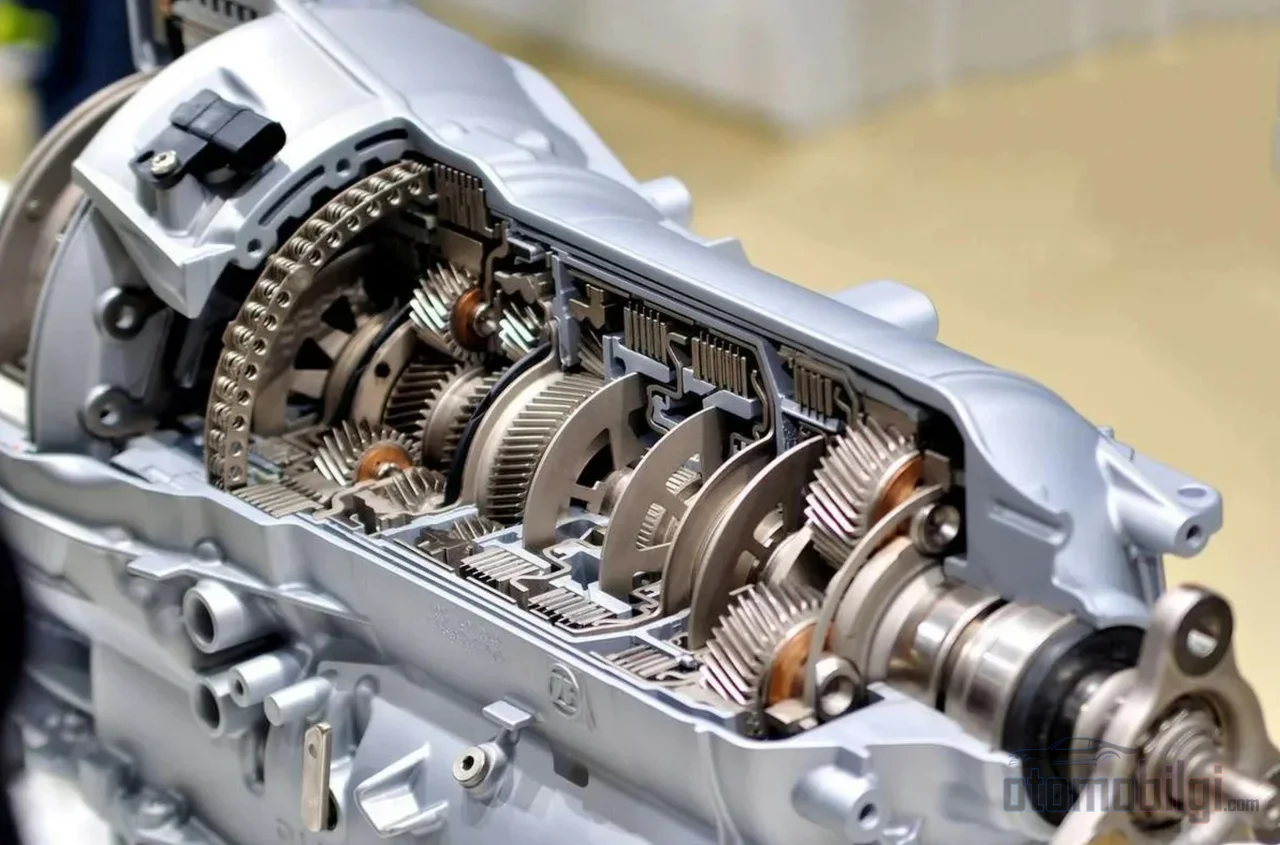
Ratios cannot be considered independently of the transmission. There are three main approaches: a manual transmission gives the driver control over power and speed at every moment via the clutch pedal and gear lever; an automatic shifts between fixed gears on its own; while a CVT offers unlimited ratios through a belt/chain-pulley system - it works like a single variable gear. The "short versus long gear" debate therefore takes on a different dimension with CVTs: the system tries to theoretically keep the engine at its most efficient rpm at all times.
The number of gears, ratio progression, and final drive ratio work together; the balance between fuel economy and performance is the combined output of these three variables. More gears mean narrower ratios for each gear that fit more tightly into the engine's power band - it reduces the question of short versus long gearing not to a single answer, but to a well-designed ratio ladder.
Short or Long? A Practical Summary for Decision-Making
The relative position of the two approaches can be summarized in a single table:
| Feature | Short (numerically high) ratio | Long (numerically low) ratio |
|---|---|---|
| Acceleration feel | Lively, quick, wild | Calm, measured |
| Wheel torque | High | Lower |
| Cruising RPM | High | Low |
| Fuel economy | Lower | Better |
| Noise and comfort | Noisier | Quieter |
| Overtaking | Fewer gear changes | A downshift is required |
Remember one exception: in turbocharged vehicles, short ratios are not always an advantage. More frequent gear changes at full throttle can force the engine out of the boost zone and require it to re-enter; this turns short ratios into a disadvantage in some turbo applications. Likewise, a very long sixth gear can drop the cruising RPM down to the lugging threshold. The choice is made according to how the engine breathes and the vehicle's actual use - not by looking at a single number on the ratio sheet.
Sources
- Gear Ratios Explained
- Final Drive Ratios - Diving Into Drivetrain Ratios
- Understanding Gear Ratios and How They Affect Your Vehicle
- What Happens When Gear Ratios Are Too High or Low?
- Overdrive (mechanics)
- What is Overdrive in a Car?
- How Does Automatic Overdrive Work?
- What Is Overdrive, And Why Don't New Cars Have It?
- How gearing can make the difference in a car
- How to pick the right gear ratio for your needs
- Optimal gear-change points
- Transmission / Final Drive Gear Ratios and Power Band
- Which setup is quicker? short gear vs long gear
- long gears vs. short geared trans : turbo
- How does changing the final drive ratio affect a car's performance?
- Modeling the Effects of Transmission Gear Count, Ratio Progression, and Final Drive Ratio on Fuel Economy and Performance Using ALPHA
- When To Shift Gears For The Best Fuel Economy