Tesla Lists the Roadster as Its Last Manual Vehicle: After That, Autonomous
Share This Page
Tesla's second-generation Roadster was unveiled in Texas on October 15 and positioned as the only human-driven car the company will produce in the long term. Elon Musk's statement that all future Tesla models will be autonomous is the clearest sign of a strategy in which the human behind the wheel is gradually fading into the background. In this article, we cover the details of the unveiling, the three configurations, and the possible effects of this transformation on the industry.
Highlights
- The second-generation Roadster was unveiled in McGregor, Texas, on October 15, 2026. Production is
- targeted to begin in 2028; the price has not yet been announced.
- Three configurations: Performance, Thrust and the invitation-only Rocket.
- It was announced that Model S and Model X production will end in the second quarter of 2026. it will end was announced.
- After the unveiling, a gain of approximately 5% was observed in the shares.
Why Was the Roadster Defined as Tesla's Last Manual Vehicle?
The answer to that question lies in two words: not chance, but strategy. Tesla positioned the production version of the Roadster as the company's only human-driven car in the long term. Musk confirmed that the future Tesla lineup will consist of autonomous vehicles in different sizes, and that the Roadster will be the only exception remaining open to manual driving. The emphasis on "manual" here has nothing to do with the gearbox; the phrasing used by sources points in the same direction, meaning it is human driving itself that is at issue.
This is not actually a new promise. In October 2024, Musk had drawn a similar picture, saying that in the future all Tesla vehicles would be fully autonomous without steering wheels or pedals. Today's announcement is that claim matched with a concrete production decision. As someone who has worked in the automotive press for years, I can comfortably note the following: when what a manufacturer says in its launch speech aligns with its product planning, it is no longer just rhetoric. And this is exactly what Tesla did here.
There are other moves that complete the picture. It was announced that production of the Model S and Model X will end in the second quarter of 2026, and this decision was presented as part of the transition to an autonomous future. The purchase option for the Full Self-Driving (Supervised) package was largely removed and converted to a subscription model; as of September 2026, the only driving package offered to customers is this Level 2 subscription. We used to talk about the engine under the hood of the car being sold; now a software subscription sits at the center of the purchase decision. This change should not be underestimated.
How the Unveiling Took Place: A Launch at the Rocket Test Facility
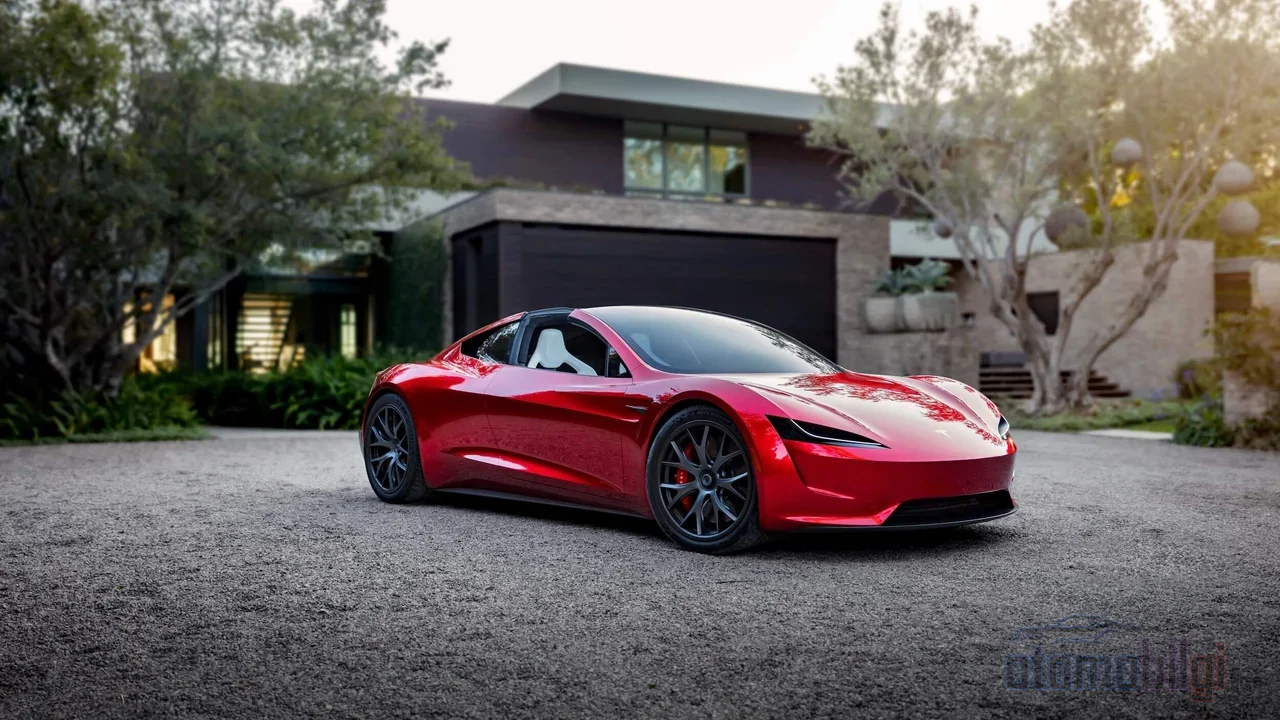
Tesla unveiled the second-generation Roadster at the rocket test facility in McGregor, Texas, on October 15, 2026. The choice of venue was no coincidence; the car features components developed jointly with SpaceX, and even the event's name was announced with a space-themed teaser. One more detail worth noting is that the unveiling, originally scheduled for September 12, was postponed from October 1 to October 15 due to rain.
The demo itself was something beyond the EV launches we have seen so far. The vehicle artificially increased grip with a high-power fan and suction system, climbed an inverted ramp, performed rotation maneuvers while airborne, got briefly airborne, and hovered over other Teslas with cold gas thrusters. Placing thrusters under the hood used to be considered a pipe dream; today it is part of a production vehicle's launch demo. As someone with over thirty years in the industry, I would also add that such demos have always left a gap between the claim and series production.
As for performance figures, they remain at the claim level for now: in the top trims, under 1 second for 0-60 mph, across all versions over 300 miles of range and above 230 mph top speed is targeted. It is also known that Tesla mentioned a target top speed of around 330 mph for the Thrust configuration. The price was not announced at the presentation; as archival data, at the 2017 unveiling the base price was listed at $200,000 and the Founder's Series at $250,000, and expectations in the industry still hover in the $200,000-$250,000 range. These figures should not be read as final prices.
Three Configurations: Performance, Thrust and Rocket
| Configuration | Standout Feature | Intended Use |
|---|---|---|
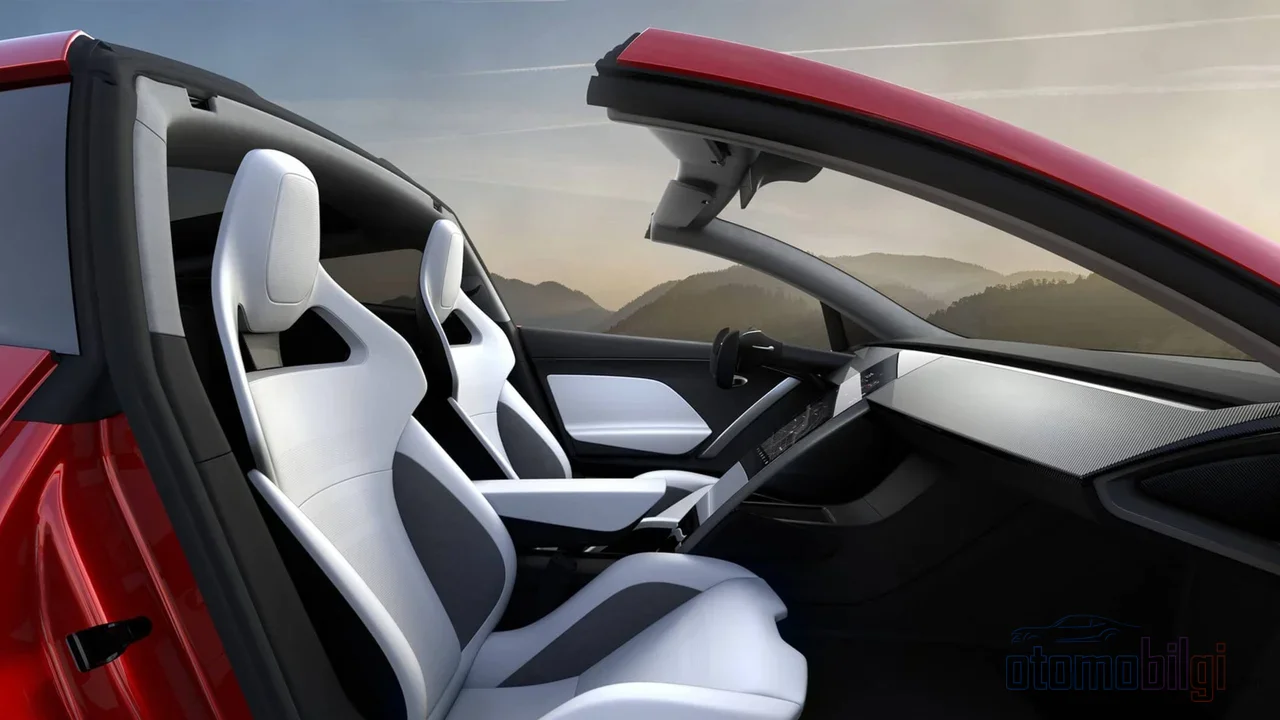
| Performance | Two seats, active aerodynamics, multi-mode suction system | Suitable for road use |
| Thrust | Cold gas thrusters mounted at the rear, 0-60 mph in under 0.9 seconds | Designed for track use |
| Rocket | Single seat, roughly ten maneuvering thrusters, upward and rotation maneuvers | Invitation only, not approved for public roads |
The logic behind the three-tier range is understandable: Performance is the car that can be sold and used on public roads; Thrust is the version that pushes the limits on the track; and Rocket is a truly boundless, closed exhibition piece. A single-seat version not approved for public roads appearing on a manufacturer's price list is not new to the automotive world, but still striking. The extent to which the technical framework discussed since the 2017 concept - three motors, steer-by-wire architecture, and a 200 kWh-class battery - has been preserved today is not yet verified; since this data is dated, it should be read with caution.
Tesla's intellectual property moves in this area also need to be watched. It is known that in August 2025 the company obtained a ground effect patent for the Roadster; the idea of pressing the car to the ground with a suction system aligns with the performance we saw in the demo. That reservations have reopened and the deposit structure has been maintained is also a verifiable detail from the official page.
Tesla's Other Moves on the Road to an Autonomous Future
The Roadster's final manual vehicle announcement isn't meaningful on its own; it makes sense when read together with the production and software decisions behind it. The retirement of the Model S and X goes beyond ending the run of two models that sat on dealer lots for years - it signals that Tesla is shifting its lineup toward autonomy-first vehicles. The Cybercab, designed from the ground up as fully autonomous, steering-wheel-free and two-seated, stands out as the tangible product of this strategy with its Level 4 positioning.
The picture on the software side is more complicated. Tesla's FSD package offered today is officially called Full Self-Driving (Supervised), meaning it is a Level 2 system that requires constant supervision. Despite this, technical assessments are split: on one side there are reviews that choose the system as the best technology of the year for its camera-focused, original approach; on the other, observations saying the system is effectively turning into a robotaxi, and even criticisms claiming it has shown no concrete progress in autonomy by 2026. The rationale for this distinction is clear: whatever its name, a system that does not offer unsupervised driving is not fully autonomous.
The regulatory front carries the same tension. In early October 2026 it was reported that Tesla was exerting intense pressure on the EU to obtain approval for a driver assistance system capable of operating hands-free on every road; if the approval comes, it will be the first automaker to achieve this. It is also a known forecast that Musk expects fully autonomous vehicle operation across roughly 25-50% of the US by the end of 2026, depending on state regulation. This gap between the vision's ambition and regulatory reality has not yet been closed in the industry.
Market and Analyst Reaction: Skepticism Alongside Enthusiasm
Following the unveiling, an increase of around 5% was observed in the stock; the enthusiasm of the fan audience watching the demo is undeniable. On the other hand, skepticism among analysts persists, and there is a solid reason for it: since its unveiling in November 2017, the Roadster has been postponed repeatedly on the production calendar, starting from 2020 and pushing through 2021, 2022, 2023, 2024 and 2025 to 2027-2028. In prediction markets, bets on a 2027 delivery have fallen from 33% to 10%; the fact that established publications like MotorTrend and Car and Driver frame the vehicle as a 2029 model also reflects widespread cautious expectations about delivery.
Technical skepticism has a history too. In 2017, some battery and energy experts argued that a battery in the 200 kWh class was physically impossible under the conditions of the day, while the acceleration targets were tied to tire grip conditions. Today, the introduction of solutions such as the vacuum system and thrusters shows that the real challenge lies not in motor power but in road holding and battery density. This once again reminds us that the claimed figures should not be taken seriously until they are tested in the production version.
There is also a striking contrast in the industry context: while electrification and autonomy accelerate, interest in manual-transmission, human-driven sports cars has not declined. In this environment, Tesla compressing manual driving into a single, upper-segment model and handing the rest over to autonomy can be read as turning the joy of driving into a kind of accumulated luxury category. Time will tell what this will cost; but an automaker gradually removing the act of driving from its product lineup deserves to be one of the most remarkable strategic breaks of the last thirty years.
Conclusion: The Last Driver's Car and the Next Decade
The second-generation Roadster represents three things at once: a sports car with which Tesla reinforces its claim through a showy engineering demo, the sole conscious exception to the company's autonomous future vision, and at the same time a test of whether promises deferred for years will finally be kept. The production target is 2028, the price is uncertain, and the technical figures remain at the claim level. Musk's clear stance that all future Tesla models will be autonomous turns this car into more than a launch story - a breaking point in driving philosophy. The remaining question is how much regulation and the real world will allow this timeline.
Sources
- Tesla's new Roadster turns in air with SpaceX thrusters
- Roadster – Electric Sports Car
- Tesla Roadster (second generation)
- Tesla Roadster reveal: What to know about the delayed EV
- Roadster will be Tesla's only manual car long term, Musk says
- Elon Musk says Tesla will stop producing its S and X models
- Tesla is pressuring the EU to approve its Full Self-Driving tech
- Full Self-Driving (Supervised) – Tesla Support
- List of predictions for autonomous Tesla vehicles by Elon Musk
- Revealed! New Tesla Roadster Takes Flight