The Rise and Quiet Descent of the V8
Share This Page
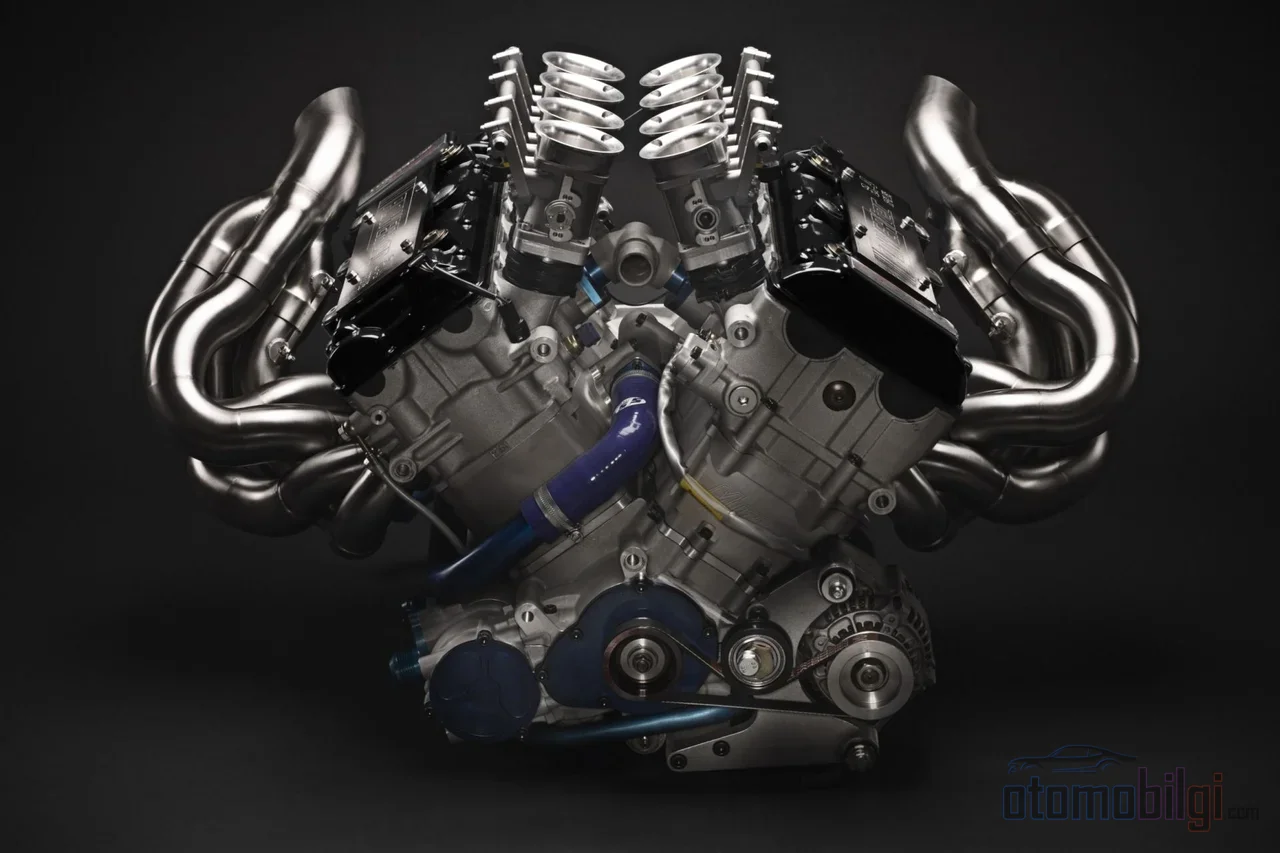
The V8 is an engine architecture that joins two rows of cylinders at a 90-degree angle, with a proven track record in producing displacement and torque. The first working example appeared in the air in 1904, and the first mass-produced road version appeared in a Cadillac in 1914; it settled into the heart of post-war American car culture, was wounded by the fuel crises of the 1970s, and was pushed aside in the 2020s under the pressure of electrification.
Highlights
- In 1902, Leon Levavasseur patented the V8 engine; the first working example was used in aircraft and boats in 1904.
- 1914: The Cadillac Type 51 was the first V8 offered as a standard engine in a mass-produced car; the 5.1-liter L-head engine produced 70 hp. .
- 1970: The Cadillac Eldorado's 8.2-liter V8 reached the peak with 400 hp (SAE gross) and 550 lb·ft of torque.
- 1976: After its compression ratio was lowered, the same engine delivered only 190 hp. .
- The V8 share in half-ton pickup trucks in the US fell from 64.5% in 2020 to 38% in 2024. down to.
Where did the V-type engine come from?
We tell the story of an engine whose history is as interesting as its architecture. In the early years of the internal combustion engine, cylinders were arranged in a single row, vertically, or radially. The V arrangement was born from a simple geometric decision: dividing the cylinders into two inclined banks shortens the crankshaft, makes the engine block more compact, and fits the same number of cylinders into a shorter engine bay. This advantage carried the engine first to aircraft and boats.
The first step on the patent side goes back to 1902: French engineer Leon Levavasseur received a patent for an eight-cylinder engine in a V arrangement. The first known working V8 was built in 1904, and its name is associated not with cars, but with record-breaking aircraft and ships. So the V8 was born not as a road engine, but as the solution of engineers seeking performance in the air and at sea. It only later leaped to racing cars and land speed record attempts.
The sources offer no definitive answer to the question of who exactly developed the V8; the line between Levavasseur's patent and the first working example shows that multiple engineers matured the same idea in parallel. But on one point there is no debate: the brand that turned the V8 from a luxury experiment into an ordinary road engine is Cadillac.
1914: Cadillac and the birth of the mass-produced V8
In September 1914, Cadillac introduced its first V8 engine in a mass-produced automobile. The engine coded Type 51 became standard in 1915 model year vehicles. The technical figures show how far ahead of its time the engine was: a 90-degree bank angle, an L-head valve arrangement, water cooling, and cylinder dimensions of 79.4 × 130.2 mm giving 5.1 liters (314 cu in) of displacement and 70 hp (52 kW) of power. The design was led by chief engineer D'Orsay McCall White; Henry Leland had hired White for the V-engine experience he had gained at Napier and Daimler-Coventry.
The market's answer was clear: the 1914 L-head V8 sold over 13,000 units, becoming the first mass-produced road-going V8 in history. The engine was later ranked among Ward's "10 Best Engines of the 20th Century" - not a claimed career, but a measured one.
Momentum rose again in 1923: the switch to a crossplane crankshaft meant 90-degree crank offsets for each crank throw, and this arrangement carried balance and smoothness to today's standard. Power rose to 83.5 hp with the same revision. Smooth operation laid the technical foundation of the V8's identity: a vibration management done with forward-looking calculation, the infrastructure of an engine that would become a cultural symbol thirty years later.
Peak years: the era when the limits of displacement and power were pushed
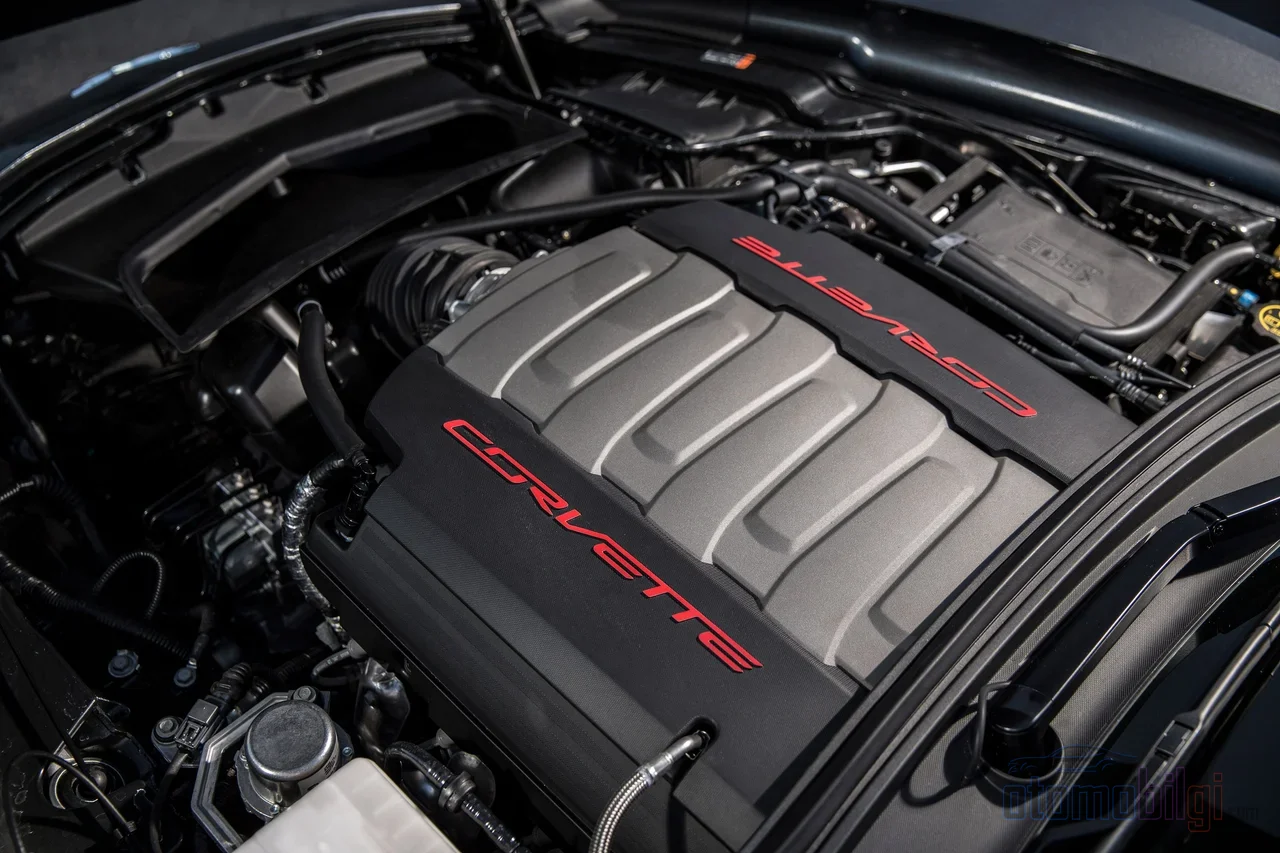
1949 was a threshold in American engine design. Cadillac introduced the 331 OHV V8 (5.4 L); in the same year Oldsmobile's 303 was on the market, and the brand pioneering the OHV architecture was Buick. Overhead valve layout meant higher revs and better thermal efficiency - a solution perfectly fitting under the hoods of growing American cars.
Then the displacement race accelerated. In 1968, Cadillac offered 375 hp and 7.7 L of displacement with a new engine, delivering 525 lb·ft of torque. In 1970 the same family was enlarged to 500 cu in (8.2 L) and in its introduction year produced 400 hp (SAE gross) and 550 lb·ft of torque; this engine would remain exclusive to the Eldorado. Scale was the American engine engineering's distinctive answer: instead of a small-displacement high-revving engine, a large-displacement low-revving torque machine.
| Year | Engine | Displacement | Power | Milestone |
|---|---|---|---|---|
| 1914 | Type 51 L-head | 5.1 L | 70 hp | First mass-produced road-going V8 |
| 1923 | Crossplane revision | - | 83.5 hp | Standard of balance and smoothness |
| 1949 | 331 OHV | 5.4 L | - | The OHV V8 era began |
| 1970 | 500 cu in | 8.2 L | 400 hp (SAE gross) | Peak of displacement and torque |
| 1976 | 500 cu in | 8.2 L | 190 hp | The year the crisis silenced the engine |
| 1992 | Northstar DOHC | 4.6 L | 275-300 hp | The modern dual-counterweighted era |
| 2022 | LT4 supercharged | 6.2 L | 668 hp | The most powerful Cadillac sedan |
The story of the table can be summarized in a single line: The same architecture climbed to the peak in thirty years and slammed into a wall in a decade.
Why did the V8 become a cultural icon especially in America?
The V8 is an architecture produced in Europe as well, in American brands, in Italian and German workshops. But it gave no one the place it earned in American car culture. The explanation lies not in the engine's technical specifications, but in the rise of postwar American industrial power: the V8 became the symbol of what was powerful, loud, and "thoroughly American". Big displacement, generous torque at low revs, and long straight roads were three complementary variables.
The contribution of hot rod culture to this transformation cannot be understated. The Flathead V-8 became the heart of custom-built and racing vehicles; for decades it was taken apart, modified, and reassembled in garages. Ford's first mass-production V8 in 1932 freed the engine from being the privilege of luxury brands and brought it within everyone's reach - the "V8" badge now meant victory and speed.
There is nostalgia in the back seat too: the rear-wheel-drive, full-size, V8-powered automobile became the very definition of the "traditional American car." This deep layer of consumer demand still keeps manufacturers from abandoning the V8 entirely despite regulatory pressure.
V6, V10 and V12: different niches of the same family
The V layout cannot be reduced to a single cylinder count; each variant responds to a different engineering need. The V6 is lighter and more fuel-efficient than the V8; its compact dimensions make it the default V solution for everyday cars. The V8, on the other hand, is focused on muscle and torque; it is the type of engine that speaks through its displacement. The V10 emerged in the 1980s primarily in motorsport applications and offered smoother operation in sports cars. The V12's history extends back to the early luxury era and it stands out with its extraordinary smoothness - an architecture in which the vibrations of two six-cylinder banks cancel each other out.
In short, cylinder count is not merely a matter of size; each configuration occupies a different point in the balance of equilibrium, sound, torque character, and packaging. The V8's role in this spectrum is a middle point between brute force and character harmony - which is why the hardest niche to fill is its own.
The technical realities that pushed the V8 aside
The V8's decline did not happen with a sudden decision, but through a chain of measurable pressures. The first warning came in 1971: Cadillac lowered the compression ratio from 10.0:1 to 8.5:1, and the engine's power rapidly eroded. By 1976, the giant 8.2-liter 500 cu in engine, with the same architecture that had produced 400 hp five years earlier, delivered only 190 hp - the electronic injection option could only bring it up to 215 hp. Oil and emissions regulations had invalidated the displacement strategy overnight.
The following decades were shaped by fuel economy rules. In 1980-81, Cadillac developed a 368 cu in (6.0 L) engine to comply with CAFE standards and added a cylinder deactivation system called "Modulated Displacement" to it; however, an ECM deficiency rendered the system unsuccessful, and dealers often physically disabled it. This 368 was the last traditional cast-iron "big-block" pushrod V8 available in a production car - the technical closing date of an era.
In the modern era the source of pressure has changed, but the direction is the same. Turbocharged V6s are replacing naturally aspirated V8s; hybrid systems are sharing the combustion engine's load; and fully electric vehicles are exerting pressure on the entire segment. The numbers are concrete: in US half-ton pickup registration records, the share of V8s was 64.5% in 2020 while it fell to 38% in 2024. Twenty-six points in four years - a pace rarely seen in the automobile industry.
Why are V8-powered vehicles still being sold?
The end of the V8 has been declared, but the announcement of a shrinking guest list didn't exactly kill an engine that still has life in it. In 2026 you can still buy a V8: the GMC Sierra 1500 Denali Ultimate, Chevrolet Corvette ZR1X, Ford Mustang GT (base price $46,560) and Cadillac CT5-V Blackwing. Every Corvette comes with a V8; the Mustang offers two V8 options. The Mercedes S-Class and the new-generation BMW M5 also keep the V8 in their portfolios. The CT5-V Blackwing, with its supercharged 6.2-liter LT4, produces 668 hp and has become the symbol of this process as the most powerful Cadillac sedan in history.
What's more striking is the scale of the comeback: Ram, GM and Mercedes-AMG are investing in new V8 engines - a major departure from their early "fully electric" commitments. With the end of the electric vehicle tax credit in the US, some manufacturers are rethinking their electrification plans; US automakers are shifting production from EVs to gasoline vehicles, cutting spending and carrying out layoffs. BMW, for its part, explicitly refuses to abandon the V8, pointing out that the engine may see more electrification as emission rules tighten. The argument that the transition will not be linear and that customers and markets will move at different paces is the framework that explains today's picture.
Look at the V8 through the eyes of an engineer who cares about handling as much as weight distribution, and the picture becomes clear: low-profile boxer and flat engines reduce load transfer and increase cornering stability; that's why brands seeking a low center of gravity move away from the V configuration. The V8's advantage is not on these pages - its advantage lies in displacement, torque and cultural memory. None of the three is exhausted; yet all three are melting away at the same speed.
Conclusion: the icon's scale is shrinking, its significance is not
From the 1902 patent to the 668 hp sedan of 2026, the lineage shows that the V8 is not a technical engine but a strategic one. Its birth is tied to the requirements of aviation and marine use, its maturation to Cadillac's daring in series production, its cultural peak to postwar American carmaking, and its decline to measurable regulatory and electrification pressure. The drop in pickup trucks' share from 64.5% to 38% between 2020 and 2024 says the comeback is not slow; the new V8 investments by Ram, GM and Mercedes-AMG say the comeback is not one-way either. The V8's story is not over - its displacement is shrinking, its sound is thinning out, and each generation is assisted by more electricity. The heart of the icon is still beating; but its pulse is now measured in numbers.
Sources
- Cadillac V8 engine
- Vintage V8s: Exploring 100 Years of Cadillac Engines
- The Complete History Of Cadillac V8 Engines
- A Brief History of Cadillac's V8 Engines
- How America Fell In Love With V8 Engines
- The V8 Isn't Dead Yet
- Noise, Power, Gas: These 4 V8 Engines
- BMW Roars Forward, Boldly Refusing to Abandon the V8
- Is the V8 Era Coming to an End?
- The Cheapest V8 Cars, Trucks and SUVs in 2026
- Why Subaru Uses Boxer vs. Inline Engines
- V10 Engine vs V12: Torque and Power Analysis
- U.S. Automakers Pull Back from Electric Vehicles