How Long Does a Car Battery Last? Signs of Weakening and Maintenance
Share This Page
A 12-volt car battery lasts on average 3 to 5 years ; a lead-acid battery only exceeds this range with proper use and regular maintenance. What really wears a battery down is not age, but short-distance driving, leaving the car parked for long periods, heat, and increasing electrical load. On this page, you will find practical steps on how to tell when your battery is weakening, how to measure voltage at home, the difference between jump-starting and replacement, and how to prepare for winter.
Highlights
- Lead-acid batteries typically provide 3-5 years of life; the national average is around 4.3 years .
- Trips shorter than 20 minutes prevent the alternator from fully charging the battery.
- Cold weather does not kill a battery overnight; it exposes an existing weakness.
- It is recommended to have the battery inspected at least twice a year .
- The 12-volt battery in electric and hybrid vehicles should not be confused with a conventional battery; that battery typically lasts 6-8 years .
How Long Does a Car Battery Last and What Determines Its Lifespan?
The job inside a battery is simple: lead plates react with the electrolyte solution to produce electrons, and these electrons feed the ignition system. Once the engine starts running, the alternator kicks in and charges the battery along the way. This cycle can repeat flawlessly for years; problems begin when the cycle runs too little or too much.
The main factors that determine lifespan, in order:
- Short-distance driving: On trips shorter than 20 minutes, the alternator does not have time to restore the energy spent during starting. The battery starts each time a little more depleted and gradually drains. Frequent stop-and-go traffic also negatively affects the same equation.
- Temperature: High average temperatures shorten the battery's chemical life. For vehicles kept in hot climates, the year limit runs out earlier.
- Parasitic drain: Aftermarket electronic equipment sometimes leaks current while the vehicle is off. Such leaks silently kill the battery.
- Wrong battery and wrong registration: A battery type that does not match the vehicle's electrical system shortens its life; in modern vehicles, failing to properly register the new battery in the system after replacement leads to the same outcome.
- Small oversights: A loosely mounted battery, electronics left on, parking in excessively hot environments, and terminal corrosion all work in the same direction.
Battery type also changes the picture. Alongside conventional lead-acid batteries, EFB and AGM batteries are used in modern vehicles with high electrical demands. EFB types are more durable and generally last longer; AGM batteries, on the other hand, last close to the upper end of the range in vehicles with start-stop systems. The average lifespan of the 12-volt safety battery in electric and hybrid vehicles is around 6-8 years ; this is a separate matter that should not be confused with the high-voltage main battery.
What Are the Signs of a Weakening Battery?
A battery does not die suddenly; it first announces itself with its sound and behavior. Over the years, the complaint I hear most often has not changed: the starter not turning at its usual speed in the morning. The signs that make a battery familiar are as follows:
- Slow cranking; a drawn-out, hesitant turning sound as the engine turns over.
- A single click at startup followed by silence.
- Dim or flickering headlights and interior lighting.
- Slow power windows, electronics with delayed response.
- Corrosion on the terminals, cracks or swelling on the battery case.
- A sulfur smell, like rotten eggs; this can be more noticeable in AGM batteries.
Is it the battery, or the alternator?
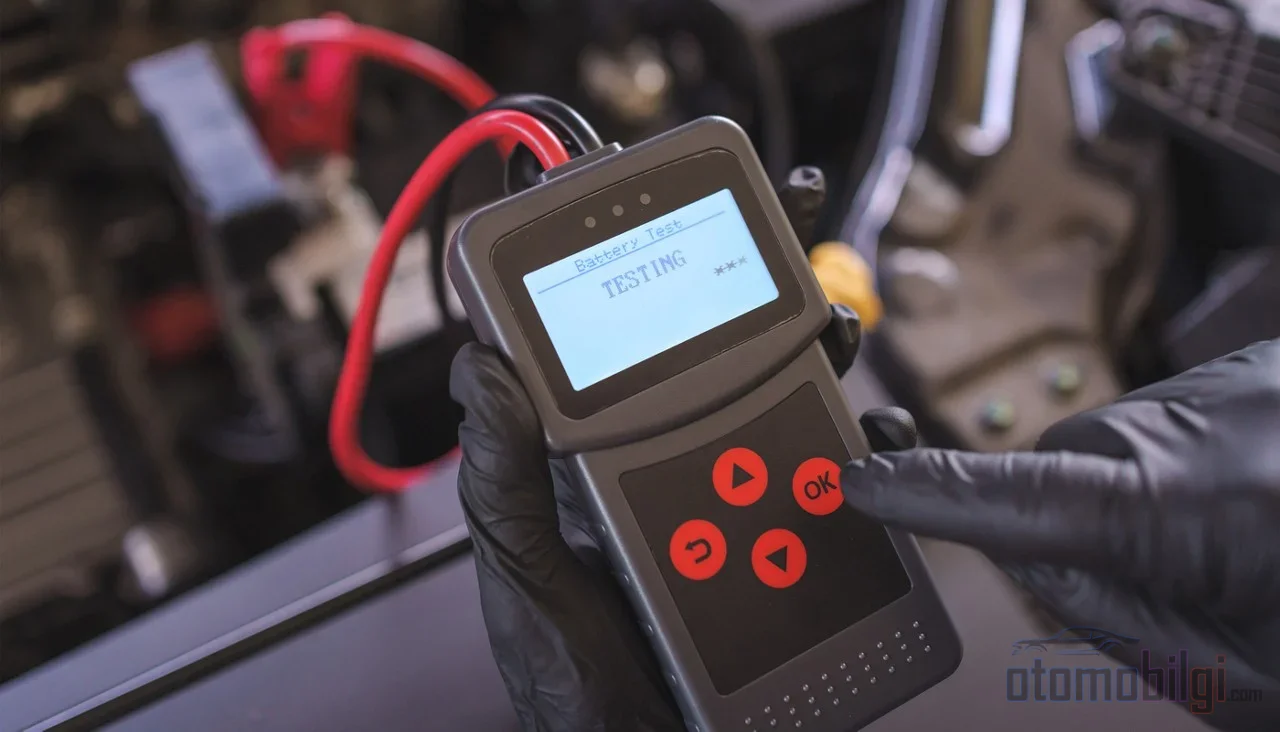
Some of these symptoms can also appear with a faulty alternator; dim headlights, electrical issues, and hard starting can occur in both cases. To tell the difference, you need to look at the battery while the engine is running: if the alternator is feeding the battery with the engine running, the lights improve noticeably. When in doubt, having a battery test done is the quickest way; the real issue is replacing the right part, not the suspected one.
How to Test a Battery with a Multimeter?
A simple voltage measurement done at home gives an idea of the battery's condition. Here is the procedure to follow:
- Set the multimeter to the DC 20V range; plug the black probe into the COM socket.
- Touch the red probe to the positive terminal and the black probe to the negative terminal.
- If the vehicle was started recently, wait long enough to dissipate the surface charge; otherwise the reading will come out higher than it actually is.
- If you wish, have an assistant hold the starter for 15 seconds while you watch the voltage; the drop under load gives a clearer idea of the battery's true condition.
To be honest, a multimeter has its limits. Static voltage does not tell you what percentage of its capacity the battery retains. Conductance testers used in auto service shops and parts stores measure the battery's response relative to its rated capacity. The replacement threshold is set accordingly: replacement is recommended when capacity falls 40-50% below the rated value; in cold climates or for vehicles that are hard to jump-start, replacement may even be considered in the 50-60% range.
Jump-Start, Charge, or Replace?
The car started with a jump-start and everything returned to normal; now what? If the vehicle runs normally after the jump-start, there may be no problem, but if there are risk factors such as the battery's age and how hard the engine struggled to start, getting a test done is the wiser choice. A troubled vehicle that was jump-started should be run for at least a while; the longer the vehicle sits, the more the battery keeps discharging, and you may face the same wall the next morning.
Charging is a more cautious approach than jump-starting. The slow charging process reduces the risk of overheating and damage, and it strains the battery less. There is also a point to remember: even an old battery, when charged, can deliver enough power to start the vehicle. In other words, the vehicle starting after a jump-start or a charge does not mean the battery is healthy; saying "the battery is dead" or "the battery is perfectly fine" without looking at end-of-life symptoms and the conductance test result would be premature. Only a test can tell whether the battery should be replaced entirely.
Battery Preparation Before Winter
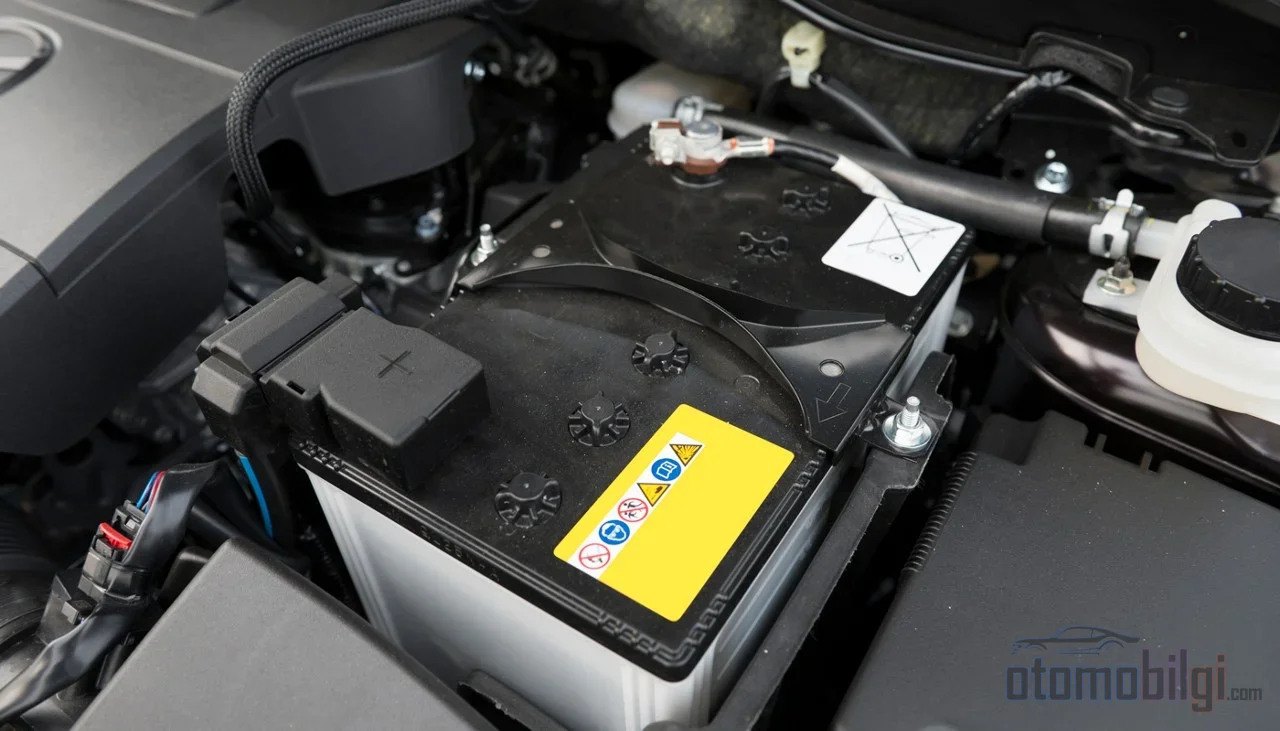
The most common misconception about cold weather is this: "The battery froze that night, and by morning it was dead." In reality, cold rarely kills a battery overnight; it exposes one that is already weak. Chemical reactions slow down at low temperatures, the battery's instantaneous power drops, and cranking an engine with more viscous oil demands more energy. This is the classic scenario of a winter morning with a weak battery: everything is fine in the evening, and in the morning the starter just clicks and nothing more happens.
In the old days, drivers used to check the radiator water and prepare chains before winter; now the battery comes first on the list. Pre-winter preparations are modest and practical:
- Keep the battery charged and drive the car frequently; a car sitting idle gives up faster in the cold.
- If possible, park in a warm or at least sheltered spot.
- Clean terminal corrosion; check the resting voltage with a multimeter.
- Have a battery test done; for batteries that have reached three years of age, this check is inevitable. If the result is weak, replacing the battery before winter rather than in the middle of it is both cheaper and a calmer solution.
Road safety organizations' winter preparation recommendations point to the same things: tires, batteries, and overall vehicle condition should be reviewed before the cold season. This order is no coincidence; the battery is one of the systems most likely to leave you stranded in the cold.
What Should Be Done About the Battery in a Vehicle Parked for a Long Time?
While a vehicle is parked, the battery loses charge even if you do nothing. For a weekend car or a seasonally used vehicle, this can drop the battery below the cranking threshold within a few months. Prolonged inactivity harms the battery; a vehicle that is never used should not be left sitting for long periods.
The precautions to take before long-term storage are simple: protect the battery, add a fuel stabilizer, inflate the tires to the correct pressure, and do not engage the parking brake. For electric vehicles, it is recommended to leave them at a 40-60% charge level. There is also a practical truth: a battery that has waited inside a car for months is not the same as one stored under proper conditions. Before putting the vehicle back into use, the battery needs to be tested and maintained; in storage locations without electricity, removing the battery and keeping it maintained at home is also a reasonable option.
Habits That Extend Battery Life
Battery maintenance is not one of those jobs that demands its own day; once it is built into your routine, it runs on its own. My advice is clear: add battery checks to appointments like oil changes, and review it at least twice a year. At the level of daily habits, here is what to do:
- Inspect the terminals regularly; corrosion typically looks like a fuzzy, greenish-white deposit. It can be scrubbed with a baking soda and water mixture, using an old toothbrush; after rinsing and drying, applying a thin layer of Vaseline to the terminal delays buildup. When reconnecting, attach the positive terminal first.
- Make sure cable connections are tight, clean, and free of corrosion.
- Do not count short trips as real vehicle use; at least one longer drive per week gives the battery a chance to fully charge.
- Do not leave unnecessary electronics on, and disconnect accessories that go unused during long parking periods.
- Protect the battery from extreme heat and make sure it is securely fastened so it does not wobble loose.
To be fair, the automotive community is not in agreement about the harm of short trips. Some argue that the battery never recovers what it loses on every short trip, while others claim that if there is no problem with the charging and starting systems, a short trip alone will not kill the battery. Where the two views meet is this: although short trips are not a culprit that drains the battery on their own, they consume an already weak battery without giving it a chance to recover.
Conclusion: Listening to Your Battery Is Enough
The battery is one of the most predictable parts of a vehicle. Making testing a routine for a battery that has reached its third year, keeping the terminals clean, balancing long drives against short-distance use, and having a check done before winter - that is all it takes. Every morning smoothed over with a jump start is a sign that the next step is testing or replacement. A driver who listens when the battery starts to talk will not be stranded on a winter morning.
Sources
- Warning Signs Your Car Battery Is About to Die-and How to Get Help
- Car Battery Maintenance: A Comprehensive Guide
- How a 12-Volt Battery Lifespan Affects Service Visit Frequency
- How Driving Habits Impact a Car Battery's Life
- How Long do Car Batteries Last? A Car Battery Life Guide
- Signs of a Bad Battery vs. Alternator Issue
- How to Test a Car Battery with a Multimeter
- How to Measure Battery Voltage with a Multimeter
- How to Make Your Car Battery Last Longer
- How Cold Weather Affects Your Car Battery
- Winter Weather Driving Tips
- How to Store a Car Long-Term
- What Batteries Need Coming Out of Long-Term Storage