Summer Preparation: Things That Strain and Protect Your Car in the Heat

Share This Page
Hot weather puts a car through a tougher test than winter. The cooling system works under extra load, battery electrolyte evaporates, tire pressure rises, and fuel tries to trap itself in the tank. That's why summer preparation calls for a different checklist than winter: coolant level and hoses, the condition of the air conditioning, correct tire pressure, battery terminals, and simple but effective habits like parking in the shade ensure the engine and cabin get through the summer comfortably.
Highlights
- In a vehicle parked in the sun, cabin temperature can rise above the outdoor temperature of 22°C .
- For every 10°F (about 5.5°C) change in air temperature, tire pressure fluctuates by roughly 1 PSI .
- Constant summer heat can shorten the life of a battery that lasts 3-5 years in a temperate climate to 2-3 years .
- An overheated engine should be left to cool for 15-20 minutes; never open the radiator cap on a hot engine.
Cooling System: The Hardest-Working Part in Summer
When winter preparation is mentioned, everyone thinks of antifreeze; yet the cooling system's real test comes in the heat. The system works on a simple logic: the water pump carries coolant from the engine block to the radiator, the radiator transfers this heat to the passing air through its thin fins, and the thermostat decides when the circuit opens and closes. If a single link in the chain weakens - a cracked hose, a corroded radiator - the whole balance breaks down and engine temperature climbs rapidly.
Hot weather makes this job harder because coolant evaporates faster and also degrades over time, losing its effectiveness. The check is simple but has one rule: the coolant level is only checked on a cold engine. A hot system is under pressure; whoever opens the cap risks scalding coolant erupting into their face.
Warning signs and what to do at the moment of overheating
The radiator's warning signs are clear: the temperature gauge climbing above normal, green, orange, or pink coolant pooling under the vehicle, steam rising from under the hood, and frequent need to top up coolant. Cloudy or rust-colored coolant also signals that it's time for a change. Inspecting hoses for cracks, leaks, and softening takes five minutes; the cost of neglecting it is usually engine damage.
If the gauge starts climbing, no need to panic: turn off the air conditioning, open the windows, pull over in a safe spot, and let the engine cool for 15-20 minutes. If coolant loss continues, sending the car to a service center with a tow truck is the right move rather than trying to drive it yourself. Your owner's manual is the authority on replacement intervals; common recommendations range from every 2 years to a flush every 3-5 years, and this can vary from vehicle to vehicle.
Air Conditioning: What to Do for Efficient Operation
Air conditioning stops being just a comfort feature in summer and becomes safety equipment; it reduces fatigue and prevents loss of attention. The system consists of a compressor, condenser, evaporator, expansion valve and dryer; the refrigerant flowing through it cools the cabin air. A fault in this chain also makes itself clearly known: weak airflow, air that doesn't cool enough, a hissing sound from the condenser, or a refrigerant leak with visible color. A simple complaint like a wet newspaper smell, on the other hand, is often caused by nothing more than a clogged cabin filter.
Maintenance isn't heavy either: replacing the cabin air filter, checking the fan belt, having the refrigerant level checked at the annual service, and monitoring for signs of leakage is enough. Running the air conditioner occasionally in winter prevents the seals from drying out. When parking the car, turning off the A/C just before shutting off the engine is also good for the compressor.
Usage habits make a difference
Getting into a car that has been sitting in the sun and immediately setting the A/C to maximum doesn't work; opening the windows first to let out the accumulated hot air gives faster results. Then using the recirculation mode speeds up cooling, but with prolonged use the cabin air can become stale - if there are passengers on board, switching back to fresh air mode from time to time is a better choice for comfort. Selecting the lowest temperature setting and adjusting the fan speed also makes the system work more efficiently. And there's the obvious one: park in the shade, don't put extra load on the A/C before you even use it.
Why Does Tire Pressure Change in Summer?
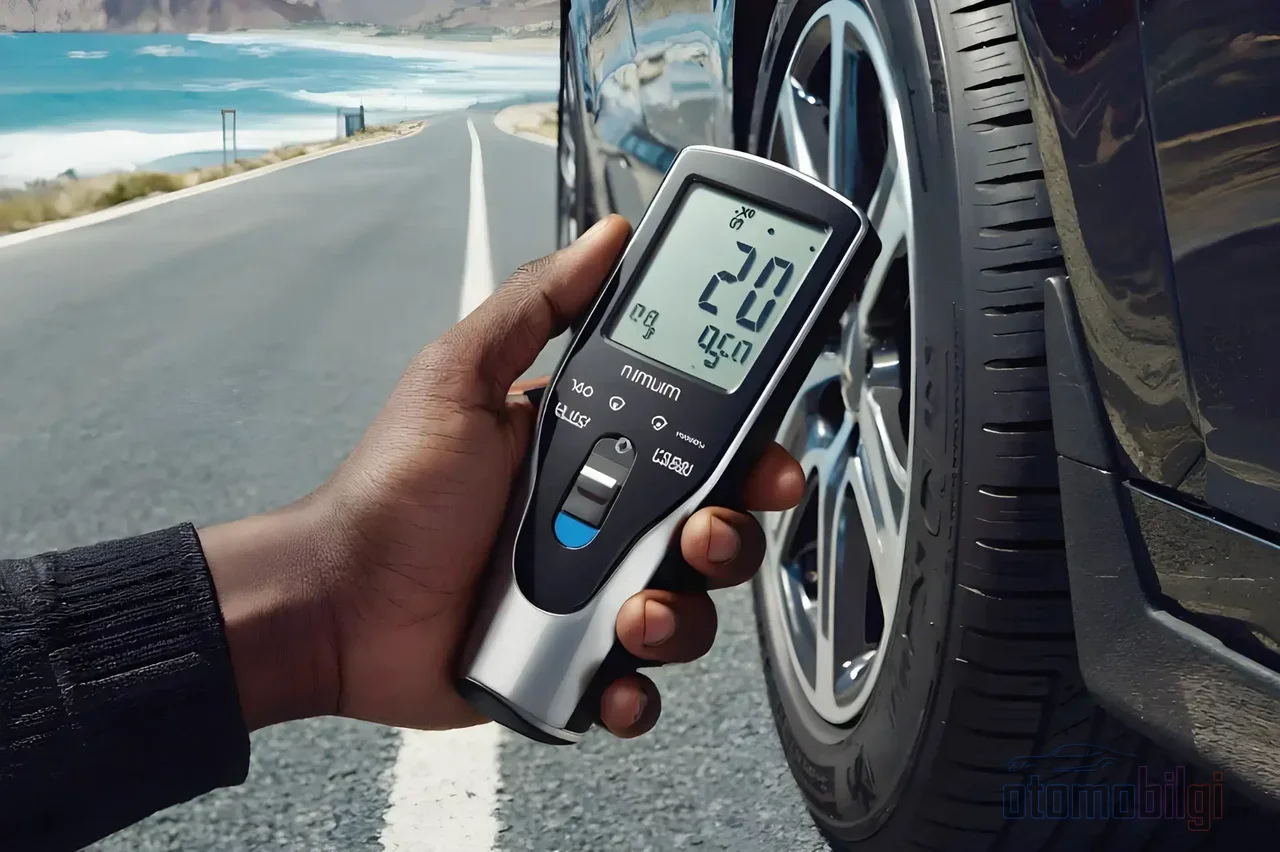
Most of the questions readers send on this topic carry the same confusion: a tire that set out at 33 PSI in the morning reaches 40 on the TPMS after highway driving on a hot day - will it blow out? No, probably not. Gas expands as it heats up; for every 10°F (approximately 5.5°C) change in temperature, tire pressure shifts by about 1 PSI . An increase of 1-2 PSI in summer heat or after a long highway drive, even a temporary rise of a few PSI, is completely normal and recedes as the tire cools down.
What matters is what the reference value is: the manufacturer's recommended pressure is written for cold tires. Measuring on a hot tire and deflating to that value means underinflating the tire when cold; underinflation leads to uneven wear and increased fuel consumption just as much as overinflation does. That's why you should do the check in the cool of the morning and set the value according to the manufacturer's specification. Symptoms such as a bulge or crack in the sidewall, frequent pressure loss, or vibration while driving are genuine fault signals that cannot be explained by heat.
Battery: The Part That Heat, Not Cold, Kills
Everyone whose car won't start on a winter morning blames the cold; yet the battery's real enemy is heat. In high temperatures a battery works well, but that good performance comes at the cost of its lifespan. Extreme heat can accelerate battery wear up to three times compared to cold; a quality battery that lasts 3-5 years in a temperate climate can drop to 2-3 years if constantly exposed to summer heat. The mechanism is also clear: heat causes evaporation of the battery fluid known as electrolyte, its charge-holding capacity weakens, and its life shortens. Batteries older than three years should definitely be checked at the start of summer.
What can be done is simple: check and clean corrosion on the terminals, make sure the battery is firmly secured in its mount - vibration damages the battery plates - and, if you have a battery with a removable cap, top up the electrolyte level with distilled water. In rarely used vehicles, using a battery maintainer known as a trickle charger also extends its life.
Fuel Evaporation: A Real Problem or an Old Fear?
The worry that gasoline evaporates from a car parked in the heat has been passed down through generations. Part of it is true: the sun heats the tank, pressure inside rises, and evaporation speeds up; a loose or damaged fuel cap makes the job easier. That's why checking that the cap is tight and, if possible, parking in the shade remain valid advice. Refueling during cooler hours and not filling the tank to the brim also make the list.
On the other hand, it's necessary not to lose perspective. Modern vehicles are designed with systems that capture fuel vapors and send them to the engine, largely preventing evaporation; the real and tangible benefit of parking in the shade is that the cabin stays cool and the air conditioning works less - which indirectly means fuel savings. If you drive an older vehicle, the issue is still noteworthy; in a new car, it is more a matter of comfort.
Paint and Interior Protection Against the Sun
UV rays affect not only our skin but also our car. Over time the paint fades and loses its gloss; inside the cabin, the dashboard and upholstery crack and fade. The most effective protection is regular waxing or a paint protection product; wax creates a barrier against UV, while a protective coating applied to the paint offers longer-lasting protection. Inside the cabin, surface protectants that block light coming through the windows, and if possible a sunshade on the front windshield, extend the dashboard's life. The cheapest solution is the one we all know: find some shade.
Beyond Coolant: Fluids to Check in Summer
Summer fluid checks don't end with the radiator. Hot weather thins engine oil and degrades it faster; synthetic oils hold up better than conventional ones in this regard. Transmission fluid can also break down in the heat and cause shifting problems; darkened or burnt-smelling fluid announces that it's time for a change. Brake fluid absorbs moisture over time and reduces braking performance in the heat - this is a detail you wouldn't want tested in a full-blown inferno during the June heat. If power steering fluid is low, the steering stiffens and you'll hear a whining sound in turns. Topping off the washer fluid with a summer-type product that dissolves insect residue keeps headlight vision clean.
| Fluid / Section | Summer point of attention | Warning sign |
|---|---|---|
| Coolant | Check on a cold engine; replace if cloudy or rust-colored | Temperature gauge rises, colored puddle underneath |
| Engine oil | Thins in the heat; synthetic oil is more durable | Rapid drop in level |
| Transmission fluid | Breaks down in heat | Shifting problems, burnt smell |
| Brake fluid | Absorbs moisture, performance drops in heat | Soft pedal feel |
| Power steering fluid | Low level makes itself known in summer | Stiff steering, whining sound in turns |
| Washer fluid | Prefer a summer-type, bug-dissolving product | Insect residue on the headlight |
The summary of summer preparation is hidden in one sentence: check the coolant on a cold engine, measure tire pressure in the cool, approach a three-year-old battery with suspicion, tighten the fuel cap and keep the car in the shade. These are jobs that require no excessive equipment and can be completed in half an hour - but they're the jobs that let your engine, tires and wallet get through the summer calmly. As far as I've seen over thirty years, most vehicles that leave people stranded have given a warning beforehand; the point is to listen to that warning.
Sources
- Cooling and A/C System Maintenance Tips - Summer Car Care
- The Effects of Weather on Your Radiator
- Car Fluid Maintenance in Hot Weather
- Why Your Car Is Overheating in Summer (And What to Do Immediately)
- What to Know About Summer Driving & Tire Pressure
- Does the Weather Affect Tire Pressure?
- How Hot Weather Affects Your Car Battery
- How Summer Heat Damages Your Car Battery and How to Prevent It
- How Bad Is Summer Heat for Your Battery
- Petrol Evaporation: Causes and How to Prevent It
- Does Parking in the Shade Prevent Fuel Evaporation?
- Car AC Maintenance Tips for the Summer
- Tips to Get the Most Cool From Your Car Air Conditioning
- 6 Tips for Optimal Use and Maintenance of Your Car's AC
- How to Protect Your Car From Sun Damage
- Simple Ways to Keep Your Car's Paint Safe From Sun Damage
- What Does Summer Car Care Include: 2026 Guide
- Essential Summer Car Care Tips