Nissan Expands Autonomous Mobility Trial in Kobe
Share This Page
Nissan is continuing its autonomous mobility trial in Kobe's Nada Gogo district in December 2026 with both a wider study area and a new operating scheme. The two highlights of this phase are on-demand booking via smartphone and real-time monitoring of the Kobe and Yokohama fleets from a single center. In other words, this is no longer a test vehicle shuttling back and forth on a fixed route, but a rehearsal for a future commercial service.
Highlights
- Trial period: December 8-18, 2026, weekdays Tuesday-Friday
- Area: Kobe, Nada Gogo and surrounding neighborhoods
- Vehicle: Nissan Serena-based, Level 2 equivalent autonomous development vehicle, with a safety driver
- Approximately 100 free participants; applications from October 14 to November 13, 2026
- Goal: paid service in selected regions in fiscal year 2027, full commercial operation in Nada Gogo in 2030
When and where will Nissan's Kobe autonomous mobility trial take place?
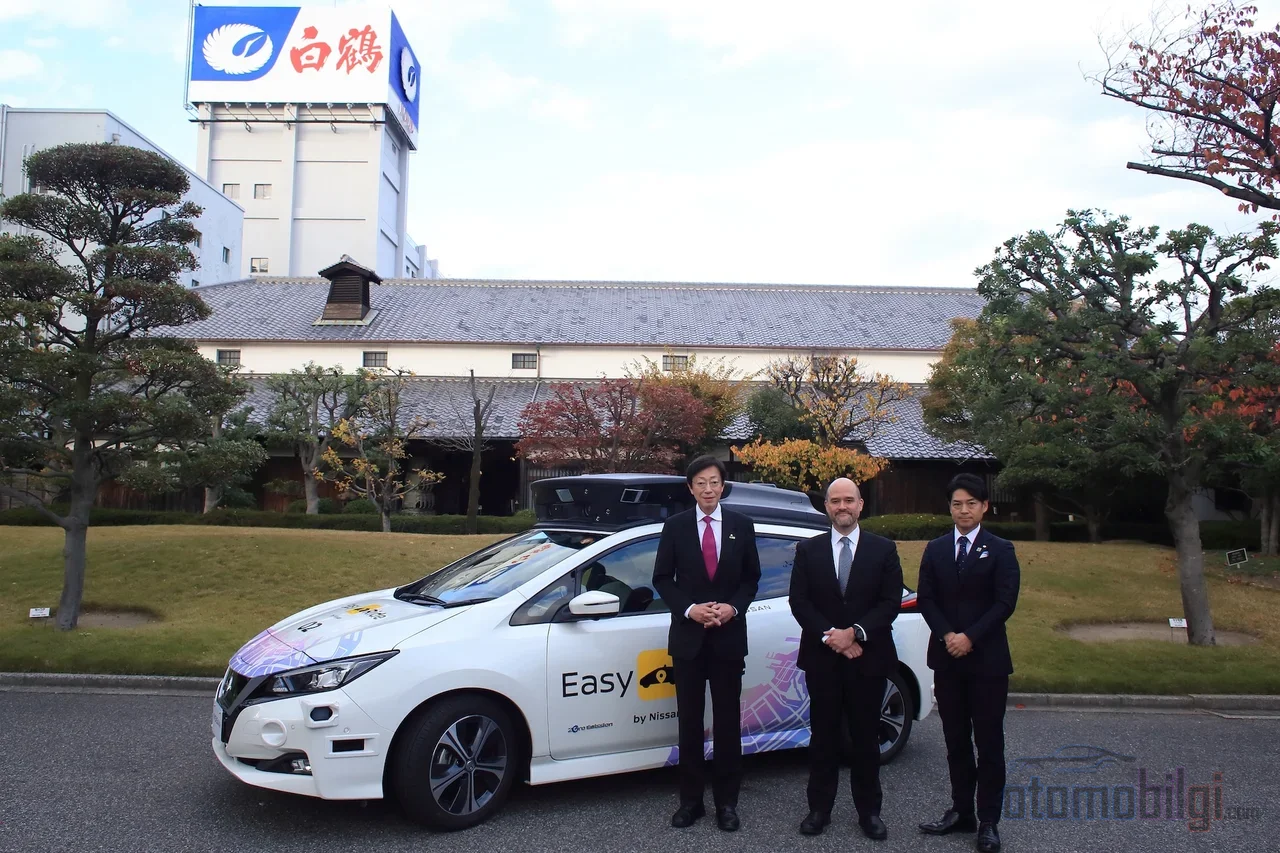
Nissan announced the details of its fiscal year 2026 pilot program on October 14, 2026, and began accepting participant applications. The trial vehicles will operate between December 8-18, 2026, only on weekdays from Tuesday to Friday. The main field of work falls on Kobe's Nada Gogo district; this neighborhood, famous in Japan for sake production, and the surrounding areas are the program's main study area.
The choice of this district is no coincidence. The area is both a daily living space for locals and a spot that attracts tourists with its sake breweries and museums. Nissan wants to measure three effects here: improving visitors' mobility, gaining social acceptance for autonomous vehicles, and contributing to regional vitality. These three form the essence of the company's approach to autonomous transportation: placing the technology not in metropolitan centers, but in local communities where transportation problems are tangibly felt.
What is different from the first test in January 2026?
As experienced followers will recall, Nissan conducted its first field test in the same area from January 19-23, 2026, in cooperation with the Kobe Municipality. In that trial, a Nissan LEAF was used, the vehicle could carry only 2 passengers, and the route was a roughly 20-minute loop covering Kobe Shu-Shin-Kan and three sake museums. Operating from 8 a.m. to 4 p.m., the vehicles carried 50 participants.
In the past, such pilots consisted of simply observing what happened with a two-person capacity vehicle on a single fixed route. Now the picture has changed: the vehicle is Serena-based, so there is a more spacious cabin and a more practical travel experience. The number of participants has doubled, the study area has been expanded to surrounding neighborhoods, and most importantly, the service operation has been structured like a real on-demand system. The January test asked whether the technology works in the area; the December test asks whether it can stand on its own as a service.
How will smartphone booking and central monitoring work?
This year's program has two technical foundations. First, participants will use a smartphone-based on-demand reservation and vehicle dispatch system. The user arranges their trip via their phone between designated boarding and drop-off points. It is not a fixed-schedule shuttle but a system that responds to calls. If we want to see how a commercial service will operate in the future, the test needs to be conducted the same way; Nissan is doing it in the right order.
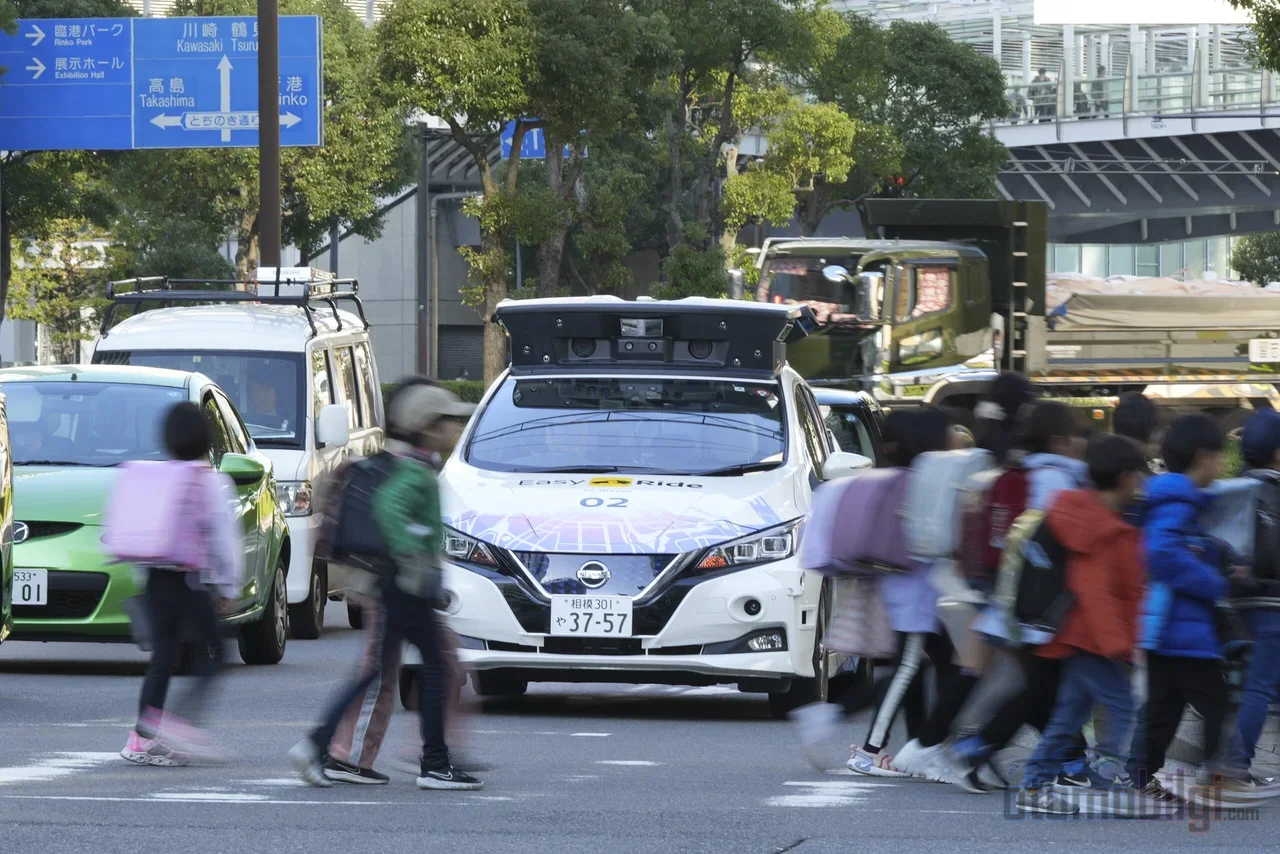
Second, and in my view the truly critical one, is that centralized monitoring is being validated at this scale for the first time. The Serena-based vehicles operating in Kobe and the Level 2 vehicles in Yokohama's Minato Mirai and Kannai districts will be monitored in real time from Nissan's Remote Operations Center in Yokohama. The goal is to increase efficiency by overseeing multiple operational areas from a single center and to ease the operational burden on local communities.
The question this detail puts before us is quite clear: if autonomous transportation services become widespread, will a separate local operations team be hired for each small district, or will a few remote operations centers cover all regions? Nissan's chosen answer is the latter. Managing the Kobe and Yokohama fleets from the same screen is a de facto test of whether this model works. If it succeeds, the cost equation of future expansion will change significantly; if it fails, an obstacle will stand in the way of operational scalability.
Are the vehicles driverless?
No, they are not. The vehicles used are SAE Level 2 equivalent autonomous development vehicles and each has a safety driver on board. Level 2 is considered the most advanced tier of driver assistance systems but legally and technically requires the driver to be engaged. In other words, the vehicles circulating the streets of Kobe are still a generation away from the fully driverless robotaxi narratives so often encountered. Nissan itself positions it that way; the current phase is built around gathering the operational details of the service under human supervision.
Who can apply for the trial, and how will the selection be made?
Applications are open between October 14 and November 13, 2026, and approximately 100 participants will be taken into the trial free of charge. To apply, one must be at least 18 years old; minors can participate accompanied by a parent or guardian. Participants are asked to consent to filming, interviews and surveys; this shows that the program is not only a transportation trial but also research into user experience and social acceptance.
If applications exceed the quota, the selection will be made by lottery and the results will be announced at the end of November. Whether or not the quota fills in such trials is data in itself; it is the most direct way to measure whether demand is real.
Where does the Kobe pilot stand in Nissan's autonomous strategy?
The Kobe program is not an isolated project; it is the road transport leg of Nissan's autonomous mobility plans. The program is being carried out under the Digital Agency of Japan's pioneering project for the early commercialization of autonomous driving services and the Ministry of Land, Infrastructure and Transport's fiscal 2026 regional public transportation support program. The City of Kobe has taken on overall project management; the Nada Gogo Sake Breweries Association is tasked with determining boarding points and exploring integrating the service with sake producers, Moplus Inc. is supporting service operations, and Nissan is providing planning, operations and vehicles.
The timeline is also clear: paid service in selected areas is targeted to begin in fiscal 2027, with full commercial operation in Nada Gogo targeted for fiscal 2030. In other words, the trial we are focusing on right now is one of the intermediate stops on the road to the paid launch.
Other legs of the same vision
Nissan's autonomous efforts are not limited to Kobe. In March 2026, the company signed a memorandum of understanding with Wayve and Uber in Tokyo; by the end of 2026, a robotaxi pilot using Wayve's AI Driver technology, based on the Nissan LEAF, is targeted to begin in Tokyo. In addition, Nissan announced, with the long-term vision it unveiled in April 2026, that it aims to offer end-to-end autonomous capability in the Elgrand, which will be renewed in 2027.
To someone looking at this picture from afar, it may seem like a clutter of details; but those who follow it closely know that the real test of automakers' autonomous journey is not the launch ceremonies, but the everyday details of operations. The centralized monitoring model being tested in Kobe may seem less exciting than robotaxi pilots, but it is precisely these kinds of elements that determine whether the service can scale. Speaking with the industry's thirty years of experience, showing off the technology is easy; running it every day is hard.
What will the coming period reveal?
The findings from the December trial will answer two questions: can an on-demand, reservation-based autonomous service work smoothly in a complex tourist local fabric like the sake district, and can a single remote operations center manage fleets in two different cities at the same time? The first answer concerns the service's user side, the second its operational economics. The transition to paid service in 2027 will depend largely on the answers to these two questions. When the lottery results are announced at the end of November and the first vehicles take to the road in mid-December, we will be one step closer to seeing how realistic Nissan's 2030 target really is.
Sources
- Nissan expands autonomous mobility service in Kobe
- Nissan Begins Autonomous Driving Trials in Japan in 2026
- Autonomous mobility service pilot program to commence in Kobe City
- Nissan expands autonomous ride pilot in Kobe ahead of 2027 paid rides
- Nissan tests remote oversight of Kobe and Yokohama fleets
- Wayve, Uber and Nissan Announce Collaboration on Robotaxis
- Nissan sets long-term direction with Vision of Mobility