inDrive Partners with Pony.ai for Autonomous Taxis in Kazakhstan
Share This Page
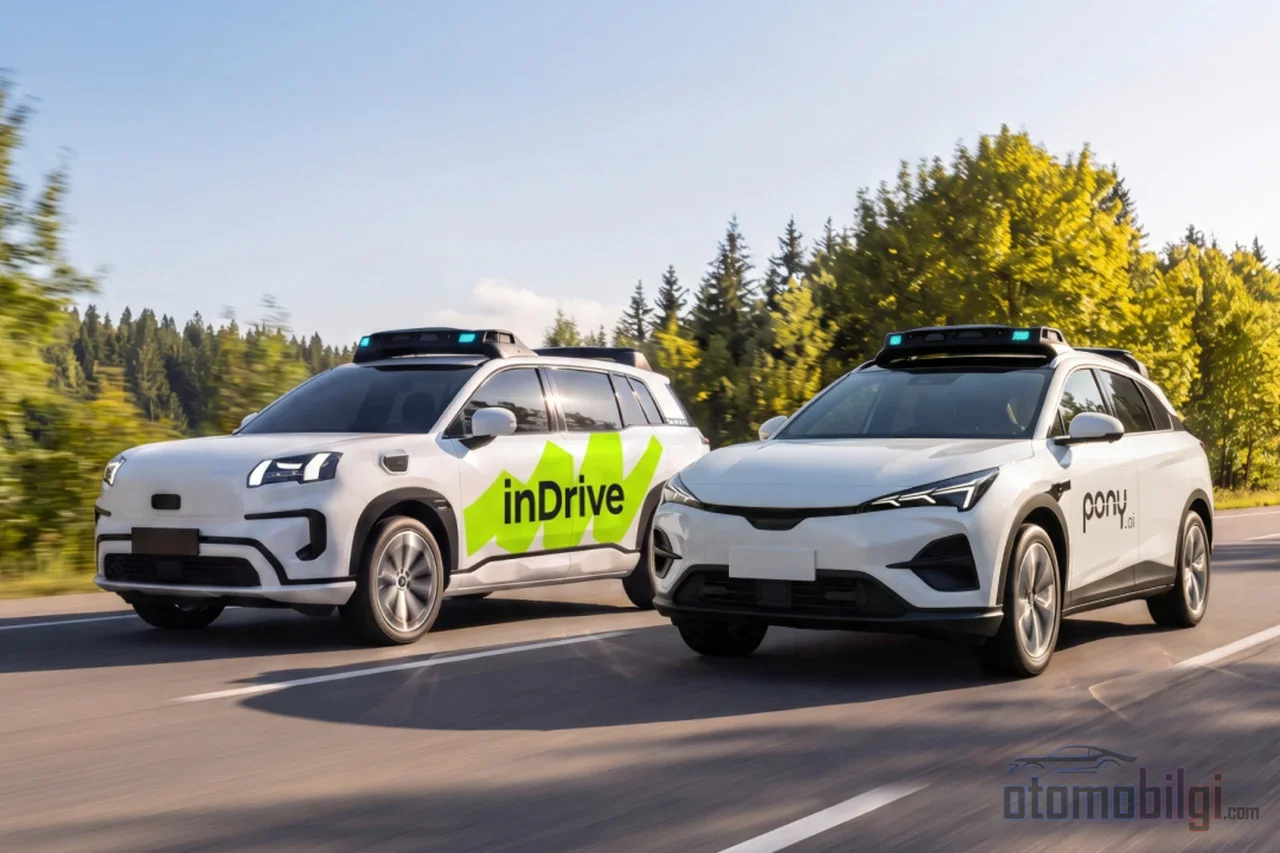
inDrive has announced that it signed a memorandum of understanding with China-based autonomous driving company Pony.ai and NVIDIA to explore autonomous passenger transportation in Kazakhstan. Under the three-party agreement, Pony.ai's seventh-generation robotaxis, inDrive's ride-hailing platform, and NVIDIA's Hyperion-based AI infrastructure will come together; the first tests will begin in Astana in the first half of 2027. It is worth remembering that this is a memorandum of understanding: it is not yet a binding commercial contract, but a feasibility assessment.
Highlights
- The memorandum of understanding, announced on October 23, 2026, designates Kazakhstan as the first test market for the autonomous taxi.
- Tests will begin in Astana in the first half of 2027 with vehicles operated by safety drivers; the ultimate goal is fully driverless rides.
- inDrive operates in more than 1,200 cities in 47 countries and has reached over 400 million downloads.
- Pony.ai's fleet has reached 1,975 vehicles; the end-of-2026 target is more than 3,500 robotaxis in more than 20 cities.
- The launch is contingent on an agreement with the Kazakh government.
What Does the Memorandum of Understanding Cover?
The memorandum of understanding, signed in Astana and made public on October 23, 2026, draws a fairly clear division of duties among the three companies. Pony.ai will supply the seventh-generation robotaxi vehicles; inDrive will provide the ride-hailing platform and operate the service in Kazakhstan; and NVIDIA will take on the entire AI infrastructure.
NVIDIA's contribution consists of three layers. NVIDIA Hyperion is a reference architecture offering a sensor and compute platform ready for autonomous vehicles; the Alpamayo Stack is the software layer containing AI models and synthetic data tools; and Halos is described as a full-stack safety system. Together, the three companies will assess the technical, operational, regulatory, and commercial feasibility of offering Level 4-ready autonomous vehicles in Kazakhstan through the inDrive app.
For anyone who has spent years in this business, the striking point is how measured the approach is. The announcement contains no concrete launch date or vehicle count commitment; it clearly states that the launch is contingent on an agreement with the Kazakh government. In the past, projects like this were announced at big conferences with grandiose claims; now the parties are first putting regulation, operations, and economics on the table. This is a picture showing that the industry has matured.
When and How Will the Tests Begin?
According to the planned timeline, tests will begin in Astana in the first half of 2027. Initially, the vehicles will have a safety operator on board; the ultimate goal is fully driverless rides, but no firm date has been given for that stage. This phased approach has now become standard in autonomous driving projects: first a human in the observer's seat, then gradually removing that person as well.
Kazakhstan also appears to be prepared. The country had announced in September 2026 that it would launch autonomous taxi services in 2027; Trials are planned in Astana and two other cities, and rules have been established for autonomous vehicle testing on designated public roads. Memorandums signed with Kazakh authorities between 2025 and 2026 have established a pilot framework that operates on a kind of proving-ground logic. So inDrive and Pony.ai are not arriving on empty ground; they are stepping onto terrain whose rules have already been written.
Why Was Kazakhstan Chosen?
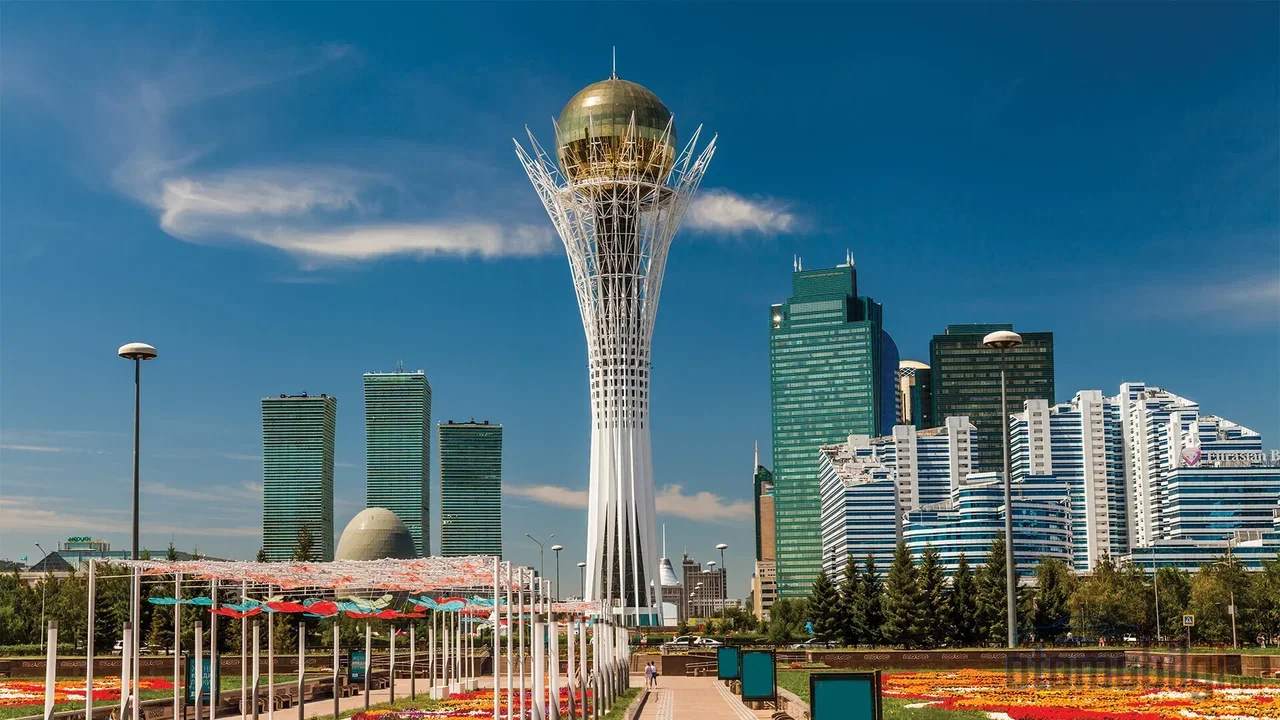
At a time when robotaxi trials are intensifying, Central Asia appearing at the top of the list may seem surprising at first glance. However, the justifications are laid out in the official statement, and each one is logical in its own right.
- Within the framework of the Year of Digitalization and Artificial Intelligence, Kazakhstan is creating its first structured legal framework for driverless transportation; regulatory readiness is a decisive requirement for autonomous projects.
- The country is the region's leading economy, and inDrive already has a strong market presence there.
- With a population of approximately 1.7 million, Astana is one of the fastest-growing capitals in Central Asia.
Astana's climate also stands out as a separate item. According to a point emphasized by inDrive's founding CEO Arsen Tomsky, the capital is the world's second coldest capital; long winters, snow, and ice are among the conditions that challenge autonomous driving technology the most. Although this may seem like a handicap, for the companies it means exactly the opposite: a system tested in harsh winter conditions accumulates valuable experience for expansion into other markets with similar climates. Software that runs under the Californian sun and software that runs on Astana's ice are not of the same maturity; the market door opens more easily for whoever can prove the latter.
The post-launch plan is designed accordingly: The companies will evaluate whether the approach can be extended first to other cities in Kazakhstan, and then to other countries where inDrive operates.
inDrive and Pony.ai: The Parties' Current Position
To understand this deal, it is necessary to look at where the parties stand. inDrive is known for its model in which the passenger and the driver can negotiate the fare, and is one of Uber's global competitors. With more than 400 million downloads, the app has ranked second in the most downloaded ride-hailing app rankings for the fourth consecutive year; it operates in more than 1,200 cities across 47 countries. Beyond ride-hailing, it also offers intercity transportation, delivery, and financial services; it reported a 31% increase in 2025 revenue.
Pony.ai, meanwhile, is one of the most experienced players in this field. Founded in 2016, the company is listed on the NASDAQ and the Hong Kong stock exchange. Its Level 4 autonomous driving technology has been validated by fully driverless commercial operations conducted in major Chinese cities and by field applications in Europe, the Middle East, and Asia. Its fleet reached 1,975 vehicles as of June 30, 2026; the end-of-2026 target is more than 3,500 robotaxis in more than 20 cities. Robotaxi revenue in the second quarter rose to 12.1 million dollars, an increase of over 600 percent year-on-year; seventh-generation vehicles reached breakeven unit economics in Shenzhen. The Gen-7 platform features multi-sensor fusion, system-level redundancy, and the ability to continue operating safely in the event of a failure.
| Party | Role in the Project | Current Status |
|---|---|---|
| inDrive | Ride-hailing platform and operations in Kazakhstan | More than 1,200 cities in 47 countries; over 400 million downloads |
| Pony.ai | Seventh-generation robotaxi vehicles | Fleet of 1,975 vehicles; target of more than 3,500 by the end of 2026 |
| NVIDIA | Hyperion platform, Alpamayo Stack, Halos safety system | Adopted by BYD, Geely, Isuzu, and Nissan |
inDrive's Autonomous Strategy: Lightweight but Multi-Fronted
The Kazakhstan deal is not the only step in inDrive's entry into autonomous mobility. In December, the company had signed a separate agreement with Saudi Arabia-based AI Driver to deploy autonomous vehicles using WeRide technology, starting with Riyadh. It is not yet clear whether that pilot will begin in the first half of 2026; inDrive is also evaluating other markets. Yuri Misnik, who leads the company's technical side, emphasizes the key condition of an open, collaboration-friendly regulatory environment for a successful launch. The company's approach is, by design, a capital-light model: rather than building its own vehicles, working with local partners in different markets.
To evaluate this strategy, it makes sense to look at inDrive's origins. The platform grew with a model in which drivers and passengers negotiate directly, keeping costs low. As the deployment costs of autonomous vehicles fall, the company's real bet is that this focus on low-fare rides can carry over into the autonomous era as well. There is similar logic on the NVIDIA side: Hyperion's ready-made sensor and computing foundation pulls down robotaxi development costs; it is noted that this is particularly important for competitiveness in emerging markets where rides are relatively cheap. Let us also note that the name was changed from DRIVE Hyperion to NVIDIA Hyperion in September 2026; the platform now covers not only passenger vehicles but a broad spectrum of autonomous mobility.
The Place of the New Move in the Robotaxi Market
This announcement came at a time when the robotaxi race was extending beyond the US and China. Uber announced plans last month to test Pony.ai robotaxis in London; it began supervised autonomous rides with Wayve and is working with multiple robotaxi companies in other markets, including the Middle East. Pony.ai's expansion beyond China has also been accelerating: In September 2026, fully driverless test rides began in Zagreb with Verne, and the partnership with Uber was expanded for the deployment of more than 2,000 robotaxis in Europe; work is under way with Mowasalat in Qatar, with pilots being conducted in Luxembourg and Singapore.
Against this backdrop, inDrive's move is read as an effort to carve out a position in the market without yet disrupting an established order. While Uber has long since diversified its robotaxi partnerships, inDrive is locking down a territory in its own region - Central Asia - where no one has yet established a foothold. Gaining early experience in a market whose harsh climate carries real test value provides bargaining power in similar markets later on. As for the question of who will actually make real money from this... Considering that ride-hailing margins are already thin and robotaxis are a capital-hungry business, this question will keep being asked in Kazakhstan as well. The memorandum of understanding is a good start; the real test will come in the first half of 2027 on Astana's icy roads.
Conclusion: A New Point on Kazakhstan's Robotaxi Map?
The memorandum of understanding between inDrive, Pony.ai and NVIDIA is a step that expands the geography of autonomous transportation while remaining measured. It is not a binding commercial agreement; it is a framework that will test technical, operational, regulatory and commercial feasibility. On the other hand, the cards held by all three parties are real: Pony.ai's field-validated Level 4 technology, inDrive's distribution network across 47 countries, and NVIDIA's Hyperion platform, which is becoming an industry standard. The agreement to be made with the government of Kazakhstan and the tests starting in Astana in the first half of 2027 will be the first criteria showing whether the project will move beyond paper.
Sources
- PONY AI Inc. and inDrive Announce Collaboration to Explore Autonomous Mobility in Kazakhstan Built on NVIDIA Hyperion
- inDrive and Pony.ai Announce Collaboration to Explore Autonomous Mobility in Kazakhstan Built on NVIDIA Hyperion (inDrive Blog)
- Uber rival inDrive eyes 2027 robotaxi tests in Central Asia with Pony AI and Nvidia (TechCrunch)
- Pony AI enters Central Asia with inDrive robotaxi pilot in Kazakhstan (CnEVPost)
- Pony AI Inc. Reports Second Quarter 2026 Financial Results
- BYD, Geely, Isuzu and Nissan Adopt NVIDIA Hyperion for Level 4 (NVIDIA Newsroom)
- inDrive Secures No.2 Global Spot in Ride-Hailing App Downloads for Fourth Straight Year (inDrive Blog)
- Ride-hailing app inDrive says revenue up 31% in 2025 (Reuters)