Why Are Tiny Electric Cars Proliferating in Cities?
Share This Page
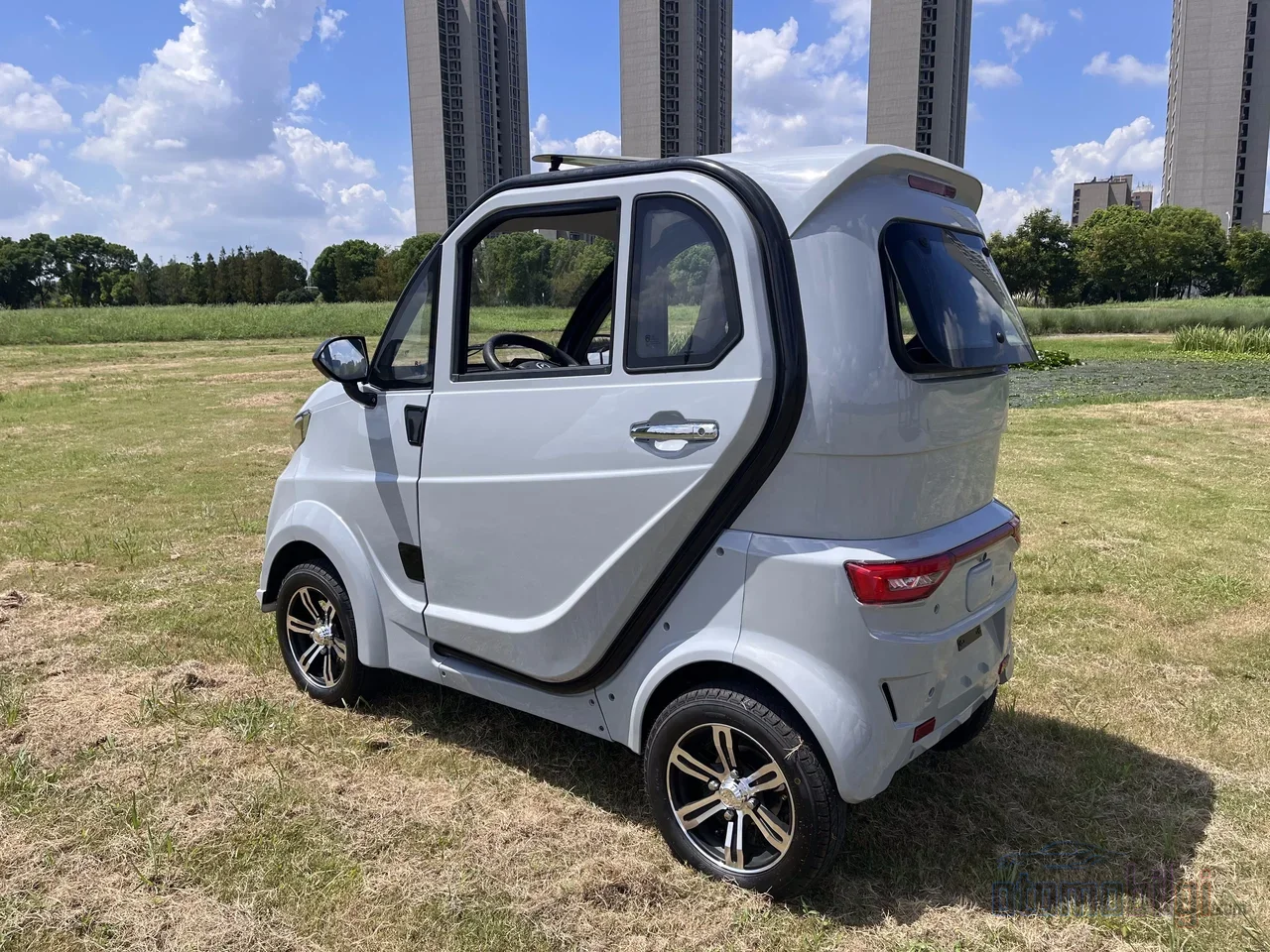
The reason tiny electric vehicles are multiplying in cities is simple: some of them are legally not classified as cars, so they are exempt from crash testing, which means they can be produced more cheaply and sold under more flexible rules. L6e and L7e class quadricycles and fully homologated compact city EVs get lumped into the same bag, but they are completely different products. So which one is a real solution, and which one is a marketing show? On this page, we separate the promises from the facts.
Highlights
- L6e light quadricycle: maximum 45 km/h, excluding batteries 425 kg, motor power 4-6 kW
- L7e heavy quadricycle: 450 kg (passenger car) weight limit, 15 kW power ceiling
- Fiat Topolino 2026: approximately 74 km range, 40 km/h top speed, charges from an outlet in ~5 hours charge
- Quadricycles are not subject to the frontal and side crash tests that normal cars undergo
- In Japan, kei vehicles accounted for 38% of the market in 2024 created
What Is a Quadricycle? L6e and L7e Classes at a Glance
First, let's get the terminology straight, otherwise our discussion stays up in the air. The European Union has created the "quadricycle" category for tiny four-wheeled vehicles. Technically, these are not cars; they are closer to the moped family. That is why their design requirements are far more flexible than those for normal cars. The boundaries are drawn based on weight, power and speed, and the history is interesting: the category was officially born in 1992 , split into light (L6e) and heavy (L7e) in 2002 , and the current rules were settled with the regulation introduced in 2013
.
| Let me explain the difference with a simple analogy: the L6e is an electric "golf cart plus" that you can drive with a license somewhere between a bicycle and a bus; the L7e resembles a car on the outside but lacks internal crash protection. Both are produced cheaply because they do not carry the legal obligations of a full passenger car. | Feature | L6e Light |
|---|---|---|
| L7e Heavy | Maximum mass (excluding battery) | 425 kg |
| 450 kg passenger / 600 kg commercial | Motor power limit | 4 kW (L6e-A) / 6 kW (L6e-B) |
| 15 kW (20 hp) | Speed | 45 km/h cap |
| 90 km/h (no limit for L7e-A) | Driver's license | AM is sufficient in most EU countries |
| Normally a category B car license | Motorway | No |
Banned in France and Italy
The So-Called License-Free Car: Rules That Vary From Country to Country The rules around France's "voiture sans permis", i.e. the license-free car, are striking: From age 14 onward, it can be used with a road safety certificate, while those born before 1988 can drive it without any documentation at all. In Finland the minimum age is 15 , in Italy the light quadricycle is used at age 14 with an A license, and the heavy class at
age 16 with an A license. So the term "license-free car" is not absolute; where you are matters a lot. Looking beyond Europe, the picture is different again. In the USA and Canada, these vehicles are classified as Low-Speed Vehicles or Neighborhood Electric Vehicles: their speed is physically restricted to around 40 km/h and on roads where they are allowed. An airbag or structural crash testing isn't required; in return, a three-point seatbelt, headlights, and turn signals are mandatory. In Japan, however, it's a whole different league: kei cars -the micro vehicles-answer size and power limits with tax advantages, and in 2024 they alone accounted for 38% of the Japanese market. So you can't say "tiny cars are useless"; with the right regulation, they can become a massive market.
Safety: Where Is the Weakest Link of These Little Ones?
Here's the crucial question. Quadricycles are not subject to the frontal and side crash tests that regular cars must undergo. This isn't a mistake, but a deliberate compromise inherent to the design itself; the category has been conceived this way since 1992 . A report prepared for the European Commission by an institution specializing in traffic engineering states that passenger-car-standard safety requirements are not applied to L7e-A class vehicles, and that this gap triggered the proposal for additional type-approval requirements.
What happens without crash protection? A 2026 scientific study concludes that all the quadricycles tested exhibited critical safety problems and, apart from the battery, finds the current regulation for vehicles weighing up to 450 kg capable of reaching 90 km/h "clearly inadequate". My analogy is this: taking a boat designed for gentle waves out onto the open sea. A 45 km/h vehicle causes no problems in its own traffic lane, but its disadvantage multiplies when it enters faster-moving traffic. This concern has long been debated in Finland; the February 2017
Sastamala quadricycle accident further fueled the debate. Let's be honest for comparison's sake: even full-size EVs don't always shine. Of the seven electric vehicles tested by the safety institute in 2026, only four earned the top "good" rating. So when even full-size EVs can't claim the trophy, where does that leave the safety level of a vehicle entirely exempt from crash testing? The answer is clear: a distinctly lower league.
Citroën Ami and Fiat Topolino: What's Inside These Cute Boxes?
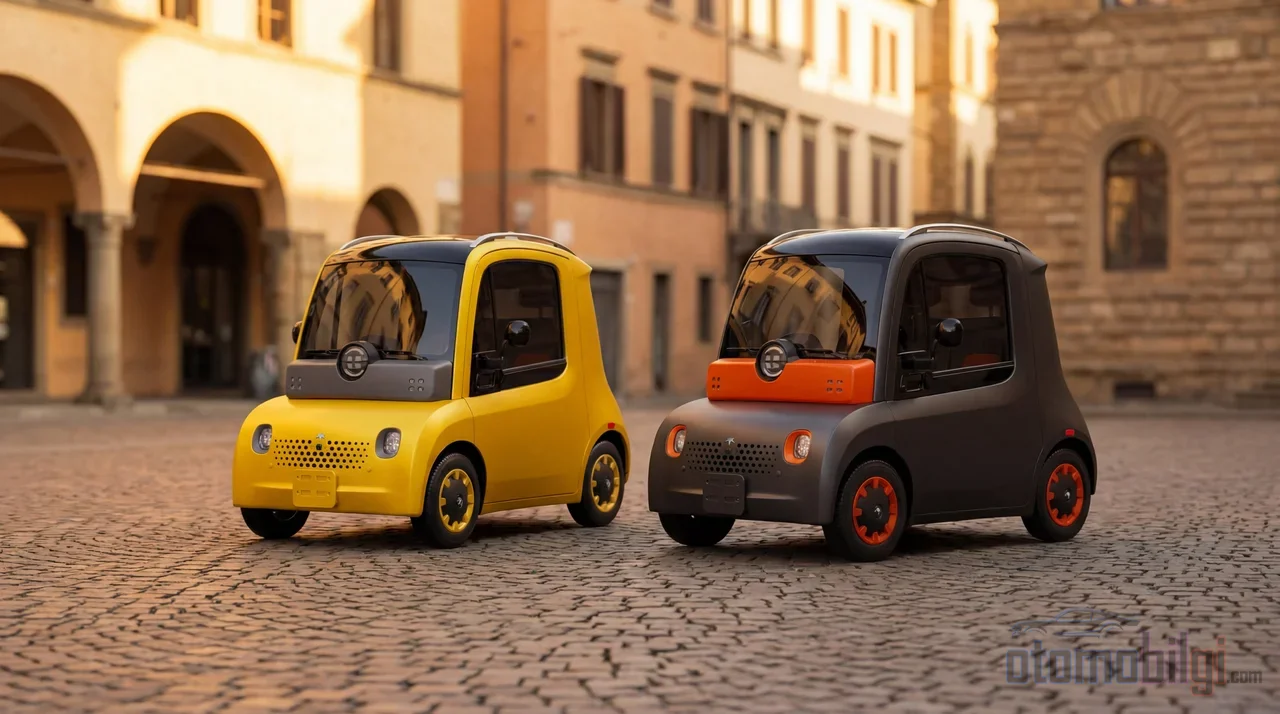
Let's look at the stars of the market. First, a little secret: the Fiat Topolino is mechanically identical to the Citroën Ami ; the only difference is the brand badge. Both are quadricycles, meaning they fall within the safety exemption we described above. The expected figures for the 2026 Topolino are as follows: roughly 74 km of range, a top speed of 40 km/h, and charging from a standard home outlet in about 5 hours. Claimed to have launched in the US as the cheapest new vehicle starting from $13,995; this price appeared in only one source, so it's best to read it cautiously.
Let me relay two jury verdicts from the British automotive press, both harsh: one describes the Topolino as "more a luxury golf cart than a useful city car"; on the praise side, its charm in the city and the possibility of its monthly costs being cheaper than a phone plan are noted, while shaky road handling, limited performance and range, and quadricycle safety are listed as cons. The verdict given for the Ami is even more blunt: "Not a real car; small, noisy, impractical, slow and can't go far." In my view, that sentence isn't really a problem - it's a product description. These vehicles are designed for short urban hops; for someone who uses it that way it makes sense, for anyone wanting more it's a disappointment.
How Big Is the Market, and What Does Growth Mean?
Looking at the numbers, the picture seems really attractive: the micro EV market is projected to rise from $9.9 billion in 2024 to $32.7 billion in 2034 , with an estimated annual 12.7% growth. An alternative market analysis measures the same market as much smaller, $4.20 billion in 2026 . Is this difference odd? No. The definition of the micro EV market hasn't been standardized; one counts a broader product range while the other measures a narrower segment. So the growth is real, but you shouldn't buy into the "revolution" narrative with rose-tinted glasses.
The broader electric vehicle landscape shows the direction of the market's wind: as of the end of 2025 there are roughly 44 million electric vehicles on the road in China, about ~13% of the total vehicle fleet. As of September 2026 new energy vehicles have reached 57% of passenger car sales in that country. This big wave is also feeding compact city EVs. A nice example: the Chinese-made Chevrolet Spark EUV, with roughly 360 km of range, a 10.1-inch screen and a trunk that expands to 1,375 L when folded, is a fully approved compact EV - but unfortunately it isn't sold in the US. On the US side, the Chevrolet Bolt EV, with a starting price of $27,600 and an EPA range of 262 miles , is among the 2026 anticipated vehicles. For comparison: in the US a new full-size EV runs about $42,000-55,000, while its gasoline equivalent falls in the $32,000-45,000 band.
Tiny EVs: The Solution to Urban Mobility, or Just Hype?
The Arguments For
- Ownership costs are noticeably lower than big EVs; the battery is small and the mechanics simple.
- They offer much better protection, comfort and visibility against rain, wind and cold than a bicycle.
- In urban areas they can save space both on the road and when parked; in cities with congested traffic this is a serious plus.
- The L7e class actually works for last-mile delivery, with 150-250 kg of load and 70-120 km of range.
The Arguments Against
The criticisms are as concrete as the praise. The problem industry analysts highlight is this: micro vehicles are suitable for short urban trips but expensive compared to e-bikes; serious price drops cannot be expected until global regulatory standards settle. In other words, the comparison is not against rival cars but against bicycles. The academic finding is also interesting: the success of the micro-EV market largely depends on the city's transportation lock-in structure - in a city built around wide roads, long distances, and abundant parking, these vehicles may not work.
The two paradoxes TRL warns about summarize the essence of the matter. First: low-mass, speed-restricted vehicles are being proliferated while exempt from safety standards; when they enter complex environments in faster traffic, they create danger. Second: those that will enter full-speed traffic face car-level safety costs, and the promise of cheapness evaporates. In short, the tiny EV either stays cheap by compromising on safety or becomes safe and expensive; you cannot have both at once. I think that is the most honest answer today.
For Whom Is It Meaningful, and for Whom a Marketing Show?
Let me draw you a clear framework. Never again put these two products in the same basket: (1) quadricycles exempt from safety standards - L6e/L7e - the Ami, Topolino class; (2) fully type-approved compact city EVs - like the Mini Cooper SE, Spark EUV, or Bolt. The former is a product limited both by its license and its speed: 45 km/h is not decorative fluff, it is the rule. The latter is a real car and undergoes real car tests.
A micro car makes sense in this scenario: you live in a crowded European city center, your daily commute is short, finding parking is a nightmare, the weather is mostly wet, and you don't want a bicycle. That box could be a sensible investment for you, and if your license situation is restricted, it might even be your only option. But once highways, long days on battery, and family safety expectations come into play, a fully homologated compact EV is a much more solid choice for the same money. In my view, the future of this market depends on adapting safety standards to these tiny vehicles and on settling rules across countries. Until then, read it like this: the promises are real, but only with the right person, the right city, and the right expectations.
Let me ask you too: is a box with 74 km of range and a 40 km/h top speed worth the money, or would you get by with a bicycle? The answer changes with your home, your city, and your wallet - and that's exactly why there's no such thing as a "tiny car for everyone".
Sources
- Quadricycle (EU vehicle classification)
- What actually is a microcar?
- TRL Report CPR1821: L7e-A heavy on-road quads (European Commission)
- Assessing future road safety with the advent of L-category vehicles - Gulino et al., 2026
- General considerations on regulations and safety requirements for quadricycles
- 2026 Fiat Topolino First Look
- 2026 Fiat Topolino: What We Know So Far
- Fiat Topolino (2026) review
- Citroen Ami Review 2026
- Trends in electric cars - Global EV Outlook 2026 (IEA)
- Electric Vehicle Outlook 2026 - BloombergNEF
- State of China's Auto Market - September 2026
- Micro Electric Vehicle Market
- Micro Electric Vehicle Market - Fortune Business Insights
- L7e Quadricycles Market Report
- Scaling minimobility - McKinsey & Company
- Exploring city propensity for the market success of micro-electric vehicles
- 2026 Chevrolet Spark EUV Quick Spin
- Chevy Electric Vehicle Lineup
- IIHS 2026 Top Safety Picks - full electric
- Are Electric Cars Worth It? The Real 2026 Cost Breakdown