Why Do Polycarbonate Headlights Turn Yellow?
Share This Page
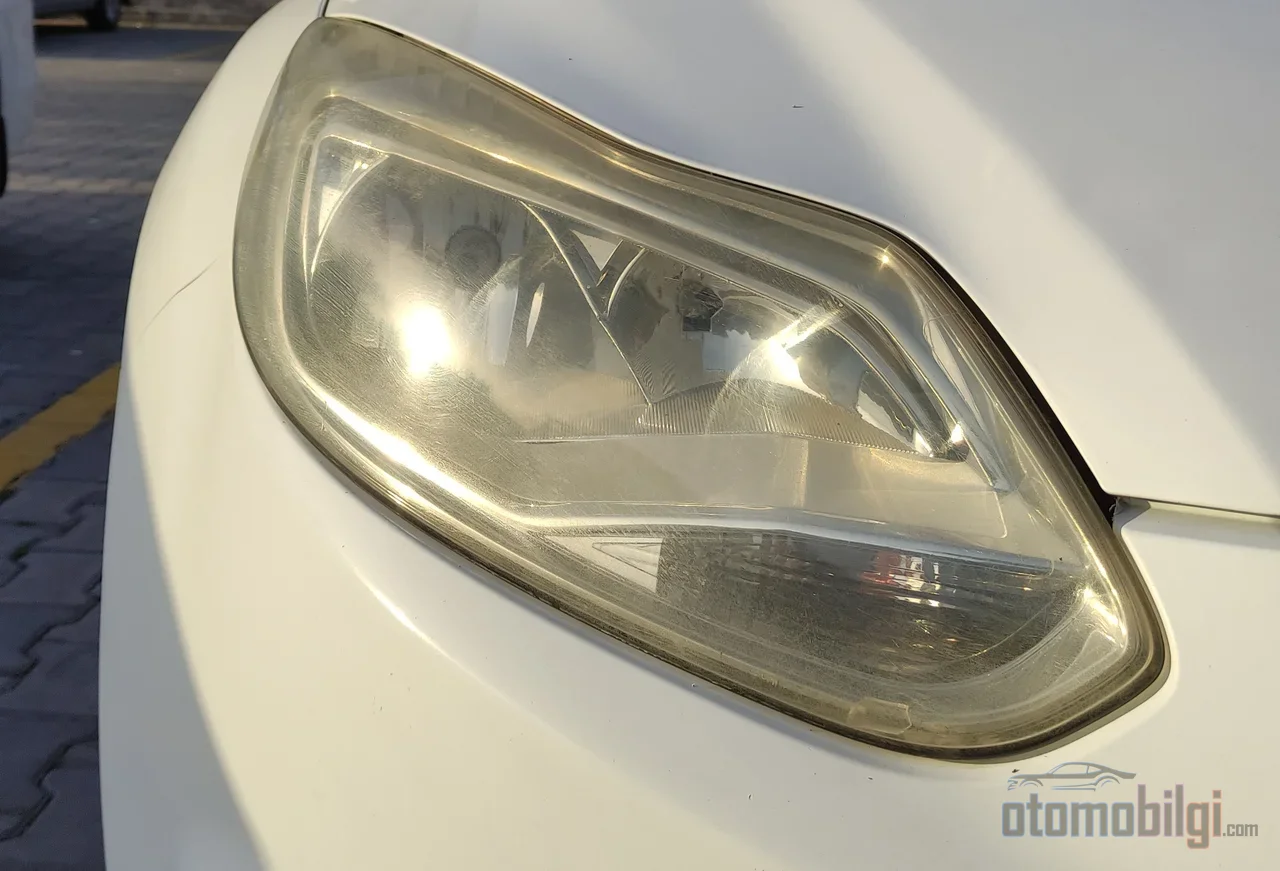
Polycarbonate headlights yellow because plastic lenses are naturally vulnerable to UV light; when the protective hard coating applied at the factory breaks down over time, the polycarbonate oxidizes, yellows, and turns hazy. This process significantly reduces light output: a severely degraded lens can lose up to 70-80% of the light compared to a new one. So that yellowed headlight isn't just ugly, it's genuinely swallowing your night vision bit by bit.
Highlights
- Polycarbonate is half the weight of glass but about 250 times more impact resistant
- Factory UV coating typically protects for around 3 years
- Yellowed lenses can reduce light output by up to 70-80%
- Toothpaste polishing does not provide UV protection; the result usually disappears within 4-6 weeks
A question for you: have you ever looked closely at the headlights of an old car parked in the sun early in the morning? That hazy, yellowish appearance is not damage from a crash or dirt; it's the aging of the material itself. And there's a genuinely fascinating materials science story behind it. Let's dive in.
Why Are Headlights Made of Polycarbonate Instead of Glass?
The headlights of old cars really were glass. But modern headlights are not made of glass; they're made of a transparent plastic called polycarbonate, or PC for short. The reason is very logical: PC weighs about half as much as glass but is far stronger; according to industry sources, it's 250 times more impact resistant than conventional glass. When struck by stones, the plastic flexes to resist instead of shattering like glass - a property worth its weight in gold for a headlight lens.
There's also the design side. Glass is a material you shape by blowing with a flame; polycarbonate is cast into a mold. That's why manufacturers can create the sharp, flowing headlight shapes compatible with LED light signatures that we admire today using PC. Production costs are also lower. In short, PC is a material that has earned its place as an engineer's favorite.
But if it's so great, why does it yellow? That's exactly where the devil hides: glass is naturally resistant to UV. Polycarbonate, on the other hand, is extremely sensitive to UV light. The ultraviolet part of sunlight directly attacks PC's molecular structure. So the material is strong but has no shield against the sun; manufacturers add the shield afterwards.
How Exactly Does Yellowing Happen? The Molecular Story
Every polycarbonate headlight leaving the factory has a thin, transparent UV protective layer on its surface: the hard coat, i.e. the hard coating. This layer protects the PC both by absorbing ultraviolet light and by providing scratch resistance. But this protection doesn't last forever; typically it lasts around 3 years. When the coating wears out and weakens, UV light starts reaching the polycarbonate itself.
What happens next is nicely explained in the academic literature. UV light breaks the carbonate bonds in PC, creating free radicals; this is called the photo-Fries rearrangement. At the same time, a radical chain reaction we call photo-oxidation begins: radicals combining with oxygen shorten the polymer chains. This process leads to a loss of molecular weight and embrittlement of the material. In simple analogy: the carpet's weave deteriorates and shrivels, and its color changes by yellowing.
The sun isn't the only culprit, though. In vehicles parked in the sun, the lens heats up and expands repeatedly during the day, then cools and contracts at night. This thermal fatigue accelerates the degradation of the coating. That's why cars waiting in a garage yellow much later, years down the line. Also, micro-scratches caused by stone chips and road wear scatter light instead of transmitting it properly, creating that hazy appearance. Yellowing and haziness thus add up together.
How Much Does a Yellowed Headlight Affect Night Driving?
Now here is the crucial question. A yellowed and cloudy lens loses light in two ways: the discoloration absorbs part of the light; while haziness scatters the remaining light diffusely rather than in the intended direction. According to measurements from photometric test laboratories, this loss corresponds to a drop in output of up to 70-80% compared with a new headlight. It's most honest to say this figure varies within that range depending on the measurement method and the degree of degradation, but the result is striking in any case.
Think of it this way: you're driving at night on an empty village road, and the distance your headlight illuminates gets a little shorter every year. Because the lens is slowly acting like a yellow filter and frosted glass. Surface degradation disrupts not only brightness but also how the light is distributed on the road. That's why a yellowed headlight is not an aesthetic problem, but a safety issue. Meanwhile, an interesting footnote: yellowish light with a low color temperature penetrates fog better than white light; but this is no excuse whatsoever for defending the lens itself turning yellow, because the yellowing there absorbs and disperses light randomly, not selectively.
Hard Coat: The Manufacturers' Shield and Standards
Manufacturers aware of the headlight lens's vulnerability found the solution in an anti-UV and anti-wear hard coating applied in a controlled environment. This layer essentially sits on top of the lens like a second skin. Even the patent literature is active in this field: headlight lens concepts featuring a protective surface infused into the polycarbonate substrate have been patented. In other words, engineers are attacking the UV problem directly.
You might ask why we don't use an acrylic lens and instead resort to a coating. The explanation is simple: acrylic is stable against UV and doesn't yellow, but it is fragile; it doesn't behave like PC under impact. Also, its heat resistance is limited, being stressed at around 88°C, whereas polycarbonate can withstand up to 115°C. That's why acrylic is used in stop lamps where the risk of impact is low; while headlights are solved with PC.
The standards side takes this matter seriously too. ECE regulations in Europe define the mechanical strength and lens surface requirements for headlights; the affected area is required not to exceed 15% of the grid surface. On the US side, FMVSS 205 sets out different abrasion resistance tests for glass and plastic glazing materials; SAE J1383 also includes abrasion testing among headlight performance requirements. So there is no zone where yellowing is forbidden or permitted, but preserving the lens's performance is a testable requirement.
Does Polishing Really Work?
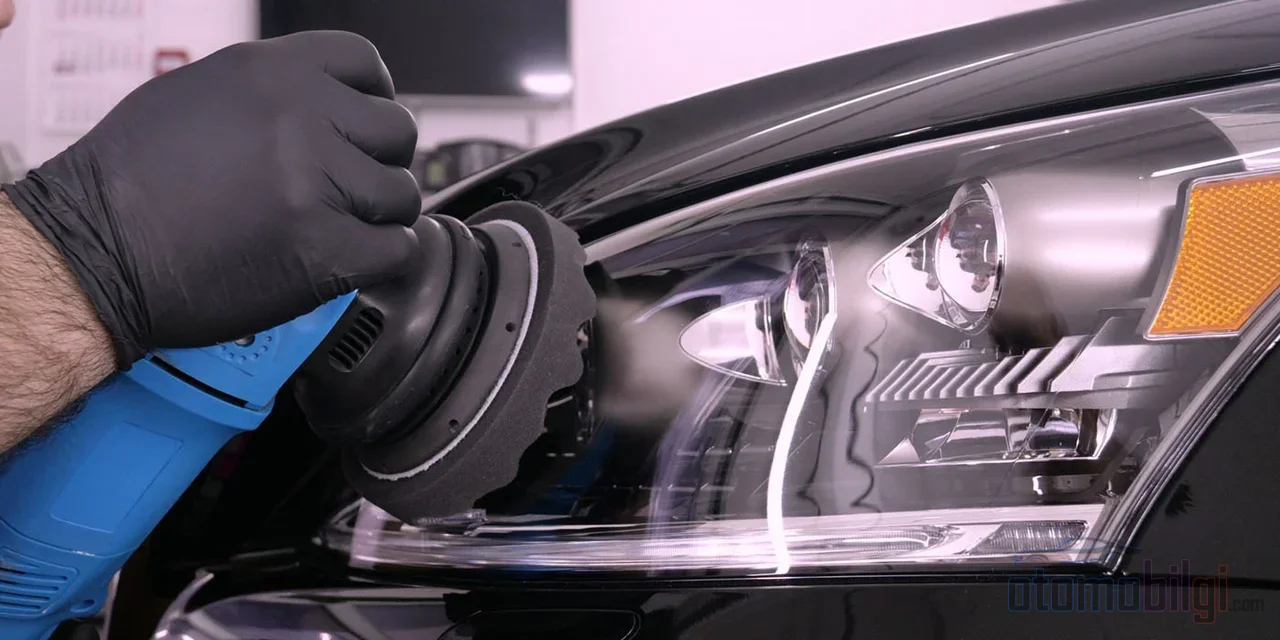
Now let's get to the most debated issue: polishing a yellowed headlight to restore it to its former state. When done correctly, it really makes a difference, but doing it correctly is essential. Professional restoration roughly goes through these steps:
- Cleaning and masking the surrounding surfaces
- Assessing the level of oxidation
- Step-by-step wet sanding: in severe cases, starting with 800-1000 grit and moving down through 1500, 2000, and 2500 grits
- Machine or hand polishing
- Immediately followed by the application of a UV protective sealant
Home remedies like toothpaste and baking soda also work on this logic with a mild abrasive effect and improve the appearance at first glance. But the critical problem is this: they contain no UV inhibitors. The unprotected polycarbonate re-oxidizes within weeks; it can return to its old yellowed state in as short a time as 4-6 weeks. So toothpaste is not a solution, just makeup.
What really determines the job is the UV sealant applied after polishing. This layer determines how long the result will last. In OEM-style professional restoration, the old coating is completely removed with wet sanding using different grits, reaching the pure polycarbonate surface, and a hard coating cured with UV-A is reapplied. This is a far more durable approach than ordinary polishing. Still, is it worth it outright? Excessive polishing thins the lens; that's why choosing the least aggressive method is the most sensible.
Where Does Restoration End, When Is Replacement Needed?
Not every yellowed headlight is a candidate for restoration. Restoration is a solution limited only to oxidation on the outer surface. If the lens is cracked, if there is damage on the inside, if the reflector is faulty, or if there is internal condensation, meaning a seal or ventilation problem, polishing will not work; at that point, part replacement is necessary. Also, adhesion problems after coating can be real; a layer applied without proper preparation peels off within weeks and makes subsequent repair more difficult. Properly preparing the surface is as important as the quality of the applied layer.
Check Your Own Headlight: What Should You Do?
As practical advice, I can tell you this: check your headlight not just once, but once every few months. If there is a slight haze on the surface, early intervention, meaning a gentle cleaning and applying a quality UV protectant, protects against major damage. If the yellowing is deep, skip the home remedies and consider professional restoration with progressive sanding and a real UV hard coat. Headlights are not just about looks, they're safety equipment; that yellowed plastic may be the only thing letting you see the road at night. Remember, yellowing headlights is not your fault; it's the nature of the material. But leaving it untreated is entirely your decision.
Have you ever experienced yellowing on your headlights? Is there anyone among you who tried toothpaste hoping for results? Tell us in the comments, I'm curious.
Sources
- How To Clean Headlights: DIY Methods That Actually Work
- Protecting Your Vehicle's Headlight Lenses from U.V.
- Headlight Restoration: Why Yellowed Headlights Are Unsafe
- Why Does a Headlight Lens Turn Yellow? Causes and Fixes
- How headlight restoration works, and why they yellow again
- UV-A Hard Coat for Polycarbonate Headlight Refinishing
- UV Coating for Headlights
- Hard-coat infused polycarbonate headlamp lens and method
- Photometric Testing - Elite Electronic Engineering
- Performance investigation of different headlights used in vehicles
- Visual Acuity in Yellow Headlights
- How UV Rays Cause Headlight Yellowing Fast
- Photo-oxidative degradation of bisphenol A polycarbonate
- Consequences of the photooxidation of polycarbonate
- Headlights: Transparency meets heat resistance
- FMVSS 205 Glazing Materials
- Headlight Restoration System FAQ