The Road to Supercar: How Young Talents Rise in Rallycross?
Share This Page
The road to Supercar is no longer a guessing game in rallycross: there is now a structured career ladder running through subcategories, national championships, and European series like Euro RX. Here you will find the rungs of this ladder, their costs, and real examples.
Highlights
- Entry to the entry-level development series is possible at age 14 from as young as
- The first-rung season budget is approximately €43,000
- Supercar cars 600 hp complete 0-100 km/h with in under 2 seconds of power
- Reaching World RX level means roughly 20 times the budget of the first rung
- From 2026 onward, the top class will once again race with internal combustion engines only
Think of it this way: for many years, rallycross was like a "ladder with the first rung missing." Even if you had the talent, jumping straight from a national championship to Supercar was both expensive and risky, and plenty of drivers were lost in the gap in between. In recent years, that gap has been filled: one-make academies, junior championships, and intermediate categories like Super 1600 now offer a clear roadmap. So exactly which rungs do you need to climb? Let's take a step-by-step look.
The First Rung of the Ladder: Why Are Academies Now Essential?
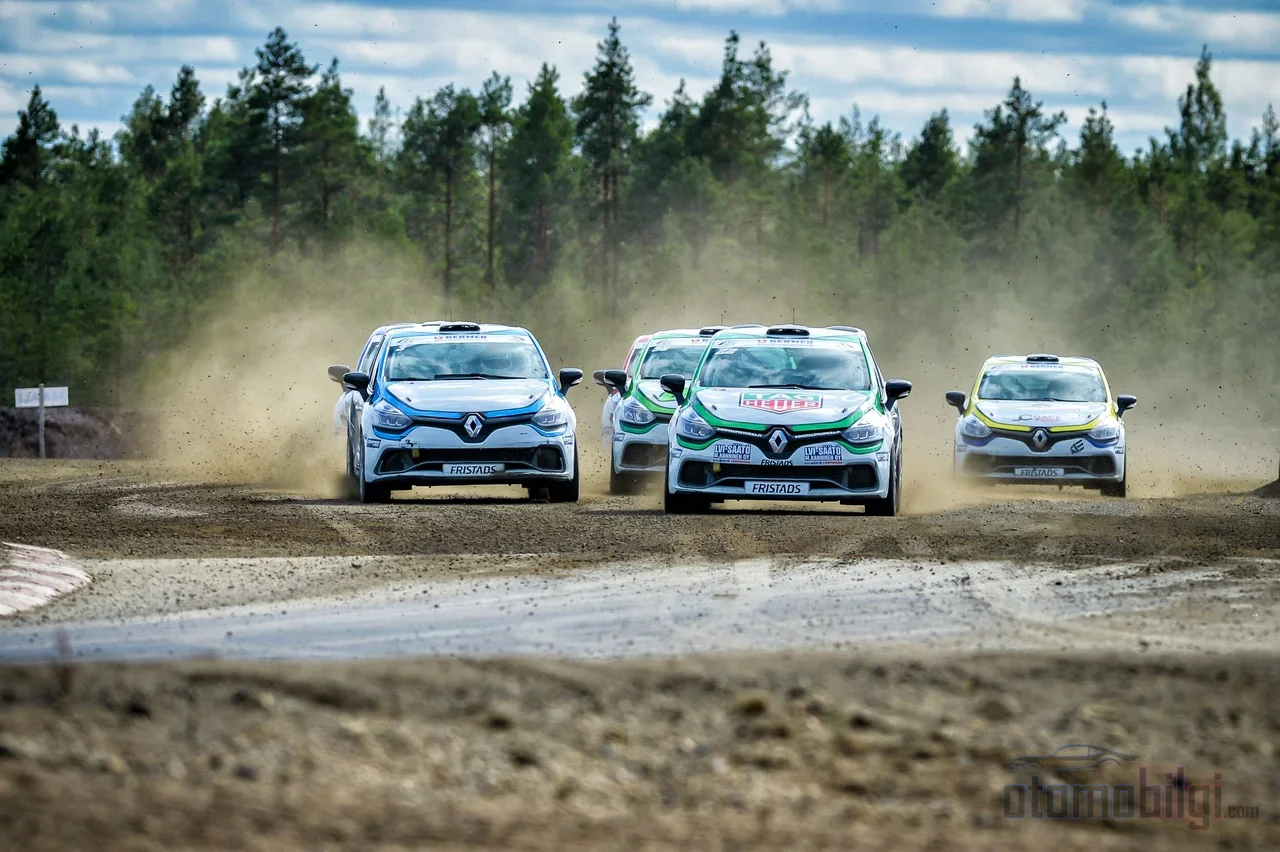
Founded in 2016, RX Academy is a one-make entry-level series designed by former racer Jussi Pinomäki. The idea here is very clever: everyone races in identical cars, so the winner is genuinely the better driver. Just stepping on the throttle isn't enough; the program covers car control, racecraft, data analysis, and even media training. Yes, media training - because you will face sponsors in the future, and you need to learn to look at cameras and speak.
The series' Renault RS RX cars come with around 220 hp and a 6-speed sequential gearbox; drivers are accepted as young as 14 years old . The champion driver earns a fully funded European Super 1600 season or the right to win five rounds of the RX2 International Series - in other words, a direct ticket to the next rung. The budget in recent seasons is approximately €43,000. A figure comparable to the price of a sports car, but it counts as the entry ticket on the motorsport scale.
For moving to four-wheel drive at a young age, Supercar Lites has long been seen as the most cost-effective route on the market; the series returned to its roots by joining RallyX Academy for the 2026 season. Why is this so important? Because Supercar cars are 4WD, meaning four-wheel drive. A driver who hasn't gained a feel for four-wheel drive at an early age leaves a huge advantage at the door in the top category.
When I started, I went straight to Supercar, and that was absolutely too much for that age. The road to the top was missing.
Heikkinen's words actually sum everything up. In the past, talented youngsters were either thrown into Supercar like learning to swim with a car held on ice, or they simply disappeared. Today's ladder has largely ended that tragedy.
National Championships: How Does the French Example Show the Ladder?
The country that shows the ladder's structure most clearly is France. Beneath the national championship that has been held there since 1977, there are three clear steps you can climb from age 16. Moreover, the cost and car specifications of each step are clearly defined:
| Category | Car | Approximate cost |
|---|---|---|
| Women's Cup | Renault Twingo RX, 133 hp, 980 kg | End-of-race rental ~3,000 EUR + VAT |
| Junior Championship (ages 16-28) | Renault Clio RX Junior, 180 hp, 1080 kg | End-of-race rental ~6,000-7,000 EUR + VAT |
| Super 1600 | Front-wheel drive, ~220-250 hp | Above the Junior level |
| Supercar | 600 hp, 4WD, 0-100 km/h under 2 seconds | Several hundred thousand EUR per season |
Perhaps the most interesting part of this table is the story of the Junior category. For years, the season champion was given a seat in Super 1600; in other words, the ladder was connected to a reward system. In 2025, this practice came to an end, and with it came rumors about the "promise of promotion to the top category." The lesson: no one should now rely entirely on a championship reward.
Rising names from France
There are also names that prove this ladder really works. Davy Jeanney became French champion in 2010, finished runner-up in Europe in 2013, moved up to World RX in 2014, and scored two wins with the Peugeot-Hansen team in 2015. Cyril Raymond, while French Super 1600 champion in 2014, went on to reach back-to-back RX2 world championships in 2016 and 2017, then moved up to Supercar in 2019. Jean-Baptiste Dubourg and Steven Bossard also followed the same path to World RX. So making it out of the national championship is not a dream - but it requires a planned climb.
What Is the Role of Euro RX? The Bridge Between Supercar and World RX
The FIA European Rallycross Championship, or Euro RX, enters its 51st season in 2026. In terms of purpose, it is the most natural bridge between Supercar and the world championship. With head-to-head races run on sand-and-asphalt mixes in stadium-like settings, it acclimates drivers to international competition. The 2026 registration platform has opened and full-season entries closed in March - meaning even the series' calendar follows the discipline of a professional driving career.
Competition in the Euro RX1 class is also as fierce as you can imagine: the standings feature names like Rytkönen and Bakkerud racing a Hyundai i20, just behind Johan Kristoffersson. The French round was won by Fabien Pailler in a Renault Mégane Mk4. So racing in Euro RX means rehearsing the step up to the world level.
On the British side, the 5 Nations BRX series plays a similar role: the logic there is to offer an ecosystem where the majority dreams of racing Supercars at the highest level, but accessible entry routes also exist. Moreover, from 2026 the FIA refilling its top class with internal combustion engines only has also simplified career planning - instead of the question "should I learn electric or internal combustion?", there is now a clearer technological path.
The Hansen Brothers and Oliver Solberg: Real Career Paths
Theory is nice, but concrete examples are more convincing, right? The Hansen brothers are the most famous success story in this business. Timmy Hansen is the 2019 FIA World Rallycross champion; with 14 World Championship wins, he has one of the richest records among active drivers, and he moved to the RallyX Americas Hypercar program with Hansen Motorsport. His brother Kevin also continues racing in the Hansen World RX Team and took the win in the eighth round of the season. Both of them came through Supercar Lites and the Hansen Motorsport infrastructure - in other words, the family team had a ladder that carried drivers from the lower category to the top.
Oliver Solberg's story, on the other hand, shows a different route. At an early age he won multiple crosskart championships in Norway and Scandinavia, became the RallyX Nordic champion in 2018, reached the ERC1 Junior championship in 2020, and switched to rallying. His father Petter Solberg - a two-time World RX champion - attributes his son's career to three years in an academy program after crosskart, along with mentorship. In 2026, Oliver, in his first full Rally1 season with Toyota, won three rallies and missed the world championship by only 5 points. A current and striking example of a driver with a rallycross background rising to the very top level.
Other names to come out of the academy
A single example does not prove that RX Academy works anyway. 2017 champion Jesse Kallio became the European Super 1600 champion in 2018 and finished third in RX2 in 2019. In Kallio's own words: "The difference in car performance and competition between the national series and RX2 is so great that it is impossible to make the jump without the Academy." Among the names developed by the series' founder Pinomäki are familiar surnames such as Timerzyanov, Bakkerud, Nitišs and Baumanis.
Physical Preparation and Sponsorship: Two Tests Off the Track
Being fast alone is not enough, unfortunately. You have to pass two more tests: your body and your budget.
The physical side
In Pinomäki's words, drivers do not need to be "marathon runners," but they must be fit enough to stay focused all weekend. Think of a rallycross race weekend: qualifying sessions, heats, repeated starts, concentration. The key components experts point to are heat tolerance, cardiovascular endurance, and fast reaction times. Also, different driving styles require different development: those coming from go-karts don't slide enough, those coming from rallying slide too much - meaning your trainer changes depending on you. In categories like RX2, where suspension travel is more limited than in Supercars, the landing-and-rebound technique is also critically important.
The sponsorship side
Here is motorsport's most brutal truth. The summary from experienced figures in the industry is this: for the RX Academy level, support of roughly 50 thousand euros is required; for Super 1600 and RX2 this rises 2-3 times; and for World RX, about 20 times. At every step of your career, you need to learn to carry yourself in a way that can convince investors. Driver sponsorships in the UK typically operate in the £5,000–50,000 band, and there's a practical rule of thumb: you need to set aside an activation budget of at least half the sponsorship amount. In other words, creating the content, events and visibility plans that will satisfy your sponsor is also your job. At 15-16 years old, this may seem hard to grasp, but this is exactly what makes the difference later on.
Frequently Asked Questions: How to Start a Rallycross Career?
- What age can you start? You can enter academy series at 14, and national junior categories such as the French junior championship at 16.
- How do costs increase? The first rung is around €43,000; 2-3 times at Super 1600 and RX2 level; around 20 times in World RX.
- Can you move directly from a national championship to RX2? According to experienced drivers, no - the difference in performance and competitiveness is too great, an intermediate step is essential.
- Is there a special path for female drivers? The Women's Cup in France offers drivers over 16 a low-cost entry with the Twingo RX.
- What is the situation in Türkiye? The Turkish round of the 2025 FIA World and European Rallycross Championship was held at TOSFED Istanbul Park on 20-21 September; one of our youngest rallycross drivers, Derin Girgin, also celebrated his 16th birthday at the track.
Moreover, a new door has also opened in the Americas: RallyX Americas is starting in 2026 with five different classes including Hypercar, Supercar and Crosscar at the Crandon, Eldora and GP3R tracks. So don't forget that the ladder isn't only in Europe. In addition, First Corner building its 25th FC2 Supercar shows that low-operating-cost Supercar options are also growing.
Conclusion: The Ladder Exists, the Next Step Is Your Plan
Rallycross is no longer a "prove your talent or disappear" discipline. There is a clear path stretching from academies to national junior categories, from Super 1600 to Supercar Lites and Euro RX - and we know the cost, age limits, and requirements of every rung. The paths of the Hansen brothers and Oliver Solberg show that reaching the top is possible with the right plan. The only question left is: which rung of this ladder will you start from?
Sources
- How to get an international rallycross career started - DirtFish
- How to Get Started in Rallycross in France? - GoToTheGrid
- FIA Rallycross Championships - Official Website
- FIA sets bold new course for rallycross from 2026 - FIA
- Supercar Lites returns to its roots with the RallyX Academy - RallyX
- Timmy Hansen, Hansen Motorsport Confirm RallyX Americas Hypercar Plans - RallyX
- First Corner Celebrates Milestone 25th FC2 Supercar Build - RallyX
- Oliver Solberg - Wikipedia
- Oliver Solberg - WRC.com
- Kevin Hansen - Hansen Motorsport
- The 2025 season of the World Rallycross Championship in Istanbul - Red Bull Türkiye
- Fit To Race - Motorsport UK
- Getting started in 5 Nations BRX
- Euro RX of Ireland - Mondello Park
- Motorsport Sponsorship Costs - SuperHub UK